
Why The Stories We Hide Keep Us Stuck | Michele Richman, Ep 216
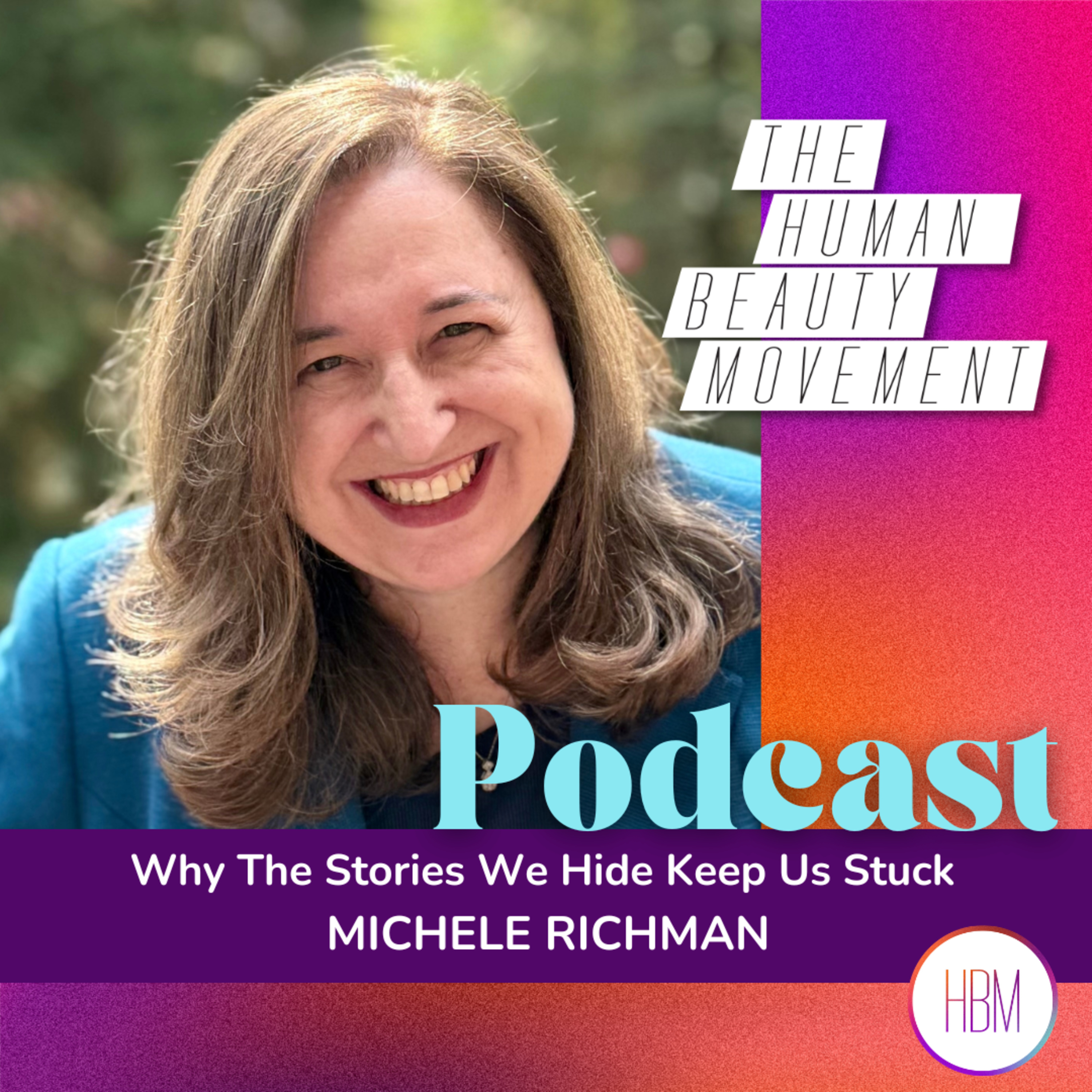


Michele Richman joins host Jennifer Norman to explore the power and healing potential of sharing the stories we often hide, especially those surrounding vulnerability and personal growth. Through candid conversation, Michele discusses how her journey as a special needs parent, leader, and author has shaped her understanding of resilience, authentic connection, and the importance of embracing every aspect of our humanity. The discussion highlights how storytelling can build bridges between individuals, inspiring others to find beauty in their own lived experiences and to courageously share their truths.
This podcast episode is sponsored by*:
- Humanist Beauty - Beauty for your skin & soul, Humanist Beauty is clean, conscious, and cruelty-free. Shop here → https://humanistbeauty.com
- SupeCaptainBraveMan - Super books for super kids! SuperCaptainBraveMan picture books are sweet stories that help build disability awareness for a kinder, friendlier world. Learn more → https://supercaptainbraveman.com
*The Human Beauty Movement may earn commissions from your support
Michele's Links:
- Website https://michelerichman.com/
- Book https://www.amazon.com/Stories-We-Almost-Dont-Tell-ebook/dp/B0GTB8KHVS/
- LinkedIn https://www.linkedin.com/in/michele-richman/
- Instagram https://www.instagram.com/michelerichman.coach/
The Human Beauty Movement Links:
- Official Website https://thehumanbeautymovement.com/
- YouTube https://www.youtube.com/@thehumanbeautymovement
- TikTok https://www.tiktok.com/@thehumanbeautymovement
- Instagram https://www.instagram.com/thehumanbeautymovement
- Facebook https://www.facebook.com/thehumanbeautymovement
- Community https://www.facebook.com/groups/thehumanbeautymovement
- LinkedIn https://www.linkedin.com/company/the-human-beauty-movement
- X https://x.com/thehbm_official
- Pinterest https://www.pinterest.com/thehumanbeautymovement
Jennifer Norman Links:
- Lnk.Bio https://lnk.bio/iamjennnorman
- LinkedIn https://www.linkedin.com/in/jennifernorman
- Instagram https://www.instagram.com/iamjennnorman
- TikTok https://www.tiktok.com/@iamjennnorman
- YouTube https://www.youtube.com/@iamjennnorman
- Facebook https://www.facebook.com/iamjennnorman
- Pinterest https://www.pinterest.com/iamjennnorman
- X/Twitter https://twitter.com/iamjennnorman
Thank you for being a Beautiful Human.
Jennifer Norman:
What if the stories we hide the most are the very stories that could set us free? So many of us spend our lives editing ourselves in real time, shrinking our truth, polishing our pain, or keeping certain chapters tucked away because we're afraid of being judged, misunderstood, or simply too much. But what happens when we finally find the courage to tell the stories we almost don't tell? Today's guest believes those stories are often where our deepest healing, leadership and human connection begin. Joining me today is Michele Richman, chief people officer and lead coach at Lawline, certified frame of mind coach, speaker, leadership strategist, former prosecutor and attorney, and author of the powerful new book, the Stories We Almost Don't Tell. Through her work coaching professionals, executives, and law firm leaders, Michele helps people unlock the stories, beliefs, and identities that quietly shape their lives and leadership. But this conversation goes far beyond career success. We're talking about the transformational power of storytelling, how coaching changed Michele's life personally and professionally, and the profound lessons she's learned through parenting a child with special needs. Lessons about surrender, identity, resilience, and a kind of love that reshapes who you are from the inside out. If you've ever struggled to speak your truth, reinvent yourself, or feel seen in the fullness of your humanity, this episode is for you. Let's begin.
Jennifer Norman:
Michele, hi. How are you today?
Michele Richman:
I'm fantastic, and thank you for that beautiful intro.
Jennifer Norman:
Welcomte to the show and thank you so much for all of your work. Now, your new book, the title itself stopped me in my tracks, The Stories We Almost Don't Tell. So I know that your story has been filled with a lot of things that you felt that you needed to hide, those human stories that you say matter the most. Can you tell us a little bit about that?
Michele Richman:
Yeah. I would say as a woman from a young age, we're told to appear strong, you know, we always are. We want to be in the room. We want to be seen as the same. And my education, going to law school, I felt like I was always supposed to be shown as, like, how does everybody think I'm doing it? Perfectly.
Jennifer Norman:
Yeah.
Michele Richman:
And so when fear took over, mistakes happened. I felt it inside, outwardly. I try to hide it. And of course, that doesn't work. And so it wasn't until I started coaching in 2020. And I can talk more about that, where I realized who I am inside and outside. Who I am personally at work is always the same person. And being vulnerable and having the courage to do that is the best way to show up for my, my kids, my Husband, my employees.
Michele Richman:
And so I started writing during the pandemic, and six years later, I now have a book of everything that I've been writing for six years. And so it changed who I am, and it made me feel like I. I'm 51 years old now, and I'm so excited for this decade. And I can honestly say starting to tell my stories is how I got to this, like, happiness.
Jennifer Norman:
Yeah. I mean, for all the calamity that happened during the pandemic, there were some really great things about it. And I think it was because it gave us time to be introspective. It gave us time to be still and to contemplate what really matters. And it sounds like you had this shift from a career standpoint and from really understanding yourself and getting to know yourself more. And through these stories, it's almost like you learn a little bit more and reveal more about yourself to yourself as well as to other people.
Michele Richman:
That's exactly right for me. I realized, like, when I paused that the last time I had really written just for myself, not for law school, not for prosecuting, for litigating, and not for what I've been doing this entire time, which is like, hr, operations, business, finance, was probably like, high school and college when I just wrote stories. And I loved it. I was on the school newspaper. I was on the college newspaper. And that just stopped when you're how your life starts. So I said to myself, it was February 2021, before, well, things before the vaccines. We were all still, like, in our houses, and we were trying to find a way to connect as employees, as team members.
Michele Richman:
We had always been in person. So we started a slack water cooler chat, and they popped up with a question. And the question said, name one goal for yourself for the entire...for the year. Name one thing. They always say if you put it out there in the universe, it'll happen.
Michele Richman:
I had been thinking about writing, so I just wrote, I'm going to write and publish something this year. And one of my team members just responded and said, Medium's a great place for that. It's really easy to use. This was February, and sometimes we say things. Nothing happens. March, April, May, it was there, June, July, August, September. I still hadn't done it. I felt like I was writing.
Michele Richman:
And just to be clear, I was in coaching. So I was journaling, and I was writing as journaling, and I loved it, but I'm, like, so scared to share it and to be judged and to be seen not as, like, What I thought everyone saw me as the person who's kept everything together. And I woke up the week of Halloween. I look on on my phone and I see someone posted Happy Bat Week. I was like, Bat Week? Is that a thing?
Jennifer Norman:
I looked it up.
Michele Richman:
It was. And I was like, all right, I know what I'm going to write about for my first piece. And I went downstairs at 6:30 in the morning. I took my computer out and I just started typing. And I wrote the story, which is in my book of in February of the year, the same month that I had said I was gonna start writing. I'm lying in bed asleep, and I hear my kids, who are 10 and 13, I believe, screaming. And, you know, what could be going on that's making them scream is like, you kind of just ignore your kids. I figured they're fighting over something.
Michele Richman:
But then all of a sudden, I hear, like, pitter, patter, pitter patter, pitter, patter, pitter, patter. And they're running upstairs really fast. They bust into our room, and they were. Something just flew across the room. You can tell by the beginning of the story what this is going to be about. I'm kind of waking up, and all of a sudden my husband jumps up so quickly and just runs downstairs and he's like. Usually ignores everything. Like, he's usually not a hysteria guy like the rest of us.
Michele Richman:
So we're like, sitting there, and he comes upstairs, and I thought it could be we Actually, this is in the pandemic. The week before, we had flying squirrels in our attic. Ready? So I was like, was it squirrel? We also had just had mice in our pantry because everybody was, like, hiding in the pandemic with us. Yeah. He comes up and he was like. And we look at him, and he was like, it was a bat. And all of a sudden, my son, the one who was sitting on the couch, he bursts into tears. He explained that, like, he had come downstairs, put all the blankets on him because he was cold, and that when my older son Max, walked down the stairs, he saw the bat lying on top of the blankets on top of Eli.
Michele Richman:
So Eli, of course, is so scared, the bat was on top of him, and he didn't even. And David said, well, I caught it and it's in a bag, and I put it in the garage. And I was like, well, how do you know it's really a bat? And he's like, well, what I haven't told you is two nights ago, there was another bat flying around the house that I chased down. And I also caught it. It was, like, very traumatic. I was, like, literally running across the...
Jennifer Norman:
Saving the family from bat infestation.
Michele Richman:
I work here. I live here. We never leave the house. And you didn't bother to tell me that there were bats in the house. And he was just like, I just didn't think you can handle it with, like, everything else going on.
Jennifer Norman:
So first, he knows you all too well, right?
Michele Richman:
Exactly. A little bit angry. But then. Then I'm an action mode person. So I right away call animal control, and they come over, and the bats, it turned out, were still alive, which David didn't know. They were sitting in our garage, and they actually had to kill the one bat to see if it had rabies because it had been sitting on Eli, which we later found out it didn't. But then they said, actually, if you have multiple bats, it means there's, like, probably a whole family upstairs. And I was like, okay, great.
Michele Richman:
Thanks for being here. Can you go get them out? And they said, actually, no. There's a law in New Jersey that protects bats. Oh. We're not allowed to move them. But remember this? This is February. When it becomes spring, it'll be warm enough, and they'll just leave on their own. So I want to make sure I say it right.
Michele Richman:
So I wrote this story down, and then I titled it Learning to Live with the Bats. And it was Learning to Live with the Bats. And then, like, when I published it on Medium, I said, and the flying squirrels. But essentially, at the end of my piece, I wrote. I finally understood the expression batshit crazy. And that was the first time I wrote anything.
Jennifer Norman:
Somehow I knew we were gonna come full circle to that phrase, because, yeah, batshit crazy is definitely an expression that's near and dear to my heart.
Michele Richman:
And I would say. And my conclusion was when I wrote it, once I started writing, I realized everything I wanted to write. I wanted to always have a lesson learned. Like you speak about is, like, we have what happens to us, and then we learn from it, and we move, and it's not what defines us. So my lessons were. And I was like. I actually said, I've realized I've been living. Not just now I have the bats in my house, but metaphorical bats.
Michele Richman:
Being a special needs parent, my mom at the time had battled multiple cancers and a bone marrow transplant. I talked about moving the company by myself, remote running operations, running hr. And these are all challenges that are really like living bats in the attic. And that was. And when I shared it, it was really powerful. Like, people laughed People were like, everyone's living in a pandemic. They could relate, but they could also relate to the metaphorical bats. And I felt something like I was realized, like, the power of sharing stories.
Michele Richman:
And I don't want to talk too much, but then I made a pledge to myself to write one piece every single month for a year, and I surpassed that. And within a couple of years, I had about 50 pieces.
Jennifer Norman:
Look at that. Congratulations.
Michele Richman:
Thank you.
Jennifer Norman:
That's amazing. And, yeah, I mean, it's a bizarre story. It's a. Some people would be like, I don't want anybody to know that I've had bats and mice in my pantry and all of that. But honestly, that's the thing that does make it like you're a real person. This is okay. Yeah. Everybody has the shit that they're going through and all of these things, and it is nice and refreshing to make light of it and to say, you know what? I learned something from it.
Jennifer Norman:
Not that it traumatized you, and now you've got a crazy batphobia. So I think that it's amazing that you actually decided to do that and did it in a way that was really creative, enlightening, and probably cathartic for you in certain ways, and then also led to this beautiful, beautiful ability to create something like a creative project going forward out of it. And I contrast that with the life that you had before, because you started the podcast by saying, when you're young, they want you to be strong. And so I felt like I needed to be strong. And you went into law operations. I mean, these are very structured, rigorous, almost lacking emotion type career paths, I would say. And so I'm just curious about the choice to do that, how it felt like, did you feel that you were shining in that, or is this new phase something that you feel is more intimately you?
Michele Richman:
Really good question. So I would say nobody's ever asked it in the way of, like, was I excelling at it or what was me? And I think those are almost two different things. I was excelling at it. I was really, really good. When I left, like, at first, my first job was a prosecutor, Department of Housing and Urban Development. And when I left there, I left. I loved the job. It just.
Michele Richman:
I ended up moving states, and I also worked in litigation, and I loved it, and I loved every moment of it. And the truth is, the reason that I switched to operations and HR goes completely to what we were talking about. I needed to change my lifestyle. And it was. I talk about this in the beginning of my book, but the year 2008, my son was being diagnosed with autism. He was three. We started the process when he was three, three years old. And I had a six month old and my mom had stage four cancer.
Michele Richman:
And I was gonna, I could tell I was gonna be the primary person like in the hospital and visits. And so I knew that being a litigator wasn't gonna be the right fit anymore. So I'll talk about this, but this is actually the company I work for is my family's business. So I knew I needed something where I could have flexibility but also start something from the ground up. And I ended up joining my brother and business my parents had started and really launching it to the successful company it is today. So I was doing really well, but I had to make a change and operations in HR was actually a pretty easy transition. Like you say, it's all the same mindset. And I really, people have always told me and I'm really organized and detail oriented.
Michele Richman:
I don't procrastinate. I. So everything came naturally. But it wasn't until I started like mentoring young women that I realized that my passion was coaching and helping and really like learning from what I went through to help the women after me so that they could feel vulnerable. And that's when I started coaching and then became a coach. And that's where I actually found who I was is like, yes, I'm good at being the detail oriented person and I still run operations and I still run HR. But now I have amazing, an amazing team that works for me. They're all like three incredible women who I've mentored and who are doing a fantastic job so that I can now do what I want, which is also write and coach.
Michele Richman:
And I speak a lot on these issues. So that's where I found out like the person I wanted to be. And then writing got me there.
Jennifer Norman:
Amazing. They say that there's these three phases of our lives and there's the learning phase, the earning phase, and then the returning phase. I tend to believe that they're all mixed up together and they might actually have a little bit more balance in terms of maybe you're learning a bit more at the beginning, earning a bit more in the middle, and returning more towards the second act. Le Deux, as they say, as you say, the second act of your life. But there's something that is really fulfilling at the second act about the returning, about feeling that you can pay it forward or pay it back to the next generation and take all that you've learned and with your earnings potentially also help to provide with volunteering or donating to charity, starting a philanthropy, things like that. And yeah, it becomes a bit more of a legacy to leave behind. And yeah, I think that being in our mid phases now it is really interesting how it's more about that enrichment of emotion and soul versus what I think that the traditional career path used to feel like. I think which was more about okay, get to retirement and then you'll be able to relax here.
Jennifer Norman:
Everything is all mixed together now. Working from home, we're prioritizing our families. We've with moms that need caretaking and with parent with, with children that potentially need caretaking too. Especially when you're a special needs mom. I mean it's a lot to think about. And so being full fledged in a career, I mean I remember feeling so guilted, like I was like I can't do it all. I wish I could be that superwoman. Like I see and I we talk about imposter syndrome.
Jennifer Norman:
It's like I wish I could be that Wonder Woman, that superwoman that can just excel at every aspect of my life. But then you realize, okay, now I need to balance. Yeah, I can't do it all. I'm always going to feel like I'm falling behind at something whether it's the kids or whether it's career or something or other. And that's okay. It's a normal circumstance and it really causes us to reflect on well, what are the important things? What are the things I want to prioritize? What are some of the things that I might have shrouded or kept secret that now can be revealed? And so that gets to your book. I'd love to hear a little bit more about some of the details in your book about those stories that you think are important that really we haven't felt that we could tell before. But now perhaps we do have a platform to do so.
Michele Richman:
Thank you. I would say that just to comment on what you were saying is I didn't think I was doing one thing well and one thing bad I felt when I was a new parent and I was working that I was failing at both of them. Like I could tell that I wasn't able to show up fully. And I also was supposed to be part time and I don't know if you had this experience. I learned that there is really know part time when you're working from home. Like this was, you know, I'm old enough that I was working from home but it was before everyone else was doing it just to like, be able to be there for my kids. But I was really always answering emails, even when I was supposed to be part time, especially when I was practicing a law. So being able to forgive yourself, that.
Michele Richman:
That was part of my book is saying, like, it's okay that I'm not able to do it all. Like, I'm doing the best that I can and I'm trying to show up. So one of the stories that I talk about that was really important to me was. And I wrote, I've written a lot about it, of like, advocating for my son who was on the autism spectrum. And I wrote the story, which is in the book, about his first day of middle school, which, as you can imagine, is a huge transition for any kid.
Jennifer Norman:
Yeah.
Michele Richman:
But especially for kids on the spectrum who have trouble with like, new things and big. And I always would try to go to like an. I had an au pair, which was amazing. But when things were the first day, I would always want to go. And I showed up waiting on the first day of school and, you know, you're waiting for everyone to come out. And he was supposed to have a power professional who usually would bring him out in elementary school. And all these kids are running out. The first group, the second group, the third group.
Michele Richman:
And he never comes out and they close the doors. Oh, and tears just start coming down my eyes. Like I'm panicking and I, I'm like, where could he be? Did he wander off? You know, at this point? At. Sometimes he did, like, have a tendency to get distracted and wander. So I, I go to the doorbell, I ring the bell and they let me in, and I run to the front office and I, you know, I said, my son is. Didn't leave the school. I can't find him. Can you get me the name of his paraprofessional? And they turned to me and, like, looked down the list and they were like, sorry, there was an administrative error today.
Michele Richman:
And he had nobody. And I was like, okay, well, I haven't been able to. And I just, like, at that moment I just ran and I just started going up and down the stairs of the school. And this is an enormous school, public school. And I find him in the corner on the third floor of stairwell, crying, cuddled in the corner by himself. And he said, he looked at me like relief in his eyes. And he just said, I just couldn't find the door and took a moment, told him he's okay, said, we're going to go out, get ice cream, got him ice cream, came home and then right away, I was like, who do I need to call to make sure this doesn't happen again? And I literally called everybody in the district. And as a lawyer, I said, what do people.
Michele Richman:
What's going to make a difference? I said, my son could have wandered out of the school and been killed. Like a car accident. Like, he could have been hit by a car, and that would have been your liability. If he doesn't have a para next day and something happens, this is going to be a crazy liability for the school district. Lo and behold, the next morning, there was a substitute. You know, they found someone, and he had, like, the para professional after a couple of weeks. And it was.
Michele Richman:
So this story I wrote about, and immediately I started here, I shared it in my own groups. And so many parents who had gone through similar things, who felt my pain, who were inspired by my ability to, like, not just take the circumstances. And I also talked about, like, this wasn't the first time I've had a battle. Like, he every. It was. It's just what I called groundhog day of me asking for something at the school, me being told it's not possible, and then finding a way. And there are a couple different times where, like, a school, a camp trip that he. They wouldn't let him on because they were afraid they'd lose him, or a school that wouldn't entertain him because he had had a para.
Michele Richman:
And so once I shared this, and if you see behind me, I don't know if you can see it, I actually performed it in a live storytelling on Mother's Day two years ago called Listen To Your Mother. I had so many people come up to me and tell me, like, I felt I've been through this, but, like, hearing this give me hope. So that's the whole point of, like, this book is these are all my stories. Me telling them made me feel free and less ashamed. And, like, I can move past it to who I am. But it's also, like, the impact on others.
Michele Richman:
The entire book is filled with stories like this. And what's interesting is when my son read it, and I always. Anytime I wrote about my kids before or my husband or anyone before I publish it, I asked for their permission. So he read it many years later when I wrote it, and he's like, I have no memory of this at all. And I was like, you have no memory of what was, like, one of the most traumatic parenting experiences of my life? I was like, not at all. I just remember having a para, I didn't know about the like.
Michele Richman:
And that shocking to me. And one thing he started telling people now that he's read my book and my cause I write about parenting a lot. And also on LinkedIn, he's like, I learned a lot about my childhood from my mom's stories. Remember it like he remembers video games he's played with, but not like the trauma moments of parenting. So oh, what a blessing. I know. I wish I was like that. Thank you for letting me go through the whole thing.
Jennifer Norman:
But no, I mean, that's the reason for this podcast is to let you also share what's in that. Because it sounds like it's so helpful the way that you've written it. It's not just like blurting out all of this negativity. It's really about, these are the sore points in life. These are the challenges as a special needs mom, as a mother, as a working mom, as a just as a human being. But these are the things that I learned from it or these are the things that I could share that might be helpful.
Jennifer Norman:
I love how you've kind of wrapped it up with either humor or inspiration and have probably a really beautiful relationship with your kids because you're able to have this meaningful way of showcasing your family, frankly, and having things that you've had to re contemplate as you do when you're writing. You always have to kind of think about, how am I going to say this? How is this going to express what are the things that I want to edit out or what are the things that I want to keep in? And it really helps to shape the way that you want to learn from that story. Because as we all know, there is, you know, what happens, and then there are the stories that we create from it and the lessons learned and the reframing of it. Because that's just the way that life is. The way that we tell something that actually happened is never exactly as it happened. And sometimes the people who are in it have a completely different recollection or they have no recollection of it at all. But yet those stories are important to express as they are healing for you. And they could be a catalyst for healing for others as well.
Jennifer Norman:
So, yeah, encouraging everybody, once again, The Stories We Almost Don't Tell by Michele Richman. Please take a look at it. It's on Amazon. I will make sure that the link is there in the show notes too. Yeah. And I also think that it's very interesting and very valuable Having an attorney's background, too, to be able to say, okay, very judiciously. This is a unique way. I don't know if I would have gone so far as to say, you could have killed my son, frankly.
Jennifer Norman:
But, yeah, if you want to get attention, it's like, okay, go for it. And this is the way to get more immediate action rather than just blowing up and yelling at a bunch of people.
Michele Richman:
Yeah. No, and one thing that I didn't mention is that because I've been doing this for so many years, I always treat people respectfully. And I know that nothing there's a good or a bad way, but it's. You get so beaten down.
Jennifer Norman:
Yeah.
Michele Richman:
I always enter every conversation with, listen, I know you're doing the best you can with limited resources. I mean, these public school districts, like our case managers, the administrators, they're fighting so hard. It's not that they don't care. And I'm like, I appreciate that this is what the problem is. And so any communication I had, I mean, this was an extreme case where I was really upset, but I never made it. I never made it litigious, but I made it. Like, let's see how it's like, how do we... How does this benefit all of us?
Michele Richman:
And this is good for the school. This is good for Max. This is good for the other students. One thing I talked about a lot in my writing and why I, like, joined the board of our special needs council when I was. My kids were younger is like, I felt so lucky that I had a legal background, because many times they actually told me, this isn't the law. And they were lying. And I actually was able to because of my training. I looked up the law.
Michele Richman:
You're like, actually, I said, no, actually, this is the law. And they would take away services and then they would put it back because I had the training for it. And I felt so... I was like, this is so hard for me. It's so unfair for the rest of regular parents who are really struggling with special needs kids and expected to have this level of. I was lucky to have flexibility in my job. I was able to go to all the meetings. I had a legal background, and still it was so hard.
Michele Richman:
So I try to work with parents both by my own, sharing my stories, but also saying, like, let me see your plan and how I can help you. And that was something that I was doing for a while.
Jennifer Norman:
Oh, my gosh. Yeah. Thank you. Because, yeah, as a fellow special needs mom and having my own battles with the educational system or with insurance. God, that's a whole other bag of worms. The medical field, all of that. It really is one of those things where the persistence and it's almost like you have to be that squeaky wheel in order to actually be heard. And if you're not, then I just can imagine people just give up and then they lose the ability to get resources, benefits, money, all sorts of things.
Jennifer Norman:
Because it's so difficult to navigate. It really is. It's so challenging.
Michele Richman:
We're not going to get political. But just as I. But the resources that are continuing to be cut. Yeah, it's become so hard. So I always called it like my second full time job just trying to do it, advocating and staying on top of it. And one thing I can share now is my son, the one who was lost in middle school. He's just finishing his junior year of college. He's been studying computer science and I wrote a post about it last week on April 30th because it was the end of Autism awareness month.
Michele Richman:
And I said like I couldn't have imagined that time. I found him in the stairwell. He's been living on his own at school school for three years. And the thing is, and it like getting there wasn't easy. There were still a lot of battles even in the beginning of college. But what was really important for me and what I want to share in the point of my book and telling these stories is like I had to redefine my expectations of what was a success. For some reason I thought, oh, college is going to be different and he's going to get all these support and everything's going to be fine and he's going to be like, that's going to be the time when everything's going to work. And it wasn't smooth like that.
Michele Richman:
And he doesn't have the typical experience. He still comes home usually every other weekend. Luckily he lives, he's at a school close by and he's not going to parties. But what did he do? He found like he's in a Dungeons and Dragons Club, he's in a board game club, he's in a movie making club and a game design club and he's doing all these competitions and he's got friends and he's happy. And so I wrote this post, but first I sent it to him and I just said can you read this before I post it? And he texted me back, I don't know if he'll be listening to this and appreciate it but he just said that was such a good post. I'm all choked up. It stopped me in my tracks. But he himself reading it all together, from where he was to where he is now, made him choke up.
Michele Richman:
Not just me. So that's why we tell these stories. Because, like, wow. They're also for the people who are in the stories. It shows them their own growth. And honestly, why did I write this book? Because I've been writing all these stories for my kids. I wanted them to have a place where this lives like this. They can hold this book and say, like, this is.
Michele Richman:
These are the stories my mom wrote about me. And this is me on my deck where I do all my writing.
Jennifer Norman:
It's an adorable illustration. The COVID is really, really cute. It's Michele with her laptop on her deck, but it's really beautifully drawn. Thank you. What do you find that you like to coach most about when you're mentoring young women or you're speaking to others? What are some of the topics that you find that you gravitate to?
Michele Richman:
Evidence. And that... It sounds like I'm still talking about law. Evidence.
Jennifer Norman:
Say more.
Michele Richman:
But the evidence is we are always saying things about ourselves. For example, for years, I would never wanted to speak publicly. And I was like, I'm just not a good public speaker. I'm worried I'm not going to look good. But if this outfit's not going to look good, it's going to be filmed. And I just didn't do it. And because the evidence I was remembering was something from, like, 25 years ago when I had negative experiences. And then my coach would say to me, well, aren't you actually.
Michele Richman:
Don't you speak all the time at company meetings? Yes. Didn't you actually teach this thing? And. Yes. And so she actually, like, by digging in, she redirected me and realized I had been using the wrong evidence to create my expectation of what I could do, which stopped me from hitting my goals.
Jennifer Norman:
Mm.
Michele Richman:
And once. So what I do with my. The women that I coach and the men is I'll say, like, they make an assumption that they can't do something I can't personally or professionally. And I'll say, okay, well, what is that based on? And almost always it's. And I never say to somebody, like, I know more than you. But I was like, when they start saying why they've given this reason, they realize it's not about the evidence, it's about their thoughts about it. Our thinking controls everything. And all you have to do is change what you're focusing on, change your thinking, and you realize you actually can achieve it.
Michele Richman:
And maybe it looks different. Maybe it looks different, like Max's college experience. He's achieving his goals, and so am I. I'm sitting here talking to you about my book, which I never thought anyone would want to read my stories, and I published it. And since it's been out for a little over a month, I've heard so many people who are like, yeah, I was bullied, too. I talk about bullying, or I also had anxiety or therapy and all these things, and they're just like, thank you for being able to verbalize what was going on in my head that I didn't even know.
Jennifer Norman:
Wow. Evidence. I love how you actually bring that up. And it does correlate so beautifully to your background. Of course, the stories, the things that we gravitate to. A funny one for me is I'm a bad driver, which I'm really not. But I like to say it's like, oh, because I've had so many, you know, strange, bizarre accidents in the past, and so it's become a running joke. Yeah, the bad Asian driver.
Jennifer Norman:
I can say it. I'm Asian. But. But, yeah. So I'm like, every time I get behind the wheel, I'm like, okay, be careful. And so I almost, like, help to propagate that silly story. But, yeah, I know I'm actually a really good driver now, but it's only because the cars have gotten better. I think it's telling me that I'm too close to something.
Michele Richman:
Whatever it is, it's the truth, though. So it's the truth.
Jennifer Norman:
I know. Whether you think you are, whether you think you aren't what you think you can. You think you can't, then you're right. Yeah.
Michele Richman:
Yeah. So I think that's really powerful for all of us, is just, like, trying to think, like, what are our thoughts doing that are controlling us? And a lot of times, it's not about changing your behavior. It's changing your thinking, and that's how you get to your goals. That's what coaching and writing has done for me.
Jennifer Norman:
So what do you think is a story that you've told yourself, that you've resisted to tell the longest?
Michele Richman:
So I told you that I work with my family, and for years, I felt, like, shame, almost like I didn't deserve to be in my position.
Jennifer Norman:
Oh, like nepotism?
Michele Richman:
Yeah, 100% nepotism.
Jennifer Norman:
Like, Imposter syndrome syndrome.
Michele Richman:
I went to, you know, I worked so hard. I went to law school. I got this job, and where I worked Before, I don't even know I'm talking about this, but I don't talk about it that much. Is like when I got pregnant, it was 2004, there was no maternity leave at the federal government. I was shocked. And I had only been working. I'd only been outta law school for two years, so I had no leave accrued. So I ended up moving to, back to New York and working at my dad's law firm, which allowed me to have flexibility in all of these things and support and, you know, so I was just like, I worked so hard to do well in law school and I got this great job and then I felt like everything else and then, you know, I started working.
Michele Richman:
My brother started the company, so. And there was a time where we were once interviewing a coo. I know the evidence is that I've built up this company. We have, you know, we're like of the largest online CLE companies. I have all these people who work for us and I know that I do a good job. But I remember we were once interviewing a CO, and we're sitting around the boardroom and the executive team, and each person says something and then he looks at me and he's like, I looked you up. I know you're the CEO's sister. And he wanted to bring me down and he did.
Michele Richman:
And it was. I was like. It took me a second to recover, but. So I want to feel like I'm up there, I'm speaking at a conference, that I'm here because I deserve to be because of all the work I've done. But it feels like when you're the daughter of the person who started the company, the CEO, current CEOs sister, that like, I didn't have to work for it. So there's a story that I have in the book about. It's called the Three Month Experiment that's now old enough to vote.
Michele Richman:
Because when I decided to work with my brother, we said we'd only do it for three months. And then it's 18 years later now. But I didn't want to write about it and I didn't want to publish it because I didn't want people to know. It makes me feel, it's like even talking about it now, I feel the feeling inside, like, that I have to prove to you, Jennifer, I belong here. I'm doing a great job. It's not just because, yes, I didn't have to interview for this job. The last time I interviewed for a job was in 2002. That feels embarrassing.
Michele Richman:
Because my job is hiring people or had been.
Jennifer Norman:
Okay. Okay.
Michele Richman:
Thank you for listening.
Jennifer Norman:
Thank you for sharing. Thank you for sharing. Yeah, no, I think that that's. It's a reality and it's something that you always feel like you have. You need to prove something. Yeah, there's always that. Okay. And I can see how it can create a facade and it can create a bit of anxiety just on the day to day.
Jennifer Norman:
Yeah. And might want you to. To hide who you are, your identity, take on a, you know, a whole new identity to try to prevent people from making assumptions. But yeah, no, I think that a lot of people can likely relate to, I mean, of course, imposter syndrome, feeling like you just aren't qualified or. Or whatnot. I think a lot of people suffer from that sense of anxiety and then a whole portion other that feel that maybe they're the whole label of nepo baby or just the whole, oh, you didn't earn your way in that sort of feeling of shame or guilt or whatever we may call it, they ultimately become pretty useless emotions if we just do what we do. It's like, okay, can I live without the judgments of others? Is there thinking none of my business. And do I want to give energy to it? So of course it's going to be there.
Jennifer Norman:
It's only human and natural to feel those sorts of things and the work to just shine in what you're really good at and to do it with grace, and you do it with such beautiful humility and vulnerability. And I think after reading your book, people will have such a greater and richer understanding of you as a human being that they would feel guilty themselves for even thinking those sorts of things about you. So, yeah, no, it's brave. It's extremely, extremely brave.
Michele Richman:
What I realized is I wasn't caring as much. It wasn't the other people, though they might have had the thoughts. It was. I was having the thought about myself, so I had to change. That was the biggest thing. And I was like, I'm ashamed of myself. That's crazy.
Michele Richman:
Like, because I speak all about women and confidence and all of these things, so. And that look, the. That goes back to the evidence and the stories that you almost don't tell. And now I love to now. I mean, yes, it's still telling the story. I feel vulnerable, but it's like I talk about it all the time now because it makes me feel like I can. Other people have their own vulnerabilities, like you say, their own imposter syndrome. And me sharing my story makes them feel comfortable to share their theirs.
Michele Richman:
And that's how you build trust even. We've been talking for 40 minutes now, and I feel connected to you because I've been telling my stories, you've been sharing yours. And that's a way to personally, professionally, like, that's the key. And I always say, like, to C level. When they say, should we invest in coaching and writing and journaling? And I'm like, yeah, if you want your company to hit its goals, to feel confident in their abilities and be able to work together, you're going to have like, the ROI from investing in coaching is going to greatly surpass anything of the time that you think it takes out of people working. So I'm just really passionate about it.
Jennifer Norman:
Yeah, I think that there's something about. And you mentioned the time that we're taking to have this conversation, this intimate conversation together, which is why I love podcasting so much because it does give a container for these types of beautiful conversations with people who I otherwise would never have met. Like, we probably would never have crossed paths before, but here we are and the universe brings us together. And it is really about that time, that quality time that we can take to get to know somebody else. Because without that, in absence of that, there is snap judgment. There's just so much busyness. And so we take little snippets of life and we label and we identify and we, you know, we try to create organization out of that, which is what we have to do with all of the information that we are given. But imagine taking this kind of time, like you were saying, for yourself to actually sit and journal or sit and write or work with a coach and have these deep relationships, these deep conversations with yourself.
Jennifer Norman:
How many of us can really say that we've done that on a regular basis? It really doesn't happen. And that's what I think is so much of the key of that healing work, of that beauty of finding who your true identity is. Those things that you are a little bit shadowy about. I call, you know, the shadow work, the shadow side, diving in and excavating that, bringing them out into the light and saying, yeah, this is all of me, rather than, okay, I'm going to show you just the veneered part of me, the glossy, Instagram worthy side of me. I'd rather this really is the more authentic me, and that's the shared humanity that I'm after. And so I appreciate so much you writing this book, for coming on the podcast, for helping others to also see the value and the benefit of doing that work for themselves.
Michele Richman:
Well, I'm just so grateful for you bringing me on, so thank you.
Jennifer Norman:
You're welcome, Michele. So at the end of each of my podcasts, I always ask three common questions that I believe bind us together in shared humanity. So my first question to you is what makes you beautiful?
Michele Richman:
I was going to say my smile as I start smiling. No, I. Well, I've been told that I have a great smile and I like my smile, but I think it's because it's not my smile, it's like my ability to feel joy in so many different situations which brings out my smile. And so I'll say my joy to my smile.
Jennifer Norman:
Love that. What does it mean to be human?
Michele Richman:
To be human is to be humble to me, to be able to like really be grateful and just really appreciate all of your success and things like that.
Jennifer Norman:
Ah, humility, humbleness. And lastly, what is one truth that you live by?
Michele Richman:
It's something that my late mother said a lot and I say it to my kids daily. Let's play it by ear. Because we often have all of these plans and things that we want that have to pivot and the ability to pivot and play it by ear is the key to, like me getting through every day successfully.
Jennifer Norman:
Flexibility. Yeah, especially being a special needs mom, I find that, yeah, the best laid plans.
Michele Richman:
Absolutely.
Jennifer Norman:
Something's always going to change. Oh well. Goodness, Michele, this was such a heartfelt and deeply human conversation. Thank you for reminding us that our stories are not weaknesses to hide. They're actually bridges that do connect us to one another, to everybody listening. If this episode moved you, then do share it with someone who may need permission to tell the story that they've been carrying silently. You can learn more about Michele Richman, her coaching work and her new book, The Stories We Almost don't tell at michelerichman.com and connect with her on LinkedIn.
Jennifer Norman:
If you enjoyed this conversation, please subscribe. leave a review. Share this episode with your community. I'm Jennifer Norman, and this is The Human Beauty Movement Podcast. I'll see you in the next episode.
Jennifer Norman:
Thank you for listening to The Human Beauty Movement Podcast. Be sure to follow rate and review us wherever you stream podcasts. The Human Beauty Movement is a community based platform that cultivates the beauty of humankind. Check out our workshops, find us on social media and share our inspiration with all the beautiful humans in your life. Learn more thehumanbeautymovement.com. Thank you so much for being a beautiful human.


