
The Missing Link Between Manifestation and Success | Ani Anderson, Ep 219
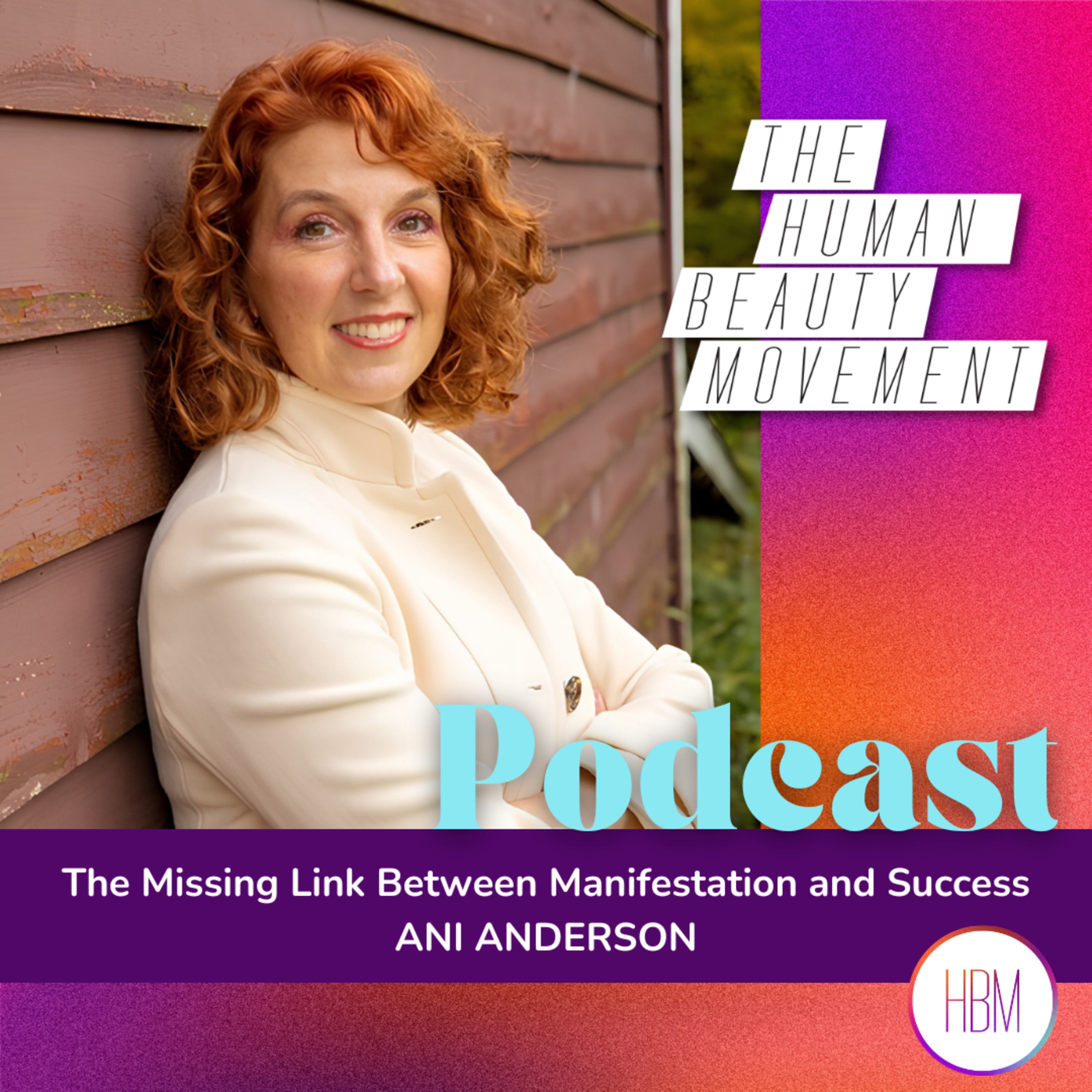


In this episode, we explore how embracing our sensations, emotions, and physical experiences can unlock true purpose, fulfillment, and sustainable success. Ani Anderson shares her expertise in somatic coaching, inviting you to challenge conventional ideas about manifestation, reframe “negative” emotions, and cultivate a deeper relationship with your own body. The conversation ultimately reveals that honoring our natural human feelings, rather than suppressing or judging them, may be the missing foundation for personal transformation and authentic living.
This podcast episode is sponsored by*:
- Humanist Beauty - Beauty for your skin & soul, Humanist Beauty is clean, conscious, and cruelty-free. Shop here → https://humanistbeauty.com
- SupeCaptainBraveMan - Super books for super kids! SuperCaptainBraveMan picture books are sweet stories that help build disability awareness for a kinder, friendlier world. Learn more → https://supercaptainbraveman.com
*The Human Beauty Movement may earn commissions from your support
Ani's Links:
- Website www.somaticcoachingacademy.com
- Instagram https://www.instagram.com/somaticcoachingacademy/
https://www.facebook.com/somaticcoachingacademy
https://www.linkedin.com/company/somaticcoachingacademy
The Human Beauty Movement Links:
- Official Website https://thehumanbeautymovement.com/
- YouTube https://www.youtube.com/@thehumanbeautymovement
- TikTok https://www.tiktok.com/@thehumanbeautymovement
- Instagram https://www.instagram.com/thehumanbeautymovement
- Facebook https://www.facebook.com/thehumanbeautymovement
- Community https://www.facebook.com/groups/thehumanbeautymovement
- LinkedIn https://www.linkedin.com/company/the-human-beauty-movement
- X https://x.com/thehbm_official
- Pinterest https://www.pinterest.com/thehumanbeautymovement
Jennifer Norman Links:
- Lnk.Bio https://lnk.bio/iamjennnorman
- LinkedIn https://www.linkedin.com/in/jennifernorman
- Instagram https://www.instagram.com/iamjennnorman
- TikTok https://www.tiktok.com/@iamjennnorman
- YouTube https://www.youtube.com/@iamjennnorman
- Facebook https://www.facebook.com/iamjennnorman
- Pinterest https://www.pinterest.com/iamjennnorman
- X/Twitter https://twitter.com/iamjennnorman
Thank you for being a Beautiful Human.
Jennifer Norman:
Welcome back to The Human Beauty Movement Podcast, everyone. This is the show that shares life lessons from beautiful humans. Manifestation has become a buzzword in popular culture. So many people struggle to create meaningful change in their lives. Is it because we're doing manifestation wrong? Well, we're going to find out. Maybe, just maybe, we are simply disconnected from the very thing that is trying to guide us. Today's guest believes that our sensations, our emotions and physical experiences hold the keys to purpose, fulfillment, sustainable success and even manifestation itself.
Jennifer Norman:
Joining us today is Ani Anderson. Ani is the CEO of Somatic Coaching Academy and co creator of the Sensation Based Motivation coaching method. A former child performer in New York City, Ani transitioned from the state stage into health and wellness. Today she's built multiple wellness centers and international training institutions and has trained more than 75,000 professionals worldwide. Wow. She's the author of Find Your Soul's Agenda and Manifestation for Dummies and she is widely recognized for her work in somatic coaching, energy medicine, mindset and helping high performing leaders achieve extraordinary results without seeing sacrificing their well being. In this episode we're exploring manifestation, purpose, nervous system regulation, burnout, embodiment, our relationship with anger, sustainable success and why feeling safe in your body may be the missing foundation for everything else you're trying to create. So if you're feeling stuck or exhausted, disconnected from your purpose or or frustrated that your goals seem just out of reach despite your best efforts, this conversation could be a game changer. Let's get into it.
Jennifer Norman:
Welcome to the show, Ani.
Ani Anderson:
Jennifer, thank you so much for having me. I really love your show and I'm really excited to be here.
Jennifer Norman:
I'm so excited to have this conversation because it is going to change lives. I absolutely feel that way. Before we go anywhere, I want to know from you, what do you think is like the biggest takeaway you hope that people listening will walk away with after hearing our conversation together?
Ani Anderson:
I love that you asked me one of the questions that gets asked at the end, at the beginning, so we can just set the whole thing up right. One of the things I hope that people listen for and hear is that nothing is truly negative that's happening. I think it's one of the main blockers when we're developing ourselves certainly in manifestation and everything that happens with us, for us, to us, is happening for a reason and we can use it for our success. When we see things that happen as negative, we block our ability to see how things can be successful. So I hope as people are listening to our Conversation they can hear that.
Jennifer Norman:
Oh, wow, that is really, really compelling. And I know that you're going to show us some techniques and we're going to talk about all of those things that are blocking our ability to what we want in life, to live the lives that we want. So let's dive in. Aside from the fact that we might be thinking negatively, why do you think that people have these big challenges about manifestation? Is it something that they're misunderstanding or is it something that they're just oblivious to? What do you think is some of the other things that people are getting wrong about manifesting?
Ani Anderson:
I think there's a number of things, but one of the things that I think is really going right is that people do want something, something different for their lives. So when people think that they don't know what they want, honestly, that's pretty easily cleared up by seeing what's happening that we don't want in our lives. But sometimes people think that they don't have the desire. If they had the desire, wouldn't it be working out? I don't see it like that. One of the main things that blocks folks who are learning about manifestation, specifically in manifestation texts in books, is that there's always something about emotion in there and how positive emotions. You need to feel positive emotions. This goes back to what I was saying about negativity. Yeah.
Ani Anderson:
People get on themselves when they think, well, my negative thoughts are getting in the way or my negative emotions are getting in the way. And we think that we have to be positive all the time for it to work out. And that's just not true. So emotions are an important ingredient in manifestation, but they can also really get in the way. In our judgment about our emotions and thinking we have to be perfect all the time. It gets in our. Our way as well. I also think that's from a personal standpoint how we approach manifestation.
Ani Anderson:
But also I think we've got to give some credit to a lot of the stuff that's been written about manifestation has been written in a little bit of secret code. And I get it because it's fun to write about the mystical things and like, there's secrets in this book and maybe you'll find them.
Jennifer Norman:
And even ironically called The Secret.
Ani Anderson:
Right. Totally. The Secret. The special people know about it. And all this stuff in Think and Grow Rich. When you read that book in the beginning, it says something like, there's a powerful secret in this book. And after you read it, perhaps you will find it out. And I remember listening to it for maybe my third time on audiobook and thinking to myself, I'm pretty sure at the end they don't say, and by the way, this was the secret. Like, did I, did I figure it out or not? So although the mysticism of it is fun, it can also be really frustrating for people.
Ani Anderson:
So did I decode it? I mean, manifestation in our subconscious and what's going on in our subconscious is hard enough to navigate. So I think that. Well, that's one of the things with our new book Manifestation for Dummies. I hope people find it to be a very practical resource so that they don't feel like they need the decoder ring.
Jennifer Norman:
Yeah, yeah, I love that you started out with this idea of maybe I don't know what I want. And everything seems fuzzy. And then people get down on themselves because they're like, why isn't this clear? I should have it all figured out by, I should know what I want. Especially if you're young or if you're going through midlife crisis, quarter life crisis, whatever it might be these days. It could be at any moment, something happens and you're like, where am I? You have this existential crisis about, I should be farther along, I should, I could, I would. And so we start shooting on ourselves as we say it. And so that gets us into potentially a negativity spiral. And to your point, it's that emotion which even further exacerbates the problem of not being able to get what you want and blocking all of this.
Jennifer Norman:
And then also you mentioned about mysticism and secrets and all of this, and some people just aren't feeling very woo woo. There are definitely different personality types. People might be more logical, need to have things laid out. They need to be, you know, more see, touch, feel, smell here in the five senses. Or there could be others that are very much into the ethereal and the quantum and the astral and have more of a relationship with that. But they too can have blockages in other forms then, you know, and so it can happen to anyone at any time. And I guess the net net message is this is normal, it's okay. And here we are.
Ani Anderson:
Yeah, it's all normal, right? Like humans, we all do things differently. That's one of the things I love about your podcast, is really highlighting the beauty of being human. And we all have the things that interest us most and our desires are different and the ways that we go about things are different. The way that we learn things are different and what it looks like when we're in resistance to change or we're Confused, or do we shut down or do we fight? Like, all of these things are different.
Jennifer Norman:
Right.
Ani Anderson:
And so each of us is going to approach everything differently. And I think when we can have as much curiosity as possible around the process and ourselves, well, it makes the whole process more enjoyable along the way, too, doesn't it?
Jennifer Norman:
It absolutely does. A good sense of humor, that positivity. And to your point, that was one of the things where. And I had read the Secret, Napoleon Hill, Abraham Hicks. I just inhaled Abraham Hicks for years and years and years. And I thought, okay, well, I don't want to do the shadow work. I don't want to do the negativity. I'm going to shy away from that.
Jennifer Norman:
I'm going to, you know, put my head in the sand when it comes to all of that, and then just focus on the positive. And I guess that is good for somebody that really is in a very negative way. And I think that at the time, I was in a very deep depression, and so that sort of thing actually was helpful at that moment in my life. But there came a point where I felt like, this isn't really getting me to that next level. Now. There are different stages to the point of different personalities. There are different phases and stages of life where different messages may not resonate with you. And some do.
Jennifer Norman:
All of a sudden, you might be listening to this podcast and you might hear something that just clicks because you were ready to receive that message. And it may have been given to you by other people in different forms, in different ways, at different times in your life. But all of a sudden it's like, oh, my God, how did I not see? You know, and it just, like the clouds part, everything opens up. And so I love that you have Manifestation for Dummies because it really does make it accessible. It makes it okay to not have it all figured out and to take people through very practically, as you were saying, how this all works.
Ani Anderson:
So, yeah, yeah, the Dummies brand is not meant for Dummies. It's meant for. Wiley does that on purpose because they have, like, an irreverence to their tone in their books, their Dummies books. They're meant for smart people who are beginners. And one of the things that I think is interesting about manifestation, like yourself, I've been doing manifestation, studying manifestation for a very long time, but I would still consider myself a beginner, because beginner's mindset always allows us to learn something, right?
Jennifer Norman:
Absolutely.
Ani Anderson:
I think with any topic topic that's true. Specifically with manifestation. So I Kind of feel like there's a tongue in cheek joke around manifestation for dummies and how they're always, they're for beginners because aren't we always beginners when it comes to manifestation in our learning process?
Jennifer Norman:
And hey, for those of you who also love to listen to Diary of a CEO Steve Bartley. He's so great at this because he's like, please tell this to me, explain this. Like I'm a five year old. And he asks the simple questions that everybody wants to ask but feels maybe too egoic or proud to ask because they're like, oh, I should know this. But he goes in and asks those questions because you may hear something in the answer that takes it in a different direction or explains it so that everything else makes a bit more sense. You can digest it and learn, truly learn like a beginner. And I do embrace that beginner's mindset. I absolutely love that.
Jennifer Norman:
So getting into manifesting, we talked about positivity, potentially framing negativity into lessons.
Ani Anderson:
Right?
Jennifer Norman:
Things that we can learn from. There's never winning and losing. It's winning or learning. I think that's something that we like, we like to say. And then there's more winning and winning afterwards.
Ani Anderson:
Exactly.
Jennifer Norman:
Yeah, yeah. Now a lot of times people try to manifest from their minds and they tend to ignore the emotional side or ignore what they're feeling in your body. Body. And here you are, a somatic coach. First of all, can you explain what a somatic coach is or what somatic means 101 and then talk about why we tend to ignore our bodies?
Ani Anderson:
Yeah, we could talk about that for a really long time, couldn't we? So somatic does mean body. And if you look up somatic or you talk to 20 people who do somatic work, you're going to hear a different flavor about what somatic really does mean in alignment with the kind of work that they do at the Somatic Coaching Academy. We do sensation based work. So you're going to hear me talk a lot about sensations. But somatic really is just about the body. Now the somatic movement is growing tremendously. It's oftentimes associated with therapy. My background is in somatic therapeutics and then I moved into somatic coaching via coaching.
Ani Anderson:
So when you're listening to somatics, somebody talk about somatics, be interested to hear, are they coming from a somatic therapeutic lens or a somatic coaching lens. Maybe that's just me being a nerd about it, but I think it's really interesting to see the difference is there. The other thing about somatics is some people who do somatics put their hands on the body and some people don't. Like, if you're not a licensed professional, like a massage therapist, for example, you might not put your hands on the body. When we train people to be somatic coaches at the Somatic Coaching Academy, we do no hands on because the people we're working with are not licensed to touch. As a person who is licensed to touch, I could do somatic hands on. I don't anymore, but I could. So anyway, those are some of the distinctions I think from a standpoint of, well, first of all, why don't we tap into our body on a more regular basis? I think it really goes back to this idea, the body mind split.
Ani Anderson:
And as humans we do kind of traditionally take so much pride in this big beautiful brain of ours and how it differentiates us from animals. And we don't want to be like animals. We want to be able to control ourselves. We want to be able to make higher level decisions and things. There's so much distinction that's in the body mind split that we don't even hear ourselves talking about it anymore. Like for example, one of the things that comes up all the time when I'm speaking or teaching is people want to know questions about the difference between the mind and the body. And I'll start to open up the conversation to the fact that the body is also the mind. But that's just not how we talk about things, especially in the US and so it takes people a head scratch and kind of like to to start to try on this perspective.
Ani Anderson:
But let's say this. If mind meant intelligence and not brain, if it meant information, if mind means information, then we get information from all kinds of places, don't we? Like we get information from our heart, we get information from our guts, we get information from our intuition, we get information from all kinds of places. I think one of the biggest disconnects in manifestation, well, in a lot of different subjects. But is this idea that the information we get from our intellect or for from our talking mind, the part of us that talks in our head is somehow smarter than the rest? I mean, for you, Jennifer, can you remember a time when maybe you made a decision from your heart space or your gut space and you just had a knowing about it?
Jennifer Norman:
What I would consider the wise ones, right?
Ani Anderson:
And that's the thing about manifestation. Because if we want to manifest things in our life, this idea of knowing and certainty is really important. And it's not just an idea, it's a feeling. We have a saying here. It's what you feel that makes it real. I mean, how do you know that you're certain about something? Because it feels like something. You feel certain. It's not just the voice in your head says, I'm certain.
Ani Anderson:
It feels like something. It's what we feel that makes it real. And so when we really embrace this new idea that we are so intelligent in so many different ways, I mean, it's kind of mind blowing and it does help us harness our power for sure, because then we're able to tap into our complete intelligence as human rather than a partial intelligence. And maybe just what's going on in the intellectual.
Jennifer Norman:
I think that to your point, a lot of us have been trained to override feelings because sometimes people feel that feelings are the lowest common denominator. Like, oh, I don't feel like getting up today or I don't feel like going to the gym. So what if we followed those feelings? Is that really the healthiest thing? And that that is in our best interest. And so we have been trained to cause an override or like a short term suffering for the long term gain. And that's possibly a lot of times we don't trust our feelings or we inhibit them, we push them down, we ignore them because we feel that in order to be a professional, mature, adult, intelligent human being. Oh. We have to be able to withstand and endure really hard things. Things that don't feel so good, but they're going to be in our best interest in the long run.
Ani Anderson:
Yeah.
Jennifer Norman:
How do we coalesce these things?
Ani Anderson:
Oh my gosh. Well, we've been taught that, right? I mean, as soon as kids start to go to school, they're taught to sit still, they're taught to be quiet. And we're taught that to be good means to suppress how we feel. Don't wiggle. But what if I feel like I need to wiggle? You can only go to the bathroom when you raise your hand. You can't eat now. It's not lunch, but I'm hungry. We learn to suppress those things very early.
Ani Anderson:
And we learn as a part of our society, to your point, that that's how you become not just a successful human, but an accept human.
Jennifer Norman:
Yeah.
Ani Anderson:
Is to suppress. One of the things that I, I was smiling so broadly as you were talking about, for example, I don't want to get out of bed to exercise. One of my favorite things to do with clients or to see our students experience in my Work is to encourage them to do something that feels wrong and see if they can enjoy it. Just completely let go into the experience of enjoyment. For example, I get up out of bed and I know I should exercise, but I don't want to. And I would encour a student or a client to the next day, wake up, feel like they don't want to exercise, and don't, and feel what that feels like to be in total acceptance. Is it even possible to be in total acceptance of the fact I don't feel like it? And allow yourself to. To make those feelings of not feeling like it even bigger.
Ani Anderson:
Magnify them, see what happens next, what judgments come up, what stories come up. Maybe there's catharsis that comes up. Maybe you want to just laugh at how amazing that is to feel like, you know, super lazy or whatever. It's one of my favorite experiments to do with clients and students and to watch people go through. Because as we describe that, a lot of times people will just take a step back and be like, wait, what do you mean, do what my body wants to do. We call it empowering the no. So there's something in the body that's saying no, but we're taught to override it. So when we learn to empower our own no, we can be really powerful.
Ani Anderson:
I remember one of the first times I really experienced this for myself, consciously. I was going through a part of my life that was really challenging. I'd gotten divorced. It was very public, lots of judgment, and a very quick turnaround into a new relationship and blending a family. It was really, really hard. I was angry a lot. And I was getting some coaching for myself at the time and therapy. I was doing a little bit of everything to help myself.
Ani Anderson:
And I remember a coach who was probably frustrated with me, trying to help me to not be so angry. And they said something like, would you rather be angry or happy? Like you have a choice, like, what would you rather choose? And I knew what the right answer was. I knew that I should say that I would rather let my anger go. But I didn't want to choose that. I wanted to empower myself to say, no, I'm going to choose being angry right now, because I really am. Like, it's really what's true for me. And so I told them I want to be angry. And it was one of the most empowering decisions of my life.
Ani Anderson:
It was so cool. So we talk about this idea that, like, maybe your body is actually giving you some wise wisdom. It probably is to pay attention to. And what if you listen to it and then go into it? What will happen next? I mean, we don't know until we go into it, but it's been my experience over the years, as we've done this with clients and students, that what happens next is, like, miraculous. What happens is an opening. What happens is more of what they do want in their lives. But again, to your point, they've been suppressing.
Jennifer Norman:
Wow, that is really powerful. Because I think that a lot of times, looking on the outside, it's hard to see somebody that you love angry or sad or frustrated. And a lot of times we want to be like, oh, just cheer up or be happy, or some way to either numb it, forget about it, push it aside, just go for the better feeling. Thought Abraham Hicks loves to say. But going into it, and I have had others say the same thing. So there's gotta be some truth, y'all.
Jennifer Norman:
There's gotta be some truth about going into that feeling, letting yourself feel all the feels.
Ani Anderson:
Yeah.
Jennifer Norman:
And then somehow your body knows how to make it dissipate. It does feel a bit like release, catharsis. Sometimes you just gotta cry. Sometimes you just gotta scream. Sometimes you just gotta have that emotional release, that anger. And in some cases, a lot of therapists will say anger is actually better than depression because at least it's motivating. It's something that's going to get you on fire to do something about something. Potentially.
Jennifer Norman:
There is energy around that. But you really think, okay, let us embrace that anger. Let it. Like, what does that really mean for people who are used to just saying, you know what? I'm polite, Polite society. I am not an angry person. I don't get road rage. I don't. That's not me.
Jennifer Norman:
How should we be in touch and okay with being angry?
Ani Anderson:
So one thing is, don't poke the bear when there's nothing to poke. Like, if you feel angry, I mean, say to yourself, I wonder what it would be like if I let myself experience just a little bit more of this. Just a little bit. Like, go into somewhere safe, like your room where there's a lock on the door of the bathroom or your car for a drive, and allow yourself to experience just a little, a little bit more. If you're experiencing it organically already, there's plenty of people who have suppressed their anger for so long, they do not feel it when that happens. They are projecting it so they will not be happy about the other person who has road rage or the person in their own life. Who seems to be angry a lot or negative a lot. And we're, we've suppressed it so far into our subconscious that it's not okay that we end up attracting other people in our lives that, that have that opportunity for us grow.
Ani Anderson:
And so if I've done plenty of this, by the way, in my, my own life, projecting, I get it, it's a protective mechanism. So if that's what's happening with anger and you're projecting, I, I would encourage you to sit with that for a minute and say something like, what I see in the other must be present in myself. Where is it or what makes me angry about the anger that they're experiencing or something like that, or what is stimulated in me when they're upset. And we'll find our own sensations. The other thing is one of the really tenants about the work that we do at the Somatic Coaching Academy. The sensation based approach is from a stand. We're talking about anger from a standpoint of any emotion. They're constructs.
Ani Anderson:
The emotions that we are experiencing are constructs that we learned just like any other thing that we learned. We learned what anger means or what happiness means or sadness means. We learned the context around what, you know, it looks like when I'm angry, which by the way, Jennifer, might be different than what you learned from your conditioning around that. And so we can get very judgy about emotions and what emotions we're feeling and why and all that stuff. So one of the key things people can do, no matter what it is that they're experiencing emotionally, is to cue in with the sensations that they're feeling and really connect with their body and ask themselves, where am I feeling something and what does it feel like? So, for example, if I'm in a relationship and I'm getting really frustrated and I want to help myself to free myself from whatever confines I'm under the spell as well. I would think where in my body do I feel something and what does it feel like? Rather than how can I express my anger better? And so let's say that I felt in my chest, I felt heat, and so I would allow myself a minute to feel that heat in my chest. For some situations it will dissipate. It's not going to be around a whole long time.
Ani Anderson:
For other situations, the sensations get stuck. So if we sit with them, they don't really go away. They're actually continually reproduced. We keep reproducing them and if that's happening, it's because we have patterns again of conditioning that We've learned that are stuck in our subconscious, in our bodies, and we can unravel those with work. But it's the sensations that actually help us to deconstruct the box that we're in around the emotional constructs. That experiencing that is so interesting.
Jennifer Norman:
I think since Bessel van der Kolk and The Body Keeps The Score, it seems like there has been this real interest in getting more in touch with the body. And I love how that is described as, like, where in your body do you feel it? Is there a heat? Hot, cold? Is there tension? Is there constriction? Is there like a sour feeling? Is it like. Try to put as many words around that feeling as you can and go into it and discover it and let your curiosity take you there and know what that is. What is somebody supposed to do after that? Is there any guidance for. Okay, I feel this. It doesn't feel good. Now what.
Ani Anderson:
What do I do?
Jennifer Norman:
Just sit with. Yeah, what's going on?
Ani Anderson:
Yeah. I know that it's a popular advice to sit with difficult emotions, and I know how hard that is, and I know how hard frustrating that can be, especially when they feel stuck. So one of the things that. That I tell people is really, do see if it's stuck, because if you sit with something for a minute or two and it's not passing, it really is because there's some kind of pattern going on in your nervous system. So as much as I would love to give people, like, hot tips and easy takeaways, that's really a safe. A sign that if you get some more help with it, that you'll be able to deconstruct that pattern and do something. I know that we like to do as much do it yourself as possible, but that really is a sign that you should get some help. And the reason I say that too, is because if we try to deconstruct our subconscious conditioning by ourselves, it's really hard, and it takes a really long time, and it's very frustrating.
Ani Anderson:
And the frustrating parts of it can help to drive those patterns into our subconscious more deeply. So getting some help with it will allow us to unlock our subconscious and move forward and move into something new more quickly, actually less expensively and all of that stuff.
Ani Anderson:
But the idea is sit with it and see if it passes, because an emotion actually is supposed to pass. If it doesn't pass, it means that our nervous system is recreating it. It's actually in a habit pattern that we're used to, and so we need to disconnect it somehow. Yeah, sometimes people can do that with, like, reframes and things like that. Actually, I'll tell you about a somatic reframe so people know more about intellectual reframes. Reframe from an intellectual perspective would be like thinking different about a situation, and then maybe if I think different about the situation, I'll feel differently and off I go, which is fantastic. Intellectual reframes work. Sometimes if they don't try a somatic reframe, we call this negative pattern disruption.
Ani Anderson:
So what you do is you get up, feel your feet on the floor, and you do a shake and a wiggle and really, like Taylor Swift, you know, shake, shake it off kind of thing.
Ani Anderson:
And really, really shake your body around again. If you're feeling something that's hard and the emotion passes, great, you just did a somatic reframe and you allowed it to pass on through. Maybe you'll have intellectual epiphany. Oh, I should do this or that. Or that's what this or that means. That's great. If that happens, it's not the goal, but maybe it'll happen otherwise. Maybe you'll just let it go and it'll pass.
Ani Anderson:
That's awesome. But anytime emotions are stuck, it means there's patterns that play in our subconscious. And our subconscious mind is such a large piece of our body mind. It's like most of our mind power. Right. So, yeah, so that's if they're really stuck, that's time to get help.
Jennifer Norman:
Ooh, thank you for that. I often know that people try to look at podcasts and listen to them because they want to get those quick fixes. But in reality, healing is. It's a very personal journey, and it is something where. Yeah. If there are these loops that you keep. You keep reliving these emotions that keep resurfacing, these moments where something will trigger you at any given time at any given place.
Jennifer Norman:
Yeah. There's something there that can be looked into a bit further and seeking some guidance. Professional help is really the best choice to make, I think, in those moments, because that it does show that perhaps you can't do it on your own, and you're not expected to do it on your own.
Ani Anderson:
Right. Maybe we're not supposed to, you know. Yeah. And there's tons of professionals that do this kind of work nowadays. There's coaches and there's therapists, and you can find people that match you and help you with what you want to do.
Jennifer Norman:
Yeah.
Ani Anderson:
For so many people, I hear so often getting over that hump of asking for help so hard for people, and there's vulnerability and potential humiliation or embarrassment about what we're experiencing, and maybe that we've experienced it over and over and over again.
Jennifer Norman:
Yeah. I have to tell you a really interesting story that just happened to me, like, probably two days ago. I. Yesterday, I just got back from a vacation, and I was in Paris for a couple weeks. And while I was there, the whole thing was absolutely incredible. I mean, it was like a dream come true. And I was there with my boyfriend, and he surprised me with tickets to a theater.
Jennifer Norman:
And he's like, I'm not gonna tell you what it is. Where the theater is, what you know what it is. It's just gonna be a surprise. And I was like, oh, my God, this is so romantic. How nice. And we get there, and the funniest thing. And here I am thinking, I've done all this healing work. I've done all the things, you know, I am totally...
Jennifer Norman:
I see the name of the theater, and it was named after this actress. I think it's Sarah Bernhardt, if I'm not mistaken, who was a dramatic theater actress. And all of a sudden, I was taken back to this time when I was a little girl, because I would cry a lot when I was young, and my mom, as a way to, like, teach me a lesson or like, to just, like, do away, she would call me that name. She would say, stop being Sarah Bernhardt. And it was something that she would say to me all the time when I cried. And so it hurt my feelings. Not like I really knew who the heck this was, but it was something where I felt that the emotion of discarding and making fun or calling me this dismissive name, all of a sudden, it brought me back.
Jennifer Norman:
I see the name of the theater, and my heart just soured up, tensed up, constricted. And when we went into the theater, he's like, what's wrong? Yeah. And I'm like, I'm so happy to be here. And I want to just tell you that. Do you know who this actress is, who this name is? And he told me, and I said, yeah, it's associated with this name that's not so pleasant. He's like, I'm so sorry. I was like, you would never know that. You would never know.
Jennifer Norman:
But the funny thing is that we watched the show, and it was horrible.
Ani Anderson:
Get out of here. And out of that.
Jennifer Norman:
It was ridiculous. It was terrible. Like, it was almost, like, laughably bad. And then at the end of It. I was like, it's really interesting now I have this real ridiculous, hilarious association with that dramatic name that all of a sudden feels like catharsis. And he was mortified because he was like, that was such a mistake. I shouldn't have taken you there. It was a terrible show.
Jennifer Norman:
I was like, you have no idea how healing that was.
Ani Anderson:
Right?
Jennifer Norman:
And I'm like, you would never know. You would not know to take me to this theater. You would not know what you just did. You would not know that this was going to be the worst, you know, one of the worst shows of our lives. But.
Ani Anderson:
But we laughed.
Jennifer Norman:
I mean, afterwards, it was hysterical. Like the ridiculousness of the feeling, the associations that were built and the drama of it all, and the interplay. And I was like, you know what? I just feel like my soul has been healed.
Ani Anderson:
Oh my gosh.
Jennifer Norman:
And then I just all of a sudden had like this warm, hilarious kind of feeling in my heart. And I was like, that has been in there, buried in there for like 50 years. You know, it's been there for a really long time. And for it to suddenly be released like that, I was like, this is just it, really. Sometimes things like that just happen. So pay attention to it. Yeah.
Jennifer Norman:
Yeah. I wanted to tell that because thinking about somatics and that it was just. It just happened. So it's just, you know, something that happened to me. But it's. It's an invitation for our listeners to think about things and perhaps it is a reframe. To me, that was a complete emotional reframe.
Jennifer Norman:
You know, oddly that happens and I was able to somehow have. And it was. It was subconscious. But then all of a sudden I allowed my. I think somehow my conscious became...
Ani Anderson:
Yes.
Jennifer Norman:
You know, noticed it and was aware of it and it was okay. I realized I don't feel this pain in my heart anymore. I don't feel this insult, this associated with this name anymore. Actually, it's hilarious. It's actually funny.
Ani Anderson:
It's so good. Especially since it was a surprise. Your system doesn't have time to really react to trying to figure the whole thing out. So your system experienced the feelings of, oh my gosh, this name. But then you had the reframe the somatic body, reframe the feeling reframe around it. And now you're never gonna be unpair that unless something else happened. Of course.
Ani Anderson:
That would be ridiculous. But so now you have these experiences paired. And your soma, your body, your subconscious has these experiences paired. It's such a giant gift, and it brings you to completion. So one of the... I mean, one of the biggest reasons why patterns get stuck in our bodies is because they're not completed.
Jennifer Norman:
Yeah.
Ani Anderson:
As children, we have things like that. And by the way, I was called that same name, Sarah Bernhardt, when I would cry when I was little. Okay, so it wasn't just your mom. They must have been listening to the same radio station. I don't know. It was on Phil Donahue or something.
Ani Anderson:
Okay, so those patterns get stuck, but we're kids, and we can't make sense of the whole thing. We can't understand not only where. Who is that? Where is it coming from? Why am I being called that name? And we can't understand the experience that the other person's having during that whole episode. I mean, that happens when we're adults, too, but without completion and the whole story around things, we can't bring resolve in our body. And so things get stuck on repeat. So what a gift. And how cool it was that it was a surprise because your subconscious didn't even get the time to go through all of the processing around it.
Ani Anderson:
It just got paired with something new. And now you'll have that new experience. It's really a neat story.
Jennifer Norman:
Yeah. And it was a gift because there are things in our backgrounds which really cause some sort of shame. And sometimes it's, to your point, when you're a kid, it's hard to articulate. It's hard to have words for it, but you just feel bad.
Jennifer Norman:
And sometimes you don't even know in your body how you feel bad. But it's just like that. You just globally feel not good. And so, you know, as adults, we can perhaps partition and create more intricacies around those feelings. And, you know, a journal is always a nice thing to do. And maybe we can sit with ourselves and then also have somebody like a professional coach, a therapist, a healer sit with you and really help to kind of tease out these emotions and really work through them in that way. But I think that the big word shame is such a big... It's such a huge deal.
Jennifer Norman:
Yeah, of how we feel about ourselves, feeling bad about ourselves, not feeling worthy. And you tend to say that you don't like this phrase, own your worth. And I was.... That really caught my attention, and I was really curious if you could explain that a little bit more about why. Why that's not such a great thing for us to think about is like, are we worthy? Should I own it? Should I remember who I am? You know, what is it about those things and trying to overcome shame that might not be the. The best?
Ani Anderson:
Yeah, good question. Yeah, it's a bugaboo of mine.
Jennifer Norman:
Own our worth.
Ani Anderson:
Because for some people, it works. But for some people, they have a really hard time overcoming that idea because to your point, they really are so shamebound internally. Somehow they know they're certain in a way that they're not even conscious of, that they're a shameful being, that they should be ashamed, and they don't even know why. And shame is a part of how we condition humans, meaning how we condition kids especially. I think, in our generation. You know, parents these days are getting a little bit better about those kinds of things. But shame was used with so many people to help to condition behavior. And as children, we're always trying to buy our safety because we're dependent on our grownups to survive.
Ani Anderson:
So our subconscious will accept shame as a way to stay safe. And then it goes in. In us so deep, we don't even know it's operating. So for. For folks who really do have shame binding in their subconscious, if they hear own their worth and they can't get on board and they can't like, do it, all of a sudden, it reconfirms that they're wrong or they're doing something wrong, or they're just not worthy of love or wealth or attention or whatever. It reconfirms the subconscious story about shame. So it's not my favorite approach. I do love to encourage people when they've heard that thing about owning their worth and they haven't been able to do it, that of course they haven't been able to do it because that's totally normal.
Ani Anderson:
And as soon as people can recognize that they're normal, they can start to let go of some of the shame binding and talk about why it might be that that's been hard for them. And then off they go. But again, we need to get these things out. We're suppressing so much to be accepted, to be normal, to be beautiful, to be successful. Whatever it is that we think is going to help us to live the life that we want, and it gets messy in there. So to. To be able to let those guards down and be able to say whatever you're experiencing in your mind, in your body is normal, allows us then to open the door for a different experience.
Jennifer Norman:
That is so intriguing. A lot of us have been conditioned because being part of a social network of being part of the tribe. It's part and parcel to survival. It's how we have been able to keep ourselves protected. It's fitting in is, i.e., better than standing out or being one out because you might be ejected from the tribe? So I think there is this thought, how in this day and age, then if this is what I'm intended internally to do or to...
Jennifer Norman:
How to behave in order to be accepted, to have approval and to survive, frankly, from a social or just a... Even a physical standpoint, how is that reconciled with who I truly am? How... How do I even distinguish that? How do I know? Do we... Is this something that we find or is it something that we uncover? It seems, seems so hard for us to tease this all out. What do you think?
Ani Anderson:
I think it comes down to sensations. I mean, that's the experience that I've had in, in my professional life and this is what I mean. If we're talking about the sensations that a person is experiencing in any moment, the heat in the chest, the tingles in the belly or the butterflies or the tension in the shoulders, we're talking about the base level experience of a person's physiology and we're taking out the storylines that get us really, really wrapped up. So when we're talking about emotions, we have the sensations as a part of that, but we also have all of these narratives and stories. And by the way, they're not just ours, they're our parents and our parents, parents and societies and the marketing we grew up with and all of these stories that are part of the whole thing and it makes it, it very complicated, dare I might say, impossible to unravel. But how do we really live a human authentic experience? We're also not afraid that if I show up that I'm not going to be rejected by others. I think a huge part of it is sensations, because if I am feeling in my body that I am unacceptable and I feel that as a tension in my solar plexus, well, anytime I go feel it, I go out in the world and I know to talk the language of sensations and I can identify myself and say I have attention in my solar plexus. That means nothing about who I am, what you think of me, what I'm wearing, the situation, whatever. It just means that I have tension in my solar plexus.
Ani Anderson:
And by the way, this is an experience that has happened for me a number of times and I've experienced it over and over and when I experience it, I breathe into it and I work on releasing it, but also it might come up again. It takes a lot of the complexity of trying to figure out intellectually what's wrong with us because there is nothing wrong with us. Our physiology is meant to give us signs and signals. It's meant to learn so that we can have patterns, so that it can be very efficient. That's how our body works, works. And so when we tap in with our physiology we're able to have a different experience of life.
Ani Anderson:
We also love to pair the somatic teaching with the natural laws of the universe, which different people will teach them different ways. We have a certain way we do it here just so there's common language at the Somatic Coaching Academy. But different, different books you read will have information about the natural laws. Abraham Hicks they talk about the natural laws. They'll talk about it in a different way than like Napoleon Hill will. But he's still talking about natural laws. Understanding ourselves as a part of the natural laws.
Ani Anderson:
My experience has been that it puts us in relationship with nature and the creative force that has created the world. So that rather than ask am I normal? Will Jennifer think that I'm normal? Will the listeners think that I'm normal and accept me? Rather we can put ourselves in relationship with nature and think I'm natural. Jennifer's natural. The listeners are natural. And each of us expresses that naturalness in different ways. We can start to let go some of that myth of if I'm normal, I'll be accepted and see ourselves more as a, a part of nature.
Jennifer Norman:
Wow. I love that instead of normal, it's think of natural. That's a really beautiful reframe.
Ani Anderson:
Thanks. It works for me.
Jennifer Norman:
Yeah, no, I'm gonna start practicing that for myself as well. I think that is a really, really wonderful idea. Because nature and what is natural. Yeah, there's so many, there's so many different forms. It's not exactly, you know, one size fits all. At all. At all.
Ani Anderson:
Not at all even, you know, if we're talking about the difference between flowers and trees, well, obviously there's a difference there. But what if we're talking about flowers? There's so many different kinds of flowers.
Jennifer Norman:
Right.
Ani Anderson:
We're like that as humans. I think not only does it help that perspective not only helps me to have a really much better self identity, it really helps me to connect and, and be a part of life with other people in a very different way. Because I'm kind of interested in what kind of flower they are rather than trying to judge whether or not they belong or I belong with them or do we fit or any of that stuff. A daisy and a rose can be in the same garden. It's not like somebody's looking and saying, why are they both there?
Jennifer Norman:
Precisely. Precisely. You might be a daisy, you might be a rose, you might be a hyacinth or.
Ani Anderson:
Exactly.
Jennifer Norman:
Yeah. You might be, you know, lavender. And all of it deserves a place. And all of it makes the garden more beautiful.
Ani Anderson:
Yeah.
Jennifer Norman:
They're so special. I know that we are coming to a close and I want to. Before we wrap up, Ani, I always ask my guests these common questions, and the first one for you is, what makes you beautiful?
Ani Anderson:
When I was a kid, I was in the performing arts and I was really highly valued for my physical appearance. And it didn't occur to me until I reached middle aged and I started to see some effects of aging, how much that impacted me, because 20 years ago, I would have thought to answer that question from a standpoint of my appearance. But what I've really discovered is that what. What makes me beautiful is being honest about the experience that I'm having on the inside and talking about it with other people and relating. Like when you tell me a story to be able to relate based on what's going on with me. So it's this honesty, this genuineness. And I think that's what really makes me beautiful.
Ani Anderson:
I won't say that what makes me beautiful is that I'm beautiful on the inside all the time. But when you see that even how we conceptualize what's ugly in us defines what we think is beautiful, we can see that somehow it all really has value. So that I think that's what makes me beautiful.
Jennifer Norman:
What a fantastic answer. Thank you so much. My next question is, what do you think that it means to be human?
Ani Anderson:
I do think it has a lot about feeling. I think it has a lot to do with feeling as humans. But we also do have these big beautiful brains that can make meaning around what we're feeling.
Jennifer Norman:
Love it.
Ani Anderson:
I think that's what makes us human is the feeling and the intellect combined. I think the human potential is about being able to make even better meaning about the feelings that we experience.
Jennifer Norman:
Oh, so much to learn, so much to know, so much...
Ani Anderson:
Yeah.
Jennifer Norman:
To discover. And my final question, what is one truth that you live by?
Ani Anderson:
Well, I think the truth that I live by is the truth of the natural laws. I practice living by the natural laws. I couldn't pick out one, so I'm going to just pick them all as one thing. Jennifer living by the natural laws I feel like for me is truth that I can lean into. It's truth that I can learn from all the time and make sense of my life. And so I live the laws, I teach the laws. By teaching the laws, I'm able to live the laws even better every day.
Ani Anderson:
So I'd say that's my truth is the laws of the universe.
Jennifer Norman:
The laws of the universe. Ani I appreciate this conversation so much because I really feel that it does take a new approach and a deeper understanding of the body as is associated with manifesting and blockages and what might be holding us back, these habit patterns that we might be getting into and thinking about the different ways that we might be able to approach our lives and flowing so much more freely. Manifestation doesn't mean wishful thinking. It's not not positive thinking all the time. It's not forcing outcomes. It's more of a relationship with our bodies, our emotions, our purpose, and ultimately that relationship with ourselves. So those who are listening, I know that all of us are navigating modern life and simply the challenges of being human. And so this feels especially meaningful for so many because I don't think that this transformation happens by doing more.
Jennifer Norman:
It really might be more about listening more deeply to that wisdom that has been within us all along. So I really appreciate it. Ani, thank you so much.
Ani Anderson:
That is beautifully said. Jennifer.
Jennifer Norman:
Thank you. Oh if anybody would like to learn more about Ani Anderson and her work, please visit Somatic Coaching Academy. That's somaticcoachingacademy.com. If this resonated with you, please subscribe to this episode, share it with somebody who you think might be interested in it, and please help us to continue spreading love, wisdom and well being throughout the world. Until next time, I'm Jennifer Norman and this is The Human Beauty Movement Podcast. I'll see you in the next episode.
Jennifer Norman:
Thank you for listening to The Human Beauty Movement Podcast. Be sure to follow, rate and review us wherever you stream podcasts. The Human Beauty Movement is a community based platform that cultivates the beauty of humankind. Check out our workshops, find us on social media and share our inspiration with all the beautiful humans in your life. Learn more at thehumanbeautymovement.com. Thank you so much for being a beautiful human.


