
How to Heal Your Nervous System & Break Toxic Relationship Patterns | Nima Rahmany, Ep 222
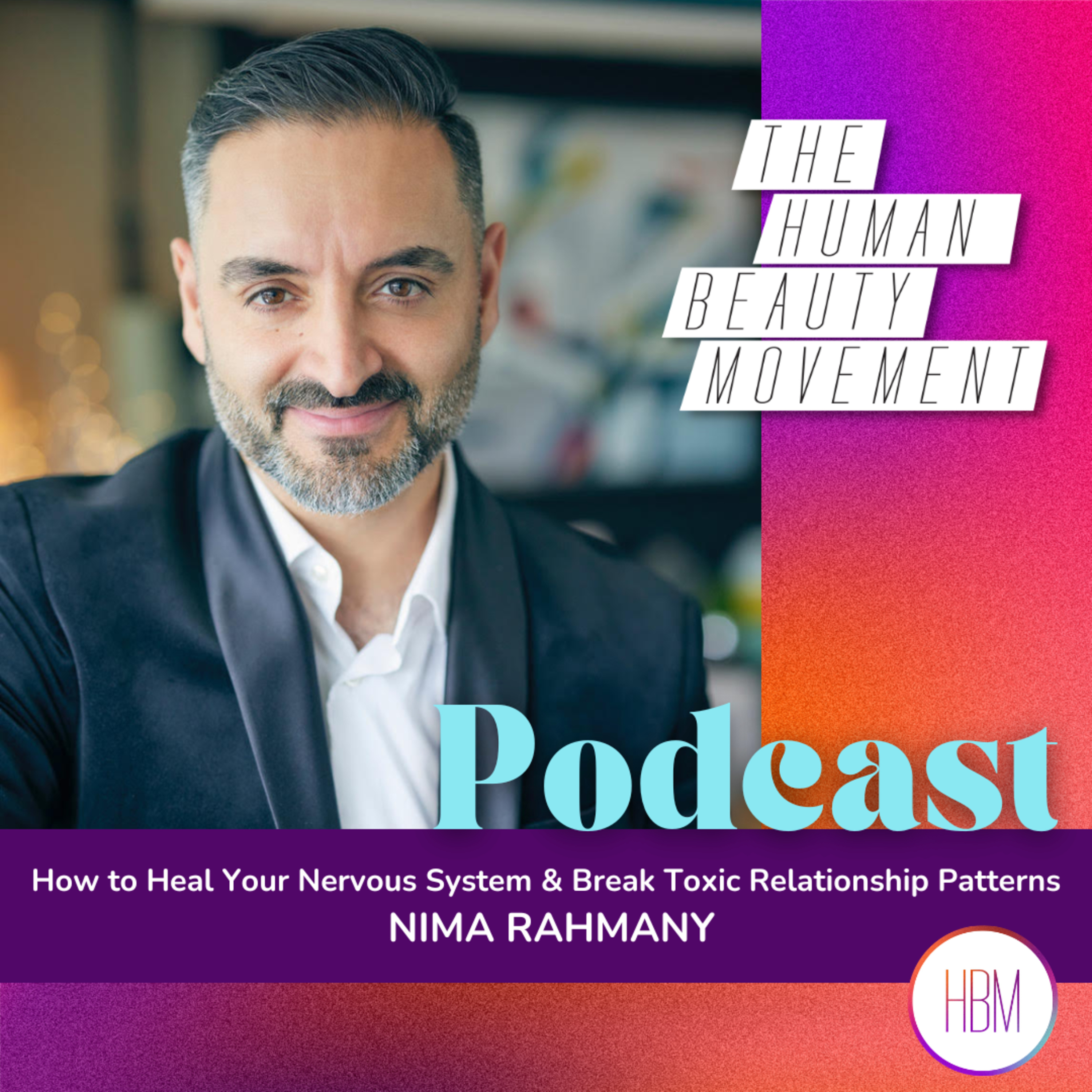


Nima Rahmany joins the show to share transformative insights on healing relationship wounds by moving beyond cognitive self-help and embracing somatic and nervous system work for deep emotional growth. He helps guide us through the pitfalls of perfectionist “healing” and invites us to expand our capacity for grief, self-trust, and authentic connection as part of breaking generational cycles.
Take the attachment style assessment! https://becometriggerproof.com/attachment-style-assessment/
This podcast episode is sponsored by*:
- Humanist Beauty - Beauty for your skin & soul, Humanist Beauty is clean, conscious, and cruelty-free. Shop here → https://humanistbeauty.com
- SupeCaptainBraveMan - Super books for super kids! SuperCaptainBraveMan picture books are sweet stories that help build disability awareness for a kinder, friendlier world. Learn more → https://supercaptainbraveman.com
*The Human Beauty Movement may earn commissions from your support
Nima's Links:
- Website https://becometriggerproof.com/
- Facebook https://www.facebook.com/nimarahmanyofficial
- Instagram https://www.instagram.com/nimarahmanyofficial
- Tiktok https://www.tiktok.com/@nimarahmanyofficial
- Youtube https://www.youtube.com/user/chironimz
- Trigger Proof Transmissions Podcast https://open.spotify.com/show/3usiig7I7enQKI8zd5TgzT
The Human Beauty Movement Links:
- Official Website https://thehumanbeautymovement.com/
- YouTube https://www.youtube.com/@thehumanbeautymovement
- TikTok https://www.tiktok.com/@thehumanbeautymovement
- Instagram https://www.instagram.com/thehumanbeautymovement
- Facebook https://www.facebook.com/thehumanbeautymovement
- Community https://www.facebook.com/groups/thehumanbeautymovement
- LinkedIn https://www.linkedin.com/company/the-human-beauty-movement
- X https://x.com/thehbm_official
- Pinterest https://www.pinterest.com/thehumanbeautymovement
Jennifer Norman Links:
- Lnk.Bio https://lnk.bio/iamjennnorman
- LinkedIn https://www.linkedin.com/in/jennifernorman
- Instagram https://www.instagram.com/iamjennnorman
- TikTok https://www.tiktok.com/@iamjennnorman
- YouTube https://www.youtube.com/@iamjennnorman
- Facebook https://www.facebook.com/iamjennnorman
- Pinterest https://www.pinterest.com/iamjennnorman
- X/Twitter https://twitter.com/iamjennnorman
Thank you for being a Beautiful Human.
Jennifer Norman:
Why do so many people spend years in therapy, reading every self help book, listening to every podcast and still feel stuck repeating the same painful patterns? My guest today believes it's because understanding your story isn't the same as healing it. Nima Rahmany is a nervous system and attachment specialist who helps high performing individuals, couples and families heal relationship wounds so they can become trigger proof in love, leadership and connection. A former chiropractor, Nima now combines neuroscience, polyvagal theory, somatic healing, shadow integration and transformational coaching to help people interrupt unconscious relational patterns and build emotionally safe, authentic relationships. This conversation is going to be so rich. We're exploring betrayal, trauma, people pleasing, emotional safety, nervous system regulation, breaking generational cycles, and why healing isn't about becoming someone new, it's about becoming safe enough to be your best self. So if you're navigating heartbreak, burnout, family issues, or simply trying to build healthier relationships overall, then this episode could be your gateway to healing. Let's begin. Hi Nima. Welcome to The Human Beauty Movement Podcast.
Nima Rahmany:
It is fantastic to be here, my dear. I am really looking forward to this conversation.
Jennifer Norman:
Wow. You have so much depth in your work and so I want to begin with healing. You've been doing this for a while. So what do you think is the biggest misconception that people have about healing?
Nima Rahmany:
Wow. We start off with the PhD level type of question. What is the biggest misconception that people have with healing? The biggest misconception is that the word. What I've noticed is that, oh, I want to be healed. The word healed as the, the past tense. Healed as in something that I kind of complete, I finish and I'm done with it.
Jennifer Norman:
Like an end point.
Nima Rahmany:
Yeah. Whereas healing is more of a kind of like an emergence. It's like healing is learning and learning is forgetting. So it's really rewiring new options, rewiring new choices than the default mode, programmin and conditioning that we were kind of like programmed and conditioned into and that we react from when we're carrying all of these unhealed wounds within us. So it's really first the step is going from unconscious to conscious because you don't know what you don't know. And then you discover, oh my gosh, this is the way that I'm reacting to somebody not texting me back. Wow, this anxious attachment, this need, this preoccupation with trying to chase after somebody or putting walls up and running away because I'm afraid of being hurt or being rejected. So I do the rejecting first.
Nima Rahmany:
These things we don't know. Like, you don't know what needs to be healed because you're not consciously aware of it. Like, if you hurt yourself, you're walking around with a sprained ankle or a back injury, you can feel it when you're walking around. Most of the time, these woundings that we are wanting to heal from, we're not even aware that they're there. So it's in relational dynamics themselves that they get activated and exposed from unconscious to conscious, so that from that point we can discover, oh, that is what requires healing. And so the thing is, when you heal that and you're no longer preoccupied and pushy when it comes to someone not texting you back, that part gets healed. And then two weeks later, you discover, oh, crap, there's another new thing that I haven't addressed and new piece that needs to get healed. And then we'll get frustrated and go, God, I thought I was healed by then.
Nima Rahmany:
So the misconception is that this is, there's a finish line, there's an end point, and there's never an end point. We have to have the willingness to work with whatever arises. And that's why the concept of, instead of trying to be healed, let's aim something else towards becoming trigger proof. Not trigger less, but willing to work with what's there and find our center when we do disconnect from being activated.
Jennifer Norman:
Oh, my gosh, this brings up so many questions right off the bat. I am really intrigued by what you just said, because you're right. I think a lot of people are like, oh, my God, I thought that I was over with this, and so I must still have worked.
Nima Rahmany:
I thought I did the work.
Jennifer Norman:
I thought I did the work. I've been in therapy for 15 years. I've read all these things. I'm into personal development. And you yourself, I mean, I know that your story, you've been in personal development, but you still found that you had triggers. There were still things that happened. And so no matter how much work you do, unless you really get to that root that is in that unconscious place and really excavate that out and let it see the sunlight, then these patterns may continue to live on in your life over and over again.
Nima Rahmany:
Yeah, you don't know that they're there. You can claim to have done all the healing work. I did the work, and I got to a really great place. I had left my chiropractic practice. I was in this relationship. I didn't know what a trauma bond was. I didn't know or understand what codependency was. And yet, as I'm out there teaching people how to overcome their past in a workshop, me, myself, I'm living in this relational dynamic which we were triggering one another.
Nima Rahmany:
And it became super duper toxic and volatile. And to the point where on March 11, 2018, after helping about 20 people in a workshop who flew from all over, over the world to help them re pattern and change their perspective of their past challenges so that they can move forward, that night I get into an argument that lasted five hours and I end up getting to this place where I actually slap my ex. And that was my wake up calling going, okay, what the heck? I thought, like, I'm teaching this stuff. How is it that I could show up in such a way that's so reactive? And that's when I realized I was using personal development as a means of avoiding these parts of myself, that I was teaching one thing, but I was embodying something totally different. And that's when I realized that most personal development is cognitive. It's reframing stories up here, but we don't actually address the pain that we're carrying in our hearts and learning how to alchemize it. And that's when I discovered somatics, breath work, polyvagal theory, and attachment work. And then I went to work and integrated these and shadow work, by the way.
Nima Rahmany:
And so that's when I realized that if you don't address the body, then it's all just a bunch of cognitive bypass.
Jennifer Norman:
Interesting. Let's talk a little bit more about that because I have actually come across quite a few individuals who I would say, yeah, they're probably going into personal development or into becoming, quote, unquote, I'll put it in air quotes, healers. But they really are trying to heal something within themselves. And you don't necessarily know if they're really getting to it, by the way that their lives are going. And so, yeah, why is that? Why is it that the mind and the body can be disassociated from each other, but that now it seems like we're becoming so much more aware of what wisdom the body holds and how we can essentially learn so much more, discover so much more about ourselves and what really rests with like deep within our nervous system, why those cause these triggers and why we try to rationalize things away, but they don't necessarily get to the that healing journey that we're hoping for. Can you tell us a little bit more about that then? All about, I mean, gosh, you mentioned polyvagal, shadow work... I mean so many different things. But can you take us just, maybe just very top level about....Okay, since we're a society that loves to like think about things so much and we ruminate and we pontificate and we try to make meaning out of things and sense out of things, but that's only part of the story.
Jennifer Norman:
What really might be more true is the embodiment of it. Can you speak to that a bit?
Nima Rahmany:
Sure, absolutely. What happens is as children we go through an incredible. These experiences that we experience. There's traumas, there's neglect, there's abuse. There is even something simple as parents being disconnected and dissociated just because of their own nervous systems. And literally being dissociated, disconnected. Let's say they have alcohol or there's conflict happening. This nervous system of the child starts to get activated.
Nima Rahmany:
And in an ideal world we will have parents that will. And a child does not know how to regulate their nervous system. As children we have to learn and we need another nervous system to help us regulate. But most of our parents growing up didn't really know that. Right. So when we get activated and we react, unless the parent is very hyper attuned. Very attuned and is able to be that safe container so that the child's emotions can get discharged and then kind of like the activation cycle can go from high activation and then get complete. If we don't have ruptures or arguments that are completed and repaired, the activation in the nervous system stays charged up and activated and the child doesn't know what to do.
Nima Rahmany:
So to protect themselves, they escape up into their minds. We go into thinking, we go into fantasy, we go into imagining a future where we all of our needs are met. We go into devices. So everything that we're doing is to try to avoid the emotional pain that comes up. And it's located in our bodies. As we get older and in our teenage years and we are told don't cry or I'll give you something to cry about or crying is weak. We then develop this relational dynamic with our own emotions where we learn to cope by dissociating, disconnecting. And we escape up into our mind and we start to think to try to come up with solutions to this feeling is.
Nima Rahmany:
Or we strategize. Who do I have to become? I can be the helper to try to find control in this chaos. I'm going to then be the surrogate kind of parent, the adult and try to take care of Everybody's needs. And one of my clients, she was 5 years old and her parents sat them down and said, you mom and I are going to get a divorce. And they basically were like, oh my gosh, they're sitting there. And then the parents left. And then they come back and they said, okay, we're going to keep trying. But they never talked about it.
Nima Rahmany:
They never completed. So for the remaining like 10, 15 years of being at home, literally she was in this fight or flight of like, okay, I have to be perfect. I have to make sure everyone's happy so that mom and dad don't leave. So what happens is that pain, what we do is we learn to dissociate from it. We go into our minds and we go and we orient to everybody else around us and we start to over function and people, please and start to put on a role or a mask or the helper or be perfect or be, in my case, try to be the therapist to your parents. And we leave our bodies and we take on these roles to try to come up with solutions for this pain, for the pain of uncertainty. So as we get older, if we didn't have training on embodiment, we then you. We still have this pain, this emotional pain that works out like anxiety, like an alarm in the nervous system.
Nima Rahmany:
So we try to think our way out of it with talk therapy. We tell our stories, we tell our story, or we try to shift the story through personal development and say, oh, because that happened, it means that I'm not good enough. And then I can say, well, was that true that I wasn't good enough? Or was it our parents that just were going through it and you're like, you know, you know what? You're right. It doesn't mean that I wasn't good enough. The story is not true. So now I cognitively tell myself that the story is not true. And I get a little bit of a temporary relief from that cognitive reframing. The problem is there's a child in my nervous system, in my body, that's still in the unconscious, below the level of consciousness, that still reacts as though it's true.
Nima Rahmany:
And to tell myself that it's not true is a covert form of gaslighting myself is a way of just denying or further shaming and repressing this childlike part of me that's in an incredible amount of pain that feels that they truly don't believe you when you say you are. It's not true that you're not good enough. So embodiment. And by the way, those people start to teach personal development like I did, because why do I teach it? Because I needed it. And so I start to get this relief, temporary relief, and go, wow, it isn't true that I'm not good enough. I have an insight, right, that makes sense to my cognition, but the embodiment, I still, I can have the insight that believes that I am good enough. But in my case, my behavior and my go, go, go mentality and my inability to stop and rest and my need to go and push more and make more and get more validation from women, get more money, get more accolades, get more performances and speeches and validation and likes and money and followers and whatever. It's a never end.
Nima Rahmany:
My behavior, even though I cognitively know that I'm good enough, my embodiment still reacts in my unconscious like I still have something to prove. So that was me. And so as my had my breakdown where the police were involved and I had to look and see how I became successful, and this Dr. Nima character that I was was all kind of like this covert strategy to run away from these parts of me that never felt like I was enough. I then realized that I hadn't embodied what I was teaching. And so that's when I stopped doing all sorts of cognitive methodologies and I started to learn how to feel. Instead of trying to feel better with personal development, I got better at feeling shitty, which sounds very counterintuitive.
Jennifer Norman:
I love how you just expressed that. I've never heard that before. That is really, really profound. And so many successful people, they're continually getting positive reinforcement. Oh, my God, you're amazing. Look what you've achieved. Look at all the things you've done. You're such a great helper.
Jennifer Norman:
You're so loving, you care so much about other people. You're so selfless. All of these things almost reinforce all of those things that may have necessarily potentially harmed us and continue to make us feel, I guess it's unconsciously bad about ourselves.
Nima Rahmany:
But, well, martyrdom. Martyrdom is rewarded, right? We abandoned. So self abandonment becomes our contextual way of relating with our relationships. And then we carry it into our businesses, right? So we abandon ourselves, our families, so that we can chase validation. And then that's when the divorce happens. And you're just like, wait, I've done everything I was doing for you. All the hustling that I was doing, this is what my clients were. All the hustling that I was doing.
Nima Rahmany:
And then they left. Well, unconsciously you were still trying to chase validation out there with something to Prove leaving the people closest to you feeling disconnected and not experiencing your presence. So there's this weird interplay between success and the principles and the identity that makes you successful really causes, like you to struggle in intimate relationships. And this is what was happening. And so the breakdown that I experienced had me look at that and go, holy cow, like, I've never had a healthy relationship before. And it's because I was operating from this need to prove. So when I would get that relationship and I'd get the validation short term, that was great during the honeymoon phase. But after six months to a year, when the truth comes out and now our wounding starts to show up.
Nima Rahmany:
Now we're operating not from our adult selves, but it's two children whose woundings are perfectly matched to try to bring up what was incomplete. And this becomes an opportunity to go from these insecure dynamics to secure. And that's what I love guiding people through now, because I went through it myself. I have a healthy marriage now, and I love the clients that I work with. And there's no proving energy anymore. And when there is, I mean, I'm. I see it come up. So I'm not leading from that part of me anymore.
Nima Rahmany:
So this has been a beautiful transition for me.
Jennifer Norman:
So what happens when we discover that, oh, it's like, oh my gosh, I'm in this codependent, toxic triggering relationship now. What I'm recognizing, I need to be healed. And is my partner willing to also do the work? I don't know. I really do. Do I just focus on myself? Do we do this together? How do you guide couples, for example, through this process?
Nima Rahmany:
Well, it's very rare that a couple comes to me that both of them together, I would imagine. Yeah, it's usually the anxious, attached one that approaches the avoidant one. Just wants to avoid.
Jennifer Norman:
Can you just for a quick moment. Because some people might not be familiar with the avoidance attachment.
Nima Rahmany:
Absolutely, absolutely. So there is one part of all of us that, see, I'll put it on my shoulder here, that really seeks connection, communion, that wants connection. Right. And then there's another part of us that just wants space. Okay, so we all have it, right? We're either completely anxious. This is the anxiously attached one that wants that. Excuse me, is being run by that part is anxiously attached.
Nima Rahmany:
The one that's run by the aspect of yourself that wants space is more of the avoidant. Right. We all have both. But the more that you are kind of like there's this weird law of polarity in the Universe of dynamic duality, polarity, that the more that you're operating from your anxious attachment, needy energy that wants, that constantly wants connection energetically in a weird way you will attract somebody who's operating more from their avoidant, who appreciates space. So who wants that space, who feels engulfed right by that. It's like when you grow up there, when there's a part of us that wants connection from our parents didn't get that consistency and wants it. That's the birth of our anxious attachment. And then the avoidant one is when we had big emotions and we approached our parents.
Nima Rahmany:
It never really allowed us to feel co regulated or safe. So we just decided that, you know what, it's just safer for me to deal with this stuff on my own. So when you have distress, those types of people generally put up walls and then they want to kind of like go and hibernate. They don't want to connect because they never really had. And the experience of sharing how they felt and then feeling better afterwards there was always questioned or dismissed or denied. So they learned to just right now. Is that right? Okay, so you're more of the avoidant, right?
Jennifer Norman:
I'm definitely more of the attached avoidant.
Nima Rahmany:
Okay, perfect. So this is what happens is you as an avoidant, Jennifer, there is this deep part of you that truly wants connection. So you'll start dating and when you'll date, you'll date these men and I'm assuming men. Yes, thank you.
Jennifer Norman:
You are correct. And that's okay.
Nima Rahmany:
Okay, cool. You're very feminine. So I just assume that made the assumption there. Who knows? So you'll date these men and the second that the man. The second, the second that this relationship. There's a really great connection that's made this guy. You want this connection and all of a sudden this guy starts to show up. He's kind, he's attentive, he wants to show up and he's not an...
Nima Rahmany:
And he's present with you and maybe there's a kiss. The very next day in Jennifer's nervous system, what ends up happening is there's this opening of intimacy that happens and the next day, boom, it's like a shutdown. Like, oh my gosh, I'm now vulnerable. This person, if I really continue, I have in my nervous system that vulnerability, that connection is going to be painful. So because of that I'm going to shut it the f down. I'm going to avoid, I'm not going to call back. And all of a sudden I might even ghost. And meanwhile that guy is Like, I thought things were great.
Nima Rahmany:
Like, what the heck just happened? But Jennifer's nervous system doesn't feel safe with intimacy. The anxious parts of her want that, but because she's been hurt before, she creates this wall of avoidance. And this is where the avoidant parts come up. And now there's this weird dance, which is strange because a man will have his anxious parts and he'll also have avoidant. So what'll happen, Jennifer, is, let's say you're with. You have this avoidance. You start dating a guy and it goes somewhere, and then all of a sudden his heart gets broken. Right now he's going to start dating, and he's going to turn into an avoidant because he was crushed.
Jennifer Norman:
Oh, what a fun domino effect this is.
Nima Rahmany:
And we all do this. This is the domino effect. So all of this to say we have an anxious part and avoidant part. There's a third one which is called fearful avoidant, which literally, you have both. It's like one foot on the gas, one foot on the brake. And this is our protective mechanisms that are trying to protect us from pain. And so this is in our body. So it doesn't matter how much therapy you do.
Nima Rahmany:
The only way to heal this is through the embodiment of going through those emotions and learning how to heal with those younger parts of you, Jennifer, that don't feel safe with intimacy, that had her emotions dismissed or denied, and learning how to meet them and meet those needs yourself so that you can regulate them. And through a rupture with a partner that will happen eventually, you're able to repair and go from this honeymoon phase to the next phase, which is the power struggle, where your wounded avoidant parts are meeting their wounded, anxious parts that you go into this loop of doom. Your avoidance brings up their anxiousness, which they try harder, which makes you avoid more, which makes them try harder, which makes you avoid more. And you go. It's called the fun. It's called the infinite loop of do I have a camp? I have a hidden camera kind of following you around on your dates. I'm just reporting back what I see, Jennifer. It's like, is this guy.
Nima Rahmany:
Yeah, this not you. Not just you.
Jennifer Norman:
This is infinite loop of doom. Yes. That would describe some relationships I've had in the doom.
Nima Rahmany:
And most people will stay in this infinite loop of doom until they break up or they just. Their health turns to shit. You can stay decades into this power struggle dynamic where they're going through that. There's no real repair because you never learned how to repair. So the next phase is mature love, where you start to see this dynamic not as this person, but this person is reflecting something within you that needs healing and going towards that from a body based level. Not just talk therapy, not just telling your story, but going and healing with the painful, vulnerable little girl that just didn't feel like her emotions were met. And then you start to go into the next level of relationship where you can speak your truth, you can have a rupture, you can have conflict, you can feel those uncomfortable emotions and then trust yourself to regulate them so that you can repair with an adult conversation on the other side of it.
Nima Rahmany:
That's what becoming trigger proof is all about.
Jennifer Norman:
Yeah, and I know that we are not going to have time in this episode to really talk about how to do all of that, but I think that the awareness is key. That's the first step. Yeah, you can't think your way out of this. And it's something to be really conscientious of knowing how you feel. And are there other signs that help people to say, okay, how am I going to shift this and realize that the healing needs to happen in a, in a different place and how to really go about that beyond going and seeing some professionals such as yourself to, to assist? Is there something that they should know about themselves or what's going on? I think that this illustration that you provided on my dating life is beautiful, by the way. I think a lot of people will be like, yep, that's in my life too.
Nima Rahmany:
So, yeah, it's very common and it's, it's healable.
Jennifer Norman:
Yeah.
Nima Rahmany:
The problem is, is that the reason why these issues showed up in the first place is because they, the breakdowns happened within relational dynamic. So unfortunately, Jennifer, I'd love to tell you that you can kind of go off into the woods, into a little hut and read some books and listen to podcasts and then resolve this. But we need relationship. So you'd really need a guide and better to have a guide and a community so that you can get out of the shame of this dynamic and see yourself in other people's stories and learn how to work through these sensations that come up. Learn how to expand your capacity to be with the feelings of rejection, the feelings of grief, the feelings of being misunderstood. So this is a very counterintuitive way. But what I discovered was like, after I got divorced and then I went through those series of failed relationships and I was living in the store, I'm never going to get married again, never going to get married again because I didn't want to experience the pain of loss like I did the first time. And so there was something that clicked for me, and it's very counterintuitive, is that after I met Diana, after that last relationship, that was completely woke me up to this whole work of becoming trigger proof.
Nima Rahmany:
And I healed with these parts of me that felt like rejected, that felt like I wasn't enough, that felt like I had something to prove. What happened is when I met Diana, when we got married, it was not hoping that we don't get divorce. It was knowing that even if, like I went from what if I get divorced? To even if I. If this relationship doesn't work out, I still trust myself. I still know that I'm going to be good. That is when you're ready. So in your case, it's not getting rid of your avoidance, it's not getting rid of your anxious attachment. It's I'm going to let love in again when I know that I can handle the grief of losing them again.
Nima Rahmany:
So it's like when you have a dog and. You've ever had a dog? Do you have a dog?
Jennifer Norman:
Oh, I've had multiple dogs.
Nima Rahmany:
Okay, perfect. Do you remember the first time you lost a dog?
Jennifer Norman:
Oh, it's heartbreaking.
Nima Rahmany:
It was heartbreaking, right? Yeah. So after that, did you go and get a dog right away or did you take some time?
Jennifer Norman:
Take some time? Yeah.
Nima Rahmany:
Right. So you took some time and then you got another dog, but you got another dog, not hoping that you wouldn't lose them again, did you?
Jennifer Norman:
No. No.
Nima Rahmany:
You got the other dog knowing that eventually you will lose them again, but you trusted yourself to be able to sit in the emotional charge and sensations of grief. So here's the crazy part, and I don't mean to burst anybody's bubble, but everything we love, we're going to lose. Everything I love, I will eventually lose. So in other words, grief, this grief that you're trying to avoid by avoiding relationships, by avoiding intimacy, there comes a point of doing the work when you realize that, oh my gosh, I'm trying to avoid the sensations of grief. So I'm not here to avoid grief. I'm here to expand my capacity somatically to contain it. And when you are ready, when you develop that capacity to contain your grief without leaving yourself, without losing yourself, without abandoning yourself, that's when you'll be ready to have another relationship.
Jennifer Norman:
Oh, that is so incredible.
Nima Rahmany:
So that's the training.
Jennifer Norman:
Yeah. And I love how for parents, we talk about cycle breaking because we don't want the next generation to have all these wounds from our undue unconsciousness, if you will. And we're always like, oh, I don't want to be like my parents or my parents did this. My parents and grown ass people walk around and they're still like my dad did this, my mother. And it's just amazing how it impacts us throughout our entire lives. And so let us be the cycle breakers that can actually recognize and be so self aware within ourselves and know how to pause before reacting and instead respond with love and as our best selves so that our kids can really have a good strong foundation to start off with.
Nima Rahmany:
Yeah, it's like what here's the question you want to ask is how were arguments? How was conflict modeled to you growing up? And this is why with my son, he's five years old at the recording of this, he anytime there's been a rupture between us, between me and his mother, he has witnessed repair happening. So his nervous system has experienced activation just as any other person human being would. But he's always experienced us returning him back into a baseline of safety. I didn't have that growing up. Okay. And the best gift that I can give my son to make sure I safeguard him from really toxicity in relationships, the way that I experienced is for me to model healthy relational dynamics with his mother. He's witnessing it. He's in the environment of it.
Nima Rahmany:
So the greatest gift that I can give to my son is a parent who loves himself enough to do the inner work so that he can experience a home that feels like a sanctuary instead of a battlefield where he gets to witness a mother being treated with respect. He gets to see how he gets boundaried when he's disrespectful to his mother or to women or to friends or to other people. And to have that balance of masculine and feminine, kind of like leadership and surrender, containment and flow and expression and all of that together. And he gets to witness it and be in the environment of it. So the embodiment happens naturally. But it's up to me to be the one to break that cycle and do the work.
Jennifer Norman:
I love how you're explaining something where it's not sunshine and roses all 24 7. Because that's impossible. We shouldn't strive for that because it's just not realistic. No, but you're showing a healthy way to resolve and to connect and have these beautiful relationships so that they are functional, they're not toxic and codependent. They're ways of really explaining and describing, but also just in the behavior, in the way that interactions happen because so much is non verbal, the way that people are together and in how issues are resolved in such a beautiful way. I think that that's wonderful for us all to remember.
Nima Rahmany:
There's no such thing as a perfect parent, you know, and there's so many estranged families out there. And you know, I've definitely had my challenges with my parents who very rigid and they come from a different kind of way of doing things. Of course, it's not about perfection. It's about the willingness to repair. It's about the willingness to kind of own your part of the dynamic and go, yeah, this is what I brought to the table. And I'm going to take, I'm going to clean house on this end of it. And I trust that I'm taking responsibility for me and I'm going to learn how to contain that. And then my relationship with you is more important than being right.
Jennifer Norman:
One thing that is really so hard to repair is when trust is breached. And I think that might be the thing that causes a lot of couples to rift is like, you've betrayed me. Something happened, there was some sort of deception and sometimes the, the betrayal hurts more than whatever else happened. Can you speak to that?
Nima Rahmany:
Yeah.
Jennifer Norman:
How does a couple repair trust in a healthy way?
Nima Rahmany:
Yeah, that's a great question. I'm helping a lot of couples heal from affairs. That's a lot of the work of becoming trigger proof is like the triggers are going to come up. You have a wave of jealousy come up. You have a wave of like, it's very common when there's a betrayal trauma happening and the journey is not linear and you have to have a willingness. So the person who was the betrayed partner, their work ahead of them is to reclaim their trust within themselves. Because every single one that I've ever worked with has said that there's a part of them that feels angry at themselves for tolerating it, for gaslighting themselves, for not trusting in their own intuition, for staying longer than they, quote, unquote, should have. And that's self betrayal.
Nima Rahmany:
That is a lack of self trust. That is a self abandonment. Because what's happening is you are taking this aspect of you that stayed, that didn't know any better, that was unconscious, that maybe turned a blind eye, and you are judging and shaming them. And in order for that the betrayed partner to heal, she or he has got to go beyond forgiveness. I had one person come to me and say, I read six books on forgiveness after the affair. None of it's working. I'm still angry, and I just. I don't want to be anymore because he's wonderful now, and it just keep kind of like just shitting on him.
Nima Rahmany:
And how do I do that? And so our work was to go beyond forgiveness and go into understanding the version of her that was checked out, that wasn't paying attention to her husband. Not that it was her fault, because it wasn't. That didn't give two craps about meeting his needs because she was so addicted to the kids. Kids and worrying about him. And so she was secretly shaming herself. So the resentment that she felt towards him was a covert distraction from the shame and the guilt she was feeling within her. So the betrayed partner's work is to rebuild trust within themselves by unshaming themselves. Okay.
Nima Rahmany:
Does that make sense?
Jennifer Norman:
Oh, my God, Yeah.
Nima Rahmany:
Okay. Then the betrayed partner, the one who did the betraying, their work ahead of them is to expand their capacity to sit in their shame and their guilt and to understand the mechanism of why they wanted to get those needs met outside and to do the betraying. And it always comes down to they felt unlovable, unworthy, and they needed that validation. So to understand that is the first step. And the second step is to expand the capacity to sit with their partners. Waves of emotion that are going to come up when they get triggered the anniversary of the discovery, that that's going to come up. And you got to be able to sit and be understanding and not say things like, God, when do. Why do we have to keep talking about this? Didn't I say, I'm sorry? Why do we have to go through that? And that's because they haven't worked through all of their guilt and their shame.
Nima Rahmany:
So it is possible. It's just that they've now fractured from themselves. And there are these parts of them that have now emerged that you got to be in relationship to if you want that relationship to work. You could actually that many of my clients that I've worked with, they've discovered that the affair was like the breakthrough to a depth of relationship that they never would have had unless they'd gone through it. So that's possible if you're willing to do the work. But, yeah, betrayal trauma is a real tricky one. And you're going to want to make sure you're getting. You're receiving help from somebody who really knows what they're doing with it.
Jennifer Norman:
Yeah. And Nima, you are one who I think that a lot of people will be knocking on the door of. Because it sounds like you do some phenomenal work that really could be revolutionary for a lot of relationships and for a lot of self discovery beyond the traditional, beyond what people have probably done for years and maybe are still looping.
Nima Rahmany:
It's definitely not conventional because my history is I'm a chiropractor that kind of like let go of his practice to really study what was missing within myself and discovered that the traditional methodologies don't work. So we need a multifactorial type of approach. That's not just because, you know, I have a psychology degree on the wall. It's because I've acted. The work lives in my bones. So I've gone through so much different. Kind of like it's unconventional, it's, it's so many. It's top down with cognitive and bottom up.
Nima Rahmany:
And it's only for those willing to, to get really uncomfortable by looking at their shadow parts of them that are running the show, their unconscious dynamics rather than staying as the victim. The people who are ready for the trigger proof work are the ones that are like tired of being in that vict, tired of the story and ready to say, hey, it's up to me to be the one to break the cycle. So it is unconventional and it's different. So I really applaud those that are ready to dive deeper, unconventional, different and powerful.
Jennifer Norman:
And doesn't that describe how we want to be? Anyway, Nima, thank you so much for all that you have shared today. Is there something that you can leave behind for the listeners, something that they might be able to walk away with that could be helpful and that they could get to know themselves and you a little bit more?
Nima Rahmany:
Yeah, absolutely. For those that are really curious about where they're at, a baseline start is where I began was the attachment style quiz. I'll let my team provide that as a link in the show notes.
Jennifer Norman:
Amazing.
Nima Rahmany:
It's about a five minute quiz where you really dive deep and understand how you react to stressful events within relational dynamics. At the end you get your attachment style and it explains it and it gives you kind of like with emails, kind of like the guidelines and the pathway into resolving it so that you can become more of a secure person and have less chaos in your relationships. So I'll leave you with that. I'll leave the listeners with that.
Jennifer Norman:
Yeah, we will definitely put that attachment style quiz in the show notes everybody. Let's all know what our attachment styles are to have a good foundation and where to begin and Then start doing this work and be on the road to true, deep down, somatic healing. Thank you so much, Nima, for that special gift for our listeners. Before we close, I ask every guest these common questions. My first for you is what makes you beautiful?
Nima Rahmany:
What makes me beautiful? Other than my amazing hair and my humility, is I've really gotten to a place where I really love who I've become. And there's nothing more beautiful that than somebody that feels comfortable in their own skin, no matter what they look like. So I think that's what makes me beautiful.
Jennifer Norman:
Love that.
Nima Rahmany:
That's like. Isn't that a One Direction song? That's what makes you beautiful.
Jennifer Norman:
All right, my second question. What does it mean to be human?
Nima Rahmany:
What does it mean? To be human means the wide range of emotions, the sadness, the grief. What it means to be human is to meet the parts of you that will eventually grieve. Because what it means to be human is to get comfortable with loss and letting go and surrendering. Because everything that we love as humans, we are eventually going to lose. So expanding our capacity for grief will allow our human experience to be more graceful. But you don't get to be human and avoid grief. So what it means to be human is to get good at grief. Because love and grief are all intermingled.
Nima Rahmany:
You can't have love without grief. Can't have grief without love.
Jennifer Norman:
What is grief but love enduring? I think that was from a Marvel movie.
Nima Rahmany:
Oh, really?
Jennifer Norman:
Yeah, yeah, it was Wandavision.
Nima Rahmany:
It's true.
Jennifer Norman:
And my third question. What is one truth that you live by?
Nima Rahmany:
What is one truth that I live by? I just had this chat with a client today. Is a truth that I live by that I practice is to be able to see the duality in things. That there's a universal law, hermetic law of polarity, that everything has positive and negative. It's kind of like the yin and the yang with the little black and the white and the white and the black. And a truth that I live by is that in everything that I look at, I try to see the bad in every good, and I try to see the good in every bad. And that sounds pretty counterintuitive to a culture that's obsessed with positivity. But in our quest for positivity, which is one side of a two sided magnet, we are denying half of our truth. And it to try to escape the unavoidable is suffering.
Nima Rahmany:
So a truth that I live by is to be able to embrace the duality and the polarity in every moment, in everything, in every event. Having a child. Positive, it's got negatives too. Getting married, it's got positives. Got negatives. So starting a business or any type of endeavor, by embracing the duality, you're now able to contain the paradox. And this is where our power is, is right in that center line rather than trying to be a one sided magnet.
Jennifer Norman:
Wow. That is such a great answer. I'm going to remember that one for sure. Okay Beautiful Humans. Wow. If today's conversation resonated with you, remember that becoming trigger proof is never about feeling not triggered again. It's really about developing this awareness, this emotional resilience. Resources respond rather than react and create these relationships rooted in self trust rather than fear or externalities.
Jennifer Norman:
If you want to learn more about Nima Rahmany and his work, visit BecomeTriggerProof.com. You can also listen to his podcast Trigger Proof Transmission and follow him on social media for more insights on nervous system regulation, attachment, emotional safety, transformational healing, and lots and lots of resources and workshops. If you enjoyed this episode, please subscribe, leave a review, share it with somebody who could benefit from this conversation. Thank you so much. I'm Jennifer Norman. This is the Human Beauty Movement Podcast.
Jennifer Norman:
Thank you for listening to the Human Beauty Movement Podcast. Be sure to follow, rate and review us wherever you stream podcasts. The Human Beauty Movement is a community based platform that cultivates the beauty of humankind. Check out our workshops, find us on social media and share our inspiration with all the beautiful humans in your life. Learn more atthehumanbeautymovement.com. Thank you so much for being a beautiful human.


