
What Cults, Psychedelics & Spirituality Reveal About Us | Gagan Levy, Ep 231
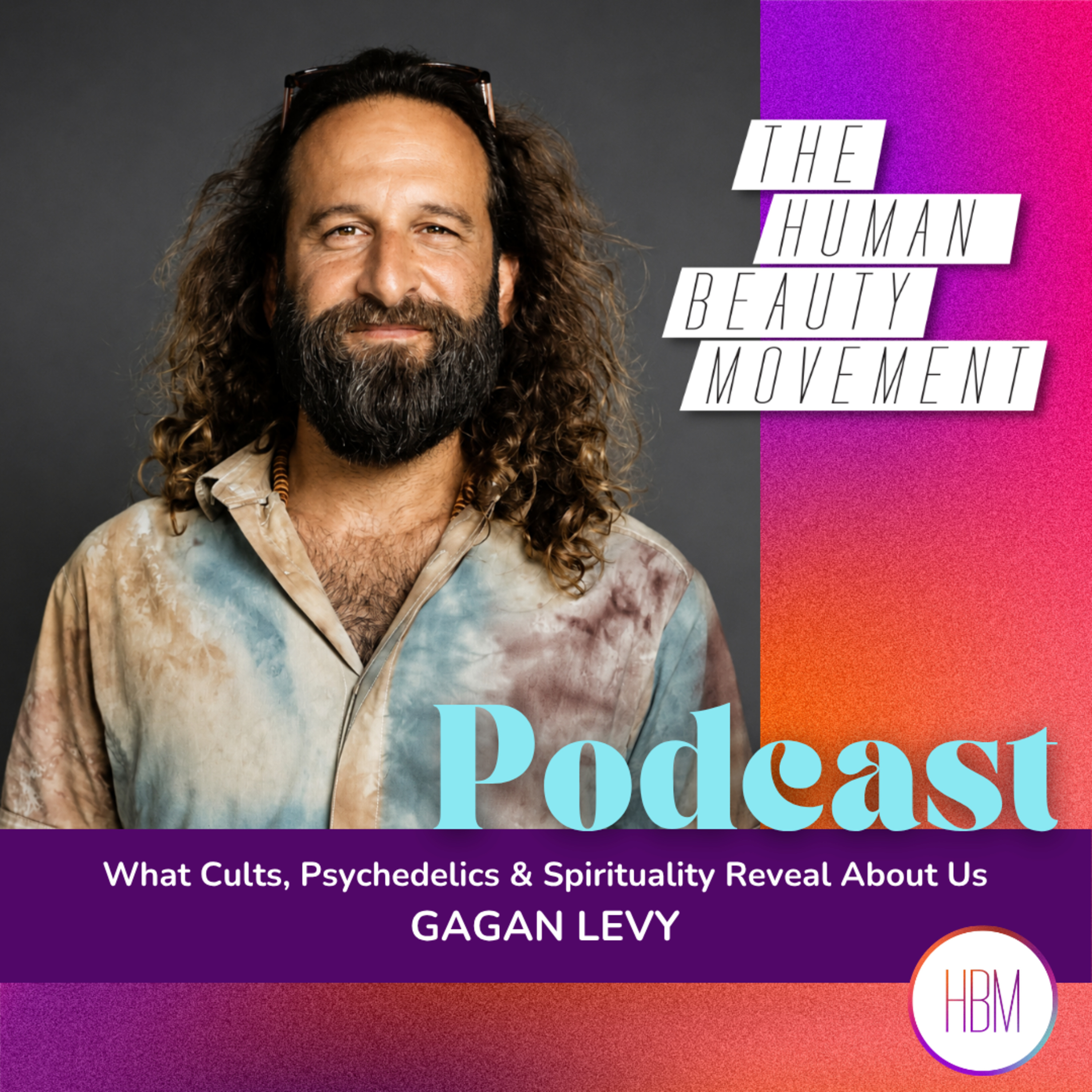


In this episode, we explore how our drive for belonging and belief shapes not only cults, but also businesses, spiritual communities, and cultural movements. Gagan Levy joins us to discuss the power of conscious, love-fueled truths to create positive inside-out change and the importance of integrating mindfulness, compassion, and authenticity into leadership and community-building. The conversation inspires us to be aware of the beliefs we subscribe to, inviting us to align our communities & movements with deeper values of joy, presence, and shared humanity.
This podcast episode is sponsored by*:
- Humanist Beauty - Beauty for your skin & soul, Humanist Beauty is clean, conscious, and cruelty-free. Shop here → https://humanistbeauty.com
- SupeCaptainBraveMan - Super books for super kids! SuperCaptainBraveMan picture books are sweet stories that help build disability awareness for a kinder, friendlier world. Learn more → https://supercaptainbraveman.com
*The Human Beauty Movement may earn commissions from your support
Gagan's Links:
- Website https://weareguru.com/
- Book https://weareguru.com/cultstarter
- LinkedIn https://www.linkedin.com/in/gaganjlevy/
- Instagram https://www.instagram.com/weareguru/
The Human Beauty Movement Links:
- Official Website https://thehumanbeautymovement.com/
- YouTube https://www.youtube.com/@thehumanbeautymovement
- TikTok https://www.tiktok.com/@thehumanbeautymovement
- Instagram https://www.instagram.com/thehumanbeautymovement
- Facebook https://www.facebook.com/thehumanbeautymovement
- Community https://www.facebook.com/groups/thehumanbeautymovement
- LinkedIn https://www.linkedin.com/company/the-human-beauty-movement
- X https://x.com/thehbm_official
- Pinterest https://www.pinterest.com/thehumanbeautymovement
Jennifer Norman Links:
- Lnk.Bio https://lnk.bio/iamjennnorman
- LinkedIn https://www.linkedin.com/in/jennifernorman
- Instagram https://www.instagram.com/iamjennnorman
- TikTok https://www.tiktok.com/@iamjennnorman
- YouTube https://www.youtube.com/@iamjennnorman
- Facebook https://www.facebook.com/iamjennnorman
- Pinterest https://www.pinterest.com/iamjennnorman
- X/Twitter https://twitter.com/iamjennnorman
Thank you for being a Beautiful Human.
Jennifer Norman:
Hello, beautiful humans. What if I told you that you probably belong to a cult? Now, before you panic, delete your apps, and start questioning everyone you know, hear me out. Maybe it's a brand you swear by, a political movement, a wellness philosophy, a spiritual community, a company culture, a fandom. Maybe it's even an idea about success, beauty, money, or what a good life is supposed to look like. As human beings, we organize ourselves around beliefs. We look for people who see the world the way we do. We create rituals, symbols, language, stories, and identities around the things that matter to us. And that instinct can be used to manipulate people, but it can also be used to bring people together around something genuinely meaningful.
Jennifer Norman:
My guest today, Gagan Levy, has spent much of his life studying and helping create the latter. Gagan is a spiritual strategist, creative instigator, and what he calls a cultural mycologist, which may just be one of my favorite job descriptions ever. For more than 2 decades, he's worked at the intersection of culture, consciousness, and social change, helping advance movements around socially responsible businesses, impact investing, regenerative agriculture, psychedelic healing, and even contributing to Barack Obama's 2008 presidential campaign. He's the founder of Guru, an award-winning creative agency that helps cult-like beliefs take root in brands, businesses, and culture. He previously served as co-chair of Social Venture Network, an organization that's helped lay the groundwork for the B Corp movement, and he serves on the board of Ram Dass's Love Serve Remember Foundation, helping carry profound spiritual teachings into contemporary culture. And now he's the author of a wonderfully provocative book, Start Your Own Damn Cult: A Founder's Field Guide. Despite the title, this isn't really a book about cults per se. It is about belief, it's about belonging, and it's about why some ideas become movements while others disappear.
Jennifer Norman:
And perhaps most importantly, it asks those of us who want to influence people, whether we're founders, leaders, creators, teachers, activists, or simply human beings with something we believe in, to consider what kind of influence we want to have. So today we're going to talk about capitalism and consciousness, movements and manipulation, psychedelics and spirituality, Ram Dass, leadership, love, and why the future may belong to people who can give us something deeper than another product to buy. Give a warm welcome, please, to Gagan Levy.
Gagan Levy:
Oh, thank you so much for having me, Jennifer.
Jennifer Norman:
Gagan, I am so delighted. It's been a while. We first met when we were trying to start these books of ours, and now you've released yours. Congratulations. I'm so delighted, and I can't wait for our audience to learn about it. I want to start first with the title, Start Your Own Damn Cult. There are probably people hearing this and thinking, wait, aren't cults bad? So what exactly are you inviting us to start? Yeah.
Gagan Levy:
I mean, I'll just say I'm kind of a big fan of taking back words, words that have gained stigma in a negative sense. I've made a career out of some of this. We'll probably touch on some of it, but even working on things like how to destigmatize psychedelics. For mental health use, how to destigmatize mental health issues for high school kids so they can feel free to talk about it. But this word cult, I love being provocative, but actually it comes from the root. I'll read this out of the book. Cultus, to care, to inhabit devotion, to make meaning through attention. And so to me, as I've been for the last 25 years as having a creative agency, helping organizations take root and grow and amplify amazing work through the world.
Gagan Levy:
Time and time again, what I really see is a founder that really found their purpose. They clarified and crystallized the purpose of what they wanted to bring into the world. What maybe was uniquely theirs to bring into the world from the zero point field. Then, okay, I think I need to build a team around this to really start to build it. And so you grow a team around it and build coherence between the mission of that and the personal purpose of each of those folks. So you start to build that team into a flow state. And then from there, from the inside out, you can amplify it to the world. And I think cults, when I really think about it, that's sort of when all the time you'll hear like Patagonia, who we work with, they have a cult following.
Gagan Levy:
Or I just did some work this last summer with Yerba Madre, which used to be called Guayakí, the yellow can yerba mate drink. I mean, talk about a cult following. They've got like 10,000 ambassadors that will just like take these cans to every event. That's a cult following. That's what every brand dreams of. It's also what every nonprofit or organization dreams of is kind of building that sort of cult devotion. So yes, it was being provocative, but I also really love that initial meaning of the root of the word.
Jennifer Norman:
Thanks for sharing that. I had no idea that that's what the original definition was of cult. And I think that that actually sounds very positive and beautiful. Why do you think that it became so bastardized, shall I say, and it turned into this negative and now it's kind of spinning back more positive again?
Gagan Levy:
Well, we'll see if we can fully spin it back positive. I think there was a number of, I mean, there's the Kool-Aid, people think of Kool-Aid, right? People think of the cult in, what was it, Waco in Texas. And typically, or Charles Manson, there's a charismatic leader that was able to basically brainwash a group of people to follow them to do anything. And that became known in culture as cults. So that's sort of the stigma attached to it. And who wants to be attached to anything like that? So for me, I started thinking about it and I'm like, you know, really a lot of times with the base of these things, there's religion, there's that sort of faith and devotion. But a lot of times at the base of these organizations, there's that kind of faith and devotion to a cause.
Gagan Levy:
I work with a lot of nonprofits and I would say, like, I'm on the board of an organization called Conscious Alliance, for instance that does hunger relief work all around the country and specifically with Native American reservations. We've been going for about 25 years now working with the music industry. It truly is a cult of people that love jam band music and love to feed the hungry in this country. And so there's such devotion to it. I mean, they're all, everyone's wearing, I got a hat right here. It's so funny. You got the hats, you got the swag, you got all the things. So that sort of is, it's just this like ingredient that I found that was similar.
Gagan Levy:
And then I started thinking about, okay, there is this commonality that I've seen in all these causes or organizations or movements that were able to truly amplify to like really be successful. So I start, and I've been, I joke that I'm a proud cult catalyzer. And so I started to think about it. I'm like, what are the commonalities between these things? So I, the book that I wrote started to become sort of a reverse engineering of what I saw in how these brands and nonprofits and causes were actually able to build that kind of devotion, that kind of gravity around an idea where it's just in the wind. It's not even marketing anymore. It's not manipulation. It's just, you can't help but fall in love and carry it on the wind. Yeah.
Jennifer Norman:
Now let's talk about that because you use CULT as an acronym for Conscious Undeniable Love-Fueled Truth. What makes something a love-fueled truth rather than simply a really effective piece of marketing?
Gagan Levy:
Well, here's where you're going to pull out the sort of what could be called a woo-woo side of me, which is, I mean, Ram Dass has been my teacher since forever. I've been on his board of directors for 15 years. His guru Maharaji really didn't teach, but there were a couple phrases they got out of him and it was love everyone, tell the truth, feed people. But love everyone. I mean, Ram Dass used to say, treat everyone as God in drag.
Jennifer Norman:
One of my favorite quotes.
Gagan Levy:
I love that. Right. And so for me, why not in business as well? We should be living into a love economy, a place where if you're going to build a business, if you're going to build an organization, if you're going to put your time into something, it should be something that has a reason to exist, a love-fueled truth. I mean, it really, the world, humanity is calling for it.
Jennifer Norman:
Yeah.
Gagan Levy:
And why do it if it's going to harm people or if it's going to harm the planet? If you're making money on something that is going to harm, of course, there's sort of some externalities sometimes in building a business and you try to do it as conscious as possible. You try to deliver your product, your service in as conscious a way as possible. And you always have an opportunity to clean it up. But I do think at the core of it, it's like, what is the soul of that business? What's the soul of that nonprofit? To me, that is a conscious love-fueled truth that needs to exist in the world. Sometimes that, and I love sustainability, the word sustainability, because that it needs to become sustainable. It needs to be self-propelling. So if it's a business, it does need to make money. It's not a bad thing to make money.
Gagan Levy:
It's just make money doing good things, make money in the love economy in a way where you're giving back to people and planet in some way. So that's the idea of these love-fueled truths that I want to propel into the world. So at my agency, Guru, the mission has always been the same, to increase joy and reduce suffering. And I think about that in a couple steps. First, for our family here at Guru, like, I want everyone here to be living their best life, working their best life. But they do the best work when you're having fun, when you're playing with people, when you're feeling loved by the organization you're working with. Then for our clients, I want them not to be in a state of fear. I want them to be having fun and playing with us.
Gagan Levy:
And of course, there's— this is in a disciplined process. We're working with professionals, but it doesn't mean you can't have fun and play and whatnot. And then through our clients for the world. And so how are they helping increase joy and reduce suffering on this planet, whether they're a nonprofit or a for-profit? And so for me, like, I mean, I'm so, you can tell I'm so passionate about this that I don't think any business organization should exist if it's causing harm, if it's not for the good, if it's not for the, it wouldn't be a check the box in the love economy, as I call it.
Jennifer Norman:
Speaking about that, because it does seem like so many tenets of pure capitalism fly against the face of love-filled economies or love-filled organizations, shall we say, because it's really like profit at any cost. The only way that we're going to succeed is by beating the next guy. How do you coincide the two when even if somebody or a, an organization were founded in a love-filled space, there may be seasons or times when, gosh, the bottom line does speak louder than a choice to feed the hungry or to maybe do something that is a bit more benevolent. There might be needing layoffs, for example, or things like that. I mean, how do you maintain that balance of being able to be in business and be sustainable and make the money, and then also being able to have these values and live by those values?
Gagan Levy:
Well, it's a great question. It's not easy to be an entrepreneur. It's really not easy to be a social entrepreneur.
Jennifer Norman:
Yeah.
Gagan Levy:
That is bringing those values. I mean, to me, it's the first stop. is integrity and authenticity and showing up with your values as a business. However, in saying that, if your business isn't financially sustainable, then you don't have a business, right?
Jennifer Norman:
Yeah.
Gagan Levy:
So you have to balance these things. And a lot of times it's a journey. It's not perfection. It's about being on a journey to do better and having awareness about that and vulnerability and transparency. This is the scaffolding that I built into the book actually is because we've been a part of growing things like B Corp, which the B Corp certification is really probably the best barometer out there of like how conscious your business is, right? Like across a number of different areas, your governance, environmental, social, how you take care of people, all different kinds of things. You get these report cards across all these different things. So in growing that, it's been fulfilling to see that movement really grow.
Jennifer Norman:
Mm-hmm.
Gagan Levy:
And also to see like some of the bigger companies start to wake up as well. and want to do better. For me, there sort of was a major chasm and I recognized it about 6, 7 years ago. Something came out called the Sustainable Development Goals. It was launched by the United Nations. There's 17 of them, different themes, right? One's like future cities. One is around climate, water, health, and things like this. So there was like over 10,000 businesses that had made commitments on these Sustainable Development Goals, but under 8% of them were actually executing on their commitments.
Gagan Levy:
So you've got these sort of like CEOs making pledges and making commitments, but the businesses have no way to follow through on it. And a lot of that is because they're looking at things like sustainability, environmental impact, and other things as cost centers.
Jennifer Norman:
Yeah.
Gagan Levy:
You and I know that actually there are opportunities for companies to build more trust with their stakeholders, their ecosystem, their staff, their investors, their consumers, and actually grow. Huge opportunities. But for a long time, they've been looked at as cost centers. And now we're even fighting against things like DEI with current administration and other things.
Jennifer Norman:
Exactly. Yeah. It's harder.
Gagan Levy:
It's, so it's gotten even harder. I mean, there's stigma, what we're talking about against DEI, right? Like against actually having a program that is leaning into equity for, so it's insanity.
Jennifer Norman:
I always have to bite my tongue.
Gagan Levy:
Well, not with me, but so what I, myself and, so Guru, this agency kind of, once I built it, it's become a kitchen that I can cook different things out of. And so me and another partner, a guy named Haider Nazar, who actually wrote the foreword for my book. We started a company called Maha Global that is helping more of the Fortune 500 companies align their reputation with their behavior. So we're helping them, we're using AI and developing insights to show them how to leverage reputation to increase their behavior, showing them the financial opportunity and how they can avoid risk by doing the right things in their business. So, and it's been really successful. Like we're working with a number of brands that you would have heard of, massive brands want to. So while Guru, I'm sort of catalyzing like the B Corps, the more activist brands, stuff like that.
Gagan Levy:
Maha Global, unfortunate naming. It was done before RFK's MAHA, but, you know, it is what it is. We have this platform. Our platform is called Darwin. And that's how we're actually able, just to come back around to your question, we're able to show the financial opportunity In doing the right thing. That's the key is like, because for a long time you kind of knew it. We all knew it in this movement, but it was qualitative and now we've quantified it. So we can show you with data and insights, like if you make this choice, here's the financial opportunity in that. So I feel like the key isn't like just doing the love economy or the right thing to do the right thing.
Gagan Levy:
Because that argument doesn't really work in mainstream capitalism, unfettered capitalism. It's like, okay, let me play your game. Like when in Rome, right? So, okay, I'll speak your language, but I'm going to Trojan horse in these practices to doing the right thing.
Jennifer Norman:
Trojan horse in. Very well timed given The Odyssey has just come out recently. But, um, let's, yeah, let's talk about the scaffolding in your book because it is intriguing. You bring in a foundation which is highly unique for business. in general, and that is the 8 Elements of Yoga. Can you talk a little bit about what you did there in terms of setting up the stage for creating an organization based upon the 8 fundamentals of yoga?
Gagan Levy:
Sure. Yeah. It's beautiful being able to cover such wide ground with you on this podcast because like, I do think we touched on business and leadership and these sorts of things, but it's like everyone is making a buck somewhere. Right. So my thought was whether you're an entrepreneur, whether you're an intrapreneur, how can you just build more coherence in your, how you show up at work. I don't think of it as a work-life balance. It's life balance.
Jennifer Norman:
Yeah.
Gagan Levy:
And so how do you do that? And so, um, yeah, I've been, uh, studying yoga for a long time and done several yoga teacher trainings and Vipassanas and different, and like I said, been studying with Ram Dass for a long time. And so something that has really helped me in the background just to be a better father. I've got 2 girls, Jaya Grace, who's 9 and Meta Jade, who's 5. And a better father, a better partner, a better human, a better friend is the 8 limbs of yoga. And the 8 limbs of yoga was introduced through the Yoga Sutras by Patanjali about 2,500 years ago. And it really is a base for many aspects of Buddhism and Hinduism and a lot of Eastern philosophy that now has come into the West through wisdom keepers like Ram Dass and Jack Kornfeld and Sharon Salzberg and others that are in our sangha. And so it was right there in front of me. Like I've been using this in my personal life.
Gagan Levy:
And then I built this agency Guru, which is devoted to working on the biggest challenge humanity's facing, what I see as climate action, mental health, and healing food systems all through this guise of socially responsible business. And so it was always about the what we were working on, but then I realized I'm grinding people in my agency just like any other agency. So it wasn't just the what, it's the how.
Jennifer Norman:
Uh-huh.
Gagan Levy:
So I started to think about how can we work with more love in our system? How can I really nurture people in the Guru family? And started to realize too, some of the awards, some of the different campaigns that really took off, When I reverse engineered it, it was like we were having the best time coming up with those ideas. We were all loving up on each other and playing. And so I started to think about like, how can I do this in my company? I organically know what I want to do, but what's the scaffolding? Like, what's the methodology I can use? And it was right there in front of me, the 8 limbs of yoga. I actually went for my 40th birthday up into the mountains in Mayacamas, this beautiful volcanic caldera up in Northern California. And I was just there by myself for a few days and it like came in really strong. It was like, it's right there. apply the 8 limbs of yoga to your business.
Gagan Levy:
And so the 8 limbs of yoga, a lot of people, when they think of yoga, you're thinking stretchy pants, Spotify playlists, downward dog. And that's sort of like how the West knows yoga. And it's beautiful. It's asana. It's the movement side of yoga. Asana actually means comfortable posture or comfortable seat. So it's about getting in that pose, but can you be comfortable in that pose? Right. You see people like sweating and shaking. No, asana is like I want to get in that pose, do it as deep as you can with as much intention linked to breath.
Gagan Levy:
Yoga meaning union, but get into it in a comfortable way. And so that's asana. It's actually the third limb. So the first limb of yoga is the yamas. The yamas are about— there's 5 of them, but the yamas are about your relationship with the world around us. So for instance, the first of the yamas is ahimsa, and ahimsa is do no harm. It's one that a lot of people have heard of. So what does that mean? Do no harm? Well, for back when it was— came with Patanjali and Buddhists, I mean, the monks won't even step on like a fly.
Jennifer Norman:
Mmm.
Gagan Levy:
But now we live in a world, right? So how do we do our best? And so do no harm. But what does that mean for you as a leader of a business? Or so for me, what it meant was really with accountability, looking at the business and looking at through the lens of ESG, environmental, social, and governance, and starting to really ask myself, I know I have these intentions of being as good as we can to the planet, but how are we doing? And really having sort of a checklist. and practices to not judge, but just hold myself accountable and get a little better. And so that's ahimsa. There's another one called asteya, which is non-stealing. So am I stealing other people's ideas? Am I stealing people's time? Could that meeting have been an email? Things like that, right? So like, that's sort of these first yamas and I can go into others as much as you'd like me to, but it really has. And the book is like a playbook, kind of sets it up. And then it goes into these 8, I call it the Cultivate Codex.
Gagan Levy:
And there are 8 codes. So the 8 limbs have become 8 codes of this Cultivate Codex. And it has practices that you can do to really go inside and think about, and then reflections as well. And it's a workbook that you can play with. And there's an online companion you can write this stuff into, and it will give you ways to, things to think about, ways to always get a little bit better. So yeah, I mean, there was that saying Suzuki Roshi said, you're perfect just the way you are, and you could get a little bit better. So that's sort of the framing of how to use the 8 limbs.
Jennifer Norman:
I love how you bring it into real-world terms. Like your first one is of your codexes, call your own bullshit. And then you've got one that's like, take your damn seat. Yeah.
Gagan Levy:
I mean, this is what I loved about Ram Dass. This is why I love Roshi Joan Halifax as well. And other, it's like, they're rascals. They're spiritual rascals. It's like spirituality in the West got so serious. It's like, I'm doing it. I'm serious. I'm spiritual.
Gagan Levy:
And you can have fun with it. You can be a little irreverent. I try, I mean, when I was writing this book, like the voice, my favorite writer is Tom Robbins. And so I kept like channeling sort of Tom Robbins and Ram Dass and, and like Stephen Covey, who did like the 7 Spiritual Laws of Success, which is like, what's the mix of that? Allow myself some grace just to have fun with these concepts, you know, don't make it so serious. I'm glad you like that.
Jennifer Norman:
Yeah, yeah. For those of you who are interested, and I'll put the information in the show notes, you can go to weareguru.com/cultstarter and take a look at the book. You can see the Cultivate Codex. Number 1, call your own bullshit. Number 2, tending the temple. Number 3 is take your, your damn seat. 4, breathe before you broadcast. That's a good one.
Jennifer Norman:
5, tune out to tune in. 6, fierce focus. 7, in the zone. And 8, congrats, you're fired. Let's talk about that. People will be like, wait a minute, I got all the way here and now I'm fired. What?
Gagan Levy:
Well, so the original 8 limbs, the 8th limb is Samadhi, right? So Samadhi is sort of, you might've heard of these saints in India that where their followers literally just like built rocks around them in a cave and they're still living, but like kind of dead alive. They've merged with spirit. It's really how we refer to in the West is like enlightenment. Now I know that's a lot to— that word has all kinds of things attached to it. And I certainly wouldn't claim to be enlightened or reach enlightenment in any way. I have had glimpses in deep meditation of what that might be like. And so when I was writing, kind of reverse engineering each of these codes for leadership, Really, to me, I was like, as a leader, I want to be liberated. I want liberated leadership.
Gagan Levy:
That's really what this is going towards. And so Samadhi, like, it's really about getting to a place of liberated leadership. And to me, it's sort of when you dissolve into your own cult, it's like you've built it to the point where your team, it's now being carried on the wind, as I said earlier, and it's true shared leadership.
Jennifer Norman:
Uh-huh.
Gagan Levy:
Your team is leading it. The movement is being led and you're just there sort of holding space.
Jennifer Norman:
Got it. Okay.
Gagan Levy:
And so, yeah, congrats, you're fired is like, you might not need to be the CEO anymore. Sometimes people in business land talk about it as like moving from CEO into founder in some ways. And you just take on, you're not in the day-to-day, you don't have, you've released control in some ways. And so, yeah, that's congrats, you're fired.
Jennifer Norman:
Well, I love that you've been able to take these ancient, what might be considered to many esoteric shall I say, concepts and really put it into modern language that everybody can enjoy and understand. So thank you for being that filter of those channeled messages. I think that that's really great.
Gagan Levy:
Oh, thank you so much.
Jennifer Norman:
Yeah. I want to talk now about why you think some ideas spread and some don't. You call yourself a cultural mycologist, which I love. That metaphor is so cool because mycelium work underground connecting things that we don't necessarily see. What does cultural mycology mean to you actually?
Gagan Levy:
Well, for me, cultural mycology is sort of foraging, right? Like I'm a constant, I'm a forager really of cultures. So, and I believe I'm also a burner and I believe in serendipity. I believe in—
Jennifer Norman:
Are you going this year?
Gagan Levy:
I'm actually not going this year. I need to take this year off. I'm going to Brazil.
Jennifer Norman:
Okay.
Gagan Levy:
For a surf trip just to drop out because Burning Man is a, yeah, it's a commitment. I did a large project last year with Ram Dass Foundation, this big geodesic dome called the Be Here Now Dome, where we brought satsang and kirtan and meditation into. And we also, we have a label where we brought different DJs that are using Ram Dass words of wisdom into their music and dancing. And it was super fun. It was a lot of work. And I was like, I will go back in '27, but I need to take a year off.
Jennifer Norman:
Fair enough.
Gagan Levy:
The thing that happens out there and you run into who you're supposed to, you run into ideas and experiences you're supposed to, and then you can feel in your body where you want to give energy, right? And so I think for me, you know, I've been doing this for a long time. I came out of the music industry developing artists and helping artists grow, and then kind of moved that energy into how can I help causes and businesses that really matter that we need on this planet grow. So I'm a forager looking kind of moving through life and floating down the river in co-creation with spirit in terms of who and what I run into and what I want to catalyze. And we've had— Well, at Guru, pretty successful track record in growing many different things. So within Guru, I started a really fun little skunkworks project called Popowie. Popowie is a word. I'll re— Popowie originates from the Anishinaabe language and translates to the force that causes mushrooms to push through the earth overnight, or the unseen energy that animates life. So what I said here, really, we're cultural mycologists that rewild business and regenerate culture by designing strategies rooted in nature, nature's intelligence and cultural alchemy.
Gagan Levy:
Ideas like mushrooms wildly sprout from the fertile soil of creative minds, bringing forth a kaleidoscope of imagination. They burst with vibrant hues and unique shapes, intertwining and dancing to form new perspectives. Like hungry foragers, we eagerly pluck these ideas, nurturing and shaping them into creations that ignite inspiration and good, breathing life into the world around us. So that's sort of what I'm up to. In the cultural mycology realm.
Jennifer Norman:
I love that statement. What a beautiful statement. Oh, wow. You've had a front row seat to a lot of movements that were once considered fringe ideas like socially responsible business, regenerative agriculture, psychedelics, and you're now part of, and these are now part of mainstream conversations. What do you think allows an idea to cross that threshold? And why do you think that some really important ideas fail to catch while others sometimes may be less meaningful, but they spark?
Gagan Levy:
Like I think about what we're doing right now at Guru. I call it culture-centered design. And for a long time in marketing, we referred to user-centered design. It was a concept formed by IDEO about interviewing people and then developing ideas off of that. I mean, everyone's heard the, what was it, Henry Ford? If he would've listened to his consumers, he would've built a faster horse.
Jennifer Norman:
Mm-hmm.
Gagan Levy:
And so, for me, culture-centered design and with the ability to ingest lots of data now with AI, which is a great use of AI, I think. I can understand what different subcultures are really caring about. Like, I can really understand the relevant truths taking root within certain subcultures, whether it's the moms of Marin or it's the Burning Man community or it's the regenerative ag. There's all these different subcultures and lots of crossover between these subcultures. I mean, if you think about the word culture, It really is just cult. Sure. Right. It's made up of a bunch of different subcultures.
Gagan Levy:
And so the more you can understand those subcultures, then you can do culture-centered design. And I think a lot of these ideas, it's the right time. It's the right place with the right vibe that can land in culture. It's not just what you do. It's the voice too.
Jennifer Norman:
Good point.
Gagan Levy:
I mean, you look at things like we've been working on this dairy brand up here in the North Bay called Clover Sonoma, doing a lot of their marketing for the last 10 years. And it's a dairy brand. It's a commodity. But we play with these dairy puns in a really fun way with this character, Chlo. Talk dairy to me. It's up on a giant billboard, right? And just having all kinds of fun with it. And it's like, it makes it palatable that those, the parents remember that when they're in the supermarket, they happen to also do the right thing, right? We were working only with the most conscious brand in that vertical.
Jennifer Norman:
Mm-hmm.
Gagan Levy:
We're just helping them build a bridge. To different stakeholders and potential consumers out there. So that's why they've been so successful. And then it's like, what is the world calling for right now? What do we need? I mean, when I think about the work, I know this is an area that you and I are interested in. Over the last decade, I've been doing a lot of work with MAPS in the psychedelic healing space. MAPS is like the largest organization in the world working on destigmatizing psychedelics for use with mental health and other things. I mean, we are going through a mental health epidemic in this country.
Jennifer Norman:
Yeah.
Gagan Levy:
And we've got the tools. We have tools that can help. It's not a magic bullet. It's with the psychedelic experience. It's the integration afterwards. Just like it's not about just going to a retreat for a weekend. It's about integrating that. It's not about just a meditation.
Gagan Levy:
It's about integrating that into your life. So the world is begging for it. It's calling for it. So that I was the leader, lead strategist of the Psychedelic Science Conference in Denver in '25. We had 8,500 people there. It's the largest psychedelic conference to happen on this planet. The world is calling for it. So you never can really predict why something's gonna land.
Jennifer Norman:
Hmm.
Gagan Levy:
But I really think it is co-creation with spirit and then having, it takes us all, right? Like I'm a translator, I'm a communicator. So someone has that beautiful idea. I can be there with them and listen to them and hear the authenticity and the purpose and the reasons to believe. Then I can understand sort of the main target audiences. I can understand that what's going on in their competition. And most importantly, I can understand what's going on in culture. Now I can develop a strategy to develop language for that to land in a way in culture. Then once you land, you build that cult following.
Gagan Levy:
You build it from the inside out, right? With your team first, you get believers. And then it's not about growth. It's not chasing scale. It's about building gravity. It's not push, it's pull. That's why these things root.
Jennifer Norman:
That's why I love your methodology because it is so much deeper and richer and much more profound in getting to know and understand the essence, the true nature of the organization almost as a living and breathing soul body that is doing and is a carrier of a message of love-filled truths and then spreading that. I think that that's very important to be able to discern if anybody is working with a partner to— on marketing and such. You can almost tell the ones that are kind of following a more traditional playbook or frankly copying what somebody else has done because they see success someplace else and they're trying to emulate it. That's not real. That's very superficial level marketing that'll only get you so far, but when you are a mission-based organization, you really deserve to have partners that will go much richer, much deeper, and create that gravity because that then will help to catalyze your business in such a more meaningful and profound way. So that's also what you're talking about when you're, when you're mentioning things like what is the financial gain potentially of working with a partner that truly is conscious versus one that's not, you know, that might be cheaper, but doesn't really get you. How much more expensive is that? of over time might that be versus one that really understands your, your nature from the jump and can build something that will develop a cult-like following and this passion that is really just something that will build brand equity, organizational equity for many, many years to come.
Gagan Levy:
That's, you're so spot on.
Jennifer Norman:
I'm curious if there is a moment when you can actually feel an idea becoming a movement.
Gagan Levy:
Well, when you just asked that, I got the feeling in my chest and I a lot of times trust my gut more than even my head. And so I think it's sort of, how do I sink in from my rational mind to my heart mind and my gut mind? I know when there's an idea that has legs and I typically won't take a project unless I'm feeling that in my body. like somatically feeling it, that yes, that I can really be helpful in growing this thing. Then there's sort of like these different epochs. I feel like as you're growing, right? It's like, there could be the idea for the brand, the name, the tagline, the campaign you launch with. There's sort of all that stuff that you get these like little yeses along the way.
Gagan Levy:
We're right now, I've got a client that I am like, I think could be the future of the whole food system, healing food systems. It's incredible. And I'm like, we're developing their name and their brand and all this. And I am like, I can't wait to work on it more. I know it's really going somewhere. It's going to be a massive, massive organization. And then it goes out to the public and you can feel the move from push to pull. There's still the tactics we have to do. Like we're trying to get in front of as many people as possible. I'm trying to— there's this typical sort of like marketing funnel of like people becoming aware of something and getting more educated.
Jennifer Norman:
Mm-hmm.
Gagan Levy:
So at each of those stages, there's like key performance indicators to tell you if you're doing well and whatnot. But for me, it's like, it's pretty somatic. Like I, and we've done it enough times, even in the music business. Like I knew when we had a song that was like gonna go and get on the radio and then it gets on the radio, right? Like, so, and then all these DJs start playing it and you're like, oh, we got one. And then the artist goes from playing to 100 to like 500 and you're like, oh, we got one. I kind of still feel that. It's that same, I mean, music is a big part of like everything I do. So I still feel everything in like frequency and music.
Gagan Levy:
And I, and so, yeah, for me, it's pretty somatic. I think especially for guys, like I'll just say, be vulnerable and say like, I mean, I got into men's work about like 15 years or so ago. And I've actually like, I feel like in just the last 10 years, been able to like even come into my body to know what I'm feeling as a man. We're kind of taught from a young age to be like confident and just like heads strong.
Jennifer Norman:
Yeah.
Gagan Levy:
Yeah. Like you succeed. I'm going to do this thing. There's the top of the mountain. Follow me. We're going. And it wasn't until I got into men's work, I got more understanding how like how vulnerability could be really helpful. And now, and I work with a somatic psychologist as well, who's amazing.
Gagan Levy:
That's like really helped me to get more in my body and be able to like feel into the mycelial network around me in a different way. Because I'm very headstrong. Like I always kind of am thinking and can see the room and whatnot. But it's so getting that down into my body was an important journey for me and knowing when something's going to take root, when it's going to flower, when it's going to amplify.
Jennifer Norman:
Wow. That integration is very powerful. Very special. I feel like you're using your whole self when you are able to connect mind with body and with soul as you have. That's so beautiful. I'd love to talk a little bit more about Ram Dass because you served on the board of the Love Serve Remember Foundation, carrying forward his teachings.
Jennifer Norman:
What is one of the greatest paradoxes I find is that in modern life, we're constantly trying to become something. We wanna be more successful, more evolved, more healed, more optimized. While so many spiritual traditions tell us to simply be here now. How do you personally hold those 2 impulses?
Gagan Levy:
Ram Dass. And I'm guessing by what you said, you know, his quote, which was, everyone must become somebody before they can become nobody, and only nobody gets free. So let that bounce around a little bit, right? That's what I love about Ram Dass. So there is this journey. I mean, actually, the book I wrote first when I came down was that journey. It was about becoming somebody, and what somebody was to me was success. And you're kind of applauded with influence and money and respect and whatnot, right? And then that's sort of a false mountaintop. And then you realize the spiritual journey is like becoming nobody.
Jennifer Norman:
Nobody.
Gagan Levy:
And sort of like, and my path, there's sort of 2 paths to nobody. It could be dissolving ego through, in lots of ways psychedelics are helpful, but in other ways as well, or realizing the beauty in diversity, realizing that, yeah, you are special and so is everybody else. And so you can dissolve into the field and be a part of— and so that beauty of diversity of ideas, and that's sort of been the path for me. I mean, life is full of paradoxes of, like, because I feel like I am constantly, like, I bring myself to now, like, not being triggered by past traumas, not being too anxious about a future possibility. How can I be here and present? And what Ram Dass taught us was be here and present, be able to witness yourself in the present. So it's like you're here and present and witnessing all the time, not judging, but witnessing.
Jennifer Norman:
That's hard.
Gagan Levy:
And so it's, it's holding that lens constantly. The practice I've adopted lately, which has been interesting because I've always been sort of like, my meditation practice has always been sort of a Vipassana, like just go blank and try to get into the nothingness realm. But it's been around visualization and gratitude and like leaning into a possible future. An aspirational future. So I started to think about it and I'm like, it's just as possible. Like when something happens to us in this moment and we're triggered in some way, it takes you back to like, you're triggered from something you're like, mom did when you were 4 years old. And you're like, now that you're not even in this headspace, so you're living a past present.
Jennifer Norman:
Right.
Gagan Levy:
But it's just as possible to live a present aspirational future. Like I could be living into that in my present instead of, right, being true. So I'm sort of playing with that right now. I mean, It's a constant journey. He did, Ram Dass has given me a lot of tools. I feel so blessed. I mean, my, the last 10 years of his life, I was going out to Maui for months and spending time with him. My kids look at him like a grandpa and spent time and he gave me a lot of tools.
Gagan Levy:
And I feel like I wrote this in the book. I mean, right up front in my, I guess, like irreverent way, I said a note on cultural appropriation, how not to be a jackass with sacred stuff. And it's like, and I give him so much credit. It's like, even when I'm not quoting him out outright. I know his, like, it's coming through me because like through osmosis, it's just, and I'm like both like just honor it and apologetic because in some ways it's like, I can't help how much like I came on. But that's sort of where I'm sitting with that paradox. Because I am like, I'm wanting to create change in the world. Like I have aspirations, I've got ambition.
Gagan Levy:
And that's part of the, what drives me is purpose. But I'm also like right here, there is no one else on this planet now for me. Like you are the only person, I am completely present with you. There's stuff tugging at me in the background. I'm sure there's stuff I'm supposed to be doing, but it's like who, the person that's in front of you right now, how do we just make them the most, or the task that you have in front of you? How can you be like really mindful about that? Just bring your intention into that task, into that person and your full presence to be here. 'Cause I think that's really the key. A lot of folks are sort of caught up in, well, I got this next meeting. So in this meeting, I'm doing stuff for my next meeting and my next meeting, I'm doing stuff for that next meeting.
Jennifer Norman:
And then never really here. Yeah.
Gagan Levy:
I want to be here. You can tell, right? Like you can really tell when someone's here and present with you, it's the biggest gift that someone can give you. So I try to give that.
Jennifer Norman:
Yeah. That's one of the reasons why I love podcasting so much because it's really this dedicated container where I feel like the absolute presence just drives flow and it's just so lovely and magical for me. Like this is such a gift for me to be able to have this time and this presence with you and to hear your knowledge and wisdom and all that you've shared and learn, and then also be able to share that with others that could also hear it and then be equally as touched. It's just wonderful. Yeah, I am curious because I absolutely loved Ram Dass so much too. I miss his presence. I felt that he was just really a bundle of wisdom and fun even into his later years.
Jennifer Norman:
I'm really curious, what do you think that Ram Dass might say about our current obsession with personal branding?
Gagan Levy:
Oh, he would say, well, we put out a great documentary about 5 years ago called Becoming Nobody. And he laughs at one part in that documentary and said, yep, that's me still being Ram Dass, still being Richard Alpert. It's hard to escape in this life. I think that it's when we are given this gift of human life where we experience separateness on this planet, there's a desire to be special, right? Like I'm a unique, you're a special flower. Like I said earlier, it's like my mom told me I'm the most special person on the planet.
Jennifer Norman:
Oh.
Gagan Levy:
And everyone wants to believe that. And you are to somebody, hopefully, and hopefully to yourself at loving yourself first. But Ram Dass also, he really dug some of the technology that allows us to connect in this way. Like the first time I actually met Ram Dass was on Skype and it was an amazing hour. And he talked about this. How amazing is, I'm in Maui, you're in, I was in Venice Beach then. And we're connecting in this way, heart to heart, one-to-one. However, I think he also commented a bit on just how out of control it's sort of gotten in today's day and age.
Gagan Levy:
I don't want to speak for him, I'll just maybe speak for myself, but it's like the age of the influencer. And so personal branding, and there's just so much time and energy put into broadcasting, into pumping your own brand and broadcasting that to the world.
Jennifer Norman:
What do you think that's about?
Gagan Levy:
Well, it's interesting, right? Like, I think about fame and it's like everyone's kind of— I don't mean to generalize— a lot of people are chasing fame, like some influence, some fame. Like, I want to be noticed. And I think it really comes back to legacy. It's like a fear of death.
Jennifer Norman:
Mm-hmm.
Gagan Levy:
We have such an interesting relationship with death and dying. And I think most fear comes out of the fear of death. And so the fear of death is not just about your body dying, it's about your Your legacy, right? Like, what will I be remembered for? That's a question I ask all my clients. What do you want to be remembered for? And I ask the brand too, what do you want to be remembered for? So to me, fame is a way to stay around for longer beyond you being here, right? Like, your name will go on, your thought leadership will go on. And at a certain point, you will be forgotten. Like, you made an imprint and there's the butterfly effect. You did touch this world. You touched a lot of people, but like, your personal name may disappear.
Gagan Levy:
And based on your fame, level of fame, I mean, the Beatles will be remembered for thousands of years. Many of us will be remembered for a couple of generations. I mean, I unfortunately, I can't remember my great-great-grandparents' names. I can't think of them right now. now. I don't know what their day-to-day life was. I don't know if they wrote a book, if they did something, a massive impact. I mean, I'm saying this out loud because I want to go figure it out, but how long can, how far can I go back in generations? So I think there's a drive towards legacy in some ways.
Gagan Levy:
And so that's a lot of our work with the foundation is around death and dying and how to build a healthier relationship around death and dying.
Jennifer Norman:
Yeah. And I never really thought of it that way. That's pretty intriguing. 'Cause I think about, yeah, the chase of fame, but is underneath that need is that real like core need, the feeling that you want to matter, the feeling that you want to, that you feel like you need love or adoration or something like that. That's a little bit deeper seated potentially.
Gagan Levy:
Yes.
Jennifer Norman:
I didn't really ever think about it as a fear of dying per se, but that's an Interesting take.
Gagan Levy:
Well, it's sort of like, it's a couple of ways you look at where you're going. And I agree with you very much. It's like my friend Blake Mycoskie, who started TOMS Shoes, he just started this movement last year called Enough.
Jennifer Norman:
Enough. Yeah. I actually just interviewed Chris Orwig.
Gagan Levy:
Oh, cool. Oh, sweet. Okay. Awesome. Well, so that's a big part of this too. Are you enough? Can you realize that you're enough yourself? Do you need the adoration of community to tell you that you're enough? enough. I mean, that's a big part of this as well, but I do think if you really follow it, it ladders up to death and dying. I mean, for me, I unfortunately got a masterclass in this when my younger brother passed away 8 years ago.
Jennifer Norman:
Oh.
Gagan Levy:
His name was Gavin Levy. He was the closest person to me in my life. He was 2 years younger than me and he passed and through that portal of grief. And thank God, I mean, Ram Dass is there for me and Raghu Markus, who runs the Mind Rolling podcast, who's my best friend and part of the foundation, was really there and others were there for me. But, you know, moving through that portal of grief, I, there's a lot of realizations around how much grief and death and dying sort of inform a lot of how we think and act in the world.
Jennifer Norman:
Wow. Wow. And thinking about that, because we often are looking for these transcendental experiences and certainly psychedelics can offer that. Do you think that our culture sometimes makes the mistake mistake of chasing that transcendental experience instead of doing the less glamorous work potentially of integrating what we've learned?
Gagan Levy:
Absolutely. I mean, there's a funny quote of: Everyone wants to do the ayahuasca. No one wants to do the dishes. And it's like, yeah, I mean, there's some magic bullet thinking around that, especially some of the ayahuasca, ibogaine, some of the psychedelics on that level. It's all of it. I mean, Ram Dass, he was right there in the beginning of all this with Tim Leary at Harvard doing work work with folks and really looking at set and setting, like mindset and setting to get into a space where you can go into a journey to have a glimpse, to thin the veil, to maybe release some of your ego and be able to get a deeper understanding of the true nature of reality. The dharma truly, as Buddhism calls it. But to me, it's like we're living in this matrix.
Gagan Levy:
I don't know that it's designed by AI bots and whatnot. And we're some avatar living in a matrix. I wouldn't take it that far, but we are living in a matrix-like world where there's certain myths and beliefs that I don't think are necessarily true to our underlying nature or healthy. And so psychedelics can be helpful in helping you pierce through that and see the true nature of reality and see how we're all connected. And moving from a self-vantage point to a shared vantage point really can build compassion that then with integration, you can bring into your life and your work and your partnership and your kids and all kinds of things in a different way. So that's the integration. Funny enough, I, the psychedelic science conference that I ran with MAPS, the theme of it, I named it The Integration. So Psychedelic Science 25, The Integration, and really trying to push even deeper on the need for doing the practice.
Gagan Levy:
It's daily practice.
Jennifer Norman:
Yeah.
Gagan Levy:
If you don't integrate these breakthrough experiences, they will sort of fade. Everyone kind of goes to a retreat or a conference. You get that conference euphoria, right? Everything's going to change. I'm going to bring it all back. We're going to change everything. And then if you don't integrate, if if you don't bring it into the practice, if you don't bring some scaffolding, bring other people along, sort of dissipates.
Gagan Levy:
And then you show up at that same conference again the next year and you're like, oh yeah, I was going to do all those things and I'm back here again. That's okay. You don't judge yourself. It's like, okay, another opportunity. It's like my yoga teacher actually said this great quote the other day when I was in her yoga class. Her name is Martine. She said the best time to plant a tree is 20 years ago. The second best time to plant a tree is right now.
Jennifer Norman:
It's just such a great quote.
Gagan Levy:
Yeah, I love it.
Jennifer Norman:
Yeah, that's amazing. So, I mean, you've worked across so many different spans and this conversation, as everybody can tell, I mean, we've covered such a lot of ground. When you zoom all the way out, do you see these things, social impact, capitalism, politics, spirituality, regenerative systems, psychedelics, culture, Are these separate movements or do you think that they're expressions of one larger shift that might be happening in humanity?
Gagan Levy:
That's such a good question. Wow. God, I hope it's one big shift. I mean, I truly believe that many of the issues we face are symptomatic of lack of compassion for each other, for ourselves and for the planet and for animals. And so to me, we need to be working on each of these things. Like you need to be curing the symptoms. We need to work on climate change. We need to work on mental health.
Gagan Levy:
But the deeper root work, which is the work I'm doing with Love Serve Remember Foundation, is sort of like watering the seed of compassion inside every human. So you can come to Ram Dass, ramdass.org. We have this inner academy. It's like a thing that you can come in and there's practice and there's sangha and there's accountability and there's community and ways to hopefully move yourself more towards this shared point? Because I really think, I mean, without, I don't want to re-say it, but that shift from self to shared vantage point is like the biggest shift we can make. Can you see yourself as part of a whole, that we're all one, that we're all doing the best we can, that we all have a part to play? Can you come at everything you do from that vantage point rather than what we laugh about?
Gagan Levy:
And Raghu and Duncan Trussell did a book on this called The Movie of Me. We all wake up every morning in the movie of me. And I do too. I wake up, there's things my kids are clawing at me. I needed clients coming in and then it's like, okay, remember it's that constant remember, remember, remember.
Jennifer Norman:
Do you think that that's what we're collectively being asked to outgrow? Is this a focal point of me to the we?
Gagan Levy:
I do. I think it is the gift of this whole thing we're doing here, this whole project object humanity. We each show up in our own astronaut suit and explore this world from a me perspective. I mean, Ram Dass used to talk about it as sort of 3 planes of existence: spirit, soul, and self. And spirit being sort of everything, right? Not necessarily a conscious being outside of us, but all of us. It's just, we're just everything. It's spirit. Soul being that unique manifestation from spirit that's being shot out in infinite direction, infinite possibilities.
Gagan Levy:
And then self being you here right now, Jennifer, me here right now, embodied, right, on this earth. And then we have these lifetimes that we get to, I mean, in Hinduism, they think about karma and lifetimes and sort of a journey back to spirit towards uniting with the one and being back in that bliss, that sheer with spirit. And so the opportunity, the very difficult, almost impossible opportunity is that we are here here to experience separateness? And can we actually live into a union while here experiencing separateness? Another paradox. It's doing that work. This is Earth School for us to try to do that. The interesting thing is, I mean, there was actually, who was it? Thich Nhat Hanh said, I love quotes, as you can tell, but Thich Nhat Hanh said, would talk about it as like a river going towards a waterfall. The river is Spirit. Then you go over the waterfall, the individual water drop droplets coming down. That's each of our individual souls. And then we merge back at the bottom of the waterfall.
Gagan Levy:
I often, I, with my partner, we were talking about it and it's like when the opportunity in our sacred union and like when you see water droplets on your windshield and they get a little closer together and then they merge and they become. So like we can actually start to glimpse union when we find like another, our soulmate or that union or unions with our, as Ram Dass and Cara's soul pod that we're magnetized to, we can actually start to clump some of those drops together. So yeah, I don't know. For me, like, I don't know anything better than that right now. That's sort of the reality I'm living into. And it's funny because I was raised Jewish, like nice, you know, a reformed Jewish kid from Baltimore.
Jennifer Norman:
And then—
Gagan Levy:
Really?
Jennifer Norman:
Gagan Levy? Oh, okay.
Gagan Levy:
Jared Levy. Yes. My given name by my parents is Jared Levy. And Gagan was given to me by Siti Ma, who is Ram Dass's guru over in India, in the Himalayas, 14 years ago. And it means sky. And it, my satsang started calling me it. And then I had these 2 names and then my brother passed away and his name was Gavin. And Gagan and Gavin were so close.
Gagan Levy:
And I was sick of having 2 names in 2 parts of my life. I was like, you know, I feel like I just went through a portal where I'm a new person. I'm going to lean in. Gagan feels more me than Jared anymore. And so, so that was my journey to my name. But yeah, I grew up Jewish kid in Baltimore. I got into philosophy and Buddhism in college at University of Colorado, and then I got Ram Dass and kind of kept going this way. So religion, spirituality, these things, like they've all had sort of parts to play in how I've formed my opinion, but that's sort of my latest truth.
Gagan Levy:
That's what it feels right to me. And I'll, and one thing I'll say too, too, that I'll just share with you because conversation feels so connected is, I mean, when my brother passed, like a month later, I experienced him. Like I had a conversation with him and really experienced him in a very real way. Like I'm talking to you right now, walking in the woods in Tahoe. And, um, he came to me and we had this very vivid, amazing conversation. And I won't go into the whole thing, but he said some things to me that I didn't know that happened early in our life and before I was born that my mom actually confirmed where true. And so this really, I went from like faith in like that soul, that frequency continuing on even without a body, like faith to like confirmation in myself. Now it's a hard thing to believe for somebody else unless you experience it, right? I experienced it.
Gagan Levy:
And so the other part of this is like that, like this self. So we've got this body that's picking up that soul when this body goes. that frequency, that soul is still being shot out into the ether, you know? And it's like, there's just not a TV set picking up the channel anymore.
Jennifer Norman:
Yeah.
Gagan Levy:
But it's still going. And so I feel my brother every day. And I, so when I, when we coming back around, like your question about that togetherness while being here with separateness. And I don't know, I just, again, like it comes back to death and dying and being, being in this, having the opportunity to be in this body to experience life in the way that we we are here in separateness, but also to have these experiences of grief, to have these experiences of the beyond, to even those experiences to help us get back to that union with spirit and potentially the journey to union to spirit, these Soul Pods being lily pads of union back to the bigger union.
Jennifer Norman:
Oh, I love that. I did one ayahuasca experience many years back, and I had very specific intentions. And I remember there were a couple of very clear messages that came through. One was that my dharma was to be a vessel of compassion. And so I really firmly felt that deep down in all chakras. It was just like, yes, it was a resounding yes. And just living my life as an example and being a, just an ambassador for helping to live out and be an example of compassion, as well as to be able to encourage and help others to find compassion with other human beings that may seem seem different from you. Hence The Human Beauty Movement, which is really all about people just finding the beauty in themselves first and then with others around them as an outshoot of the love that they have for themselves.
Jennifer Norman:
And the other thing that I learned was everything that we're experiencing is really— it is a portal. It's as above is so below. It's everything inside is outside. Everything that's upside is downside.
Gagan Levy:
Yes.
Jennifer Norman:
It is that paradox of living here. Earth school, you know, on the spaceship Earth. It's really fascinating that what we carry inside becomes and manifests into your world. And a lot of people don't like to believe that they're creating their own reality, but it really is something extraordinary. When you're able to change that mindset and change beliefs, you see how your life completely changes because you do become a new person, whether you take a new name or not. You do become a new person. It's really truly, truly incredible.
Jennifer Norman:
And the other thing that I will mention is on another psychedelic experience where I didn't have a proper reintegration afterwards, it was quite devastating. I do remember it was almost traumatic. And so I am a proponent of carefully guided psychedelic usage with folks that know what they're doing and for those to really be held and supported as they do learn about their experience and then reintegrate it into the lives that they wish to live. It's kind of like there is a saying about, you know, burning the boats and burning the bridges and all of that and then marching forward, but it can be quite devastating and really very jarring for a lot of people. And so just knowing yourself, knowing how best to proceed and reintegrate what you've learned about maybe your new self and about the new reality that you might be stepping into. It does become important. And Gagan, you might have more information on that because this is really your lane too.
Gagan Levy:
I certainly, yeah, have an ecosystem of safe opportunities and integration opportunities and tools that we've actually developed from early Ram Dass pioneers and stuff like that. And I actually do some retreats I call Entrepadelics that are super fun. Loved it. I'd love to have you to. They're these 2-day, first day's more play and nighttime of medicine and journey. The second day, we actually, once you've created that connection and kind of broken through and had your own experience, then we're in a group and we're working with that and integration into life and work and your purpose and business, all kinds of things. And it's super fun. We are having an incredible time with this.
Gagan Levy:
And, and we have somebody that is very experienced and safe that actually, you know, and legal that provides the medicine. Yeah.
Jennifer Norman:
Amazing. It's really amazing because when I did my ayahuasca weekend, it was a 2-night journey. The second night I noticed it was so much busier. There were a lot more people there than the first night. And the fellow that I was sitting next to in ceremony, I strike up a conversation before we began. And I said, did you arrive by yourself? He's like, oh no, my whole company is here. This is our retreat. And I was like, oh, that's great.
Jennifer Norman:
What an amazing company. And it turned out to be a cannabis company.
Gagan Levy:
Right. That's great. Oh, I love that. So good.
Jennifer Norman:
Can you imagine? I could never imagine a, like a company that I had worked with actually saying, let's all go on an ayahuasca retreat together. Yeah.
Gagan Levy:
Well, I'm sure that was a breakthrough experience for them. Yeah. What an opportunity. Wow.
Jennifer Norman:
For sure. For sure. But too funny. Oh my gosh, Gagan, this has been really incredible. At the end of each of my conversations with my podcast guests, I ask 3 questions that bring us back to the heart of The Human Beauty Movement. So my first question to you here is, what do you think makes you beautiful?
Gagan Levy:
Well, I'm told this, but I'm going to answer this from the I statement, is that I bring joy to everyone that I come into contact with and lift them up, lift up the room with them, make them feel seen, but play and joy into everyone I touch heart to heart, one-to-one. That's, I think, my gift in that and what makes me beautiful.
Jennifer Norman:
And thank you for that answer and how you answered it, because I think that's a really good lesson for a lot of people listening. If somebody says something about you, rather than saying, oh, well, I'm told that I am, turn it into an I statement and say, I am. That's lovely. Thank you for for that. My second question, what do you think it means to be human?
Gagan Levy:
I was told that I'm a holy man, and then so how I've integrated that is that I am a holey man. I am holey in that holey like holes, full of holes. There are, there are, I'm perfect just who I am and could get better, right? Like, like I said earlier, Suzuki Roshi. Also whole, integrated, bringing all aspects into this opportunity of being human. I'm not wearing masks. I'm here present. And, uh, that's whole. So W-H-O-L-E-Y.
Gagan Levy:
Um, so, uh, that's what's coming to me right now is, uh, sort of like, yeah, we are astronauts on spaceship Earth, as you said, uh, as Buckminster Fuller said, There are no passengers. We're all crew. So being human on this is loving your neighbor, telling the truth, showing up with authenticity. That's being human.
Jennifer Norman:
I love that. I And the last one, what is one truth that you live by if you had to choose just one to share?
Gagan Levy:
I am doing my best to increase joy and reduce suffering on this planet for as many people as I come into contact with, as many people as I can touch while I'm here.
Jennifer Norman:
I just love that. Gagan, thank you so much for your work, for all that you've shared in our conversation, and for what is yet to come. I really appreciate you being my guest today.
Gagan Levy:
Great to be here with you. Oh my.
Jennifer Norman:
And I keep coming back to this idea that maybe the question isn't whether we are influenced by belief systems. We all are. Maybe the more important question is whether we're conscious of the beliefs we're choosing and what those beliefs are asking us to become. Because belonging can certainly be weaponized, but at its best, belonging can also remind us that we're part of something larger than ourselves. And perhaps that's the invitation behind starting your own damn cult, not to gather followers around yourself, but to gather people around an idea worth believing in. Goggins' book is Start Your Own Damn Cult: A Founder's Field Guide, and you can learn more about Gagan's and his work through weareguru.com. I'm Jennifer Norman, and this is The Human Beauty Movement Podcast. I'll see you in the next episode.
Jennifer Norman:
Thank you for listening to the Human Beauty Movement Podcast. Be sure to follow, rate, and review us wherever you stream. The Human Beauty Movement is a community-based platform that cultivates the beauty of humankind. Check out our workshops, find us on social media, and share our inspiration with all the beautiful humans in your life. Learn more at thehumanbeautymovement.com. Thank you so much for being a beautiful human.


