
Peptides, Exosomes & the Search for Better Healing | Dr. Jeff Gross, Ep 233
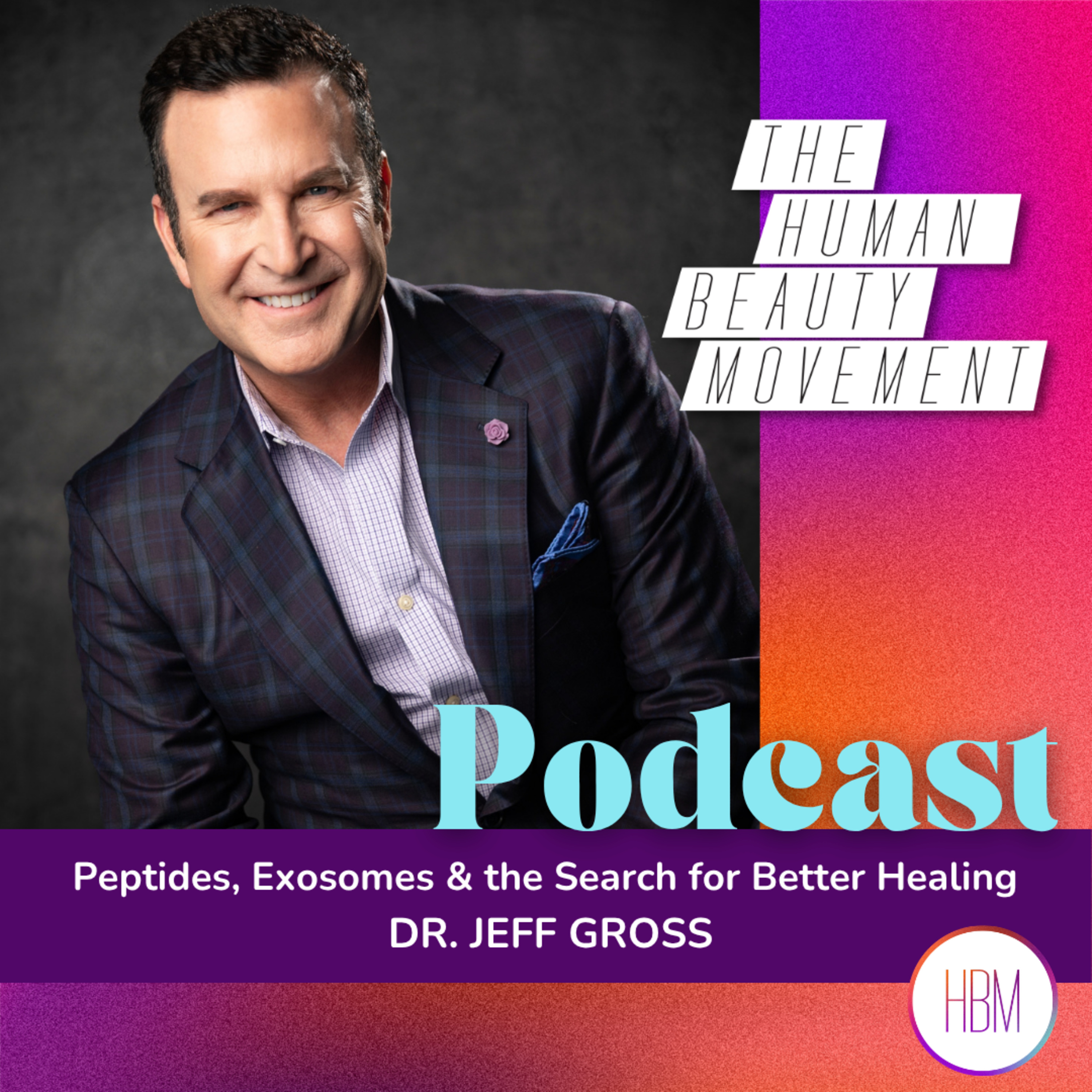


Dr. Jeff Gross joins the podcast to demystify peptides, exosomes, and regenerative medicine, exploring how these advances offer hope for more holistic healing and well-being. The conversation emphasizes looking beyond quick fixes, focusing on understanding our bodies, informed choices, and honoring our natural aging process rather than chasing endless improvement.
Disclaimer: The content provided on this podcast, website, and associated materials is for general informational and educational purposes only. It is not intended to be a substitute for professional medical advice, diagnosis, or treatment.
- No Doctor-Patient Relationship: Listening to, interacting with, or receiving information from this podcast does not establish a doctor-patient relationship between you and the hosts, guests, or affiliated organizations.
- Professional Consultation: Always consult a licensed physician or qualified healthcare provider for any health concerns, medical emergencies, or before starting any new treatment, diet, or fitness program. Never delay seeking professional medical advice based on information heard on this show.
- Limitation of Liability: The hosts, guests, and producers of this podcast disclaim any liability for any damages, losses, or injuries suffered directly or indirectly as a result of using or relying on any information contained in this program.
This podcast episode is sponsored by*:
- Humanist Beauty - Beauty for your skin & soul, Humanist Beauty is clean, conscious, and cruelty-free. Shop here → https://humanistbeauty.com
- SupeCaptainBraveMan - Super books for super kids! SuperCaptainBraveMan picture books are sweet stories that help build disability awareness for a kinder, friendlier world. Learn more → https://supercaptainbraveman.com
*The Human Beauty Movement may earn commissions from your support
Dr. Jeff Gross' Links:
- Website https://recellebrate.com/
- Instagram https://www.instagram.com/recellebrate/
- Facebook https://www.facebook.com/recellebrate/
- YouTube https://www.youtube.com/@stemcellwhisperer
- TikTok https://www.tiktok.com/@recellebrate
- LinkedIn https://www.linkedin.com/in/jeff-gross-md-5605605/
The Human Beauty Movement Links:
- Official Website https://thehumanbeautymovement.com/
- YouTube https://www.youtube.com/@thehumanbeautymovement
- TikTok https://www.tiktok.com/@thehumanbeautymovement
- Instagram https://www.instagram.com/thehumanbeautymovement
- Facebook https://www.facebook.com/thehumanbeautymovement
- Community https://www.facebook.com/groups/thehumanbeautymovement
- LinkedIn https://www.linkedin.com/company/the-human-beauty-movement
- X https://x.com/thehbm_official
- Pinterest https://www.pinterest.com/thehumanbeautymovement
Jennifer Norman Links:
- Lnk.Bio https://lnk.bio/iamjennnorman
- LinkedIn https://www.linkedin.com/in/jennifernorman
- Instagram https://www.instagram.com/iamjennnorman
- TikTok https://www.tiktok.com/@iamjennnorman
- YouTube https://www.youtube.com/@iamjennnorman
- Facebook https://www.facebook.com/iamjennnorman
- Pinterest https://www.pinterest.com/iamjennnorman
- X/Twitter https://twitter.com/iamjennnorman
Thank you for being a Beautiful Human.
Jennifer Norman:
When your body isn't feeling like itself, a promise to help it heal can be very powerful. Maybe an injury keeps coming back. Maybe you're noticing changes in your skin or your energy. You wanna understand what's possible, and suddenly everyone seems to be talking about peptides, but what are they actually doing? And how do we make sense of the distance between an exciting discovery and a treatment that we can trust? My guest today is Dr. Jeff Gross, a board-certified neurological surgeon and the founder of ReCellebrate, where his work focuses on regenerative medicine, longevity, and exploring alternatives to surgery when appropriate. He studied biochemistry and molecular cell biology at UC Berkeley, earned his medical degree at George Washington University, and trained in neurological surgery at UC Irvine before completing a fellowship in spinal biomechanics at the University of New Mexico. What's really intriguing about Jeff's journey is that he trained to operate and that his work now explores where there might be another way to help someone heal. Today we're getting into peptides, cellular communication, and the questions behind the headlines about recovery and aging. You'll come away with a clearer understanding of the research, what's still uncertain, and what to ask before considering a treatment for yourself.
Jennifer Norman:
We'll also talk about what it means to care for your body without turning your life into an endless improvement project. Let's welcome Jeff to The Human Beauty Movement Podcast.
Dr. Jeff Gross:
Thank you for having me. It's great to be here.
Jennifer Norman:
Now, you trained as a neurosurgeon. I was curious if there was a particular patient or an experience that made you think, I need to explore what else might help this person.
Dr. Jeff Gross:
I don't think there was one moment. It was a transition over time of frustration with the sick care system. And the lack of listening and options and customization for patients, patients who might not be ready for surgery because surgery comes up so quickly on the menu.
Jennifer Norman:
Oh.
Dr. Jeff Gross:
Orthopedic doctors' lists and things. So we wanted to, or I specifically wanted to find things in between the basics therapies and medicines and surgery. There was so many more options, particularly in the field of biologics, which takes me back to my undergraduate training, but I really wasn't able to push.
Jennifer Norman:
So let's talk about where you are now, because it seems like this is such an eye-opening and fulfilling place for you to be in terms of being able to find something which you're calling more biological. Can you explain that for our audience?
Dr. Jeff Gross:
Yes. And thank you for putting the word fulfilling in there because I wish I had these tools my entire career. It's so rewarding now and so, so much more efficient to treat someone not having to do surgery and getting a similar result.
Jennifer Norman:
Ooh.
Dr. Jeff Gross:
With something very basic. So biologic means it's not a traditional drug or pharmaceutical. It's not an abnormal chemical. Most of these things are very natural. They come from either the stem cell field, and we can dive into that if you like, and/or the cell signaling aspects of that, which include natural proteins, hormones, or smaller proteins we call peptides.
Jennifer Norman:
Okay. Yes. Let's talk about stem cells because stem cells, peptides, all of these things, a lot of people have heard about them. I'm not sure everybody knows exactly what they are or what they do and how they can help. So perhaps we can start with just the 101 basics if I've never taken a bio class before. What is a stem cell?
Dr. Jeff Gross:
Great. So the stem cell is a cell from which all other cells are derived. It's from how a baby is made. So a baby starts out as a single cell, a fertilized egg.
Jennifer Norman:
Mm-hmm.
Dr. Jeff Gross:
That is a master stem cell. It can create a human. That's amazing. So that cell divides and divides and divides, and you have an embryo, and that embryo starts to form characteristic shapes. And those are still stem cells, but they're not quite as powerful as that original single cell. And then by the time that baby is born, and it's made from all these stem cells, right? The stem cells are becoming other cells. By the time the baby is born, it retains what we call multipotent stem cells.
Jennifer Norman:
Mm-hmm.
Dr. Jeff Gross:
They're not as powerful as the embryo, embryonic stem cells, but they can still help the baby grow and develop, help the baby heal or the child heal or replace tissue. And we do that all the time.
Jennifer Norman:
Mm-hmm.
Dr. Jeff Gross:
And not just the baby or child, but the adult. We as adults tap into our own stem cells all the time. The problem is they get affected by the cellular effects of aging.
Jennifer Norman:
Uh-huh.
Dr. Jeff Gross:
The environment, things in our diet, stress, not sleeping right, not exercising, all those things affect our cellular health, including our stem cells. So they become lesser in number and lesser in quality. So part of that whole theory of aging is the stem cells aren't working as well, so it can't keep us young and restored and replaced.
Jennifer Norman:
Yeah. So there is a lot of just natural intelligence in stem cells. I mean, that they can just turn into any other kind of cell and they can replicate. And do all of these incredible things for regeneration. Where are stem cells in the body once we do become adults? How do you know where they come from and where they are?
Dr. Jeff Gross:
I'll tell you where they are, but I do want to rewind that last comment because we now know that stem cells aren't really replacing our tissue like we thought they were. They do some replacement. They replace skin cells, liver cells, things like that. But when you think about the traditional stem cell treatment, which has now been available for over 2 decades in the world, a little late to it here in the US, but we have it. Those stem cells are gone in a day or two after receiving them. So they're not doing as much replacement. They're doing some cell signaling that we'll get into in a moment. But our— we still rely on our stem cells because they give us that signaling to help our own cells restore and reverse the inflammation that's causing them to age and be damaged and degenerate and lead to disease.
Jennifer Norman:
Mm-Hmm.
Dr. Jeff Gross:
Those are mainly in our bone marrow. Many also live in our fat. Even those of us that have shed a lot of fat, there's still some, and they live around our blood vessels. And most tissues have some retained stem cells, even if they're dormant.
Jennifer Norman:
Interesting. Now, okay, let's talk about a real-world example of how you would utilize stem cells in order to help somebody avoid surgery potentially.
Dr. Jeff Gross:
We've moved beyond the stem cells, and that's where that cell signaling comment comes in.
Jennifer Norman:
Okay.
Dr. Jeff Gross:
So if we follow the 101 of stem cells, we now know that they are not doing the work, but they deliver the work to our cells. And our cells end up doing the restoration and regeneration and heal us like we could heal as a child, which is more robust. So those cells deliver 2 kinds of messaging to our cells, and the stem cell gives us the best message. It's a healing message, a restorative, youthful message, fighting inflammation message. And that code word inflammation is really key. It's that inflammaging is the other word for inflammation.
Jennifer Norman:
Yeah.
Dr. Jeff Gross:
So the first way is they deliver growth factors, which are proteins, and some of those are smaller called peptides. And then they also out-bubble a smaller, smaller than a cell vesicle called extracellular vesicle that takes a message out of the stem cell and delivers it directly into our cells. Those vesicles are called exosomes, you may have heard of. So the stem cell signaling is everything it secretes. And those 2 categories of secretions together, we call the secretome. And it's again, the exosomes from stem cells and the growth factors and peptides from the stem cells. That is what we're tapping into now because it's less expensive and more efficient, travels through tissue better, crosses the blood-brain barrier, and is the very reason a pregnant woman has that glowing skin and growing hair. She's getting a daily dose.
Jennifer Norman:
Oh, I remember those days. Yeah.
Dr. Jeff Gross:
So that's an example, that's a real-world example of a stem cell type treatment through delivery of exosomes from the womb to the mother.
Jennifer Norman:
So there are a lot of different ways that these exosomes, peptides, et cetera, can be delivered. What would be considered optimal for various cases? I mean, we hear about exosome creams. We hear about different, of course, injections and things like that.
Dr. Jeff Gross:
Yep.
Jennifer Norman:
And you probably do all of the above. Tell us about different kinds of scenarios.
Dr. Jeff Gross:
No, it's a great question. So we'll start with the most basic. Topically, exosomes and secretome cream, stem cell secretome cream, it's got the exosomes and some of the peptides, can pass through the outer layers of the skin and help rejuvenate and reduce inflammation at the dermal skin layers. So we have access to those creams. They have to be kept refrigerated. to be useful. So you see a lot of exosome creams on the market. Those aren't doing that much because they're warm.
Dr. Jeff Gross:
If you really want an active one, you have to get a cold supply one because they're bioactive. They have to be kept cold before you apply them. Then the second least invasive way to approach it would be nasal spray.
Jennifer Norman:
Wow.
Dr. Jeff Gross:
A great way to deliver exosomes to the brain and peptides and growth factors, all the signaling, is through a nasal spray. So we have patients that come in with inflammatory brain issues and we can help their body fight the inflammation. And we've seen amazing things right in front of us after the nasal spray. So that's an easy delivery, no big deal with the nasal spray. For people with lung issues, we can do a breathing treatment with the exosomes and growth factors, the Secretome, just a regular nebulizer machine we use. And then we get more invasive. So we have intravenous infusions for whole body reasons. Maybe there's an inflammatory issue, an autoimmune issue we want to help suppress the inflammation.
Dr. Jeff Gross:
Some people want to be optimized. I do it myself just for preventative reasons, longevity-seeking reasons.
Jennifer Norman:
Mm-hmm.
Dr. Jeff Gross:
So that's an infusion. And then our, the way I got into this field was through musculoskeletal care, joints and spine. So we inject structures surrounding the joints and the spine based on really good MRIs ahead of time, clinically matching that up with where the symptoms come from.
Jennifer Norman:
Hmm.
Dr. Jeff Gross:
And if we can target it right, we can deliver it directly through an injection. And we have seen some examples of cartilage growing back.
Jennifer Norman:
Wow. That's pretty incredible. Now, talking about where these come from, I know that you said in a human being, they're in the bone marrow, a little bit in the fat. Now, when I was back in the beauty industry and stem cells themselves were kind of the rage, people would say, oh, I just got this cream and it's from apple stem cells.
Dr. Jeff Gross:
Yeah.
Jennifer Norman:
And you kind of think, oh, well, is that gonna be effective for a human being? I don't know. Or does it have to be from a human? Does it, can it be animal derived? Where do most of these come from that are being used?
Dr. Jeff Gross:
Important questions. So first we'll talk about the human source, and then we'll talk about the plant source and the differences between human and plants, because it's a great conversation and you, your questions are awesome.
Jennifer Norman:
Yeah.
Dr. Jeff Gross:
So the human source that we use is from— is a highly vetted source. It comes from a non-COVID vaccinated, young, healthy mother screened in her first trimester. No drugs, no drinking, no smoking, only one romantic partner during the pregnancy. So they're clean. Then there has to be a C-section because that's a sterile surgery and the baby has to be healthy. So congratulations, mom, here's your healthy baby. We were going to throw away your amniotic fluid, your umbilical cord. Will you donate it? It's a true donation.
Dr. Jeff Gross:
It's handled by American Tissue Bank Services, the same people who handle kidney and liver and other organ type things. And then it's sent to an FDA-registered lab where it's screened and tested by a third party.
Jennifer Norman:
Mmm.
Dr. Jeff Gross:
And has a 2-week quarantine to make sure there's no infectious particles. All the viruses are tested, and then it's tested for quality. Both the count of the exosomes and the amount of the growth factors and proteins. So it's a very highly regulated, vetted process before we can acquire these biologics for regenerative purposes. So that's the human, and that's what I'm using. Yes, you can take stem cells out of your own body, but when you take your car to get the oil changed, you want that fresh oil in there. You don't want to put the old oil back in. So I like the bioactivity of the youthful source.
Jennifer Norman:
Mm. Okay.
Dr. Jeff Gross:
Now for plants, and it's amazing cuz all species on the earth make some kind of extracellular vesicle or exosome, or some people call them plant-derived exosome-like particles, but they're vesicles. Plants produce something called phytonutrients. They are the cool biochemicals that plants give us that our cells need.
Jennifer Norman:
Mm-hmm.
Dr. Jeff Gross:
Examples would be vitamins, vitamin C... Plants package their phytonutrients in these plant exosomes. And when you get apple exosomes, you're getting vitamin exosomes. You're not getting that regenerative signaling. You're getting a vitamin infusion, which is great, cuz that's an incredible cell delivery mechanism. And we've done some work around that. But for regenerative purposes, the plant exosomes are not adequate. So you might need both.
Dr. Jeff Gross:
You might need the phytonutrients from plant exosomes. The plant regenerative, the plant stem cells, and the human. And we use the human in aesthetic purposes, and I skipped that earlier. You can do a vampire facial with something called PRP from your own plasma. Well, we can also do it with the exosomes. You don't have to draw your blood and it's more potent. So we have applications for the human and the plant.
Jennifer Norman:
Okay. That was very, very helpful to know what the difference is and why you might use one versus another. So I appreciate that. The one that comes, or the ones that come from human sources sounds very expensive.
Dr. Jeff Gross:
Well, it's certainly more expensive than plants.
Jennifer Norman:
Yeah.
Dr. Jeff Gross:
Plants donate for a small cost, the cost of harvesting and all that. Yeah. Even though the human donation is free, that entire process and FDA registered costs—
Jennifer Norman:
It's a lot of due diligence. Yeah. Yeah, it is. Yeah. Hmm. Interesting. And so you mentioned a vampire facial, which I think that a lot of my audience may already know about, but some might be like, what? That's the first time that I've ever heard of that. And to some it can sound a little horrifying, but I would love for you to explain what is going on and why somebody would want to do a vampire facial.
Dr. Jeff Gross:
Well, it was discovered a while back that there's a healing property of blood, of your own blood even. And if you can concentrate the growth factors and the healing components of your blood, get rid of all the red stuff and just get that good stuff and concentrate it down and reapply it somewhere, you can have rejuvenating benefits because it has growth factors and peptides in it. So traditional method is you draw 7 or 8 vials of blood, you spin them in a tabletop centrifuge, so it separates out the red cells from the plasma, from that little bit of that in-between layer that has what we call platelet-rich plasma. And that is a part of blood that has all these lovely growth factors, probably some exosomes. And you can re-inject it, micro-inject it, or microneedle it, if you like, onto the face. We also use it on the scalp for thinning hair. And over multiple applications, you can have rejuvenating benefits to the appearance and the structure of the skin and the hair follicle. Well, we can also do that with the exosomes.
Dr. Jeff Gross:
It's called the vampire facial because of course you take your blood and it's very Draculean.
Jennifer Norman:
Exactly. You just get these horrifying like pictures of what this could look like. But yeah, it sounds very intriguing. And I suppose how many sessions would one want to take before they start seeing results, do you think?
Dr. Jeff Gross:
We prefer people to do 3 sessions spread apart maybe by 6 weeks at a time, for example. And then see how they're doing. And it depends on other factors too. How's their diet? How's their sleep? How's their hormone optimization? There's so many other factors that go into skin health. Then there are peptides and like the copper peptides, one that is important for collagen rebuilding and it delivers a copper molecule to the machinery of copper repair, copper. And so that's one. You have to rebuild the collagen, the elastin to get the structure of the face. You have to have muscle because you lose muscle over time, especially in the temple, which is very common around the time of menopause.
Dr. Jeff Gross:
So you have to build muscle. You have to be working at building muscle. There are facial exercises, but you have to have good protein and a good amount of protein. There's so much involved in that.
Jennifer Norman:
So interesting. Now, speaking about some of the things that you were doing, like if you have, like you said, cartilage regeneration and such, how do you know what to use and where to put it and how often to put it? I'm just really curious about if somebody comes in with an ailment, like I can't walk, my knees or my hips, or, and that happens so often as we age, the hips, the knees, the joints, like all of the joints are in trouble. And rather than getting a hip replacement or a knee replacement, which a lot of people get...
Dr. Jeff Gross:
Right.
Jennifer Norman:
As they're aging, how, I'm just curious, you said you look at the MRI and then what would be those other steps? Just for somebody who's listening that's like, oh, this is me. I just would love to give them that assurance of - this is the, what the process might be like if you were to try this as an alternative.
Dr. Jeff Gross:
Well, first we start by getting to know someone, usually by video. Most of my patients don't live here in Las Vegas. Vegas, where I practice. So we get to know you, we see what your health is like, because anything we do has got to be supported with a holistic approach to your longevity lifestyle. So sleep, diet, exercise, nutrition, hormesis, muscle mass, bone hormones, everything. So we help you with your entire longevity journey because we're going to get a better result from any joint regenerative approach that we might take.
Jennifer Norman:
Mm-hmm.
Dr. Jeff Gross:
If we build the pyramid of support underneath it, the foundation. So that's important. And it might include peptides, it might include mitochondrial health, so many things. And then we would prove and confirm to the extent a doctor can that your pain is coming from a specific spot because it might only be part of the joint. We see a lot of people, for example, who've had knee surgery, like a scope, not a replacement.
Jennifer Norman:
Uh-huh.
Dr. Jeff Gross:
An arthroscopy, and they're no better. Turns out their problem wasn't the meniscus tear. that many people end up having over time. It was a kneecap problem. So we really want to confirm the source of the discomfort and pain and dysfunction because we want to be very granular and particular. Of course, I've always done that in my spine practice and neurosurgery practice, but so many don't because of the watered-down 5 minutes you get with an orthopedic doctor who just looked at the MRI.
Jennifer Norman:
Mm-hmm.
Dr. Jeff Gross:
So we don't treat the MRI, we treat the patient. At some point, we like to examine the knee. We ask exactly where it hurts. And by the way, we're using knee as an example. We address ankles and toes and thumbs, a lot of thumbs.
Jennifer Norman:
Really?
Dr. Jeff Gross:
Particularly in perimenopausal women, all kinds of hips, all kinds of things. But knee is a great example. And we know how to approach this because they've been doing this in France for over 20 years. This is not new. And they have good published medical evidence on how to approach this. Now we've tweaked it in 2 ways. One is we use a very high resolution MRI ordered with some bells and whistles, meaning I know how to order an MRI better than someone just writing an order. That says knee MRI.
Dr. Jeff Gross:
I know how to order special additional views like you would order an In-N-Out Burger and know the secret menu. Not that I'm advocating we all should be dieting In-N-Out Burger every day, but indulgence sometimes is important, right? So, and then we correlate. We look at those images, we see if we can correlate the exact sources of the cartilage loss, and we do that. And then the other tweak to the French procedure is we are using more evolved biologics that we didn't have 20 years ago. So they have some incredible publications. We've been following them for a long time. And when I decided to add this to my practice and I went and retrained and re-educated, I looked around, well, what's the best approach and what's the best biologic? I married those and apply it here in our practice. And we have some cutting-edge things.
Dr. Jeff Gross:
And I have exemplar MRIs a year apart where we've done one injection. It's usually a one-and-done. There's no downtime.
Jennifer Norman:
Wow.
Dr. Jeff Gross:
And we have seen cartilage regrowth. Now that's not a claim. I'm not allowed to make those claims. The FDA has not approved those marketing claims, but I'm allowed to show examples. I'm allowed to show medical evidence that's published, and I'm allowed to support someone's informed consent, meaning here are all the options. You can have surgery, you can take more steroid injections, or you can look at this more logical biology. So that's sort of the thing. It's a one-time injection.
Dr. Jeff Gross:
We do it under a little twilight sedation, not general anesthesia. The, the injection's the easy part. The hard part is getting ready for it, gearing up, getting healthy, getting everything in order, making the correlation, knowing the targets. The injection's just sort of the final little check mark. Now people are sore for about a week, but it's well tolerated. You can go right back to activity. There's no long recovery. There's no, the same risks of surgery don't exist.
Dr. Jeff Gross:
And you haven't burned any bridges.
Jennifer Norman:
Now you said that the preparation for the injection is the harder part and getting healthy was something that you di. just mention. Are you saying that you have to maybe stop smoking, stop drinking? Like, are there things that you would want somebody to do in order to prepare? What does the preparation stage look like for somebody who might live in Las Vegas?
Dr. Jeff Gross:
I don't want— Well, I mean, most of my patients don't live in Las Vegas.
Jennifer Norman:
Right, right, right.
Dr. Jeff Gross:
So, you know, it's different for everyone. Yes, if you're smoking, it's gonna work against you and we wanna stack the deck in your favor for the best possible results. We used to do that for surgery too. If your hormones aren't optimized and your bone density's low, we've got to address that. That means your body's not growing. And I don't mean growing bigger, but maintaining muscle and bone are key longevity markers. And we have to foster that. And it takes more activity and intent and action in the perimenopausal, postmenopausal, or even older gentlemen crowd than it does in a younger crowd.
Dr. Jeff Gross:
We take it for granted. I say we, I'm not young anymore.
Jennifer Norman:
Neither am I.
Dr. Jeff Gross:
We took it for granted. And you have to be able to be what's called anabolic, growing, developing, turning over muscle and collagen and elastin and all these important proteins in the body. Otherwise you're wasting. You're either wasting away or you're growing, you know, not just mentally, but physically.
Jennifer Norman:
Yeah. Well, I think that a lot of people are, especially with women, as most of my audience is, then they think perimenopausal, menopausal, oh, it's getting to the end. And I have to do anything that I can to try to hold onto youth. And so it's almost like they're trying harder to keep that maintenance going. And so are there, I'm just curious about if somebody is all of a sudden kind of waking up and realizing, oh my gosh, I've got a pain. And that's just symptomatic of this larger scale kind of, you know, atrophy that is occurring in, in the body due to aging and neglect and whatever it, it might be.
Dr. Jeff Gross:
Yeah.
Jennifer Norman:
I'm just curious, where would you recommend somebody begin? Obviously you said, okay, we've got to stack the deck in your favor. So the obvious ones, the diet, the drinking, the smoking, like all of those things.
Dr. Jeff Gross:
No, it's a good question. If, unless it's an acute injury that caused it, that pain that you woke up with one morning in your joint, the process that led to that started years ago.
Jennifer Norman:
Mm-hmm.
Dr. Jeff Gross:
So we need to identify that root cause, the location, the cellular problems, and address it. It could be supplements. It could be building muscle and rehabbing, rehabilitating around that joint or all the joints. It could be more restorative sleep. It could be not enough protein in your diet. Hormones are a big issue. People are fearful of hormones because there was so much disinformation for so long.
Jennifer Norman:
Yes.
Dr. Jeff Gross:
And we now know that hormone optimization is probably the best thing you can do for suppression of inflammation, suppression of aging effects on the cells. I mean, you're not going to slow your calendar age, but you can slow your physiologic or biological age. And for maintaining bone density and joint health. So we start there. We look at the diet, inflammatory diet. And then if all those things are dialed in already or close to it, and we can make those changes. And of course, removing any toxins, if you're smoking and, you live next to a leather dye factory or something. We need to talk about that.
Dr. Jeff Gross:
But the next thing that we would look at perhaps is peptides. There are some incredible anti-inflammatory peptides that are, you know, not that expensive, easy to do, that are a reasonable option that your body makes naturally. We're just giving you back some extra, just like we would with hormones. In fact, peptides are what we call paracrine signaling molecules, which in effect are small hormones.
Jennifer Norman:
Oh, wow. I love that you're treating or looking at the entire person and the whole longevity train rather than just, okay, you've got a knee problem or you've got a thumb problem and let's just treat that, which is very different than I think than the current sick care industry...
Dr. Jeff Gross:
Yeah. Oh yeah.
Jennifer Norman:
Which is really just specialized down to parts and localization. So that's very key.
Dr. Jeff Gross:
Part. Cookbook-driven. Insurance forces you to jump through hoops. We call that rationing by hassle. That was one of the reasons I just couldn't do that anymore. It's horrible. It's absolutely—
Jennifer Norman:
There's so many poor people that are like, I just give up. It's more of a problem for me to try to cut through all this red tape and to actually get better.
Dr. Jeff Gross:
The insurance companies are counting on that. You lose 10 or 20% by attrition and frustration. They're making money. Yeah.
Jennifer Norman:
That is so true. I would love to talk about some of this language that you've been using. There's this reassuring language like natural, targeted, works with your biology. What do those descriptions actually tell us about whether a particular treatment is safe?
Dr. Jeff Gross:
Safety might be a different measure. It depends on who's defining safety. But your body has stem cells in it. It's always had stem cells in it. Getting some more logically should not necessarily cause you to have any alarm. Just more of it. Same thing with bioidentical hormones, right? We want bioidentical. We wouldn't want some modified one if we can help avoid it.
Dr. Jeff Gross:
Those things might be problematic. We want something the human body thinks is its own. Same with the peptides. You know, we make these in our body.
Jennifer Norman:
Mm-hmm.
Dr. Jeff Gross:
We make GLP-1s in our body. Now, our GLP-1s don't last very long, and the GLP-1s that we take from other sources are slightly modified to last longer. So that is a modification. In some way, but it's otherwise very natural instead of most pharmaceuticals, which are distilled from organic chemistry projects on a bench, which might mimic in part a natural occurring molecule, but sometimes just don't at all.
Jennifer Norman:
That's so true. With some specific ones, I think there's BPC-157 that gets a lot of attention for injury recovery. What would be like the strongest human evidence that you would point to that are, what are people claiming that the evidence can't yet support? I know that there are some some things where, yes, I'm always gonna put the disclaimer on this podcast that this is really just for entertainment and education and that we're not treating or preventing any diseases. Talk to your doctor about what's right for you. But, uh, it's just interesting to see, okay, there is FDA approval and, and those sorts of things. And then there are other things where it's like, okay, this is something that we're doing, which is kind of like a sidebar, but we are seeing some incredible unique—
Dr. Jeff Gross:
Yeah.
Jennifer Norman:
Changes going on here.
Dr. Jeff Gross:
Let's break that down in reverse order. You mentioned the word FDA approved, and that is a partial phrase that's often used to scare people. And I know you didn't mean to scare people, but the people who wrote that phrase do.
Jennifer Norman:
Yeah.
Dr. Jeff Gross:
FDA was set up by Congress to regulate marketing claims to protect consumers. They have the jurisdiction over marketing claims. So when you say FDA approved, the full phrase should be FDA approved marketing claim. So that's why I said earlier, I cannot make a claim, nor have I ever as a physician made a claim that we can cure or treat a disease or condition. Those are their words, and I am compliant therewith, both here on this podcast, other podcasts, and with every patient. The, uh, it's important, however, under the doctrine of informed consent that each patient knows all the options afforded to that patient. Otherwise, I'm not doing that patient the full service under my oath.
Jennifer Norman:
Mm-hmm.
Dr. Jeff Gross:
So when the, somebody says FDA approved, that has nothing to do with the practice of medicine and what a patient could receive, should receive, or what might be best decided by that patient. That means I, or a website or advertisement cannot say that stem cells cure a disease, exosomes cure disease, BPC-157 cures a disease. By the way, the same thing applies to vitamin D. Many people are vitamin D deficient. They get some sunlight. But they also need some vitamin D supplementation. Not FDA approved, but we do it all the time. How about dehydration? You get dehydrated in the hot sun and it's been hot in the Southwest this year, right?
Jennifer Norman:
Yeah.
Dr. Jeff Gross:
You, and some people are bad enough, they had to go to the emergency room. And what do they do in the emergency room, Jennifer? What do they do there?
Jennifer Norman:
They'll give them an IV.
Dr. Jeff Gross:
They get an IV, not FDA approved, but, but no one has any qualms with that. So this is a scare tactic. So people do not be scared. The phrase FDA approved deals only with marketing claims. You and your doctor have a private conversation about what options are best for you. Go over the risks and benefits. Get a second opinion if you need to. Get a third one.
Dr. Jeff Gross:
Don't take no for an answer. Okay. So now we've undone that part.
Jennifer Norman:
Thank you.
Dr. Jeff Gross:
As to human evidence, which I think was the earlier part of your question.
Jennifer Norman:
Yes.
Dr. Jeff Gross:
Because BPC-157 is a human-produced, naturally occurring molecule, it cannot be patented. So you will not find big pharma paying $50 million to do a large randomized controlled study of thousands of people. You're just not going to find that. We call it level 1, It doesn't, it's not going to exist. A lot of things in medicine don't have level 1 evidence, but we do them anyway.
Jennifer Norman:
Okay.
Dr. Jeff Gross:
Why? Because it makes sense and it helps. So we start, doctors start with observations. Science starts with observation. Remember in 6th grade when you learn about how to make a hypothesis and test it?
Jennifer Norman:
Mm-hmm.
Dr. Jeff Gross:
Well, that's based on observation. So we have incredible observation. We have incredible animal studies. We have human dose escalation testing on BPC-157 published, NIH PubMed, it's out there, up to 20 milligrams IV, which is a lot, no side effects.
Jennifer Norman:
Hmm.
Dr. Jeff Gross:
So everything else, you have to make your best judgment. Look at what's out there. There's not a ton of human evidence. There is quite a bit of evidence in Russia and they didn't share it all because this happened right before the Berlin Wall fell. And there's a doctor Cavinson, who really was looking at these peptides from animal organ meats to give cosmonauts and Russian soldiers an advantage.
Jennifer Norman:
Oh.
Dr. Jeff Gross:
So we're late to the party here.
Jennifer Norman:
Wow. Wow. So if somebody hears though, like they're listening to this podcast and they say, I just heard about BPC-157, I am a professional athlete, you know, I'm a football player, and, and they go and they rush to the doctor and say, this is what I need, what would you say to somebody who just hears something and then thinks, oh, this is the magic bullet, this is something that I need?
Dr. Jeff Gross:
Well, like with every patient, we educate. First, let's figure out what we're dealing with. What's your problem? Why would you want this? And if it fits, we look at the, all the options, right? We talked about going over all the options. You know, we could traditional steroids, anti-inflammatory drugs, and then natural things. And maybe peptides, including BPC-157, is one of those.
Jennifer Norman:
Excellent. I love that you're very methodical with how you are coming into every single individual and really seeing what is right for them. And that's what I think everybody should walk away with, is knowing that there's going to be a lot of information here, a lot of things are going to be discussed, but in the end, it's your body. You are a unique N of 1, and really have this discussion with your healthcare provider about what is right for you. But definitely stop smoking first. That's important. We'll say that for everybody.
Dr. Jeff Gross:
All your listeners aren't smokers, are they, Jennifer? What's going on?
Jennifer Norman:
No, no, no, I'm just— I'm sure everybody has a vice, you know. It could be, it could be something.
Dr. Jeff Gross:
We all, we all do things every now and then, you know. A little indulgence, you know, is good for you. As, as a colleague of mine calls it, vitamin G for gratitude. You have to treat yourself.
Jennifer Norman:
I love that.
Dr. Jeff Gross:
That's a shout out to Ben Azadi for that one. Thanks, Ben.
Jennifer Norman:
I love that vitamin G. Yeah, everything in moderation, including moderation, right?
Dr. Jeff Gross:
Including moderation. Arnold Beckman, excellent quote. Good job.
Jennifer Norman:
Now, coming from the beauty world, I'm also very interested in GHK-Cu. It's the copper peptide. And I used to have a line of products which was copper peptide, and that was something that was very good for increasing collagen. How does the evidence for putting it on your skin compare with the evidence for injecting copper peptide?
Dr. Jeff Gross:
Well, we know that the bioavailability of injection is superior to topical. However, because we're only delivering it to the dermis for the purpose you're describing, 'cause it has other purposes besides skin, that topical's very good. The reason for that is it follows what's called the 500 kilodalton rule. And that means, and that refers to a weight or a size of a molecule, anything below that size typically can fit through the outer layers of the skin and get to the cells, the dermis. Okay. And GHK is 3 letters, and those are codes for 3 different amino acids that make up that peptide. Those 3 amino acids plus the copper molecule are GHK-Cu. That happens to be just under 500 kilodaltons.
Dr. Jeff Gross:
So that can get through skin. So we like to do inside-out approach for people who come in and say, I want a skin makeover. And we will give them both topical and injectable. We might also, if we're doing a microneedle procedure or microinjection procedure, we would sometimes add the copper to that. Does sting a little, but it goes right away. But the results can be quite good. And especially in our GLP-1 group, we have a lot of patients taking GLP-1s and they lose weight rapidly. The skin doesn't remodel as fast as the weight loss.
Dr. Jeff Gross:
And we have people with, you know, paying the tax of the rapid weight loss, which is loose skin. And it takes a good 2 years sometimes. Well, we can accelerate that 2 years to get the skin to remodel faster by microneedling the GHK-Cu. So That is, there's a move there. You see some things on the internet about that, and that's a nice strategy. The earlier you start, the better.
Jennifer Norman:
I love that. I'd love to talk about some of the things that you wish people knew, like, but let's bust some myths here. Are there things about peptides that's out there in the ether that you wish people would stop saying or believing?
Dr. Jeff Gross:
Yes. So thing one is avoid the Chinese peptides. Well, people, I'm so sorry. The vast majority of them actually get produced in China. Even the good stuff.
Jennifer Norman:
Okay.
Dr. Jeff Gross:
Why? It's inexpensive. The large pharmaceutical houses there can do the chemistry to clean them up and get them. The key is the the big importers here, the legitimate importers who supply the compounding pharmacies and also supply the pharma industry, have to do third-party testing when they get here. So it has to be pure, 99% or better. Has to have no leftover chemicals in the cleansing process called TFAs. Has to have no other impurities like heavy metals that are part of that industrial process, and certainly no. added nonsense. You know, people you see on social media, oh my God, that's where the fentanyl comes from, right? So third-party testing, always certificate of analysis, always.
Dr. Jeff Gross:
And the, the big importers of these ingredients then supply it to most of the peptide suppliers out there. So just vet your supplier, look at the certificate analysis, has to be third-party test, not the same-party testing.
Jennifer Norman:
Mm-hmm.
Dr. Jeff Gross:
So that, that is what— and I buy from different sites for my own personal use, my family's use, because different sales and different— they run out over here what have you. So I buy just like everybody else. So first, China, they come from China, just don't buy them on Temu. Secondly, this whole FDA approval thing, which I think we debunked earlier, again, no claims can be made, just like vitamin D, we cannot claim that peptides treat or cure a disease or condition except in very certain circumstances where there are some approvals like tesamorelin or SS-31 and a few others for certain, certain disease states. And then we use those off-label. With all the other ones, there is no label. So it's just simply not Again, I just make— I'm a doctor. I've never made a guarantee or a claim about anything.
Dr. Jeff Gross:
Doctoring is an art based on science, how you apply that science in the right way for the right— for that individual, that n equals 1, as you said. So those are 2 of the big myths. Third is probably delivery. Subcutaneous injection in your belly is the way to go. If you have a knee problem, injecting the skin around your knee does not get you more to the knee. It just hurts more.
Jennifer Norman:
Oh, really?
Dr. Jeff Gross:
Yeah, that's mythological. The way it goes into your subcutaneous tissues, to your capillaries, up into your veins, to your heart, and gets redistributed throughout your body. So if you want to inject your knee subcutaneous tissue, that's a lot— you're going longer out of your way.
Jennifer Norman:
Wow.
Dr. Jeff Gross:
It hurts less in the belly and it's a more central uptake. It's better. The belly, the central area, the butt, the thighs, the belly, that's where you want to hit. I think there was one more myth that came to mind, and it is probably delivery in general, is that the bioavailability of subcutaneous Subcutaneous is far and above the way to go. For example, you hear about the oral strips that you can take, and the oral strips might get you 1/10 of the bioavailability of a subcutaneous injection. So although some people don't like the injections, I get it, it does require a needle, um, you would have to take an awful lot of oral strips to get a similar amount.
Jennifer Norman:
Interesting.
Dr. Jeff Gross:
And that would be cost prohibitive.
Jennifer Norman:
Wow. That is really interesting. Is there a treatment or an idea that you became less enthusiastic about along the way that you thought, oh, this seems revolutionary. And then all of a sudden it's like, oh, it didn't really do very much. Yeah.
Dr. Jeff Gross:
Great question. I've become more and more interested in mitochondrial health. You take care of your mitochondria and it really helps to take care of your cells. They're not just the powerhouse, they're so much more. So, you know, NAD+ declines with age and we know that NAD+ is a necessary biomolecule for electron transport chain energy production in the mitochondria. So you see these people getting NAD+ supplements and things.
Jennifer Norman:
You can't get NAD+ orally.
Dr. Jeff Gross:
it just doesn't make it into your system. You can't get it well with subcutaneous injection. It gets chewed up before it gets into the cell.
Jennifer Norman:
Wow.
Dr. Jeff Gross:
I've even tried an IV on myself at high dose. Some people swear by it in terms of how they feel, but biochemically, the way to get NAD+ into your cell is optimize your mitochondria through various means, peptides, exercise, things like that. And then take either NMN or nucleotide riboside, which is NR, or nicotinamide riboside. I may have said it wrong. NR. Those get converted intracellular where you need it to NAD+.
Jennifer Norman:
Yeah, because you see a lot of those companies out there that are doing NAD injections and things like that. So that's actually really a good point to know. And there's a lot of supplements out there on the market, but now NMNH is also a big thing too, I think.
Dr. Jeff Gross:
NADH or NMNH?
Jennifer Norman:
It's like NMN, I think it's NMNH.
Dr. Jeff Gross:
I'd have to look that one up. Sorry, that hasn't come across my desk yet.
Jennifer Norman:
Yeah. Oh, I actually have it in my cabinet. It caused me such an upset stomach that I stopped taking it, but it was supposed to be like a precursor to NAD+. At any rate, yeah, no, it's good to know what actually biologically is going to do something or what's just going to make expensive urine, as they say.
Dr. Jeff Gross:
Yes, exactly.
Jennifer Norman:
When you hear a claim like that something reverses aging, what would you need to see before you believe that it had a meaningful difference in somebody else's health?
Dr. Jeff Gross:
Well, we look at cellular markers that talk about biological age. There are different tests you can do. DNA methylation clocks. You can look at sugar molecules attached to antibodies called glycan. These are glycan molecules, sugar molecules. And with age, there are certain accumulations of those. So you can look at that. And if you can weave that backwards in a test, then you know something is moving in the right direction.
Dr. Jeff Gross:
The other thing you can look at is SIRT1 gene activity, which is an anti-aging gene. You can look at reactive oxygen species being reduced. You can look at senescent cell markers like beta-galactosidase. Now I'm throwing out a bunch of biochemical terms to sound smart, but these are the things we look at in lab tests to see if we're moving in the right direction. Now, if you don't have to do just that, if you track your heart rate variability, your HRV, with an Apple Watch or an Oura Ring or a Whoop Band or a host of other new health metric devices, and you can move that in the right direction, that is a great way, a great kind of secondary marker.
Jennifer Norman:
Oh, nice. I'm curious, before we move into my final questions with you, what is one research question that you are most excited to see answered?
Dr. Jeff Gross:
Oh, well, we now have access to some fancier things we didn't even get into today, like Muse stem cells and tissue-specific exosomes from neurological stem cells and things like that. And we are really looking to involve ourselves in some studies to use those more advanced regenerative biological tools. to move the needle forward in some of the things we're doing, particularly in the neurological system where I come from, and also in the spine. There are certain elements of the disc that are very difficult to regenerate. So we're really trying to move that forward. That's what I'm involved in, in part, and look to hopefully foster learning more about.
Jennifer Norman:
Oh, well, that sounds like exciting territory. So ladies and gentlemen, more to come on that front. Let's keep our eyes and ears open. So, Dr. Jeff Gross, I always finish up by giving my I ask my guests 3 common questions. I love to hear the answers. The first one for you is, what makes you beautiful?
Dr. Jeff Gross:
My, uh, the woman in my life. I call her my wife. She's amazing. I do what I do in part to, to keep her attention.
Jennifer Norman:
Ah, that's lovely. What does it mean to be human?
Dr. Jeff Gross:
Well, I look at this at the cellular level, but there's a part that I'm not good at, and that all those cells are connected by energy, and that energy, we're just starting to learn more about. We didn't get into today, you know, red light therapies and quantum things and pulse electromagnetic fields that probably work at the mitochondrial level. And those things probably get together and make up our soul. That's very far afield from a surgeon-minded anatomic cellular doctor like me, but there's something there and I would like to learn more about it.
Jennifer Norman:
That sounds really cool. And then my last question, what is one truth that you live by?
Dr. Jeff Gross:
That it's okay to say, I don't know, and go seek the education and the answer.
Jennifer Norman:
Such an important point. Oh my gosh. Well, Jeff, thank you so much for spending time with me today and for taking us through all of these questions behind your work. To everybody listening, I hope you leave feeling more comfortable asking questions about your own care. You deserve to understand what's being offered, what supports it, and how it fits the life that you want to live. There's room for all of us to be curious about what's science might make possible and to appreciate the body that we are all living in today. Your worth is never dependent on how young you look or how well your body performs. Remember that.
Jennifer Norman:
You can learn more about Jeff's work at reCellebrate.com. We'll include the link and the resources on today's topics in the show notes. If someone came to mind during this conversation, please do share this episode with them. And I'd love to hear from you. What does aging well mean in your life? Until next time, I'm Jennifer Norman, and this is The Human Beauty Movement Podcast. I'll see you in the next episode.
Jennifer Norman:
Thank you for listening to The Human Beauty Movement Podcast. Be sure to follow, rate, and review us wherever you stream podcasts. The Human Beauty Movement is a community-based platform that cultivates the beauty of humankind. Check out our workshops, find us on social media, and share our inspiration with all the beautiful humans in your life. Learn more at thehumanbeautymovement.com. Thank you so much for being a beautiful human.


