
Why We Never Feel Good Enough (And How to Change It) | Chris Orwig, Ep 221
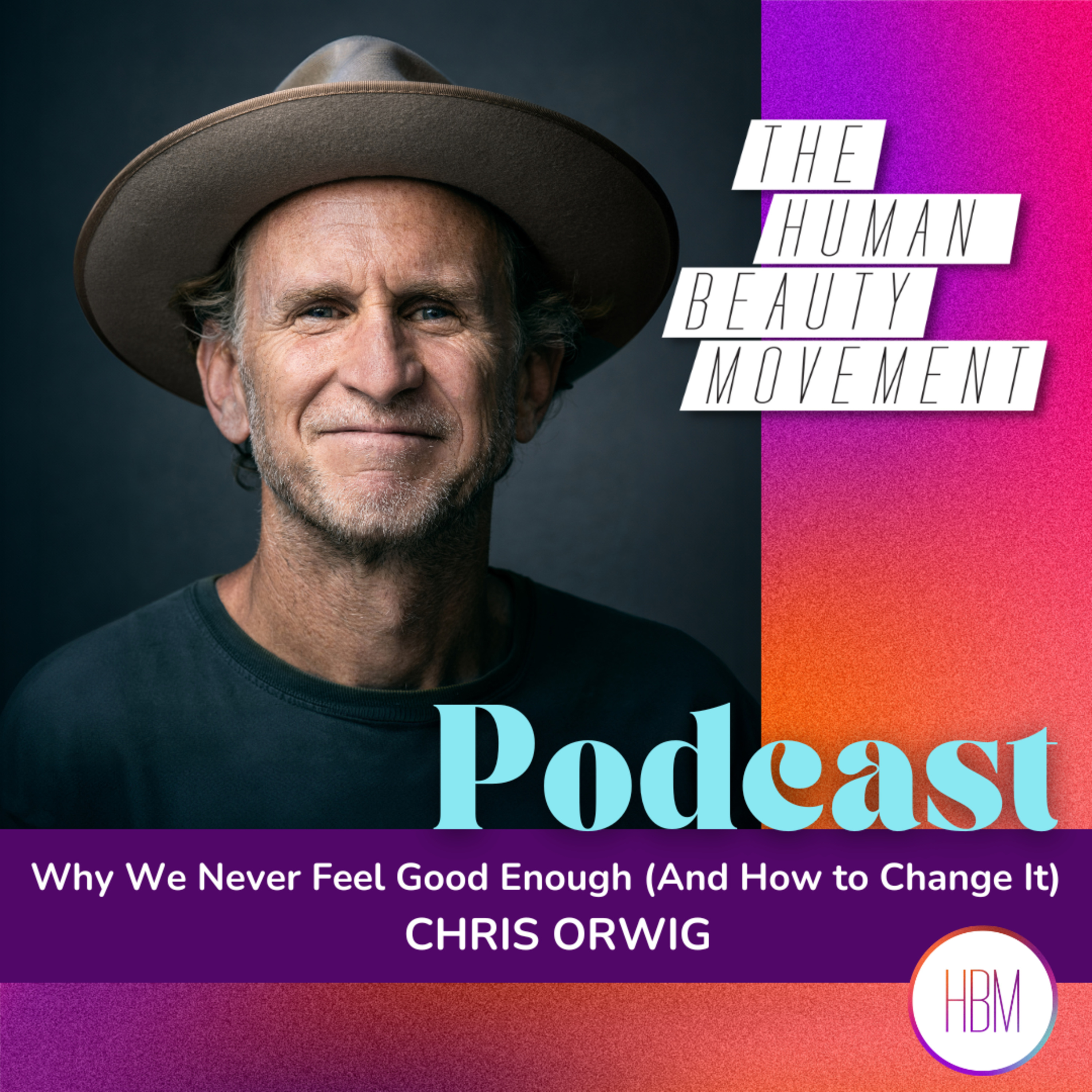


We explore the transformative power of creativity, presence, and authentic connection with celebrated photographer and "We Are Enough" co-founder Chris Orwig. The conversation delves into how art and creative expression can foster healing, build community, and help individuals feel truly seen and valued. The episode highlights the importance of vulnerability, thoughtful acts of kindness, and the vital reminder that every person is already enough just as they are.
This podcast episode is sponsored by*:
- Humanist Beauty - Beauty for your skin & soul, Humanist Beauty is clean, conscious, and cruelty-free. Shop here → https://humanistbeauty.com
- SupeCaptainBraveMan - Super books for super kids! SuperCaptainBraveMan picture books are sweet stories that help build disability awareness for a kinder, friendlier world. Learn more → https://supercaptainbraveman.com
*The Human Beauty Movement may earn commissions from your support
Chris' Links:
- Websites https://chrisorwig.com/ and https://www.chrisorwigphoto.com/
- Instagram https://www.instagram.com/chrisorwig
- Facebook https://www.facebook.com/chris.orwig.9 and https://www.facebook.com/chrisorwigphotography/
- LinkedIn https://www.linkedin.com/in/chris-orwig/
- Books https://www.amazon.com/stores/Chris-Orwig/author/B001IGJL9Q
We Are Enough Links:
- Website https://weareenough.co/
- Instagram https://www.instagram.com/weareenough
- TikTok https://www.instagram.com/weareenough
- Youtube https://www.youtube.com/@WeAreEnough1
The Human Beauty Movement Links:
- Official Website https://thehumanbeautymovement.com/
- YouTube https://www.youtube.com/@thehumanbeautymovement
- TikTok https://www.tiktok.com/@thehumanbeautymovement
- Instagram https://www.instagram.com/thehumanbeautymovement
- Facebook https://www.facebook.com/thehumanbeautymovement
- Community https://www.facebook.com/groups/thehumanbeautymovement
- LinkedIn https://www.linkedin.com/company/the-human-beauty-movement
- X https://x.com/thehbm_official
- Pinterest https://www.pinterest.com/thehumanbeautymovement
Jennifer Norman Links:
- Lnk.Bio https://lnk.bio/iamjennnorman
- LinkedIn https://www.linkedin.com/in/jennifernorman
- Instagram https://www.instagram.com/iamjennnorman
- TikTok https://www.tiktok.com/@iamjennnorman
- YouTube https://www.youtube.com/@iamjennnorman
- Facebook https://www.facebook.com/iamjennnorman
- Pinterest https://www.pinterest.com/iamjennnorman
- X/Twitter https://twitter.com/iamjennnorman
Thank you for being a Beautiful Human.
Jennifer Norman:
Every once in a while, you meet someone whose work instantly resonates with your own mission. That happened recently when I attended a We Are Enough event during Mental Health Awareness Month. An evening dedicated to connection, creativity, conversation and community inside a very cool art gallery in la. It was one of those rare gatherings where people weren't trying to impress each other, they were just simply showing up as themselves. And that's where I met today's guest, Chris Orwig. After hearing him speak and learning more about his work, I knew I had to invite him onto the podcast. Chris is a celebrated photographer, creative director, best selling author, educator, Sony artisan of imagery, and co founder of the We Are Enough movement. Throughout his career, he's photographed celebrities, athletes, musicians and change makers for brands including Google, Patagonia, Space, SpaceX and The Nature Conservancy.
Jennifer Norman:
But what inspires me most is that his life's work isn't really about photography. It's about helping people feel seen. Today, we're talking about creativity as a path to healing, the connection between art and mental health, building authentic community, and why perhaps the most important thing any of us can believe is that we are already enough. Let's welcome Chris Orwig to The Human Beauty Movement Podcast. Hi there, Chris. So great to see you today.
Chris Orwig:
Yeah, so great to be here. Jennifer, that was a beautiful introduction and I had the privilege of sitting next to you at that event, which was so wonderful. And you were so kind because that was kind of a start of some of the things we're doing. And I had a lot of anxiety about a couple of things and you were just like, it's okay. You gave me some good... You gave me some good calm energy and also enthusiasm and just. Yeah, likewise. The feeling is so mutual.
Chris Orwig:
I was like, any chance to get to continue this connection and relationship, I am a thousand percent in. And the work that you're doing and the energy you bring into the world is incredible. So.
Jennifer Norman:
Well, that's really, really, really sweet to say. And I am really just... I want to be one of the first more public people to congratulate you for receiving your second master's degree. This one is in counseling psychology. So big congrats to you. It is huge.
Chris Orwig:
That is huge and fun to do. I mean, at this stage in life, I'm midlife and it's a lot of times we get degrees or things earlier. So it's sort of fun to get to go back to school. Because at this stage, if you go back, I'm 53 right now. If you go back, you really want to go back versus maybe when you're younger, sometimes it's more like, well, you kind of have other questions in your mind, like, could this be something I want to do? But there's different kind of certainty or clarity that comes with age. So that has been really fun.
Jennifer Norman:
That is really fantastic. And we'll. We'll talk a little bit more about that because you've had such a creative career and you've worn so many hats, too. But I would love to start from the beginning. And in terms of who were you before all of this... What sparked your love of creativity? How did you get into doing what you're doing?
Chris Orwig:
Yeah, that's such a fun question. I've heard from one of my mentors, like, always ask questions that people like to answer. And so that is really fun. Origin story kind of questions like that. It's beautiful. But. And also because this is all about connection, I think the way we connect with people is learn how to ask other people these questions. So I'm going to steal that question from you, because it's beautiful.
Chris Orwig:
But then back to my answer. As a kid, I grew up in a home. My mom was a painter, and my dad designed and built the home I grew up in. And so I feel like the gift that gave me was when you build homes, it's like space and windows and architecture and all of that in a beautiful home in Northern California, opening up to rolling hills and just seeing that there was nothing there. It was dirt. And then we went to the site as the home was being built and as he built it and then lived in it my whole life. And so that was a gift in the creative process. And my mom, she used to take us on field trips to factories.
Chris Orwig:
And this was before it was common, but I've been to a licorice factory, jelly bean, Hostess Twinkie, fortune cookie. And so this was way back in the 70s, and she would kind of call these factories and say, could we ever get a tour? And we would put on hair nets. And I remember as a kid watching things being made, like, let's say the Hostess Twinkie, which is a kid. It's amazing. Now as an adult, that's absolutely gross. But in the... The kid version of me was like, wow, you take flour and sugar, you mix it, it goes through a process, and out comes this incredible thing. And then we got to eat them off the conveyor belt.
Chris Orwig:
I know what my mom was doing now, then I didn't. But she was teaching us about process, and she was teaching us that artists, creatives, makers, they start with ordinary ingredients and they have a vision and they mix all those things together. And it's through the mix, it' the process that something arrives or surfaces or is brought into the world. Same thing my dad did. He had his own process. So I think for me, it all started growing up around that and seeing that as kind of a beautiful way to be in the world.
Jennifer Norman:
I love that. It's almost like alchemy, when you think about all of these just basic ingredients. It could be wood, it could be nails, it could be paint, or it could be flour and sugar. And then, poof, a Twinkie is made, or a home is actually built. And there is something magical about putting all of that human creativity and love and art and just being and making something out of what could essentially be seen as ordinary materials.
Chris Orwig:
I love the idea that creativity is making the most with whatever materials you have at hand. I think Picasso said it best. He said, if I don't have red, I use blue. And I think if we compare the word creativity with weird, we can really understand the word creativity. So if I say, man, my daughter's math teacher is weird, there's a slight negative connotation. Typically, not always... keep Austin weird. Sometimes that is positive, but sometimes 'weird' is like there's something a little off. But if you say, wow, my daughter's math teacher is really creative, there's this hint or this lean towards positivity.
Chris Orwig:
And so I love the idea that creative people, they're like, okay, let me just take whatever I have, red, blue, whatever, flour, sugar, and let me figure out how to make the most with that. And that definitely led me to photography, because in photography, I've been a portrait photographer, and I have found that portraiture is the most inclusive genre of photography. And what I mean by that is if you're a fashion photographer, you need. It's about clothes. And so you need a certain kind of clothes. If you're architectural photographer, you need a certain kind of home. If you're a food photographer, you need a food stylist. Certain kind of food.
Chris Orwig:
If you're a portrait photographer, you need a human. I mean, literally anyone on the planet is a great portrait subject. And the ultimate goal of portraiture as a photographer is to look so closely at someone else, so deeply, so intimately that we see ourselves. So even if someone is a different gender, a different political or religious orientation or whatever it is, we can somehow identify. So let me kind of clarify that. So when I'm photographing Kelly Slater, which for me, 11 time world champion, surfer. I'm a big surfer, One of my heroes. I'm so excited about this.
Chris Orwig:
And when he says to me, Chris, I'm embarrassed to admit that for most of my life, I've played the idea of Kelly Slater versus been the person of Kelly Slater. The way I can see myself in that is I am not like Kelly Slater. I don't have that pressure. I'm not a public person, whatever, rock star athlete, but I can identify with the idea of playing, the idea of who I am versus who I am truly and authentically, and that it's sometimes easy to play to the idea, to impress or to protect myself, to try to be, because I'm nervous, but it's hard to really be true. And so I think that kind of encounter is. You see yourself in this. Like, oh, this is what we all do. Some of us, like, did that in junior high and we don't do that anymore, maybe.
Chris Orwig:
But for me to really realize, no, that's still alive in me and that's still an edge for me, that's an area of growth back to the enough thing. Because often if I'm not feeling enough, I'm going to try to impress. I'm going to play the idea of who I think people want me to be. And so portraiture is about just working with whoever you have, whatever, whoever's there, and then exploring how to, one, learn something from that person, see yourself in that scenario, and then create something that's maybe authentic or true or has an energy that could even connect with someone else as well. Like, man, I feel like I'm talking a lot, but, like, with that, there's a different surfer I photographed, but I showed someone who knows him and she started to cry. And that's kind of the goal, that you see someone so clearly that it creates this deep resonance and connection. And what people tend to think is photography is about how something looks, and that's absolutely wrong. It's really about how it makes us feel if we think of the best photographs in your lives.
Chris Orwig:
Like, one of my favorite is my grandfather, Ivan. It's not photographically good, but it's my grandfather, and I never met him. And he was a painter and a writer. And so having that picture makes me feel this connection with him. It doesn't matter. The camera and lens doesn't matter, the light, but it's the meaning in the story.
Jennifer Norman:
Yeah, I think that it's interesting because there are some photographs that are technically well done, but if the subject matter feels like it doesn't have a soul, I think that what you're doing is you're able to kind of tap into that personality and really identify with that human's soul. And that's the loveliness of what you're doing and your philosophy for taking portraits. And I think that there's something just intriguing about the idea of portraiture in general. People just love to see faces, I think.
Chris Orwig:
Yes.
Jennifer Norman:
And bodies. There's just, like, the ultimate art form and, you know, playing with light and contour and all of that. But there is just something intriguing about getting the energy and captivating that energy, capturing that energy, and really having somebody feel that emotion of what that person is conveying through that picture.
Chris Orwig:
Yeah. And even. And it would be great to capture a portrait someday if the stars align and we could work. That would be amazing to capture your energy. We collaborate in that way. But I think even it can be a healing experience. So one small story is, when I teach workshops, you often will hire... Or workshop teachers will often hire local models, because students that I have will need to practice.
Chris Orwig:
And it's hard to. Sometimes it's real people, so to speak, mechanic or surfer or something, but sometimes it's a. It's a talent model. And often what you learn with models is it's a very complicated space to be in because it's. In a way, it's kind of like being a military kid where you have. You live somewhere for first grade, and then you move for second grade, and then again for third grade for a model that happens every day. They, like, do a job and they connect with everyone, then they leave, Then they do a job, and then they leave. So they're often very guarded, and rightly so, because it's a tough world to be in.
Chris Orwig:
And so this one model really had her guard up. My students worked with her, and at the end, everyone left. And I said, hey, I didn't get a chance to work with you and capture a portrait. Could I do that? And she was like, of course. And I just couldn't get past the shell. And so, again, as an artist, a lot of times you have to trust your intuition. And so I ask a question, which is, if you were to get to the end of your life and regret something like never having gone to Paris or maybe something bigger, what would it be? And she thinks, and she says, I would regret never having been vulnerable. And I said, tell me more.
Chris Orwig:
And she says, well, I was dating this man. He was the love of my life. He was the one I knew in my heart. He was my soulmate. He was the one I was destined to be with my whole life. But I was never brave enough to tell him. I was never vulnerable enough to tell him that I loved him. And he got in this car accident and he now has permanent amnesia.
Chris Orwig:
And I visit him every week and he doesn't remember me. But I know... now her tears are coming. I know if I told him that I loved him, that he would remember me. And. And obviously my camera is down at this point and she's crying and I'm just kind of. We're all taking a moment for this to settle and. And then eventually I said, I think it would be beautiful to capture a portrait with that in mind. And she was like, I would love that.
Chris Orwig:
And so I captured this portrait and it's incredible portrait, one of my favorites. And because it's real and alive and it was healing for her. It was healing for her to tell that story she hadn't told anyone. And that image then serves as a moment of recognition. Sometimes with pain and trauma, the best thing we can do is recognize it versus ignore it. And sometimes the portrait encounter can offer an occasion for that. And the gift, of course, hopefully. Well, now I know was for her, but also for me because again, how do I see myself in that, Getting to the end of my life and never having been vulnerable in regards to sharing with someone that I love them.
Chris Orwig:
And so soon after that, I saw one of those Instagram quotes that we see all the time now, which was like, be the person who tells your friends you love them so often that they think you're weird or something like that. You know, like just weirdly, like just be all in. Like, tell people. And so I do because of that encounter. I tell people, you know, love you, bro, or love you sister or love you, mom or even Jennifer, you, I love you. I appreciate you. I felt your support at that event that was so important for me. There's love in my heart because of that.
Chris Orwig:
And so I think these encounters we have with people, whether. Cause some people are like, well, I don't do portraits. How does this relate? I think how this relates is being willing to trust our intuition to ask important questions and then being willing to gain the wisdom we need from other people, I think people are like God's messengers or the universe's messengers. Whatever language we have, that are there to share with us wisdom. And if we can just be receptive to it, it can really shape us and we can all kind of collectively learn together. That was a long story, but that...
Jennifer Norman:
That was a beautiful story. Hey, this is a long form podcast. So feel free talk and tell stories. I love that story so much because it is very relatable and it's so perfectly told on The Human Beauty Movement Podcast. Because this format, this, this, this platform came about because I was in the beauty industry for a quarter of a century and I feel like I had really kind of inculcated a lot of that sentimentality into my being in that. It was about the show, it was about the perfect picture, it was about the pose. It was about just like everything that might have been superficial was what thought was beautiful at the time. And then you fast forward to life be lifing, and you realize all of the things that you're missing when you are not able to really understand yourself and connect even with yourself, let alone other people. You can't connect with other people if you're not connected to yourself.
Jennifer Norman:
And so I did this deep soul dive into this work about inner beauty, about understanding humanity and who I really was. I had to really understand and get to know me and be okay with the imperfections. And that's the beauty of a portrait. The portrait captures imperfections. And those are the ones that really are so juicy, right? Those are the ones that almost like when you see like those beautiful National Geographic pictures where it's like you can see the crevices, you can see the just the light in the eyes or just what the mouth is doing and the crookedness and the. All of those beautiful imperfections that make us real human beings rather than the whole filtered effect and the things that we do to try to make everybody think that our lives are so polished and perfect. It's wonderful to be able to just like rip off that veil and have these kind of conversations about what humanity is about, what real beauty is about, and the fact that you're capturing that part of a human being and can express it in a way in color that might be two dimensional, but it is so much more powerful when you get that feeling.
Jennifer Norman:
It is so much more meaningful by being able to, most likely that model who had not been seen because she had not let herself be vulnerable, probably in that portrait, was able to really see herself for what might have been the first time. And that's really lovely.
Chris Orwig:
Yeah. And that, I mean, ultimately, I mean, isn't kind of the gift of friendship is. I like how the Zen Buddhist monk Thich Nhat Hanh put it. He said, the greatest gift we can give someone is presence. And I think when we're present with someone, people have the opportunity to feel seen, to be Seen. And ultimately, in friendship and connection, that's what we're going for. Whether it's mentioned therapy and stuff like that in therapy or in photography or at an event in an art studio. Part of it is.
Chris Orwig:
I think why I was so nervous at that event is the timing. And I wanted everyone to feel like they had a voice and had an opportunity to share and be seen and be known and to be heard. And that ultimately, that's at least what I'm searching for in my friendships, are people who can handle. I'll just say it this way. People can handle me. And what I mean by that is, I had this one friend who couldn't handle my failures. So I would say something like, you know that last photo shoot, I just dropped the ball. It was a disaster.
Chris Orwig:
And he'd be like, no, way, bro. You're like, Chris Orwig. And I was like, no, man. I just like. He's like, no. You always find a way of, like, pulling something off. And I think what he was trying to do was encourage me. But what I really, really needed in that moment was like, oh, man, what went wrong? Tell me about it.
Chris Orwig:
And it will be that, like, in that case, I photographed this guy named Jack O', Neill, who's kind of the inventor of the wetsuit for surfers. Big deal. He's since passed, but I felt like I didn't honor him well enough in the photo session or the portrait session. I felt like I made a few mistakes, and what I needed in that moment wasn't someone say, like, oh, it's all fine, bro. You know, high five. I needed someone to say, like, whoa, tell me more. And then even, like, there's times where I've cried after portrait sessions because of that. And when you're in a moment of grief event, any degree, say, when my dad died or something, I don't need a friend to be like, yeah, but he was, like, a great dad, and it's so cool.
Chris Orwig:
You had. It's like, I need someone to, like, hold that space and cry with me, right? And so friends that can be present in that way, that's the beautiful gift. And also celebrate when things go really well. If someone's like, dude, you're on this Human Beauty Movement Podcast. Like, how amazing is that? I'm like, I know. Can you believe it? Like, I sat next to Jennifer, got to go on a show. Like, are you kidding me? This is amazing. So I think that friend makes me feel seen, me feel heard.
Chris Orwig:
Right? And then that is a deep part of connection.
Jennifer Norman:
Yeah. I know, so many folks that are... they mean well, sure, they want to try to be that encouragement, but, yeah, that's what we would call toxic positivity, I think, rather than necessarily being like, well, tell me more about that. Oh, gosh. And sitting with you in that and hearing you out, rather than almost ignoring your feelings, it's not letting you feel those feelings.
Chris Orwig:
Yeah. Like, those don't count.
Jennifer Norman:
Missing them like, oh, don't be so down. Cheer up. Like, those sorts of things are. They're not helpful in terms of being able to really process what happened. And it really does shortcut a lot of that emotion.
Chris Orwig:
Yeah. Just to add to that, you know, one of my favorite child psychology teachers from grad school, she would commonly say that my least favorite thing to hear from an adult is that kids are resilient. And at first you think, like, what are you talking about? But when you deconstruct it is exactly what we're talking about. What will happen is there's something happens, like they're going through a divorce, or someone gets their bike stolen, or in our town, we had this big tragedy or whatever, and they said, well, kids are resilient. And then she would say, our whole profession is based on the fact that kids aren't resilient because kids go through a lot of stuff, and it lives with them their whole lives. And a lot of our work is going back to what happened in an earlier time in their life. So to say they're resilient is dismissing the reality of the situation and what we. Yes, kids are resilient.
Chris Orwig:
We are all. All resilient in certain ways. Not all of us, but some of us. And resiliency is an amazing quality to cultivate and to have, but it's not at the expense of dismissing what's really going on. And for me, as a parent of three daughters, that what that means is rather than, like, my kid's favorite stuffed animal gets chewed up by the dog, just being like, kids are resilient, you know, you'll be fine. Yeah. Get over it.
Jennifer Norman:
Or back when I was a kid, I didn't have a chance to eat it for a dog to chew up. So get over it.
Chris Orwig:
Yeah. To just be like, wow, like. Or to just sit with them and be quiet with them. Or. I remember when, like, maybe when my daughter's bunny rabbit died, we buried it in the backyard and just sat there and cried together. And we just. That was what you do. That's that presence, that connection, you know, hopefully she felt seen.
Chris Orwig:
And so I think back to that comment that my teacher said about kids. But I also think about that in regards to friendships, when tough things happen to people because we never know what's going to land for people and what I mean by that. Can I tell another story?
Jennifer Norman:
Yeah, yeah, please.
Chris Orwig:
Okay, so this is a kind of a kid's story in my backyard that I'm looking at. We have. Have two tree forts, a trapeze, a giant tire swing. We have a trapeze in the front yard. We have a little creek to go. We have all these kind of things. And a friend visited with his kids, and he's from LA, I'm in Santa Barbara. He said, Chris, your house has more ways for kids to get injured than any house or any backyard I've ever been to.
Chris Orwig:
And he's like, and I love it. Yeah. And I was like, that's it. It's very adventurous. It is very thoughtfully. Like, I've built all these things very thoughtfully. And he was saying that as a compliment, like, I love how adventurous your yard is. And he's this funny guy.
Chris Orwig:
So that he. That's the way he said it. And then a few weeks later, he was talking with his daughter and he was talking about me. He said, remember when we visited my friend Chris and the house and had all these things, and his daughter was just looking at him like, what are you talking about, dad? And then finally she goes, oh, you mean the chicken house? And he's like, yeah, because we have chickens and it was our first time holding a chicken, so she didn't care about the other stuff. All she cared about, like, what made an impact on her was holding a chicken. It's the first time she'd ever done that. And the reason that story sticks with me is we just never know what element of a situation is going to stick for people.
Jennifer Norman:
True.
Chris Orwig:
And sometimes that means related to lowercase T trauma. Someone can say something and we're like, that's not that big of a deal. But for them, maybe it is, or maybe they go through a life transition. And we're like, yeah, I know a lot of people have been through that, but maybe for them this is really hard for these sequential number of reasons. So I guess part of that is just knowing there's always more to the story, never jumping to conclusions for other people and allowing them to have the experience they're having versus dismissing it based on our own life experience, if that makes sense.
Jennifer Norman:
Yeah. Yeah. I think that that is really great. And. And it's interesting how you were just in the sequence of how we were talking in this conversation, you were talking about how you were capturing people's authentic beings and then also talking about their lives and caring about them, really caring about people and letting them grieve, letting them feel, Letting them have their emotions, letting them express rather than trying to beat it down or refine or try to adult it out of them or things like that. And it's so beautiful how you've made this connection to really having a passion for mental health, mental wellness, and helping people feel okay with themselves and feeling enough. Is that why you got involved in We Are Enough? You gotta tell us about the story about how that all came about.
Chris Orwig:
Yeah. Jen, you're so good at asking questions. Oh, my gosh. But, yeah, I think part of it grew from my friendship with Blake. And Blake is Blake Mycoskie. He's founder of TOMS and sold TOMS and then made a lot of money and then... You do have. When you make a lot of money, you buy a vintage car and go on great trips.
Chris Orwig:
And then in his case, became depressed and suicidal. He really lost his connection to his core, who he was and his purpose in life and his community. And we almost lost him. And I was part of his healing journey, and photography ended up being part of that. That's another little side story we could go to. But what I have found is I really love this idea that Dr. Martha Beck talks about a lot, which is that the opposite of anxiety isn't calm, it's creativity. And when we're anxious, we have a very narrow vision, and we're also kind of stiff.
Chris Orwig:
We're kind of stuck. When we're creative, we're kind of curious. So our vision expands, and we tend to take a half a step forward. And it's often when we're struggling emotionally, spiritually, physically, taking those small steps, small little wins that can stack up can really help us grow and move through grief or pain or loss or depression. And so in that context, and then also in kind of, he discovered his core wound was never feeling enough, we started to ask these questions of like, well, I wonder if this is unique to you, or broader and bigger. And of course it is.
Chris Orwig:
You know, of course it. It's like, I mean, I saw on the front of Honey Nut Cheerios, there's a little bee. There's a little honeybee on there. And the honeybee right next to it has these words that say, you are enough. And so I was like, that is so funny. It's like it's all over culture, right? Now, you know, culture, you know, our collective consciousness is picking up this idea that there' a lot of messages that are making us feel like we aren't enough. And then I love how Tony Robbins talks about it. He said, I've never met a king, a queen, a prince, a movie star that has never felt like... every one of them at some point in their life, have felt like they aren't enough. And what's underneath that is this feeling of not being lovable or not being loved. And ultimately, love is the most powerful thing in the world.
Chris Orwig:
Right. And so when we question, am I enough? Sometimes I think that can tap into deeper ideas. Am I lovable? Like, if someone were to truly, truly see who I am, would they accept and love that person? And so that really led to. And then also, obviously, all the photography I did and some of the studies that I did and work doing therapy with kids who've been through trauma, it really brought us this place of this passion project which is sharing this message. 100% of our profits go to these organizations that work with kids. And our goal is to raise awareness, create conversations, and also raise funds for these great organizations that traditionally are underfunded because it's hard to raise money in mental health. And so that's a real joy of ours, to do that and to be part of it.
Jennifer Norman:
That's amazing. And I'm wearing my Enough bracelet.
Chris Orwig:
Yeah, me too.
Jennifer Norman:
Yeah. Okay. Yeah. Do a shout out for the bracelet. So these bracelets are... The concept is you get one and you give one.
Chris Orwig:
Yes.
Jennifer Norman:
Why did you decide to set it up that way?
Chris Orwig:
Yeah, and you have to remind me real quick. I'll say that in one second. But one of the things we often do when we share a bracelet is ask someone who is someone who makes them feel enough. And then the idea is that you wear the bracelet with that person in mind. So remind me, you already told me, but I'm forgetting who is someone that makes you feel enough? What did you share that night? Or maybe what's coming in now? And who does that help you remember?
Jennifer Norman:
Yeah, I'm pretty sure I probably said my son, if I'm not mistaken, because he's my everything. He's my angel on earth, and he is just one who has changed my life for the better. And so I probably said my son makes me feel like enough because it's just an honor to be his Earth mama. And yeah, he inspires me every day with his strength and I'll say his bravery. I've got a tattoo that says 'brave' for him, because he almost died many times and he's chronically ill. He's got a very, very rare genetic disorder which renders him on a ventilator 24 7, non verbal, non mobile. And he wasn't supposed to make it past three years old and he just celebrated his 20th birthday. And so he's just an incredible testament to love and commitment and what community and support and extraordinary people who come together to figure things out.
Jennifer Norman:
And he's definitely shown me what life is about, the more important things. And it's really all about love. It really is. Yeah. And he's shown me that I feel whenever I didn't feel like I was enough, it was always for some stupid ass reason. It really, really was. And then just coming back to the core tenets of humanity is like, yeah, no matter who you are, what your abilities are, what gender, race, color, creed, background, who name you never. We're all enough.
Jennifer Norman:
Just, Just being.
Chris Orwig:
Intrinsically. Yes.
Jennifer Norman:
Just being. Yeah. And he shows me that because where society might say, oh well, he can't do that. Can't, can't, can't, can't. The fact that he is inspiring so many people to do and feel and so blessed and so grateful, it's like, yeah, his value is just undeniable to me. So he's my, he's my reason why I feel enough.
Chris Orwig:
Wow.
Jennifer Norman:
How about you? Why do you feel enough?
Chris Orwig:
That was incredible. Our time was cut short because I was a little bit stressed that night, but I didn't get to hear all of those details. But that is so beautiful. And it is part of the Enough movement is taking time to remember that there are people who have our back and that make us feel like we are enough and then also that we can then be enough for them. Which makes me think of the story of an Uber driver. I had a couple, I guess now it's like a month ago, but I was talking with her and she. I was just asking her a story and she was talking about her son was a major league baseball player but he got cut and now he's addicted to fentanyl.
Chris Orwig:
And she was crying and she was just like, I don't feel like I'm enough. I don't feel like I have the. What it takes to care for him, to walk through this with him. And she was just sharing about all that. And then at the right point in the conversation, I said, well, this may be kind of goofy, but like, like I'm part of this passion project with these Enough bracelets I know from what you're sharing that you are enough. That you care about him so deeply that you have everything you need inside of you. You have the community around you to support your son, to be there for him. Could I give you this bracelet? And she's just crying and she's like, oh, my gosh, you're right.
Chris Orwig:
I am enough. I do have what it takes. And so I think it's. And what I was hearing in your story was part of that. It's like your son, correct me if I'm wrong, but it feels like he brings out the best in you. You and our friends that we have, they bring this out in us. One for us to remember. We have what we are enough, ourselves.
Chris Orwig:
And we can care in deep ways. We can do hard things. And part of this movement is about remembering and remembering it for ourselves and remembering it others that have been there for us. And the last little part of the story is when I've shared this with an AA group at the end of the night, the group went around and shared and said, chris, thank you for presenting this. And this was amazing. But I have to tell you, probably about 80% of the people there said that was one of the hardest questions I've ever been asked because I couldn't think of anyone that made me feel enough. And then eventually they'll say, and then I thought of my sponsor, and then I thought of this AA group. And what that made me realize is that, you know, for some of us, we can easily think of, oh, yeah, my sister, my cousin, my brother, you know, whatever.
Chris Orwig:
They make me feel enough for my son. But then there are a lot of people out there who maybe don't have that quick response, who need us to be that person for them to just show up and to be able to handle them, whatever it is that they're going through, kind of like that Uber driver, that she can be there for her son. And so it's kind of a beautiful. I mean, not kind of. It's really a beautiful movement in a way, because it's a. There's kind of a universality to it, but also real. A lot of specificity to it. What I mean by that, it's kind of this global message like, yeah, we're enough, or, yeah, I am enough, but then more specifically for you, it's your son.
Chris Orwig:
For me, it's my dad, or whatever it is. It's important to celebrate those stories because in mental health, when we have shame, we tend to become silent. We tend to be isolated, and then there's increased risk. And all the stats show that if we have one person that we can connect with, we have a greater chance of getting through something. And so what we're trying to do in this passion project movement is to help people, to celebrate those people, be that one person, and be intentional about it. So you get one back to what you're saying, and then you give one. And the idea is you wear one, at least for me, with someone in mind, and then I give one to someone else, and I say, hey, Travis, you've always been someone. I just sent my friend Travis 1.
Chris Orwig:
You've always been someone who had my back. I'll never forget this moment. And. And I shared some stories with him, and then I said, and I want you to have this because I'm so grateful for you. And so the idea is this kind of creates a giving chain, where in mental health, there's kind of the opposite, which is kind of the silent isolation chain, where we become quiet, we internalize, we kind of remove ourselves from community, and then that ends up with increased risk. We're worse as fathers, as friends, as mothers, as brothers, as sisters, all the things. So we're trying to create this chain reaction that. That moves in the other direction.
Jennifer Norman:
That is so cool and so well thought out. It does speak back to the TOMS model of buy one, give one. I think that that was also, you know, just such a beautiful and groundbreaking model for doing business. And this, from a mental health perspective, I think is so important, because you're right. If you can reach out to just one person, just one person, you might be changing a life. You never know what that other person's going through. In my world, I actually decided to start this children's book series called the Adventures of SuperCaptainBraveman because I wanted more people to understand disability, especially among kids. If you can teach them at an early age, then they can grow up to be awesome adults.
Jennifer Norman:
And so what if we were to normalize disability? And the way to do that is so simple. It's to say hi. It's just like if you see somebody that doesn't look like you, say hi. And it can make all the difference in the world. Just that simple gesture, a smile, and say hello. And it can make somebody feel less lonely. It can really brighten somebody's day. It can do a world of good.
Jennifer Norman:
And so by even gifting them something like going a step beyond and saying, you know what? You're enough. You're really, you know, I. I see you. I've spent this time to learn about your story. Who actually strikes up a conversation with their Uber driver? Ladies and gents, I mean, this is the kind of person that Chris is. So yeah, yeah,
Jennifer Norman:
I challenge you. I challenge you all. Say hi to your Uber driver. Find out something about your Uber driver. You never know what they're going through.
Chris Orwig:
They are definitely neglected in our culture. And then I think also maybe just to add to it, knowing when not to give the bracelet is equally important. One friend going through really hard time, I think the last thing he would want from me right now is a bracelet. And so knowing just that, I think in our ambition to help. Back to presence. Sometimes the greatest gift is just presence. Or like you said, it's just. It's just saying hi.
Chris Orwig:
If you see someone and there's some difference, they're different from you in some way. Just smiling. Saying hi can be a beautiful act of kindness. Then trusting though, your intuition when the moment is right. Maybe you say more or maybe it involves gifting them something like the bracelet.
Chris Orwig:
But having that sensitivity, perhaps, and that awareness that sometimes. Let me just think of it, I was hit by a car skateboarding. And so I went through a lot of health stuff. And there were some times where I was just so sick of people asking me about how I was doing. The last thing I wanted was to talk about my problems. And so I want them just to ask me, like, what I thought of the movie or do I like this kind of gum, anything. I wanted just to say hi. Right.
Chris Orwig:
I didn't want all the other things stuff. And so kind of recognizing that. And really, for me, at least it's intuitive. But really asking the question, what is? I'm just trying to think of it. Let me just try to find out. You can tell I'm wrestling with this, but when people have been through some kind of trauma, capital T or lowercase T, back to what we were saying earlier, the worst thing we can do is dismiss it or kind of wrap it up in a package with a bow or even dig into it too quickly and too deeply. Sometimes a wound is so fresh that silence really is the best thing you can do. I can think of.
Chris Orwig:
I have a friend who recently lost her mom and she told me and I just stood there in silence and was like, wow. Or maybe I just said, I can't imagine how hard that is. You know, I didn't say, like, tell me more. You know, it wasn't the right moment. Or I didn't say, here's a bracelet. You Know, or I didn't, you know, say, like, what's the worst part about losing your mom? You know, maybe if I were that friend or is that moment. But it wasn't that moment moment. And so I think one of the things with mental health is, or back to your point, with kids with disabilities is sort of knowing those moments.
Chris Orwig:
So help us understand, maybe with disabilities and kids, help me understand great ways to engage with and connect with someone who. I see there's a school down the road where my wife teaches. I see at the school playground with a disability.
Jennifer Norman:
Yeah, thank you for asking me. Oh, the tables are turning. Yes, yes, the tables are turning. I think the wonderful thing to know is that we are all humans and everybody deserves respect and kindness. And so to the point of, you don't want to be dismissive, you don't want to go straight up to the caretaker and start talking to that person. The other child is there, hey, how's it going? And it's always okay to say, hey, do you need any assistance? Because oftentimes people are either dismissed or whatnot if they need help opening up a door. Now, some people might get offended, like, oh, you think I can't do that? But it's better to be on the side of helpfulness, I think, and kindness and doing everything from a place of just respect and love and never assuming that a person can't hear. You can't understand unless somebody who might be a caretaker, a guardian is with them and then can provide a little bit more information if needed about the situation.
Jennifer Norman:
Yeah, yeah. I remember that the one thing that I felt when my son was young and I would take him to the playground and the kids would stare and the parents would feel uncomfortable and awkward. And a lot of times, you know, the kids, they mean well. They go up and they're curious and they're like, what's wrong with that boy? And, you know, at first it might have stung a little bit, but I would rather have that conversation and be like, oh, this is what's going on, rather than have the parents shush and be like, don't be rude. Don't be rude. And, like, pull the child away. And it could be such a teaching opportunity. It could be such a wonderful opportunity for a connection to be made and for that child, the typical child, to learn there's nothing to be afraid of.
Chris Orwig:
Yeah, I love that. I love that. And maybe what I'm hearing you say a little bit is when there are maybe something that's challenging or we feel awkward, or is, I'm thinking in my own mind is just like, take a little breath and be like, like, you know, and just. And just be kind. You know, just be like, kind, kind like you would anyone. And if you make a mistake, if you say, hey, could I catch that door for you? Or do you need any help?
Chris Orwig:
And there's some they'd wish you hadn't said that. Say, no biggie, you know, and. And not assuming and engaging, you know, like you would in life. I'll even go back to our Uber drivers or anytime. I think there's a lot of opportunities in culture just to simply engage with people and to be kind.
Jennifer Norman:
Yeah.
Chris Orwig:
Is that fair? Is that a little fair summary?
Jennifer Norman:
I can tell you more often than not because as a single mom of a disabled boy, I can be exhausted. And a little helping hand goes such a long way. Like if somebody opens the door for us so that I can. I don't have to people. I mean, that shows such a lovely act of kindness. It's just really a thoughtful, simple gesture that goes a really long way in my book.
Chris Orwig:
So I love that.
Jennifer Norman:
Just thinking about that. Yeah. Yeah, I love that. Well, Chris, I loved our conversation so much. At the end of each of my podcast episodes, I always ask three common questions of my guests, and it's just so lovely to hear the different kinds of answers that are received. My first question to you is, what makes you beautiful?
Chris Orwig:
Hmm. That is such an interesting question. What instantly came into my mind was when my mom will say, that looks so cute. And then it made me think of, like, cuteness and beauty as like a feminine quality and something that I don't describe myself with. So I. So. But I'm just going to kind of work through my thought process here because I'm. And maybe this will be helpful for other men because men don't go around and say, like, I'm beautiful.
Chris Orwig:
We might say, I'm handsome. Or with my mom, I'm like, mom, I'm not cute. I'm handsome or something. You know, I remember as a kid saying that, you know, But I think what makes me beautiful, I strive to have a beautiful soul, which is one that shines brightly, that emanates a sense of warmth and peace and kindness. And I would say, that makes me beautiful.
Jennifer Norman:
I love that answer. Amazing. My second question, what do you think that it means to be human?
Chris Orwig:
Wow. I have had a few near death experiences in my life, and what those constantly remind me of is that life is this incredible gift. And I think to be human is like. I think when humans are at their absolute best. When humanity is at its absolute best, there is a sense of gratitude. I think to be humans is to appreciate deeply the gift of life which then compels us to really love and care for others.
Jennifer Norman:
That's great. And the last question, what is one truth that you live by?
Chris Orwig:
These are amazing questions. Oh my gosh. So fun. One truth that I live by, my gosh, is it the truth or just a truth, I guess is the question. But I think what's coming in right now for me is the one truth is the power of thoughtfulness. And I truly believe when we slow down, when we savor. One of the reasons I'm a photographer, there's this great quote by Marc Raboux who says that photography is savoring life at 1/100th of a second. I think when we savor dark chocolate, we buy a $10 chocolate bar and we just take a little bite of it. We're really tasting it it and we're slowing down.
Chris Orwig:
And I think attention, a quality of our attention in our lives define the quality of our lives when we're paying more attention, when we're more thoughtful, when we're more mindful. And so something, a truth that I live by is that it is infinitely important to pause, to savor, to reflect. And often what that then circles back to is to a kind of spaciousness, a kind of silence. Where I think it was Emerson who said let us be silent that we may hear the whispers of the gods. Or Mother Teresa said God is a friend of silence. I think it's pause in those quiet moments where we can connect to something bigger than ourselves.
Jennifer Norman:
Oh, thank you so much for those amazing answers. Wow, wow wow. Well, beautiful humans, thank you so much for joining Chris Orwig and I today on you thank this episode. To learn more about Chris, his books, photography coaching and the We Are Enough movement, definitely check out the links that will be in today's show notes. If this conversation touched you, do share it with somebody who may need the reminder that they are seen, valued and enough exactly as they are. I want to thank everybody for joining us for this episode. I'm Jennifer Norman and this is The Human Beauty Movement Podcast. I'll see you in the next episode.
Jennifer Norman:
Thank you for listening to The Human Beauty Movement Podcast. Be sure to follow rate and review us wherever you stream podcasts. The Human Beauty Movement is a community based platform that cultivates the beauty of humankind. Check out our workshops, find us on social media and share our inspiration with all the beautiful humans in your life. Learn more at TheHumanBeautyMovement.com. Thank you so much for being a beautiful human.


