
The Hidden Reason High Achievers Feel Unfulfilled | Laura G. Patac, Ep 213
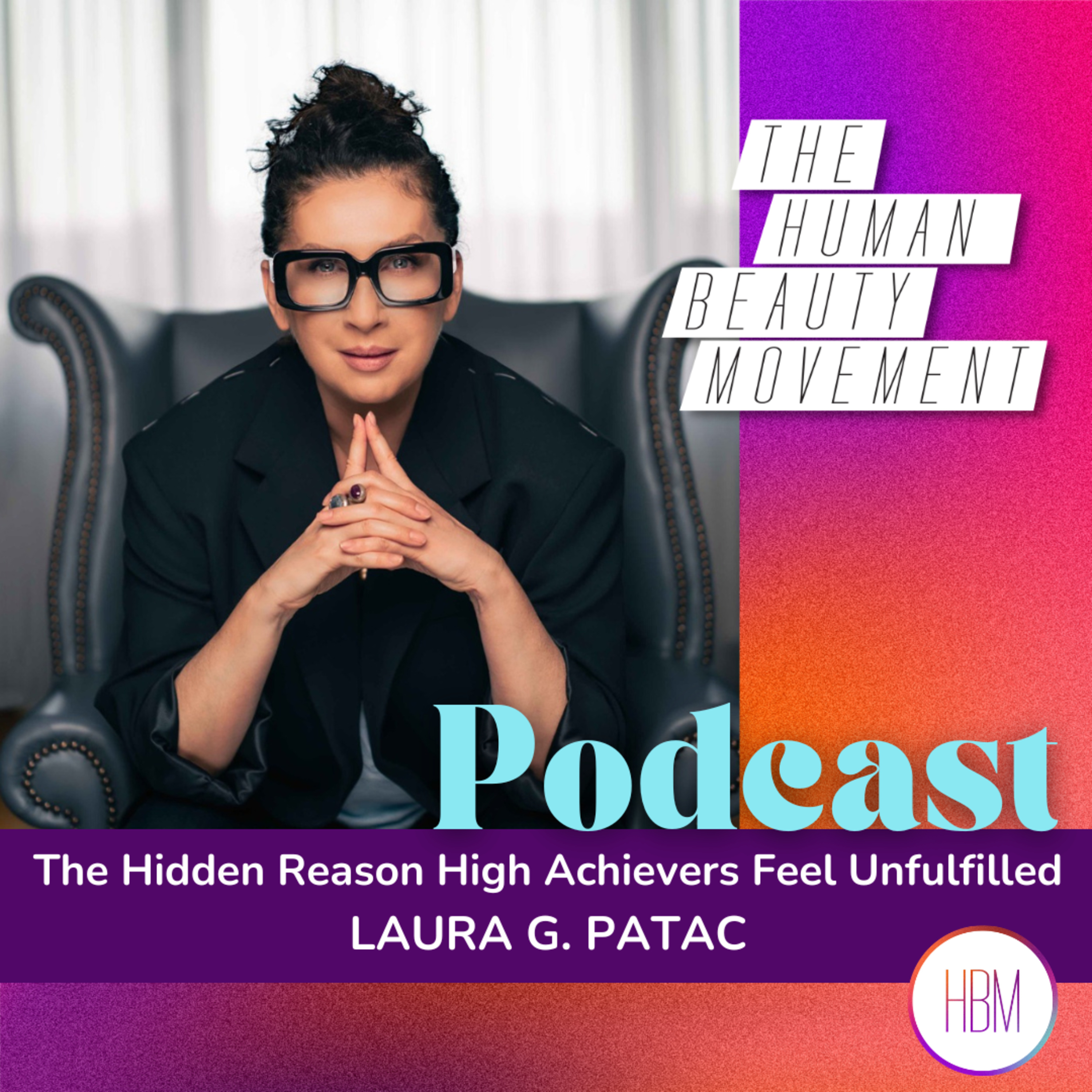


In this episode, we explore how the narratives we tell ourselves can shape, limit, or empower our sense of fulfillment, featuring insights from Laura G. Patac on aligning our inner and outer stories. Together with Jennifer Norman, the conversation delves into practical frameworks for self-reflection, pattern recognition, and intentional reinvention—moving from perfection-seeking to embracing wholeness as the true expression of human beauty. Listeners are invited to acknowledge their agency, honor their authentic strengths, and choose to rewrite the story of their lives with honesty and compassion.
This podcast episode is sponsored by*:
- Humanist Beauty - Beauty for your skin & soul, Humanist Beauty is clean, conscious, and cruelty-free. Learn more here → https://humanistbeauty.com/
- Prose - Prose believes that everyone deserves extraordinary haircare & that making things custom is the only way to give everyone their best individual results. Prose is also a certified B Corporation, proving that good business is always sustainable. Learn more here → https://prose.ffxwxg.net/thehbm
- Kosas - Kosas is makeup for everyone, that celebrates simplicity, looks as good as it feels and is good for you, too. Learn more here → https://kosas.7zgd.net/thehbm
- Opal Cool - Clinically tested cooling therapies designed for hot women at every life stage, and uniquely engineered to deliver precise cooling temperatures that offer safer, long-lasting, and effective cooling therapy solutions. Learn more here → https://opalcool.pxf.io/thehbm
*The Human Beauty Movement may earn commissions from your support
Laura's Links:
- LinkedIn https://www.linkedin.com/in/laura-g-patac/
- Book https://www.amazon.com/Whole-Not-Perfect-Empowering-Themselves/dp/1965480306https://www.amazon.com/Whole-Not-Perfect-Empowering-Themselves/dp/1965480306
The Human Beauty Movement Links:
- Official Website https://thehumanbeautymovement.com
- YouTube https://www.youtube.com/@thehumanbeautymovement
- TikTok https://www.tiktok.com/@thehumanbeautymovement
- Instagram https://www.instagram.com/thehumanbeautymovement
- Facebook https://www.facebook.com/thehumanbeautymovement
- Community https://www.facebook.com/groups/thehumanbeautymovement
- X https://x.com/TheHBM_Official
- LinkedIn https://www.linkedin.com/company/the-human-beauty-movement
Jennifer Norman Links:
- Lnk.Bio https://lnk.bio/iamjennnorman
- LinkedIn https://www.linkedin.com/in/jennifernorman
- Instagram https://www.instagram.com/iamjennnorman
- TikTok https://www.tiktok.com/@iamjennnorman
- YouTube https://www.youtube.com/@iamjennnorman
- Facebook https://www.facebook.com/iamjennnorman
- Pinterest https://www.pinterest.com/iamjennnorman
- X/Twitter https://twitter.com/iamjennnorman
Thank you for being a Beautiful Human.
Jennifer Norman:
It is a fact. The most important story in your life is the one you've been telling yourself all along. Truth is, long before we build careers, relationships or identities, we're already living inside a narrative. And when the story we tell the world doesn't match the one we tell ourselves, we feel it. That tension, that quiet misalignment. Today's conversation is about rewriting that story with honesty, courage and compassion. My guest is Laura G. Pattin, an award winning author, storyteller, leadership speaker, and Gallup Certified Cliftons Strengths Coach with over 25 years of executive leadership experience across 5 continents.
Jennifer Norman:
After her own powerful reinvention, Laura now helps high performing professionals navigate identity shifts and career transitions not by chasing perfection, but by choosing wholeness. She's the author of Whole Not Perfect, a deeply reflective, poetic and practical guide to aligning your inner story with the life you're actually living. In this episode, we explore the stories that shape us, the ones we outgrow, and how you can consciously step into the story you wish to become. This is your invitation to begin evolving into the very best version of you, starting right now. Laura, welcome to the podcast.
Laura Patac:
Hello, Jennifer. Thank you so much for having me. And let me say hello to all your viewers and listeners. It's a pleasure being here talking about reinvention, inner beauty, and also all those kind of topics which they might enable us to reinvent ourselves.
Jennifer Norman:
And I appreciate that you are joining me from Bucharest. I love the fact that this podcast is global. It's bringing the world closer together because we all do have these things in our lives that are universal. These stories, the stories that matter most to us and the stories that we've been telling ourselves and the ones that we truly wish to live out loud and for the future of our lives. So you write in your book that there are these two stories that matter most, the ones that you tell the world and the one that you tell yourself. And I would love to start there because I think a lot of people do feel that gap. They don't always have that language for it. Tell us, you talk about how we live inside stories before we even ever set goals.
Jennifer Norman:
How do these early stories shape the direction of our lives?
Laura Patac:
Well, I will start this talking a bit about storytelling because maybe people don't realize that, but stories, they are part of our life. Like every day. If you are thinking about our interaction, here you are thinking about the interactions which you have at breakfast with your family, with your kids at work, a presentation, a board meeting, a feedback which you give to someone, an interaction when you are queuing at the supermarket. Everything is storytelling. So to me, sometimes I'm even saying that even our dreams are stories. So if you are thinking, out of all the stories we tell in our life, two stories become extremely important. One is the story that brought us where we are right now. And it's about the stories we choose to live and the learnings we are taking with us from those kind of handful of three, five big stories that shifted our life.
Laura Patac:
Because there are those kind of stories that with a significant emotional shift in our life. So I'm calling that like the individual origin story. And the second story, which actually might be a consequence of the origin story, are the stories we tell to ourselves here in our mind. Now, if you are looking around and you are like seeing people, you see all the time this kind of like very confident, very professional people who actually are very successful. You feel that you can trust them. But what I realized, I realized that some of these people, they can be very disconnected inside. And I was one of those people because it was a moment in my life when actually success stopped feeling like an alignment. It was that kind of moment when I was relied on people, they were relying on me.
Laura Patac:
I was delivering, I was performing excellent to the external world. I was that kind of like, you know, perfect girl, problem solving for everything, taking responsibilities, which sometimes they were not even mine. But inside, internally, I was feeling that I was dripping, I was going down and I was like, it was not me. And that was the moment when actually I realized that the perfection, the external validation which I was seeking, because perfection, it's about the external validation, right? You want to be helpful, you want to be perfect, you want to be build the perfect image. But wholeness, I realized that wholeness actually is something else. Wholeness is that internal coherence, the way how the stories you already lived are aligned with the stories you tell to yourself. That the strengths you possess, the values, they are reflected in the significance you want to bring into the world. And when success, which is on paper and visible to the external world, it's different than the significance which you internally want to bring to the world.
Laura Patac:
That is where actually the reinvention begins.
Jennifer Norman:
That is such a beautiful thought, to be able to be in coherence with the way that you naturally wish to feel. And I think a lot of people can relate to the fact that their daily modern lives are not in sync with the way that they really wish to be lived. Because there is part of us that is driven by all of these success factors, by the career, by Obtaining by challenging and competing and doing things, getting promoted, getting accolades, getting all of this validation. But yet there's something that gets lost. And there's a big gap sometimes. And it gets bigger and bigger, perhaps as time goes by. And then you get to the midlife crisis or some people, quarter life crisis even, frankly, they say, and they're like, what is my purpose? What am I doing? They feel like they're kind of floating in the wind. And they don't know how to necessarily get back to the place that they really might feel more harmonious with themselves.
Jennifer Norman:
So how do you help people find that for themselves?
Laura Patac:
Well, when I left corporate world three years ago, I really went through an identity crisis. And because when that success, on paper, the title went away, the job description went away, the paycheck went away, I was somehow in the position to ask myself two or three questions. Let's see how many we are going to. Because there were many questions, but I selected, like, couple of questions which I believe they are relevant. So one, I ask myself, what am I good at? What am I good at to bring to the world? The second question it was, how am I gonna translate the rich experiences of the last 25 years into my next chapter? Meaning what? From my past stories I'm gonna take into something significant that comes next. And the third question, actually, it was a bit of a realization. I realized that during my stories, my career, all the places I lived and worked, I've met so many people. And I realized that each and every person coming into my life actually was trying to teach me something.
Laura Patac:
And when you start reflecting on those people who actually they impacted, they had a positive impact, or even they challenged certain moments in your life, and you start to know understanding what were the lessons. And you have that kind of aha moment saying, oh, my God, that was the lesson. Now I get it. And you understand that you took something with you, or maybe you didn't, you start, you know, also understanding who are those kind of people who can be very reliable into your next chapter. And you start, you know, consolidating that kind of circle of support which you need into the next chapter. So to me, ultimately, I ended up with a very interesting formula of reinvention, because I think any kind of experience when you close a chapter and you want to open a new chapter, either you move to a new country, either you step into a new relationship, either you start a new job in a new company, or you just want to write a new chapter, which you want, it's very different a significance than whatever you did before. That's a process of reinvention. You reinvent yourself.
Laura Patac:
And the reinvention process, it's a very simple formula of three elements. It's about reflection and giving yourself the time to reflect and to absorb your past experiences, understand how your strengths have been used, understand, revalidate your values, check again on your purpose. So reflection, it's an important step of reinvention. And based on that, you are in a beautiful position to reframe some of the things. Reframing, it's a beautiful tool which actually helps you take something which you understood as a pattern that comes as a pattern in your life. So for. And I'll give you some example, one of my pattern was always that because I'm responsible, and responsibility is one of my strengths. My top five strengths.
Laura Patac:
I was always taking on responsibilities that they were not mine and doing so actually, I was burning energy and I was, like, having my plate all the time full without allowing myself time to breathe. So therefore, understanding that actually you reframe it and you're gonna say, I'm gonna take those responsibilities, which actually, they are mine, and they are having a direct impact on three things important in my life. And that's that it's not that you are not taking responsibility anymore. You just reframe it. And I think reflection plus reframing, understanding the patterns from your previous stories enables you to start taking small, simple steps in correcting those patterns. Because those patterns actually, they can be corrected. And some patterns you want to step out of it. Some patterns you want to keep it.
Laura Patac:
Some patterns actually you might want to say, oh, that was something which actually helped me a lot. So to me, reinvention, it's a very personal process of reflection and reframing with intentional steps in understanding who you want to become.
Jennifer Norman:
I find that really intriguing because sometimes we aren't aware of the detriment mental nature of a pattern until you get to a breaking point, until you get to a place of burnout or a sever in a relationship, a blow up, something like that. And then all of a sudden you're like, where did this come from? How did this happen? How do we look back and reflect? So that piece of it is very important. Sometimes it's not as easy to do if you're just managing through things. And things seem, quote, unquote, I'll put in air quotes, seem to be going fine. It could be because you're developing some sort of a codependency on people around you. Example, people might have been used to Laura doing everything. And so they decided, oh, Laura can handle it. And so you did, because you did, you handled it.
Jennifer Norman:
And perhaps you received some sort of gratification because you said, gosh, I can do so much, I can take on so many things. So this was part of building identity for you until it wasn't. Until perhaps you said, you know what, there's a moment in time where I'm crying uncle, I'm burnt out. This is not the way that I want to be anymore. So I am choosing to reflect, reflect and then reframe this situation so that I'm only focusing on the things that are going to be nurturing and directly my responsibility. And I'm going to empower and delegate to other people those things which they should be responsible for. And that way we will create a harmonious, non codependent relationship going forward, which will be more sustainable.
Laura Patac:
Yeah, but the good news, I'm super excited that you brought up patterns and you picked up on this is because patterns actually are our individual strengths. Talking very loud. And the good news is that we have the possibility to understand what are those kind of like natural talents which actually, because we are using them every day, they become our strengths. And we as human being, I think that we sit on a very solid, unique foundation. And the unique foundation is built on our past stories, experiences, learnings, our strengths and our values and strengths. In particular the ones who actually shape patterns. They can be very easily identified at any point in life or life season. And there is an instrument called CliftonStrengths developed by Gallup based on over 50 years of research of human behavior.
Laura Patac:
What the overall concept of individual strengths says is that we as individuals, we all possess 34 talents.
Jennifer Norman:
34! Not 33 or 35. 34.
Laura Patac:
34.
Jennifer Norman:
Okay.
Laura Patac:
Defined very well. Now, the way how we access these 34 talents is very different by individual. It depends on our education, our upbringing, our early life experiences in a way that I think around age 18, you can check out through Clifton strengths. What would be your natural talents? Something which comes very without effort. It comes very natural to you don't need too much effort. Right. And your top 10 will always be very unique to you. And I'll talk about my top five just as an example.
Laura Patac:
Okay, now, so top ten comes very natural. The next ten, actually, in order to access those talents, you need to put a bit of effort. And I'm calling them the reading glasses. And the last one down to 34, actually, you really need to put a lot of effort. And I'm, I'm calling them the party glasses. Because when you want to buy some super cool party glasses, you put the effort to think about your outfit, to go to the shop to check. So that is like, you know, solid effort. Okay, now the top 10 strengths, which being very natural to you, some people, they might not don't even realize that they have it.
Laura Patac:
They create patterns in the moment when they are overused, underused, or not used at all. Let's speak very practical. So my top five strengths, my first one is learner and being a learner. It means that I'm curious first of all, but I'm also avid in understanding things, in drilling for information and trying to assemble pieces together, right? Learner. For anyone avid for learning, it's a good thing. But when you are overuse it, learning could also drive you to the rabbit hole. Because for example, if you are to have an exam or you, you want to prepare for a board meeting or you want to do anything, right, you just go like, oh, I need one more piece of information. Oh, I forgot, I need to read about that.
Laura Patac:
So therefore, you put a lot of pressure on yourself and you might delay things because you still need to search for one more piece of information, right? Which means that you might be in the position to first to confuse yourself, but also to confuse others because you might bring too many details to the table. My second one is arranger. Arranger means that you have the ability to juggle with multiple priorities in the same time, but also to allocate resources. But when you overuse that, you might be too pushy in planting too many priorities and you might stretch your resources. The third one, it's about responsible, which I just, I was just talking about it like you take over responsibilities which are not yours, and you go a bit to burnout. Strategic. Strategic means that you know how to move things from point A to point B. But you also, you are able to have a lot of risks assessment.
Laura Patac:
And sometimes if you are overusing your strategic, you might delay plans just because you are creating the plan B to plan C to plan D and so on, right? So understanding naming your strengths, actually you understand bouncing your strengths to your past experiences and challenges. You understand how you've been using your strengths. And then from that you'll understand, you know, the patterns, the pattern of getting exhausted and close to burnout too many times in life. Why? Because you're responsible. Was overacting the pattern of being always late or delaying things. The codependency because people, they become codependent on you because you are taking on Too much so. Understanding your natural talents, individual to you, and how you use them in the past reveals the patterns which you have the opportunity to understand, but also to reframe and to correct.
Jennifer Norman:
I find it interesting how those particular talents, I was thinking, okay, a talent at playing the harmonica, a talent at doing spreadsheet or being analytical. I suppose it's so curious to me how these talents are a bit more broader buckethead than I was imagining. And I can see how beautiful and how interesting this could be for people to go and maybe do an assessment and discover what their top natural talents are. And then the ones that are a little bit harder for them to adopt and then the other ones, interestingly enough, I think that a lot of people take for granted the things that come naturally to them as well. Sometimes you feel like, oh, I don't even have any skills. And then you say to your friend, are you insane? You're great at this, this. And they're like, yeah, but that stuff's easy. I think that people value like the hard work, this concept of what we call hard, hard work.
Jennifer Norman:
And that have to be difficult in order to be valuable or meaningful. Almost like a cost of entry, as it were.
Laura Patac:
Yeah. Because I think I remember from my career days right until I discovered Clifton strengths, which I use actively in my job and even, you know, hiring people, even when you put teams together.
Jennifer Norman:
Amazing.
Laura Patac:
I was putting teams together based on their strengths because you want to have someone having a bit of like, you know, strategic thinking with someone with influencing people. What I forgot to mention, when it comes to these 34 strengths, actually the strengths, they map on four areas. Strategic thinking, execution, influencing people, and relationship building. So your top 10, they map automatically and you can understand who is the one who is like, you know, very strategic with futuristic, with ideation, with learner, with those kind of like natural talents which can combine very well with someone in execution, like an activator. Let's do. Let's do things, you know, and when you understand how your strengths map on the four areas, therefore it's very easily for you to understand who is going to be partnering very well with you, complementing you with maybe natural things which you don't have. But traditionally in corporations we were always going to the performance reviews and we were looking to weaknesses, right?
Jennifer Norman:
Yeah.
Laura Patac:
And that kind of, like, I would say reframing. I think it's necessary, because I would say it very boldly, that growth is not going to come from fixing your weaknesses. Growth is going to come from maximizing and calibrating and Using, well, what you already have.
Jennifer Norman:
That's interesting because it is our nature in corporations to look at what are the deficiencies because it's almost like, well, let's, they always say like the weakest link. The team is only as, as strong as its weakest link. I love the way that you're approaching this concept of teaming so that you don't have people competing against each other so directly to be the leaders. For example, you've got a leader, you've got an executor, you've got the relationship builder, you've got the analyzer, you've got a well rounded team that can really harmonize together and push a project forward. That's really quite excellent. And I think that it helps people to appreciate the strengths and the skills and the talents that they have and not compare themselves so much with somebody else who may have a different set of skills and practices and talents too. Because a lot of times that's what we do too. We drive ourselves crazy saying, oh, I'm not like that person.
Jennifer Norman:
And they'll look at their weaknesses and they'll have that negative self talk and they'll necessarily be digging themselves a hole, probably a rabbit hole frankly to see, okay, what are the ways that I can be better at this? And they might be utilizing energy in not the most efficient way when they could be maximizing strength.
Laura Patac:
To your point, you are spot on because all the research is saying that people who are going to a job or they are performing things which they come very naturally to them, it means that they are also very joyful, it means that they like doing those things. So therefore you're going to have people extra motivated getting into a job where actually they are going to do what they like doing. Right?
Jennifer Norman:
Yeah.
Laura Patac:
And when someone is in a job which is not aligned with their talents, of course there is frustration. Of course, you know, you are looking over your shoulder, you put more effort, you drain your energy. Because yes, you. And I'll give you just one, one simple example. Right?
Jennifer Norman:
Yeah.
Laura Patac:
Empathy. Everyone is like, everyone is looking, oh, where is my empathy on my 34 talents? Well, empathy for me is on the 17, right. It doesn't mean that I'm not empathic, it means that I'm empathic when is needed. Because for me to be empathic, it takes a bit of effort, it takes a bit of energy. Right. Remember, natural comes natural. The rest you need to put a bit of effort. Those talents are accessible, but through that effort which you're gonna put to access those, you're gonna drain your energy and you might even create a bit of like, you know, internal frustration.
Laura Patac:
It doesn't come natural to you right now in a job when people are mostly accessing talents where they really need to put a lot of effort, that is going to also increase a bit of the internal friction. Right. So why don't we are understanding people talents, which they are their strengths in a way that they are compatible with the task, the job which they are doing. And in this way they become much more engaged, much more motivated and within the teams they complement each other, not competing with each other.
Jennifer Norman:
I think the underlying note here is that a couple of things but a person needs to know for of all, because some people are like, I don't know, but doing an assessment and really having that moment of self reflection or those periods of self reflection to know what am I good at, what do I love to do, what does come naturally to me, what do I feel most comfortable and energized about doing? And then looking at that in context of relationship, work environment, all of those things. And if the place where you're working isn't suiting the aspects of your skills, of your strengths and nurturing those, then you have agency, you have a voice in being able to express that that is the case and that these are the things that you would like to see out of that. And if the answer is no, find another situation, find another job. Because you will likely be butting your head against a wall and exerting so much energy trying to find fit in to a place. And that gets to that whole how we started this conversation. It's like when your external world doesn't really fit and there's this gap between what you really feel, how that story that you're telling yourself and what's going on in your external world. Getting as much harmony and closeness so that you feel that you can truly thrive is so vital I think here. And so that is the subtext is that you need to know yourself.
Jennifer Norman:
And then you have to have agency in order to be able to express that to your surroundings and create the surroundings that you wish to have. And if that is seemingly impossible because there are larger forces at hand, then you have the capability of jumping to a different opportunity. This is not victimization here. We don't want anybody to stay in a place that is torturous because too many people are, frankly, too many people are. Yeah, that does lead to burnout and dissatisfaction and stress and anxiety and depression. All of those things.
Laura Patac:
Yeah, I think to be in a place where actually you Stop. And you realize that what success is on paper, it's not aligned with who you are. That is self awareness. And that is a first step, naming your strength, claiming them when you understand how you use them, how you use them in the past experiences is going to help you to understand the patterns. And after that you take that and you aim it to your next destination, to the way how you want to live your life, to the next story which you want to write. So I think this process, it's a sort of like personal responsibility, if I may say so, right?
Jennifer Norman:
Absolutely. It's radical responsibility. One of my favorite lines, yeah, it's
Laura Patac:
radical responsibility, oh, I like that. I'm going to borrow it.
Jennifer Norman:
Radical responsibility.
Laura Patac:
Yeah. Because sometimes society is saying that reinvention, you really need to go through transformation. But the way how I position is that in reality reinvention, it's integration to integrate your stories, your strength, your values into the story and the person you want to become and the way how you want to live to choose to leave the next chapter in your life.
Jennifer Norman:
Yeah, yeah. I think that the title of your book Whole But Not Perfect is really just a powerful reframe unto itself. Why do you think so many of us are still chasing perfection?
Laura Patac:
I think there are internal and external factors, right. Sometimes. And I was the one caught into the tumble dryer of life, right. I was a hamster on the wheel. I was like going to prove myself to provide for my family, to do so many, so many things. And so in my time I was brought up in a very simple way. We didn't have so much information. And I think the old generations, we've been very focused on career like mm, get into a university, get a job, build that kind of like very predictable kind of life cycle, right?
Jennifer Norman:
Yeah.
Laura Patac:
But now I think with, with a lot of like information, with a lot of focus on individual well being, the awareness about the importance of looking inward. I see various individuals, different generations coming and asking questions and asking for support in order to understand better themselves before understanding others. So to me I think there is significant progress. But what it takes for anyone still being in this kind of like cycle of life, it's either an important event happening, a challenge, something which shifted dramatically to at one moment to just stop and reflect. And people, sometimes they simply don't take the time. I see you ask people, do you journal, do you have like, you know, do you put in your calendar like 30 minutes for yourself? Do you, are you going to coaching, to counseling sometimes? I think that in business we are always talking about business strategy. Right. I found it very interesting that individually we don't talk about your individual.
Laura Patac:
What's the strategy for yourself to bring yourself from point A to point B? First you have to define point A. Right. After that, you really need to define the point B where you want to go. I think that individually we really need to start building that individual strategy where reflection and taking the wide space to sit with yourself and understand where you are, where you want to go, why there are some things happening in your life. Understanding your patterns, understanding your strengths. This is something which, as I said before, it's an individual responsibility. Some they will always do it, some they will not. And that's a reality.
Jennifer Norman:
Yeah. I love that you've got these different frameworks in your book where you talk. This is wonderful because these different frameworks are very memorable and they help to guide different steps of the process of how you can begin and where it can lead you. Can you just, for example, take us through your story framework and how it helps people navigate real life moments?
Laura Patac:
Oh, definitely. So it's a very nice framework and actually helps a lot with framing realizations, you know, those kind of things that. I realized that. And I will actually. I will open the book.
Jennifer Norman:
There's the book, everybody. For those that are on video, you can see the cover, Laura just held it up there. It is whole, not perfect. There you go.
Laura Patac:
Yes, yes. So the story framework is helping anyone to start looking to their past stories and understand the realization from a significant moment of shift, either emotional shift, either when something changed in their life. And S stands for scene. Where and when does that experience begin? Right. Like any story, you always. You're gonna have a situation, you're gonna have some participants to the scene. There is a plot which is called tension. Right.
Laura Patac:
And that's the T from the story.
Jennifer Norman:
So S is seen and then T is tension. We're going to be spelling out story S, T, O, R, Y, which is what the framework is called. So scene. Where and when does it begin? Tension. What challenge or decision drives it?
Laura Patac:
Yes, yes. After that, we are looking to the opportunity, Right. Oh, what action the person is taking or it plans to take. And I think opportunity is the moment when, when you put it on paper, you also, you have your thought process, your critical thinking. Because understanding the scene, understanding the tension, you start already using your natural talents and they will be reflected into the actions you are taking. Right?
Jennifer Norman:
Yeah.
Laura Patac:
The revelation. So after that we have the R, which is the revelation. It's about the insights that emerged from the action. So how that went? Like, it went well. You had like some significant outcomes. Did you encounter any kind of other challenges? And to me, those kind of insights, they will force somehow to the critical thinking, like, oh, so what that means for me, why I'm thinking that it was a good outcome, was that like success? What drove those actions? They were. I was simply responsive to some external factors or to the situation, or I was super proactive in the situation. So there are many insights which can emerge.
Jennifer Norman:
It's interesting because on R, because I think this is a really very important part of the story framework, because the revelation may be an aha moment. It might be analyzing what happens. And it can also be your opportunity to reframe. Reframe, exactly. Yeah. And say, okay, well, this is how I interpret interpreted it. Was that helping? Was it serving me or what would serve me better? And so the R can be also a reframe to the why, which is the next part.
Laura Patac:
Exactly, exactly. So, oh my God, you are a master in framework because in the you forward, this is where you have the opportunity to take that insight and reframe it. To take what emerge and say, oh, how this is going to shape my next chapter? Right. Is it going to serve me? Is it not? Am I gonna. Is it the gold nugget which I always carry on with me, or is it something which doesn't serve me anymore?
Jennifer Norman:
Right, right. I think the you, the Y, which stands for you, which stands for you forward, is really that opportunity and it, and it is your choice, it's to say, okay, how was that going for me? If it wasn't, then what? How are you shifting it? What is the way that you are going to shift what that pattern was, what that story was, so that it can serve you, so that you can take it as something that is going to be beneficial. Because, you know, they always say in life you have wins or you have learnings, there's no losses. This is learning. I agree. So this is your opportunity to learn from that pattern and to transmute that pattern, to shift it and evolve into a new you. I love that. I think that's so helpful for people.
Jennifer Norman:
And so again, if you haven't gotten this, then this is your opportunity to take a look at the book. I'm going to put the link to the Amazon page where you can buy this book because there's so many beautiful nuggets. It's very poetic. It's wonderful for really absorbing and learning about these different frameworks and stories and things that you can use practically for just really reshaping, relearning, rethinking and developing yourself into a better situation as you wish to evolve.
Laura Patac:
Thank you so much. Thank you so much, Jennifer, for giving me the chance to go to. Through one of the three frameworks which are in the book. The other two. There is one framework, the dream framework, which I encourage everyone to use to shape their aspirations and their next story. But I think the story framework, as you said, is the very powerful tool to reflect and also reframe, which are the two important elements of reinvention.
Jennifer Norman:
Yeah. Because it is important to take note of these things, but then do something about it. That's really where that change is going to happen. You can think, oh, I keep doing this. And how many of us say that? Oh, yeah, I just. I don't know why it's happening again. It's happening again. Why is this happening to me again? Why am I looping? It comes when you decide to put that stake in the sand and say, I'm doing something differently.
Jennifer Norman:
It's. It comes from moving forward with changing it, living a way that is different from your previous pattern. Conscientiously. Yes, conscientiously. I love it.
Laura Patac:
And intentionally. And intentionally.
Jennifer Norman:
And intentionally.
Laura Patac:
And very important. Very truthful to yourself. Because there are some times when we have a distortion of the stories.
Jennifer Norman:
Yeah.
Laura Patac:
But when you are pen and paper or typing on screen, depending on everyone's choice, and you are with yourself, being truthful and intentional. There are two prerequisites of really going through a process which is going to enable individual growth, is going to enable you to explore yourself, but also to evolve to the next chapter.
Jennifer Norman:
Yeah. And sometimes that is best served with somebody by your side, like a coach or a therapist or somebody that can help you to mirror what's going on. Because we can get caught into our own emotional stories of the way things are and get trapped in that, the way that it feels in our bodies, if there's pain or if there's frustration or anger. And then the challenge becomes, how do you release those negative emotions that are associated with those past behaviors so that you can let them go, so that you can release them. There are methods like tapping or EMDR or other things that should be done with the aid of a professional, somebody that can really guide you to it. It's a little bit more difficult to do on your own. Not to say that you can't, but, you know, certainly it's very helpful to have somebody there to really, very empathetically as well as objectively be there to be your coach in this process forward. So that is an opportunity for you as well, if you're really serious about making these kinds of life changes for yourself, particularly when it comes to career, particularly when it comes to relationships.
Jennifer Norman:
I mean, I think that health, wealth, relationships, those are the big three that can really redefine and reshape your entire life as it's going forward and so that you can really live more harmoniously with yourself, within yourself, and more beautifully outwardly as well. Oh, Laura, this has been so helpful. I appreciate you so much for coming onto the show. At the end of my podcast, I always ask my guests three common questions. These are things that I believe bind us together as humans. Our beauty, our truths that we live by, and our humanity. My first question to you is, what makes you beautiful?
Laura Patac:
Very good question. I think people around me make me beautiful.
Jennifer Norman:
Cool.
Laura Patac:
I do grow and I learn a lot through the relationships I build. And I think that energy and all the wisdom and also support I'm receiving from people around me, that makes me beautiful.
Jennifer Norman:
Oh, what a nice answer. My second question, what do you think it means to be human?
Laura Patac:
Oh, being human. It means that. Okay, so this is. I thought a lot about being human and because right now it's about, you know, artificial intelligence, human intelligence. You know, we are going exactly in endless debates on this, but I think being human is one the ability to answer the question when people are talking and they're expressing a situation emotionally, to have the ability to reply back, I've been there. I know how it feels.
Jennifer Norman:
Wow.
Laura Patac:
Being human means that you can connect emotionally with someone and there is no artificial intelligence giving you that answer. I know how it feels. But we as human, we can give that answer as long as we resonate with the experience. We show compassion, we show empathy, and we truthfully, we've been there until we know how it feels.
Jennifer Norman:
And I know how that feels. And my last question is, what is one truth that you live by?
Laura Patac:
One truth that I live by is that we don't become by accident. We become for the stories we choose to live.
Jennifer Norman:
I think that that is amazing. Those are beautiful answers, Laura. I think there is something quietly radical about choosing to live in alignment with our truth. And it doesn't have to be polished, it doesn't have to be perfect, but it does need to be real. And that is human. And maybe that's the invitation here. It's to stop trying to be someone else, trying to hide those emotions and become a bit of artificial bot like substance that's in the world. I think that humanity is really about being so fully expressedly ourselves.
Jennifer Norman:
I really appreciate you Laura for reminding us that we're not here to be flawless, that we have these stories, that we can recreate these stories and we can be here to be whole and to have beautiful stories to come to everyone listening. If you appreciated this episode, please don't keep it to yourself. Please share it. Please comment, Please subscribe. Make sure that you are engaged with us because that is a way that our podcast grows. Your story that you have been living isn't fixed, it is still being written. And so the question just is, what will you choose next? Next I'm Jennifer Norman and this is The Human Beauty Movement Podcast. I'll see you in the next episode.
Jennifer Norman:
Thank you for listening to The Human Beauty Movement Podcast. Be sure to follow, rate and review us wherever you stream podcasts. The Human Beauty Movement is a community based platform that cultivates the beauty of humankind. Check out our workshops, find us on social media and share our inspiration with all the beautiful humans in your life. Learn more at thehumanbeautymovement.com. Thank you so much for being a beautiful human.


