
Before You Get Plastic Surgery, Watch This! | Dr. Ruslan Zhuravsky, Ep. 208
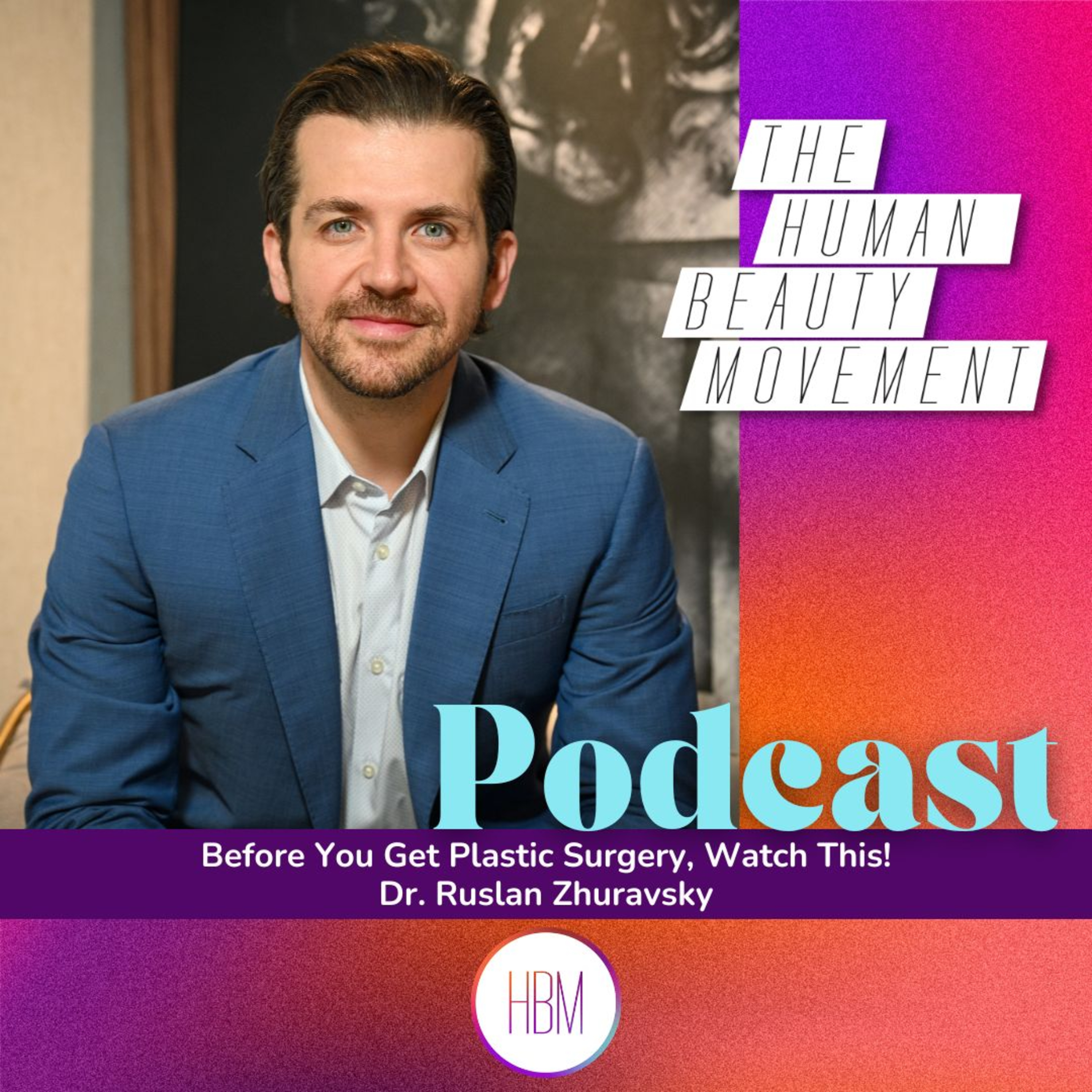


In this episode, we explore the complex intersections of beauty, identity, and self-worth through an in-depth conversation with Dr. Ruslan Zhuravsky, a board-certified facial plastic surgeon known for his discerning and ethical approach. Listeners are guided to reflect on the motivations behind cosmetic procedures and the importance of making empowered, informed decisions that align with authentic self-respect rather than insecurity. The conversation emphasizes the value of self-love and alignment with one's true desires, challenging the notion that external transformation alone leads to genuine inner happiness.
This podcast episode is sponsored by*:
- Humanist Beauty - Beauty for your skin & soul, Humanist Beauty is clean, conscious, and cruelty-free. Learn more here → https://humanistbeauty.com/
- Opal Cool - Clinically tested cooling therapies designed for hot women at every life stage, and uniquely engineered to deliver precise cooling temperatures that offer safer, long-lasting, and effective cooling therapy solutions. Learn more here → https://opalcool.pxf.io/thehbm
- Organic India - Organic India is a Certified B Corp that offers organic teas & supplements formulated by traditional wisdom and modern science. They embrace organic regenerative agriculture, ethical fair trade partnerships & beneficial, inclusive social change. Learn more here → https://organicindiausa.sjv.io/thehbm
- Curious Elixirs - Curious Elixirs are booze-free craft cocktails infused with adaptogens to help you unwind. Inspired by classics like the Aperol Spritz, Spicy Margarita, and Negroni, every Curious Elixir is crafted with organic ingredients and no refined sugar. Learn more here → https://curiouselixirs.pxf.io/c/4794562/1059410/13600?adcampaigngroup=CE-Affiliate-2021
*The Human Beauty Movement may earn commissions from your support
Dr. Z's Links:
- Website https://zfaceplasticsurgery.com/
- Instagram https://www.instagram.com/drzface/
- Facebook https://www.facebook.com/DrZface/
- Youtube https://www.youtube.com/@drzface
- LinkedIn https://www.linkedin.com/in/ruslan-zhuravsky-43a34335/
- TikTok https://www.tiktok.com/@drzface
The Human Beauty Movement Links:
- Official Website https://thehumanbeautymovement.com
- YouTube https://www.youtube.com/@thehumanbeautymovement
- TikTok https://www.tiktok.com/@thehumanbeautymovement
- Instagram https://www.instagram.com/thehumanbeautymovement
- Facebook https://www.facebook.com/thehumanbeautymovement
- Community https://www.facebook.com/groups/thehumanbeautymovement
- Pinterest https://www.pinterest.com/thehumanbeautymovement
- LinkedIn https://www.linkedin.com/company/the-human-beauty-movement
- X https://x.com/TheHBM_Official
Jennifer Norman Links:
- Lnk.Bio https://lnk.bio/iamjennnorman
- LinkedIn https://www.linkedin.com/in/jennifernorman
- Instagram https://www.instagram.com/iamjennnorman
- TikTok https://www.tiktok.com/@iamjennnorman
- YouTube https://www.youtube.com/@iamjennnorman
- Facebook https://www.facebook.com/iamjennnorman
- Pinterest https://www.pinterest.com/iamjennnorman
- X https://x.com/iamjennnorman
Thank you for being a Beautiful Human.
Jennifer Norman:
Today's conversation is a powerful and nuanced exploration of beauty, identity and agency. And it may challenge everything you thought you knew about plastic surgery. We're diving into the emotional and psychological dimensions of cosmetic surgery. How to make truly empowered decisions about your body and why no procedure should ever define your self worth. My guest today is Dr. Ruslan Zhuravsky, widely known as Dr. Z, a board certified facial plastic surgeon and founder of Z Face Plastic Surgery in Aventura, Miami, Florida. Known for his meticulous technique and artist's eye, he blends advanced surgical science with a deep respect for individuality, creating results that are refined, natural, and never trend driven.
Jennifer Norman:
But what truly sets Dr. Z apart is this. A significant part of his work is telling people not to have surgery. In a world that often sells transformation as the gateway to worthiness, Dr. Z offers something radically refreshing. Discernment ethics and a commitment to helping patients make decisions rooted in self respect, not insecurity. So if you've ever questioned whether changing your appearance will actually change how you feel inside, this conversation is for you. Stay with us.
Jennifer Norman:
Doctor Z, welcome to The Human Beauty Movement Podcast.
Dr. Ruslan Zhuravsky:
Thank you, Jennifer.
Jennifer Norman:
I'm so honored to have you here. Now, your work sits at the intersection of science and art and psychology. But what strikes me most is your willingness to tell patients no, which I think is pretty rare for a plastic surgeon. I would love to just hear a little bit more about your philosophy and what led you to practice in the way that you do.
Dr. Ruslan Zhuravsky:
Yeah, it's funny, when you tell people this, like, what do you mean? You say no. And that's actually a very big part of my practice because I feel that I have a certain job. I'm not just this plastic surgeon that you see kind of, you know, on TV. I'm a doctor. And as that, I'm charged with making people feel better about themselves. That's actually the rewarding part of plastic surgery. Other doctors, you cure diseases, there's reward in plastic surgery. I get to see those patients come back in and I get to see that joy on their face.
Dr. Ruslan Zhuravsky:
They, they don't even have to say anything. But I want to make sure that I get to that point every single time. And so if I feel that I might not, despite doing a great job objectively, if I can't get to that, subjectively, if I think that I can do this wonderful transformation and still not yield these results, where they get this fire in their eyes, where I truly make a difference, then there's no point in doing this. Then all we've done is we've done surgery, we've created a result, and the patient is still in the same place mentally. So what's the point? There's really no point in doing anything at all because they're still just as unhappy. So we just kind of wasted a surgery.
Jennifer Norman:
Oh, interesting. Let's talk a little bit more about that because it sounds very psychological and very emotional. So when somebody has these expectations that cosmetic surgery is gonna just fix their lives, fix everything. How do you know? How does a person come into your office? And what are the things that you're seeing so interesting?
Dr. Ruslan Zhuravsky:
There's so many different things. We don't like to. So I'm not a psychologist, obviously, and we don't like to really use words like, oh, psychology of this, because people get very intimidated by this. But of course, that's at the root of a lot of things in life. I didn't really do any sort of training on psychology or anything. This is more of a feeling. It's more of being a real human being, a real person. And I think then it becomes very obvious.
Dr. Ruslan Zhuravsky:
So there are two main types of patients that come in. There are those that want enhancements and those that want rejuvenation. Enhancements are things. Things where people say, okay, I look like this, but maybe I want my brows higher. Not because they fell, but I want them higher. I want a slightly different look. I want a rhinoplasty because I want the nose to look differently, or a lip lift because I want the ratios. I want something to enhance the way that I look.
Dr. Ruslan Zhuravsky:
And within those, there are the people that have very reasonable requests. And I feel that what I can do for them is going to really yield, not just an objectively great result, but something that's going to truly make them happy. And then there are those people who sometimes they're just chasing these minor things or things maybe not really worth chasing, or they're reasoning. They're just kind of all over the place. I don't know. Maybe I want this, maybe that, and I don't know what it's supposed to do. For me, it's more of a feel. It's not any one particular thing that they do or say, but you start to get a feeling where you're gonna do this for them, but they're always going to find something wrong.
Dr. Ruslan Zhuravsky:
And again, we can use all these words like psychology, body dysmorphia, and all those are certain criteria, but there are lesser effects of it. There are. There are just these minor things where you start to get the feeling again that you can do all of these surgeries and they can start chasing and chasing. And I see this a lot with some of today's younger crowd also. Some of them have reasonable expectations and reasonable things that they want. And other times, they're already beautiful and what they're chasing is not actually going to make a difference. So those are the enhancement. But also then there's the rejuvenation.
Dr. Ruslan Zhuravsky:
People, of course, age, and it's tough. I mean, being somebody. I'm 42 right now, and I'm seeing the signs of aging, so I do understand why, where that goes. And some people really do have reasonable things that they come in for. Listen, I noticed that this has been happening. I look more tired, I look more aged. I don't even look my age is one thing, or I don't look as refreshed as I feel. And so they want to achieve that look to match their inner beauty.
Dr. Ruslan Zhuravsky:
And then there are those that are just so fearful of aging, and they're going and they're chasing after these minor things. So really there's those two. And we want to spot the ones that are in the reasonable categories. They come in with specific requests, maybe a specific request, like they want a lip lift because they saw things about lip lift, or they want a rhinoplasty because this is something that they've always wanted. Great. We talk about it. And if we have a mutual alignment based on what it is that we can do for them, and that really kind of excites them. And yes, this is what they want.
Dr. Ruslan Zhuravsky:
Fantastic. And then you get the ones that come in and they think they want this, they think they want that, and it's a conversation. This is actually why my consultations are usually pretty extensive. We're talking about minimum 30 minutes because we have to feel these things out. We have to go back and forth again. I don't have one particular question that I ask them. I just start off with, tell me what it is that I can do for you. And then they start to open up, and I kind of take it from there if I think that they're realistic or not.
Dr. Ruslan Zhuravsky:
So that's kind of how I start to assess it.
Jennifer Norman:
Interesting. I will tell. I'm very open about my surgeries. I tell people on my podcast, whenever I have plastic surgeons on or people who are talking about aesthetics, I have nothing to hide. I share everything. When I was in my late 20s, I was dating somebody, and I remember the person who had lived in Las Vegas and was used to women looking a certain way, shall we say in terms of their breast size, was encouraging me to get a breast augmentation. And I think I was at the place in my own journey where I was insecure. I was very insecure about my body, I was insecure about my looks and so I went and I mean I was pretty flat chested and this person was encouraging me to get like a C cup, which on me at 5' 2" would have been a little silly, I think I...But to each their own.
Jennifer Norman:
So I ended up getting one but I was pretty adamant. I just wanted it to look natural and I ended up really happy with the results. But at the same time I was like, I need a liposuction, I need like I was just everything about me, I just wanted to change. And I think I was doing it because of some sort of an insecurity and a self loathing rather than like really just embracing the result. And so I ended up in almost like this kind of revolving door I would say, of going back and getting more life, you know, like it was just like one of those things that over my lifetime I just felt myself picking, nitpicking at like all these different things on my body that were wrong.
Jennifer Norman:
Fast forward to just last year when I had like the full boat done. It was really just exciting to me. I felt like there was a different energy about it. Just as you were saying, like you come in and maybe you're not as so satisfied with the results because you're always like, well, what's the other thing that I can do? What's the other thing? It's almost like painting one room in the house and then the rest of the house needs redoing, right? But then you get to a place where it's like, it's enjoyable and you know that what you're doing is going to be exciting and you're really looking forward to the inside matching the outside of your appearance because you do feel like, well maybe you've aged and something about your outside is just not expressing that energy that you really feel inside. And so it's a very individual thing I think and it's nice that you can really discern that in your long consultations when you're talking to somebody. Because I think at face value a lot of people judge other people for getting cosmetic surgery or getting things done. And I'm like, you just don't know what that person like let the person be, let the person do what they're doing. We don't know what's going on inside of them and it's kind of like I feel like live and let live.
Jennifer Norman:
And so yeah, it's really refreshing to hear from the doctor's point of view what they see and the, the ones that are really in that emotional state where they can come back and be like I love what you've. You know, I love the new me. I love this, I love. You know, this is so exciting and that's really what you want. I mean that's really probably the most rewarding for you rather than the people that are like eh, they're just. I don't know if they'll ever be so satisfied per se.
Dr. Ruslan Zhuravsky:
Yeah. So there's an interesting thing, you brought up a great point. There is. You have to have this initial comfort level. I'm going to use the example of revision rhinoplasty. This is of course to the extreme of it. I get a lot of revision rhinoplasty as you may know. It's one of the surgeries that I think is messed up most often around the world.
Jennifer Norman:
Oh really?
Dr. Ruslan Zhuravsky:
Oh yes. I get them from all over the same things. I mean that's a whole other topic that I could talk about for weeks.
Jennifer Norman:
Yeah. And by the way, your before and after, if you guys go over to Dr. Z's website it like you will scroll, scroll, scroll through. Amazing. I love before and afters. They just really excite me. I'm like oh my gosh, look at how amazing this differences. But go ahead. I interrupted you. You've done a lot of rhinoplasties?
Dr. Ruslan Zhuravsky:
Yeah, a lot. And those are actually, we're going to be updating the website. Those are some like four or five years old. We have a whole lot. It is very difficult to go through before and afters and actually organize them, send them to the web guide. But so revision rhinoplasty. Some patients come in and they recognize that there are things wrong with their nose and they want a revision and discussion and it's great. There are other times where they come in and they're so, so distraught.
Dr. Ruslan Zhuravsky:
They are just wrecked over it. It had really made an impact, a negative impact in their life and continues to on a daily basis. I recognize this at this point they're. Everything is wrong with their nose, every single thing. And truly objectively, their nose is not good. And I'm not telling them that their nose is good but their emotional connection with their nose is just way off. They're so distraught that almost no matter what you do for their nose, they're coming in like, please rescue me. Please rescue me.
Dr. Ruslan Zhuravsky:
Like, great. There's a lot that I could do. I absolutely. Get your nose back to normal. We can do all these things, but you need to come to terms with the fact that this has happened to you, that this is your nose. Don't like your nose. You don't have to like your nose. You don't have to accept that this is going to be your nose forever, but you have to accept that, yes, this is your nose, that this has happened.
Dr. Ruslan Zhuravsky:
And once you become more comfortable with that, again, you don't have to like your nose. I'm not saying be confident and go out there like, yes, this is my body. No, but at least get to a place where you're more comfortable with it. Once you're in the place where you're more comfortable with it, you can make more rational decisions about what it is that you want, more rational decisions about your expectations. And then your results, you're going to appreciate way more. So that's the extreme example, but I think that translates into all surgery where some people come in and they just. They want. This bothers me.
Dr. Ruslan Zhuravsky:
This. This is asymmetric. This is higher, this is lower. They, like you were saying, they're so distraught about so many different things or maybe some particular things, they really just dislike themselves. And the best thing to do is first come to terms with it. This is. You love yourself for who you are. You don't have to love that your aesthetic is any particular brow lip what it is.
Dr. Ruslan Zhuravsky:
I'm not saying that you have to be super happy with that aesthetic, but love yourself, love that. Yes, this is you. And once you're in a better, more comfortable zone, at that point you can again make more rational decisions about what it is that you want. And you're not going to be chasing these insignificant little things and chasing things that are really not important. I see tons of examples for this. I don't like to give any specific examples, but I get a lot of these girls. They come in, they're beautiful, and they want just something. And I have a few of them.
Dr. Ruslan Zhuravsky:
They'll keep coming back, and I tell them no, and then they'll come back. I see them again on the schedule in a month, and they come back, okay, I know you said no about this, but what about. Note that as well. Well, what about this? And they. Every time. And I have several of these, they'll keep coming back like, no, I'm not. Like, I make money off of this. If I'm saying no, it's because I Don't think that it's in your best interest.
Dr. Ruslan Zhuravsky:
You're chasing something that's not actually going to make a significant amount of difference and you're just going to then look for the next thing that you think you can change where maybe that's not the issue. So if you're finding yourself doing that, where you're, maybe it's this, maybe it's that. I'm also going to say some people do come in and yes, we do a lot of things. We will do something like a brow lift, a facelift, eyelid surgery, lip lifts, when it's reasonable. But if you're just chasing off, I don't like anything, this bothers me maybe first, center yourself. Get comfortable with your look. You don't have to love it, but get comfortable with it. And then you can take the appropriate steps.
Jennifer Norman:
Wow, that is such great advice. And I know from being an adopted Korean girl that grew up in a white household, I did not like the way that I looked. I felt ugly, I felt different. And it was a really deep seated emotion that I know was born out of being teased when I was young and because there was really not very many Asian people when I grew up. And now of course K pop is everywhere. Thank the Lord. You know, it's like things are different now. Being Korean is actually pretty cool, but back then it was not so cool.
Jennifer Norman:
And there was a lot of insecurity and a lot of self loathing born out of an ethnic difference and just feeling a bit othered. And I know that my other dear sisters and brothers in other communities, whether it be Latin, whether it be African American, et cetera, I mean, there is a hardship when you feel ugly, when you feel like you are not fitting in to the ideal of what society tells you that you're supposed to look like. And I really do celebrate the fact that we've come so far into celebrating so many different kinds of beauty and so many different kinds of shapes and sizes and looks and different skin tones and bone structure and body sizes and whatnot. And I think that the idea of self love, I mean, it does sound cliche, let's face it. I mean, it's a hard thing to do. It's easy to say, it's harder to do and sometimes you just feel like smacking people when they say, oh, you need to love yourself more. We get it. But it really does come down to the root of your true inner happiness.
Jennifer Norman:
And you're feeling like everything that you do from here on is just going to be so much more positive and beneficial and uplifting for you rather than doing things because of this trying to correct everything and everything is wrong and otherwise it's really going to be a place where it'll be hard for you to be satisfied, just as Dr. Z was saying. And so there are a lot of other podcast episodes where I do get into the idea and the concept of self love and self esteem and self confidence from former models and other folks, life coaches and therapists in general. And so I encourage everybody to just take a peek at those as well, because it does get to the heart of just being okay with yourself first and then making decisions from that place rather than not being okay with yourself and then making decisions from there. Because it is a really different thing. It's a nuance that really does change your life when you're able to change your perspective on why you're doing it. Like, what is that real why of what you're doing? Wow. So I, yeah, I mean, I would love to see, like what are.
Jennifer Norman:
When you were talking about people who have these high expectations or maybe were over promised or unprecedented under informed, if bored. What are some of those common, I'll call them mistakes. But like, what are some of those things that you see when people come in, when they see filters or trends or quick fixes and things like that?
Dr. Ruslan Zhuravsky:
And you know what? I'm going to integrate this with something you actually just mentioned, the models and the people that you see on there that are beautiful. I tell this to my patients all the time. I have a lot of them as patients. People that you see online that you go, wow, they must be so happy about how they look. No way. They have the absolute exact same insecurities. They come in here and while you may see them out there looking gorgeous, modeling, being beautiful.
Jennifer Norman:
A great photograph.
Dr. Ruslan Zhuravsky:
Yeah, a great photograph. Or maybe even just you actually see them in real life and you go, wow, they are absolutely beautiful. They come in with the same exact insecurities, just on a much more minor level. But to them, psychologically and mentally, it's the same level because they come in with these little things. So chasing small, minor things that when you start to chase is when you end up in these celebrity blogs and these news feeds. Look what happened with plastic surgery. Plastic surgery gone wrong. So the classic thing nowadays is over filler.
Dr. Ruslan Zhuravsky:
That's the thing that you see all the time. And it's a real thing. Filler is great. Filler is an incredibly wonderful tool that I use all the time. But you have to use it judiciously. The issue that happens is patients will come in and they'll say, well, I don't know. I just. I think I can use more cheek.
Dr. Ruslan Zhuravsky:
Some can. And it is up to the providers. The issue that's happened is everybody is now a provider, and not everybody is always going to be ethical. And it's a dollar sign. So they go in there, they ask for it, and they get it. But as the patient, they may not always see what you're seeing from an outside perspective. This is where the provider has to have the artistic eye to know whether it's valuable for them to do this or not. They'll get, say, the classic one is obviously cheek filler.
Dr. Ruslan Zhuravsky:
So you get the cheek filler, and it might look nice. They'll come back in six months. Oh, it went away. No, it really didn't. So let's look at your picture. No, it didn't. There's still filler in there. But they're so used to it, they just want more.
Dr. Ruslan Zhuravsky:
They want more. You always, as humans, we always want more of everything. Yeah. Our comforts. We always want something a little bit more. And it's the same thing with all this. So somebody has to be there to put a stop and say, no, no, no more filler. No, you're not hollow here anymore.
Dr. Ruslan Zhuravsky:
Now you're going overboard. And so the number one mistake is, I see is really just too much filler. And filler in the wrong areas. Areas would not be deficits or absolutely necessary. You see especially in the cheeks. You see this in the lips. You see sometimes too much in the jawline, where all of a sudden you went from accentuating the jawline to making the face too rough, too harsh, too wide. Those are some of the issues we see surgically.
Dr. Ruslan Zhuravsky:
We see patients chasing little things like a little bit of fullness here. Let's do some lipo. No lipo in the face should almost never be done. That's a huge. No, no, let's not go there. So the point with that, to integrate those two, is everybody has something that when they look in, they dislike. It's just a matter of how they relate to it. And if you think that beautiful person that's an ad or online is completely confident with themselves.
Dr. Ruslan Zhuravsky:
No, they're not. They have all these things. So that's just a little bit of insight that I think might help people.
Jennifer Norman:
Definitely.
Dr. Ruslan Zhuravsky:
They think they're the only ones to have facial asymmetry. I haven't seen anybody with perfect facial symmetry ever. They think they're the only ones with nostrils that Are different heights or eyes that are heights or brows that are different or eyes that are different sizes or a bigger and a smaller side of the face. Well, guess what? I see it on every single person.
Jennifer Norman:
And sometimes that makes you look like you. It gives you a little bit of that interesting character rather than taking it and making it look too perfect, I suppose. Right.
Dr. Ruslan Zhuravsky:
There's programs that will actually split your face in half and give you.
Jennifer Norman:
Yeah.
Dr. Ruslan Zhuravsky:
Two different versions of your face. It'll combine the right and the left of your face and they're. They're very different. All of a sudden you get a very symmetric face, but neither one of those are you.
Jennifer Norman:
Right.
Dr. Ruslan Zhuravsky:
That asymmetry, there's some beauty in it, definitely.
Jennifer Norman:
There's a couple of things I wanted to just mention. I had really great podcast episode with a male model named Jonathan Nysial. And he was the guy who was on the cover of every Harlequin book, the romance books. He was the model for those. And he did runway and all that, but ended up with terrible body dysmorphia because he was comparing himself to like runway men that were like, slender, chiseled, all of that. And he just developed terrible, terrible eating disorder, drugs, like a lot of things. And it was because he just started to become so insecure, even though he was one of the most beautiful people on the planet. And so it does happen, not just for women, but also for men, which is something that I found really interesting because a lot of people are like, oh, it's a woman thing, but really it's a human thing. Everybody has these insecurities.
Jennifer Norman:
And the other thing I wanted to ask, since you're in Miami, I have to get your opinion on Mar a Lago face.
Dr. Ruslan Zhuravsky:
It's one of those areas, is Mar a Lago. They used to call it Boca face. And that transitions. It's a whole other thing. That's the classically. That's the overfilled face. Too much fat grafting and an over pulled face. Interesting thing about that.
Dr. Ruslan Zhuravsky:
This doesn't have to do with mental readiness and anything, but people often think that if I do less, then I'm going to get a more natural result. This is the number one myth about facelifts and everything. If I do a smaller lift or a lesser lift, I'm going to get a more natural result. It is the exact opposite. So we do good quality deep plane lifts. That's a very comprehensive lift. And with that you actually get a much better elevation. Not a pull, it's an elevation because we're detaching in the deep plane.
Dr. Ruslan Zhuravsky:
And we're able to just reposition things so you're not getting that over pulled look. You're just getting a very nice natural look. As opposed to these lesser lifts. It's less work. So when you do less work, you're forced to just pull on skin and pull on that next layer called the SMAS, so these SMAS lifts. So then you're getting that stretched mouth stretched, tiny eyes. And then they're also offsetting those results are trying.
Dr. Ruslan Zhuravsky:
Those results are they're creating stretched look. They're not getting as much lift. So what do they do? They offset it by putting a bunch of fat grafting. Because let's make the result better, let's fill up the face. And that's how you get those poor results, unfortunately, as opposed to doing the more comprehensive surgery which is the deep plane lift. So that's a huge mistake that a lot of people make because lesser means more natural.
Jennifer Norman:
Nope, not the case. Interesting. Okay, thanks for busting that myth for sure.
Dr. Ruslan Zhuravsky:
Patients don't know any better when they go into it. So to transition to what we're talking about is they see something that they don't like. So they go in for these surgeries, they trust their surgeons who really should help advise them on this. But they end up with this Boca Mar a Lago face and they kind of keep chasing it. Interestingly, because now we have deep plane facelifts and the ability to create more natural results. That's actually created a paradigm shift where younger patients were getting people in their 30s coming in for deep plane facelifts. 30s and 40s. If you asked me 10 years ago, I would.
Dr. Ruslan Zhuravsky:
In fact, I still remember a 35 year old that I said, no, you're not going to do a facelift. I'm not going to do a facelift for you. And then I thought about it. Was I ageist? Why? Because my office staff asked me, wouldn't she look better? And I go, yeah, but she's 35. So I realized, wow, I was just excluding her based on age. Now we plane facelift, we can get a much more natural result. So the younger patients no longer have to trade off either look a little bit saggy versus looking Mar a Lago Boca face or anything like that. So this has created this shift into younger patients wanting facelifts because they can still get a very natural result while looking better.
Dr. Ruslan Zhuravsky:
And that's one of those paradigm shifts thanks to better techniques.
Jennifer Norman:
Yeah. I also wanted to mention like many years ago when I felt like I needed like a tummy tuck or something going on. There was just, like, something going on in the midsection. I was unhappy with myself. I was unhappy. And I went in for some consultations, and one doctor in particular is like, let's talk about risk and reward. This is a big surgery, and it's a very expensive surgery, and you're like a size four for, like. And so said, I think that the risk is greater than the reward. I think you just need to exercise and you'll be fine.
Jennifer Norman:
And I was crushed. I remember going back and just feeling like I wanted to cry because I just wanted it so bad. And I really just. It bothered me so badly. I mean, fast forward and I ended up getting, like, the reverse tummy tuck, lipo, J plasma, like, and all of that. And it was actually something that I felt good about. And I think that I was ready for and that, yeah, maybe my body had changed and in 10 years or what have you, but it became so much more gratifying.
Jennifer Norman:
But I'm sure that sometimes when people come into your office and you say, you really don't need surgery, what are you hoping that they hear when you say that? I'm curious.
Dr. Ruslan Zhuravsky:
I don't ever just say, you don't need surgery. It's backed by an explanation. They tell me what it is that they're coming in for. I do my analysis. So let's say that it's a someone in their 40s or even 50s coming in for rejuvenation. They feel tired, they look bad. And I look, and there's really not much laxity. There's not much volume loss.
Dr. Ruslan Zhuravsky:
And we examine the face, and I don't just say, no, you don't need it. I go, okay, let's look at this. What are the areas that bother you? I don't know. Okay, so let's examine. Let's look your volume in these areas. So I go. I actually take it one step at a time. I explain all the analysis, and this is why it takes so long.
Dr. Ruslan Zhuravsky:
And then, for example, let's look at laxity. And we do something like this. And I'll show them how much laxity they have. Have. They look back in the mirror, and what I look for is this reaction in their eyes. And if you do this and there's barely any movement and they just go, well, yeah, it's like your doctor said, the risk and reward. I can go in there, I can do this deep plane lift. For what? For this and for them to go.
Dr. Ruslan Zhuravsky:
Right. It's. Yeah, it's a serious surgery. I mean, it's. We, yes, we can do it really well, but it is a surgery and it's an investment. It's time downtime. You're looking at one to two weeks of downtime. You're looking at going, and it's expensive for.
Dr. Ruslan Zhuravsky:
And it's not preventative. Right. So then the other patients where we do this and they go, I look for this. There's a sparkle in their eye that they're like, yes, yes. Okay, then that's worth it. Because I know that if we're going to do the surgery, we're going to do that and get it. So when I say no to them, I'm explaining along the way. And at the end, I don't even have to say no, per se.
Dr. Ruslan Zhuravsky:
I kind of show them, well, is this what you want? Do you think this is worth the surgery? And they kind of come to the conclusion with me as I share what I know about the face and what I see in them, whether they're. And they realize, like, okay, I guess not. And then we can then talk about other things that maybe bother them. And sometimes it's just as simple as skin care. Something like using proper skin care, micro needle, that's what was bothering, but certainly not that. So that's one reason I say no others. They just want the yes, we can make a difference. And I show them, I can make this difference objectively on paper, I can make something like this of a change, approximately.
Dr. Ruslan Zhuravsky:
And they're just kind of like, yeah, okay, but I want to look like this person. As soon as they're telling me this, I'm like, look, you can't look like this person. You can't look like this filtered version of this person with makeup. And they keep going back to it. I start to realize they're like, your expectations are not where I think we can land objectively. I think that I can go in there, do a great job objectively. And your reaction, you're still going to be dissatisfied. So I'm hoping that they're hearing me say I can't meet your standards.
Dr. Ruslan Zhuravsky:
And I really hope that you can come to terms with certain things or if you're willing to accept what it is that we can do or find really what it is that bothers you. And again, I'm not a psychologist. I'm just here to inform you and help guide you honestly with what you can do. So. And again, the word I like to use is alignment. If we're aligned on those things.
Jennifer Norman:
Absolutely. Yeah, yeah. It must be so hard for you to go to cocktail parties. And every woman is like, what do I need? What do I need to do? Tell me what I need.
Dr. Ruslan Zhuravsky:
I usually don't tell them what I do. And if somebody ever finds out, because I know that as soon as...
Jennifer Norman:
You're just gonna be harassed.
Dr. Ruslan Zhuravsky:
As soon as it happens, or somebody recognizes me, like, hey, talk to you. Like, okay.
Jennifer Norman:
Oh. And then it's like, all right, I'm on the clock now.
Dr. Ruslan Zhuravsky:
I have trouble saying no because I am very passionate about what I do. I do love it. I love to spread good information. So when they engage me now, okay. I want to be able to explain all this to them. But sometimes a cocktail party or restaurant is not a really great place or out and about. So I try to give them, like, look, these are the main things. Let's sit down and actually talk about it.
Dr. Ruslan Zhuravsky:
Because they're helpful people online, always on Instagram, TikTok, they want a quick answer. I really wish it was that simple. And it's not me trying to get you to actually do a consultation. It's because there is no quick answer for this stuff. Like I said, it's, let's go through the steps so that I give you the proper basis and foundation. Dispel myths that you may have seen out there.
Jennifer Norman:
Yeah.
Dr. Ruslan Zhuravsky:
Analyze your specific anatomy issues and then we can arrive at the conclusion rather than, can you fix this? Yes. No.
Jennifer Norman:
Do you feel that with social media and all, like the Instagram, the filters, all of that, do you think that there's been more of. There's been more foot traffic into your place? Because people are seeing this and they're comparing themselves to it?
Dr. Ruslan Zhuravsky:
I don't think it's because of social media. I think people have always wanted to. Plastic surgery used to be very stigmatic, right? Because. Oh, yeah, you've got plastic surgery. That was a bad thing. People really tried to hide it. People are more open. It's more mainstream.
Dr. Ruslan Zhuravsky:
So I think there's more foot traffic because it's more available. We have better techniques. Yeah. More accessible. We've always had magazines, soap operas with the most beautiful people on earth, unrealistically, even. So there's always been that motivation. Social media has given people a little bit of unrealistic expectations. And it's really surprising how people don't recognize how filters, you mean.
Dr. Ruslan Zhuravsky:
You know that there's filters. You know that people use makeup, and yet they still come in and they show me people that they want to look at from a specific angle, a certain nose. I entertain it. Sometimes I look at the nose. And I tell them, I don't even know what that nose looks like because it's filtered makeup covered many of the noses. I'll even see, oh, that's not a good nose. Because, look, if you can see through the shadows. So it's really skewed people's understanding of what is good, what is bad.
Dr. Ruslan Zhuravsky:
And this is why I do a lot of talking and dispelling myths about what it is that we can actually achieve. It's. It's blown people's expectations out of the water. They think that they could go from 70 to looking 30. We can do some pretty amazing things, but just it has to be within the realistic range.
Jennifer Norman:
Yeah, yeah, I can imagine. I mean, first of all, makeup artists are magicians. Let's just put that out there. They can do some amazing things to make people look really different from their natural selves. And so a lot of times, if you're just seeing somebody with makeup, like when I saw the Oscars and I love looking at red carpet pictures, I'm like, oh, wow, that is a beautiful makeup job. That when the hair extensions and I mean, that is the best of the best. They are looking as good as they will probably get.
Jennifer Norman:
But that is so not real either. But then, yeah. On top of that, it's interesting how people have really just changed their perspective on what aesthetic beauty looks like. I think it shifts over the years. It's kind of funny to see what was considered ideal 20 years ago versus 10 years ago versus now, and how that evolves with fashion or with time. But you're really not into doing the trend thing. Tell me what you mean by when you're not into trends. What are you looking to achieve with your patients?
Dr. Ruslan Zhuravsky:
Yeah, so I don't think trends really have a place in something that's permanent. Plastic surgery should be permanent. So it's not like a pair of jeans. One day you want baggy jeans, the next day you want tight ones. You're not just going to throw those jeans out or donate them and get a new pair. This is going to be your face. So. And every surgery that you do, you create damage and harm.
Dr. Ruslan Zhuravsky:
And it's a surgery. It's not without risk. So again, it's not like buying a pair a shirt or something like that. You're say, creating a nose that's maybe extra pointy and extra upturned, because that just happens to be the trend. Well, think about it. That trend is going to pass. Maybe not tomorrow, but maybe in 10 years.
Dr. Ruslan Zhuravsky:
But your nose is not going to. If anything, the nose may now be disproportionate to your face, which has now aged. You want to create things that are timeless. So even a nose that may look good on someone who's at their 20, think of what that's going to look like when you're 50 or 60. It's not going to look good because it was a trend. The trend has passed. But also your face doesn't match that trend. Or for a while everyone had this whole excessive fox eye thing and, you know, you don't hear too much of it anymore because it created a lot of issues.
Dr. Ruslan Zhuravsky:
But that's all like, hush, hush down low. Oh yeah. Because when you start messing with the canthus in those areas, surgery has its problems. So you don't just follow trends. Another thing you see in plastics and medicine in general is something new comes out, everyone jumps on it, everyone starts doing it. And how many times do you see a medication that's sponsored by some company, and then 10 years later, if you've taken this medication and you had side effects, please call the law offices. So, great. So you get some new devices and they promise you the world and all of a sudden everyone jumps on them.
Dr. Ruslan Zhuravsky:
The companies sell them to the doctors, the doctors push them and the clinics push them and next thing you know, oh, actually no, the results weren't that good. It created these problems and now we're, we're moving on to the next device. Great thing. So you just have to be really cautious with these things. You have to think about what it is that they do. Is it something beneficial or can it be harmful? Down the line, my biggest pet peeves are with things that melt natural fat, especially underneath the chin area and the face. That fat is very useful. I don't like to name particular devices, there are many of them, but they, they promise you this, they promise these results, which they'll never get, but in the process, they'll melt that nice thin layer of fat that you have immediately underneath the skin, which is your layer of cushioning.
Dr. Ruslan Zhuravsky:
And earlier I mentioned, I think that that facial liposuction really has no place in plastic surgery, because this is beautiful fat that gives you youthfulness. And then down the line you start to see striations. Your thin, your skin is thinner and when it's thinner, it's crepier.
Jennifer Norman:
Is that buccal removal?
Dr. Ruslan Zhuravsky:
That sort of, that is a much deeper fat pad. Okay, that was a trend for a while, so why not jump trends? Some people, I would say out of every 20 patients that asked me for it. I. I'll do it on one.
Jennifer Norman:
I was going to say I was really excited to do it, and I was told, no, don't, don't do it. And I was actually really happy that I didn't. Yeah, yeah. They said, no, it'll make you look really older.
Dr. Ruslan Zhuravsky:
Exactly. So if you look at people that have had it, I think some of many of them have aged themselves prematurely because they've now over hollowed initially at six months, maybe even a year, and then with time, this area naturally atrophies and all of a sudden you look overly gaunt and overly hollowed. Now, people with truly, really, really chubby cheeks, sure, not a problem. But out of all those, maybe one out of 20 that I come across that I think, okay, we can do this with a positive result rather than, oh, it's a trend. Let's just go ahead and do this for everybody.
Jennifer Norman:
And I did it because I started seeing everybody getting it, or at least I was. Yeah, I was intrigued by it, so I inquired about it, but I'm really happy that I didn't. Wow, that's really so helpful.
Dr. Ruslan Zhuravsky:
You went to a doctor that was ethical and actually looked at your face and said, okay, what are we hoping to achieve with this? Is this going to be positive or is this going to be negative?
Jennifer Norman:
Yeah. I actually went to Koreatown here in Los Angeles because there's. They've done thousands of Korean faces. And I thought that to me, that made me feel comforted that they know how to work with my face. And so that was something. I actually went and took a trip to Cabo before that because I thought that maybe I could get it done cheaper. But it turned out that doctor said that I, I can't do your face. And I was like, oh, that's really interesting.
Jennifer Norman:
And he just said no. And so I ended up just taking a vacation instead of going down there for surgery, which was great. But, yeah, not a bad place to have to have a vacation. But yeah, originally I went down because I thought I was going to have all this surgery. And he said no.
Jennifer Norman:
And just as you were saying, it made sense because I feel like maybe there wasn't that alignment that you were talking about with what his comfort level was and what he could do for me versus maybe somebody who knows Korean faces. So it made, you know, it was...
Dr. Ruslan Zhuravsky:
Definitely worthwhile and that that alignment is definitely important. And if. I think if a surgeon tells you no, it doesn't mean just so some people will hear no. And they'll just keep going, looking for...
Jennifer Norman:
the person that says yes.
Dr. Ruslan Zhuravsky:
I would hate to say no, stop right there. Because maybe that surgeon just doesn't feel comfortable with those procedures. So get somebody that feels comfortable. But if they really say no, then maybe accept that it's not good for you. They also have to give you a reason why. No, not that. No, I'm unable to do this. Like I said before, it's no, because let's look at what this is going to do.
Dr. Ruslan Zhuravsky:
This may not be a positive or it may not be enough of a positive to match the level of surgery and the expectation. So it your reason, and you really have to find the surgeon that you have that alignment and that connection with where whether they say yes or they say no, there's a good reasoning behind it. So if they say yes, okay, yes. Why? Because I think we can make these improvements and I think they will match within this range of expectations that I feel you're expressing to me. Then to me, that's alignment.
Jennifer Norman:
Yeah.
Dr. Ruslan Zhuravsky:
Misalignment is either I can't do it for you or just, you know, it's not going to make enough of a difference.
Jennifer Norman:
Yeah. I'd love to know if you could just say some parting words to any man or woman out there who is thinking about cosmetic surgery. Like, what do you hope that their thought process is? What do you hope it is that they're thinking? They're feeling as they're going and considering this, what. What do you think would be the ideal?
Dr. Ruslan Zhuravsky:
Number one is to, like we said before, to think, what is the motivation? Why do I want this? Whether it's rejuvenation or enhancement, what do I think it's going to do for me on a personal level? Is it going to make me feel more confident? I'm going to get a chin implant and I'm going to feel more confident. Great. I'm going to get a rhinoplasty. My nose is not going to stand out. It's going to transition smoothly with my face and it's going to enhance my look and I'm going to feel better about it. Yes, those are great things. So if that is in line with it, great. If the thought is I'm going to do this and it's going to lead to all these other changes in my life, it's going to make me better at work.
Dr. Ruslan Zhuravsky:
Okay. That's a lot.
Jennifer Norman:
I'm going to get a man...
Dr. Ruslan Zhuravsky:
Yeah, that's step one. And the other thing is, I want people to think about quality. And we have too many people that again, jump on trends because they want a shortcut. There's no shortcuts. Shortcuts are exactly what lead people down the revision road.
Jennifer Norman:
So here they go to Tijuana.
Dr. Ruslan Zhuravsky:
Yeah. And you know what? I'm sure there are some good doctors down there, but you really just do your consultations, find that alignment, think of quality, not just jumping on board with the first person around the corner in doing many revisions of a variety of surgeries, especially again, rhinoplasty, because I think that's the one that is most often botched. I hear a lot of stories. Some people really did do their research and they went to the best and I feel for them because they did the right things. But many others, they just kind of said, oh, okay, just going to go to anybody. Well, there's plastic surgeon. And they just kind of go through. So number one, find your motivation for it.
Dr. Ruslan Zhuravsky:
Find why it is that you want to do it. Understand what your expectations are. Do the consults, make sure that you're aligned with your surgeon.
Jennifer Norman:
Hmm.
Dr. Ruslan Zhuravsky:
Don't just settle in one consultation. My number one advice to patients is do multiple consultations. Compare and contrast, get education. Because what you read online about these surgeries, it gets confusing. What's a deep? What's a mini lift? What's an upper lift? What's a vertical lift? It's so confusing. Talk to the doctors, get it from them directly. Have them explain it to you and have them explain it to you in terms of your face. Have say, three doctors explain it to you and then contrast notes, see which things make actually the most amount of sense to you, that will really help you make the right choice.
Jennifer Norman:
I love that. Yeah, I really hope people take away from this that with The Human Beauty Movement, we're not pro surgery, we're not anti surgery. We're really about you making conscious and empowered choices about yourself. So I think that if you're considering a procedure right now, thinking about all of those aspects of what Dr. Z mentioned and what we were talking about before doing it, where it just like the thought of it makes your own whole soul light up. Like if you get so excited about thinking about this is what is realistic and what I can expect as a realistic result, then it's really exciting for you. Then I think that that energy will just carry through to how you truly do feel afterwards if you go to somebody who's very well aligned with you. So thank you so much for educating everybody about what your process is and some of the things that they should consider.
Jennifer Norman:
And then also just like coming back to their own general sense of self worth and positivity, I think that that is really where everything kind of begins.
Jennifer Norman:
So, Dr. Z, at the end of every podcast, I ask every one of my guests three common questions. These are the things that I think really connect us. It's our beauty, our humanity, and the truths that we live by. So my question to you is, what do you think makes you beautiful?
Dr. Ruslan Zhuravsky:
Oh, wow, That's a tough one. Physically or emotionally? I think. I mean, the number one thing I think is I connect with people. I'm genuine, which sometimes can be good. And sometimes people don't like transparency, but I'm kind of as is.
Jennifer Norman:
Yeah, no, I appreciate that about you. I could tell when we're just talking right now, you're really very, very empathic and very genuine. So I think that does make you beautiful. Yeah.
Dr. Ruslan Zhuravsky:
I think it's good to spread the love and be good and not be a pushover, but be kind to your fellow man and woman.
Jennifer Norman:
Yeah. And I think that that will express itself through the work that you do. For sure. That energy definitely carries through. Okay, my second question to you is, what do you think it means to be human?
Dr. Ruslan Zhuravsky:
The ability to make conscious thoughts and decisions for our lives and to have. I mean, what's the meaning of life? Right. But to have some meaning to it and to live out your life with meaning, I think that's probably one of the biggest things.
Jennifer Norman:
Nice. Living a life with meaning. And lastly, what is one truth that you live by?
Dr. Ruslan Zhuravsky:
I think just honesty. It always comes down to I. I like transparency and honesty. I wish things were just simpler sometimes, because I think they can be simple. We over complicate things. Surgery and all those things are complicated, but we over complicate a lot of other things. Things. So that is a truth that I really live by.
Dr. Ruslan Zhuravsky:
I want to do really good things for others. I want good communication. I want good relationships. And I want to block out the bad and keep it simple.
Jennifer Norman:
Love that. Well, Dr. Z, thank you so much. This was such a thoughtful and helpful conversation. I really learned a lot from it. Everybody who's listening, thank you so much for tuning in. If this episode resonated with you, please share it with someone who you might think needs this perspective today. And as always, please stay curious, kind, and courageous. Until next time. I'm Jennifer Norman, and this is The Human Beauty Movement Podcast. I'll see you in the next episode.
Jennifer Norman:
Thank you for listening to The Human Beauty Movement Podcast. Be sure to follow rate and review us wherever you stream podcasts. The Human Beauty Movement is is a community based platform that cultivates the beauty of humankind. Check out our workshops, find us on social media and share our inspiration with all the beautiful humans in your life.
Jennifer Norman:
Learn more at thehumanbeautymovement.com. Thank you so much for being a beautiful human.


