
Coming Out, Identity & Truth — Own Your Story! | Zach Randles-Friedman, Ep 209
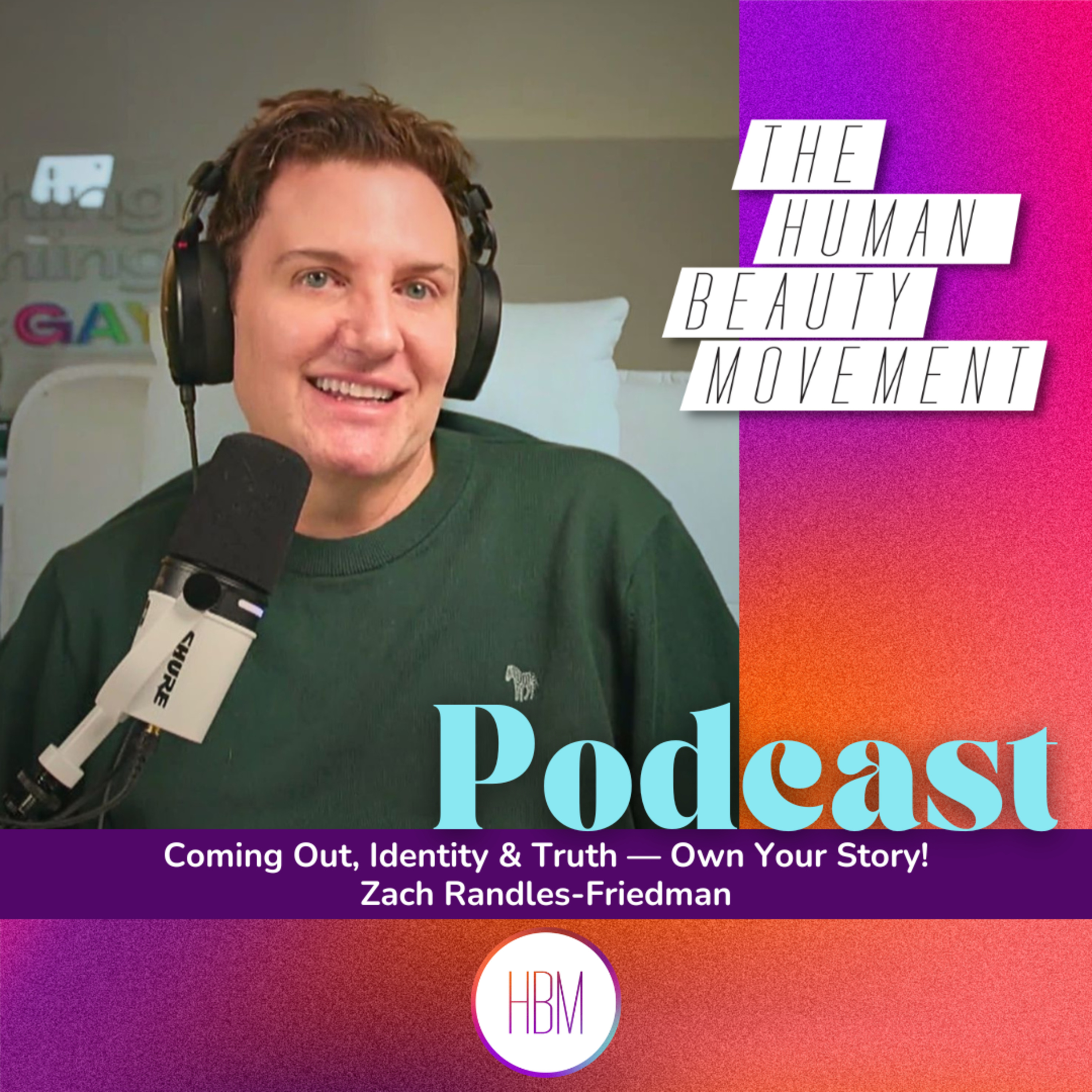


In this episode, we explore the power of authentic storytelling, focusing on the intersection of identity, coming out, and self-acceptance. Host Jennifer Norman and guest Zach Randles-Friedman discuss the challenges and liberation of living one's truth, highlighting the importance of empathy, resilience, and unconditional kindness. The episode encourages us to embrace our authentic selves and reminds us that sharing our stories helps cultivate understanding and beauty within humanity.
This podcast episode is sponsored by*:
- Humanist Beauty - Beauty for your skin & soul, Humanist Beauty is clean, conscious, and cruelty-free. Learn more here → https://humanistbeauty.com
- Packed with Purpose - Packed with Purpose is a woman-owned business that embeds social and environmental impact into the everyday act of gift-giving. Learn more here → https://packedwithpurpose.pxf.io/thehbm
- Prolon - Life doesn’t slow down—it transforms. Support your longevity and healthier living with Prolon. Learn more here → https://lnutra.sjv.io/thehbm
*The Human Beauty Movement may earn commissions from your support
Zachre's Links:
- Website: https://www.everythingandanythingpodcast.com
- Instagram: https://www.instagram.com/therealzachre
- Listen Up Girl Podcast https://podcasts.apple.com/us/podcast/listen-up-girl/id1768659721
The Human Beauty Movement Links:
- Official Website https://thehumanbeautymovement.com/
- YouTube https://www.youtube.com/@thehumanbeautymovement
- TikTok https://www.tiktok.com/@thehumanbeautymovement
- Instagram https://www.instagram.com/thehumanbeautymovement
- Facebook https://www.facebook.com/thehumanbeautymovement
- Community https://www.facebook.com/groups/thehumanbeautymovement
- X https://x.com/TheHBM_Official
- LinkedIn https://www.linkedin.com/company/the-human-beauty-movement
Jennifer Norman Links:
- Lnk.Bio https://lnk.bio/iamjennnorman
- LinkedIn https://www.linkedin.com/in/jennifernorman
- Instagram https://www.instagram.com/iamjennnorman
- TikTok https://www.tiktok.com/@iamjennnorman
- YouTube https://www.youtube.com/@iamjennnorman
- Facebook https://www.facebook.com/iamjennnorman
- Pinterest https://www.pinterest.com/iamjennnorman
- X/Twitter https://x/iamjennnorman
Thank you for being a Beautiful Human.
Jennifer Norman:
Some people tell stories, some people spill tea, and some people create entire spaces where truth feels safe enough to come out of hiding and maybe even crack a joke while at it. Because, let's be honest, being human is already a lot. Add identity, visibility, and trying to figure yourself out in a world that loves labels more than nuance, and suddenly storytelling becomes survival. Today's guest understands that better than most. Zach Randles Friedman is a podcast host, producer, and cultural commentator whose work lives at the intersection of identity, media, and meaning. With just the right amount of humor to keep it all from feeling like a group therapy session you did not sign up for. He's the creator and host of Everything and Anything and A Bit Gay, a long form interview podcast where artists, activists, and everyday humans share deeply personal stories. Stories about individuality, creativity, healing, and transformation with honesty, warmth, and the kind of conversations that make you say, wait a minute, how did we get here? And why do I love it so much? He also hosts Listen Up Girl, where he breaks down current events through an LGBTQ lens, bringing nuance, clarity, and just enough side eye to keep things real.
Jennifer Norman:
What makes Zach's world work so powerful is this. He knows how to hold space for truth without losing that humanity or the sparkle that makes those truths easier to carry. So today we're talking about identity coming out, storytelling, media, and what it really means to be seen fully, honestly, and maybe even fabulously. So come on in. You're going to love this. Hi there, Zach. How are you doing today?
Zach Randles-Friedman:
Good. Thank you for having me on. I love your show.
Jennifer Norman:
Oh, thank you so much. And I love yours. I feel like this conversation could already go in like 10 different directions in the very best way.
Zach Randles-Friedman:
As I was thinking about this yesterday, I was like, I feel like we could. This could be like a 10 hour podcast if we wanted it to be.
Jennifer Norman:
It really could. Maybe we should do like a joint thing where we just come at it from all different angles. Because you know what? I think that there's so many different facets to. To every person, and I'm one of those people that don't like to just stay in one lane. And I know that you don't either. There's just so much to life and so much to explore. I think that's probably why we're both podcasters.
Zach Randles-Friedman:
Exactly. And I love a good conversation. That's what I love the most about this.
Jennifer Norman:
Exactly. I love these meaningful conversations. I get to meet people that I otherwise probably would have never have met before, and I'm like, so grateful for the connections and learning something about you. And learning something about myself along the way. It's just the most amazing thing. But this is all about the audience, too. I want them to know a little bit more about you because this is the first time I'm introducing you to my audience. I want to know what inspired you to create your show.
Jennifer Norman:
At what point did you think, first of all, like, yes, this is the name. I'm committing to it. This is what I want to do?
Zach Randles-Friedman:
Yeah. So I was working in the pharmaceutical industry and communications, working for a company. It was a. I'll call it a skincare company without saying the name of the company. And there they said, can you do a podcast for us? And mostly keep it internal and just interview our leadership team and so people across the world that works for the company can get to know who these people are. I said, sure. I actually didn't say sure so easily because I hated the sound of my own voice. I didn't want to see myself on camera.
Jennifer Norman:
Really.
Zach Randles-Friedman:
Yeah. It was all painful at first, and so I ended up doing it. And then a couple of the episodes ended up going externally. We putting them on LinkedIn and YouTube and stuff, and they did very well. So. So I left that company and went to the next company. And I kind of missed the podcast piece of what I was doing at that job. And the company I was working for, they weren't looking for a podcast at that point.
Zach Randles-Friedman:
So I have a friend that does video and audio production and all this. And I said, I think I may want to do my own podcast. He's like, yeah, sure. What are you going to talk about? I'm like, I just want to kind of talk about anything and everything I want to. And that's kind of how I came up with the name Everything and Anything. And I have guests that are. It can be anywhere. From a transgender woman that decided to transition at the age of 66 years old or 52.
Zach Randles-Friedman:
I just interviewed somebody today that was 52, and she transitioned to a. To psychic mediums, to a woman that brought me into a past life regression and showed me who I was in previous lives. I just told someone's Coming out story. At 52 years old, he finally decided to be his authentic self.
Jennifer Norman:
Wow.
Zach Randles-Friedman:
And he had to tell his wife and three kids. And that episode did very well because he was so. He had so much support from the audience and people on Instagram, and it just blew up. And I was so proud of him for doing this and having the courage to do it. And so I started doing this, and then all of a sudden, like, I just started getting listeners and I'd have friends on. I was struggling to get guests. And then before you know it, you're telling guests no, like, like 50, 60, 70 emails a week. And I'm going through them.
Zach Randles-Friedman:
I'm like, wow. Yeah. So I just. I really ended up liking it. I got to be okay with my voice and seeing myself on camera, so. And. And then I felt like there was something missing in the news. I was going through, like, my social media and going through news, and I was looking.
Zach Randles-Friedman:
All this LGBTQ plus news was coming up. Half of it seemed like it was AI generated or fake or it wasn't real. So I'm like, I'm gonna go find ... 10 minutes or less a day, I'm gonna give LGBTQ news and really see, say, the, you know, the real news, not the fake news. And maybe add a little commentary into it once in a while. And I said, oh, I'm gonna call it Listen Up, Girl.
Zach Randles-Friedman:
Cause I want you, I want you to listen up and listen to the news. And that's kind of how I got my two podcasts started.
Jennifer Norman:
So that's wild. I want to say, when I found you on LinkedIn, I had to do a double take because you look extremely professional in your suit. I was like, wait a minute, is this the same person? Oh, it is. I had to, like, zoom in on the face and make sure it was. Actually, I was like, you know, Zach Randals-Friedman, I was like, that's a very unusual name. So in order for me to feel like, okay, there must be another one around, I was like, no, this is him. Okay.
Zach Randles-Friedman:
Yeah, it's. It's my business side, so. But I have left my full time job to do podcasting full time. So I'm so excited about it.
Jennifer Norman:
Yeah, I'm loving it. Yes. Congratulations on that. I think everybody aspires to that who does podcasting, hoping that this could be your lifelong gig, because it's just so rewarding. Absolutely.
Zach Randles-Friedman:
So rewarding.
Jennifer Norman:
It truly is.
Zach Randles-Friedman:
I mean, my mind has. I have, like, had a mind shift of how I think of certain people. And I've grown so much from doing my own podcast and the people I got to meet and I have met or. And I get to meet in the future. It's just. It changes everything.
Jennifer Norman:
Yeah. I want to talk about this intersectionality of your business, because clearly a lot of times on a LinkedIn or something like that and in corporate, you put on a professional front, and I. I'm just curious. Did you ever feel like you had to hide your gayness while you were working? Or was that something that you found over time? You just. Everybody was comfortable with it. Were there any experiences that you can share?
Zach Randles-Friedman:
Yeah. So it's funny that you bring this up because I talked about this in a podcast maybe a year ago. So whenever I was living in New York City and working for major corporations and I would go into work on a Monday and people would say, what... I was working for a big bank at the time. And I would go into work and they're like, oh, what did you do this weekend? And I would like say, oh, just went out with some friends. Didn't tell anybody I really had a boyfriend at the time. Nobody, you know, didn't tell anybody anything about my personal life. Wasn't saying I was going to this gay bar. That gay bar.
Jennifer Norman:
Right.
Zach Randles-Friedman:
And. And then finally I started feeling more comfortable with it and I started kind of talking about a little more. Then I went to my next job. And I'm always cautious. At first, even though it was New York City, I still felt like, oh, I need to kind of like, hold back a little bit.
Jennifer Norman:
Yeah.
Zach Randles-Friedman:
I never was discriminated, though, at all. Like, everybody was always kind. I will say, though, that there's always that one cisgender straight guy that knows I'm gay and has to make sure he knows that he knows that I know that he is straight. So there's one at every company. So there is. He's. He needs me to know that he's married, that he has a wife, that he has kids, puts on a little bit more of hyper masculinity that he puts out there for it. He doesn't want to ask me about my husband.
Zach Randles-Friedman:
He doesn't want to ask me about anything like that, which is okay. There's one at every company, so most of the time, so. Which is fine. I just work with them and I keep it professional. And that's it.
Jennifer Norman:
Yeah. Would you mind sharing a little bit about your own coming out story? I mean, I'm curious about how that was because it's so nice to see people liberated and living their best lives out in true force, true colors. I celebrate that so much. But so many people have it so hard. And I know that you speak to those people so beautifully throughout your podcast and throughout all of your work. And I think that it's really empowering for people to know that there's this journey that a lot of people go through. Everybody's different, but there is some relativity in your story and in what you might have gone through and what others might also be going through and knowing that, okay, at least I have a role model that I can look up to and say, hey, this is okay.
Zach Randles-Friedman:
Yeah. So I was in denial about it. Like in maybe junior high, I started thinking maybe I was attracted to guys, but I was really, I grew up in Miami and so I really tried to suppress it a lot. And then in high school I had girlfriends and I really did not want. I was denying. I was like, there's no way I'm gay. There's no way I'm attracted to guys. And I would just like try to like pretend it didn't exist.
Jennifer Norman:
Interesting.
Zach Randles-Friedman:
Then I went to college, ended. I was. I had a girlfriend my freshman year and it was going great. And then we ended up just becoming friends and we kind of like stopped talking for a little while. And then I ended up going kind of to my first gay bar at like 20 years old. And I didn't know anybody there. And that's what you have to do. You kind of go in and you're scared and you're like, oh, what's happening? And I was just experimenting to see if like maybe I was attracted to guys and stuff.
Zach Randles-Friedman:
And I met a guy that night and we ended up making out in the parking lot. And so I'm like, okay, yeah, I'm into guys. But I also thought, well, I'm into girls too. So I wasn't quite sure what I was doing, was struggling with what I actually was.
Jennifer Norman:
Sure.
Zach Randles-Friedman:
The next. I didn't go back to the bar for a couple weeks and I went back and then I ended up running into somebody. I work, I was working a part time job in college and somebody I worked with was there and him. And I became really good friends because he ran to me. Because I knew you were gay. I'm like, I'm not gay. I'm. I'm like, I don't know what I am.
Zach Randles-Friedman:
He goes, no, you're gay. And I'm like, okay. So we ended up becoming really good friends and we ended up like going to south beach together and doing all this stuff and becoming like best friends. And that was like my outing. So I was living with my ex girlfriend who was my roommate in South Beach. We were friends. She knew I was gay. Loved it.
Zach Randles-Friedman:
Every gay man that met her loved her. She would go out with me every night of the week and everybody loved her in South Beach. She was fun and just. She was my best friend at the time. And then we had some things happen I had to move back into my parents house for a little while style for like a year. And I was a total club kid where I had platinum blonde hair, three earrings in each ear, a belly button ring, blue vinyl pants with platform shoes and a belly shirt. Like, I just like total club kid at 21, 22 years old. And it was fun.
Zach Randles-Friedman:
But then my dad said, your last year of college, do you want a job at my company? And I said, yeah. And so he got me a job at his company paying good money for a part time job. And so I shaved my head and got rid of all the platinum blonde hair and I like took some of the earrings out and stuff so I could be more presentable to go to a professional office. And that's what struck my parents as something being odd. Not when I was wearing platform shoes and blue vinyl pants or latex black pants. It was whenever I started wearing khakis and my hair was my natural color. I'm sitting out back at my mom and dad's house at the pool, and my mom comes out and says, I need to ask you something.
Jennifer Norman:
Uh huh.
Zach Randles-Friedman:
And I'm like, don't ask me something you don't know. Want to know the answer to. She goes, I have to ask you something your dad wants me to ask you. I'm like, okay, ask. And she goes, are you gay? And I said yes. And she started crying and she says, is your friend Tony and Gary gay too? I go, yes. And then she said, do you want to be a woman? I said, no, mom, I don't want to be a woman. Just because you're gay doesn't mean that you're transgender.
Zach Randles-Friedman:
Then she said something. She goes, do you have AIDS?
Jennifer Norman:
Oh.
Zach Randles-Friedman:
This is the 90s. And so. And she didn't really know gay people and know about them and all that. And I said, mom, no, I don't have AIDS. I don't have any diseases. I use protection and all this. So like, I'm fine, I'm just gay.
Zach Randles-Friedman:
And she cried. She goes, so I'm not ever getting grandchildren. I'm like, not for me. Probably not. And she told my dad, and my dad left the house that day. And we didn't... He came back later that night, but we didn't speak for six months. Living in the same house together.
Zach Randles-Friedman:
He couldn't accept it.
Jennifer Norman:
Oh.
Zach Randles-Friedman:
And then it was right before Christmas time. I was home from school. He came. I was coming out of the kitchen, going to my bedroom, and he stopped me and he says, and he gave me a hug he goes, I love you no matter what. And he gave me a hug. And he goes, it does not matter what if you're gay or whatever. I just want you to be yourself and I want you to be happy. And him.
Zach Randles-Friedman:
I became so close after that. Growing up. We were, you know, he was my dad and I loved him. But something happened at that moment where we had this bond that I just can't even explain how amazing it is to have somebody that unconditional love that he gave me at that point. So. And it was just so amazing. And my mom, she didn't want to tell her friends or my aunts and grandparents. We never told my grandparents, but she started telling her friends.
Zach Randles-Friedman:
They're all like, yeah, we've known this for years. How could. Like, we knew he had. He had six earrings in both ears. So, like, he had a belly button ring. Like, you didn't see him being gay. Kind of stereotypical, the twink gay kid. So.
Zach Randles-Friedman:
And she says no. And then she told my aunt. My aunt's like, yeah, I've known since he was 6 that he was gay. Like, I don't care. Half my friends are gay, so it doesn't matter to me.
Jennifer Norman:
Yeah.
Zach Randles-Friedman:
And my mom and I moved to New York after college, and I met a guy right away, and he's 27 years later, we're still together, we're married. And my parents, when they came to New York, I said, I want you to meet Andrew. And so they met him, and he came and met my mom, gave her flowers. We all went to dinner. And after that, they loved him. He was one of their sons. And same thing for me with his mom and dad.
Zach Randles-Friedman:
We told his mom and dad a few years later, they're Jewish, and he had a Jewish mom that really wanted grandkids. And she was disappointed at first, but she loved me as much as she loved her son. And his father loves me. He calls me his son, so. And his grandparents all love me. His entire. He has a big family. His entire family.
Zach Randles-Friedman:
There's just nothing but unconditional love there. And they love me. And I, you know, we've been together for 27 years, and I'm just like a part of the family. So it's just. I feel so fortunate that my mom and family love him and that his family, all of them, love me. And his grandfather there the day he died, even. And his grandfather was just the most kind person ever.
Zach Randles-Friedman:
Did not care. He died in his 90s. He did not care. We were gay. He was religious, and did not care about any of that. He just wanted Andrew to be happy and he was happy that we were together.
Jennifer Norman:
Oh, that is so beautiful.
Zach Randles-Friedman:
Sorry, I feel like I just talk so much, but that's my story.
Jennifer Norman:
Hey, this happened over years. I mean, the way that you encapsulated, I feel was just perfect. It was just really such a heartfelt story that I think is just. It's understandable that with parents who have certain idealized fascinations of what their kids are going to be like, and everybody has it when they have a child, you just envision what your child will be like. And when there's deviation from that, there is a sense of loss. And so the amount or the time that it takes for acceptance, some don't. Some don't accept it. But some just need time to process that loss or that sense of a loss of control of what they felt was going to be a future with grandkids and all of those kinds of things.
Jennifer Norman:
And because it is different sometimes, if religion comes into play or very strong family indoctrination into how things should be, then I would imagine that a lot of shame and feelings of just like a lack of acceptance come into play. But I'm so happy to hear that things have turned out so beautifully for you guys, for your whole family. It's amazing.
Zach Randles-Friedman:
Yeah, it is. And my mom and dad got a double whammy because my brother five years later came out and said he was gay.
Jennifer Norman:
Wow.
Zach Randles-Friedman:
So, okay. My mom and I was living back in Miami in like 2004 or 5, and my dad calls me at 8 o' clock on a Saturday morning. I'm like, why are you calling so early? He's like, your brother's here. He came home drunk. He's at a bar or something. He needs to tell you something. I'm like, okay. And I get on the phone, he's like, I'm gay.
Zach Randles-Friedman:
And he's crying. I'm like, yeah, we've all known that forever. And you're welcome because I got. I already.
Jennifer Norman:
You made it easy for him.
Zach Randles-Friedman:
I made exactly. I took the hard hit from mom and dad for you. And they don't care anymore. So who's gay and who's straight? So you're welcome because you don't care. Do you still love me? I'm like, what? Am I not going to love you anymore because you're gay? I'm gay. Like. Like it makes no sense.
Zach Randles-Friedman:
But yeah, they got the double whammy. My mother didn't get any grandchildren, but she loves. She Loves. He's. He's married as well. Oh, and she loves. She says she has four sons, so we're lucky. Yeah.
Jennifer Norman:
That's incredible. So you actually knew. You felt like you knew that he was also gay even before you knew that you were gay? Or maybe I think just growing up.
Zach Randles-Friedman:
Yeah, I mean, when he was in elementary school, I thought he was gay. Like, he. I just. I always thought he. He was. And I mean, I didn't know for sure, but yeah, he would. He had these girls that he played with down the street, and I'm just like, they were like our neighbors.
Zach Randles-Friedman:
I'm just like. Just the way he'd run down the street and stuff with them. I'm like. I'm like, he's. He's so gay. Like, what's going on here?
Jennifer Norman:
And you can say that.
Zach Randles-Friedman:
Yes, he's my brother and I'm gay, so I can say that for sure. But I'm just like, he's just. He's so. And I would tell my mom, like, I think even before I came out, like, I think my brother's gay. She's like, no, he's not. I'm like, no, he's gay, mom.
Jennifer Norman:
And she's like, sometimes we see in other people things before we actually fully are aware of it ourselves. And that's the case in point. It's so interesting how he cried, though. I think that that's a reaction that a lot of people do have when they come out. Is there. There's just so much emotion in it? Will I be accepted? Is this okay? Will I still belong? Or will I be completely rejected? And I think it gets overwhelming.
Zach Randles-Friedman:
Yeah, I mean, he probably. I mean, he held this in. He's seen me living my authentic life where he was hiding in the closet. And I think there was just like a lot of pent up emotions there that he was finally able to, like, say it out loud that, you know, that he was gay. And then I think he realized when my mom and dad, like, we don't care. Like, just live your life and be a kind person. That's all we ask. Then he could start being himself and that's all he needed.
Zach Randles-Friedman:
And it just like. I think it was just like a relief. Or he's just like, yes, I can be who I want to be now.
Jennifer Norman:
So I want to hear about your relationship with yourself and then also with your husband. Because I think that when you going through this process and please educate me because I happen to be a... I sometimes lean on the bicurious. But I'm pretty, pretty cis, I would say. But. And I'm very open, but I'm always curious about the aspects of self love and about self worth when you're going through this. Like, did you feel a moment of empowerment when you finally did come out? Or was it before that, before even felt that you needed to, that you were strong enough to say, you know what, I'm going to be? Because it's very courageous, frankly. A lot of times in society, it's like we. When you're bucking the trend and you try to fit in, like you were saying in your corporate situation.
Jennifer Norman:
And I kind of did that too. I felt like I had to like reel in like the creative side that wanted to dress a little bit more colorfully.
Zach Randles-Friedman:
Yeah, Yeah.
Jennifer Norman:
I went into this really like, very stiff corporate job where they said you have to wear a business suit and you can't wear pants as a woman, you're supposed to wear skirts. Like, it was very, very conservative where I first started to work and I was. It just didn't feel like a good fit. It felt like part of me was suffocating. And I'm just curious about your whole journey of just kind of blossoming, frankly.
Zach Randles-Friedman:
Yeah, I mean, I think that. So I had a lot of friends that were girls growing up, like in high school and junior high and stuff. And there would be some. There was like two guys in high school that would call me gay or fag or whatever they would say. And. But the thing is, is that my girlfriends that had these boyfriends that were not letting these guys get away with it. So I always had that protection for me. So.
Jennifer Norman:
Oh.
Zach Randles-Friedman:
And I was like, not girls exactly. And I. But I wasn't like, I still wouldn't just admit it to myself. So I think there was a lot of. I remember like laying in bed at night time in high school thinking, like, what will I my wedding be like one day? And I would try to picture it and I never could picture it. Like, I just had a blank. Like I couldn't imagine like the girl that I'd be married to one day. Like the traditional way of living, none of it was just sparking with me.
Zach Randles-Friedman:
And I. I liked myself, but I don't think I loved myself back then. And then whenever I went and I started meeting gay friends is whenever that shift happened. And I'm like, I don't really care what anybody thinks about me. I don't care. I'm going to be who I am.
Zach Randles-Friedman:
Especially if my parents found out and they accepted it. It gave me even more power to be who I wanted to be. And there's just. There's a time where there's a shift that happened, and you're just like, I can now be my authentic self. I don't have to pretend anymore. And there's always like. Like the corporate world, like, sometimes you don't have to give it your all, you know, to be who you are fully. But now something happened to me also when I turned 50 where I really stopped caring what anybody thought about me at all. Like, I can dress the way I want, I can do whatever I want, and I don't care.
Zach Randles-Friedman:
And that is so liberating in so many ways. It's like a different level of self love or something that happened to me where you just are so comfortable with yourself. You can be who you always want to be and not care. So, yeah, I mean, I think coming out overall was. It was a learning experience. And I remember there was at one point where I'm like, God, I just wish I wasn't gay. And now I feel like I'm so happy I'm gay.
Zach Randles-Friedman:
Like, I'm glad I didn't live that straight life because I've had an amazing life and I've experienced so many great things because I am gay. And so, like, that's. I wouldn't change anything.
Jennifer Norman:
Isn't that wild how when that insecurity, it's almost like you're kind of like playing a role. Like, almost like auditioning your own life instead of starring in it and just flourishing and feeling so at ease with yourself. There is that inherent feeling like, yeah, this. I'm just gonna embrace who I am and I'm gonna be, you know, unapologetically me. And you attract the people that can resonate with that. And, you know, for those, there's always gonna be people with their own opinions. But I think when you surround yourself with support and love and the fact that you had unconditional love in your family and around you with your friends, your girlfriends and all, that's just so beautiful. I wish that for everyone.
Jennifer Norman:
I truly do.
Zach Randles-Friedman:
And then I end up meeting a lot of gay guy friends, that I'm still friends with them this many years later when I first came, went to the gay bar for the first time, I'm still friends with these people. Like, they're still my good friends. And so you. As you get older, you start to kind of shed friends, I think. And I've. I've definitely done that part. But the Friends that are in my life, that has been in my life for 20 plus years are going to always be there. So I feel very fortunate and happy that I have such amazing friends.
Jennifer Norman:
Yeah. So you've done the south beach thing, the New York thing, and now you're in Massachusetts. Yeah. You're in Boston. I'm curious how the gay culture is in the different areas. Is there. Are there differences, too?
Zach Randles-Friedman:
Yes. So I've also lived in Atlanta and Philadelphia.
Jennifer Norman:
Oh, my gosh, you've been all up. And. Oh, Switzerland, too. Well, all right, tell us.
Zach Randles-Friedman:
So the gays in Miami, the gay... Whole gay scene is great. When I was growing up, it was the 90s, so you would see. And it was before it was what it is today, what south beach is today. It was a little grungy still. Definitely, like, model like this. That's when the supermodel started coming on. See, you'd be dancing in a club and Madonna's literally right there.
Jennifer Norman:
Yeah. With Gianni Versace.
Zach Randles-Friedman:
Well, she was with. She was dating Dennis Rodman at the time. And so it was her and Dennis Rodman who. When I seen her out that time. Yeah. So that was always that.
Jennifer Norman:
See, we're contemporaries. I remember that very well.
Zach Randles-Friedman:
And so that was fun. And I made so many friends in South Beach because it was college, and it just, like, it was great when I moved to New York. New York gays are so, so friendly. Like, you can walk into a bar, say, hey, anybody want to do a shot? Yeah, I'll do a shot. And you, like, leave there, and you have 20 best friends. I love New York. I love the gay culture and the gay community in New York.
Zach Randles-Friedman:
They're amazing. Atlanta is a little standoffish, but I've made some friends. I got into some friend group. I ended up making so many great friends in Atlanta. So I think I just got lucky in Atlanta. And then Boston is a whole different story. So the gays in Boston are not friendly. They are... I did a podcast episode with somebody that lives here in Boston, and I said, why are the gays so mean here? And he goes, they are. They're so mean.
Zach Randles-Friedman:
And that. Oh, no, it's on my Instagram. It ended up getting 135,000 views. Oh, my God. And I'm sure that if I go. If I go out to a gay bar in Boston the next month or so, people are going to know. Have seen this clip because so many people seen it.
Zach Randles-Friedman:
And I don't think they're nice. I don't think gay men in Boston, I don't know, they're just like, they're on. They think that they're. I mean, they're good looking guys. I went out two or three weeks ago. They're good looking, but a lot of them never left Massachusetts. Maybe they went to college in another state and came back, but most of them just go to school in Massachusetts. They keep their same friends.
Zach Randles-Friedman:
They have this little clique they don't want anybody else in. They're just not nice. I remember me and my friend Tony were out and I. There was this guy standing at the bar. He was by himself and it was me and two other friends. And I'm like, hey, do you want to do a shot with us? He goes, why, what do you want from me? I'm like, you're by yourself? We were just trying to be nice. He's like, no, I'm good. I'm like, okay.
Zach Randles-Friedman:
Oh, so that's just like the attitude you get. And it's just, it's so bizarre to me and I just don't understand it because I'm super outgoing and friendly. I'm like, yeah, let's be friends.
Jennifer Norman:
And I wonder what instilled that fear. There must have been. Did something happen where people are just on edge?
Zach Randles-Friedman:
No. Well, somebody said it's like Boston is so liberal and open minded with things. It's the first state they had gay marriage and, or same sex marriage and stuff. But they said it's like, goes back to like the, the Pilgrims or something. That they were so conservative. They still have these, these thoughts about you.
Jennifer Norman:
Puritanical gays!
Zach Randles-Friedman:
Yes, exactly. Puritanical gays is exactly it. So that's what a lot of the other gay people. But the funny thing is, is that whenever I interview gay guys from Boston on my show, they say the same thing. Like, yeah, people in Boston are not friendly. Gay people are not friendly. I'm like, but you're saying this and you're gay. Like, why don't you be friendly? Like, I don't know, I'll try.
Zach Randles-Friedman:
I'm like, no, out to a bar.
Jennifer Norman:
Like, do a shot, God damn it. Do a shot.
Zach Randles-Friedman:
Exactly. Buy a shot for somebody, like. And it's just like. But everybody says the same thing. Even whenever we were out, I, we were talking to this one guy named Brandon. I said, hey, like, don't you think the gay guys here or not? And I say, because, yeah, they're all assholes. Like, they don't talk to you unless you've been friends with them for years. I'm like, why?
Zach Randles-Friedman:
Because. I don't know. Then he left, and we've never seen him again. So he's just like. He was his little.
Jennifer Norman:
That's it. We are on a mission to make Boston a friendlier gay place. So help us God. It's got to happen. This is. This is it. We are going to put a stake in the sand, and it's going to be a challenge for every gay man and woman in Boston to actually go out and give somebody else a hug or buy a shot or something.
Zach Randles-Friedman:
Buy a shot or just get a drink or just.
Jennifer Norman:
I don't know, don't see somebody standing by themselves.
Zach Randles-Friedman:
Like, go up and say hi.
Jennifer Norman:
Give them a compliment. Nobody wants anything from you. But just to be friendly. There. There is such thing as. Yeah, unconditional kindness.
Zach Randles-Friedman:
It's not like, come to Boston for a weekend and we can maybe do this together, I think.
Jennifer Norman:
So we're gonna just go lock arms and arms and. Yeah. Just, you know, get our rainbow flags out and just make it happier and make it friendlier. I think that that's important. It's so. It's so important for people to feel okay with just feeling free. Not to say that things aren't bad right now. Just in general.
Jennifer Norman:
I mean, I think that there is just a general sense of oppression no matter where you go.
Zach Randles-Friedman:
Yeah, yeah. Totally.
Jennifer Norman:
Gay or straight.
Zach Randles-Friedman:
I mean, I'm lucky that I do have good gay friends now and stuff. I still think the gays are just, like, not so great here, but I feel lucky. I have good straight friends. I have good gay friends. I have kind of have it all. So I'm. I'm happy with my life here.
Jennifer Norman:
What's your perspective now that you are in your 50s, about the younger generations and them growing up gay? Like, how do you feel that there might have been a difference between what you had experienced and what kids these days are going through, regardless of where they live?
Zach Randles-Friedman:
First of all, I'm very happy that kids are feeling comfortable at coming out the age in junior high and high school, because that never would have happened when I was growing up. You would have been definitely beat up or even killed, probably. Who knows? I'm really happy to see that. And also, I think more parents are accepting of it, depending on where you live, of course. But a lot of parents are accepting, and there's still parents that are telling their kids that you got to move out, you're out. I don't want to have anything to do with you. What I am thankful is, is that when I was growing up, there was no social media because I. Yeah, stuff that was happening even when I was in South Beach.
Zach Randles-Friedman:
The things that we were doing and stuff in high school. Like, I would not want to have records of all that. So I'm so happy that I wasn't around to stick around.
Jennifer Norman:
So I really want to see your vinyl pants and your platform shoes, though.
Zach Randles-Friedman:
I have the platform shoes.
Jennifer Norman:
Still have to. Oh, you're going to have to send me some photos of you and your bleach blonde hair with all your earrings and everything.
Zach Randles-Friedman:
God, it was so, so scary. I think.
Jennifer Norman:
Amazing. I love it.
Zach Randles-Friedman:
And I was so skinny, too. Like, I couldn't believe how. I mean, I wish I was that skinny still, but I was just like, I look anorexic. I was so skinny. And I would eat and eat and eat and I would never gain weight, which was amazing.
Jennifer Norman:
So how about Switzerland? How was Switzerland when you were there?
Zach Randles-Friedman:
Not for me. I love Europe. No, I went for a job. I was living in New York City. The company I was working for said, do you want to move to Switzerland? I said, yeah, let's do it. So me and my husband moved to Switzerland.
Jennifer Norman:
Wow.
Zach Randles-Friedman:
We moved from New York City, living in the heart of Manhattan, 8 million people, to moving to a town of 350,000 in Switzerland. Everything in the town closes at 6 o' clock during the week. Everything in the town is closed on Sunday. And it was just. Was such a switch, like, culturally for me, and I just could not. I had a great few first months. I love the weekends because every weekend we'd get on a flight and go somewhere different in Europe or take a train. And I got to see more of Europe in a year than I would have my whole life.
Jennifer Norman:
Yeah.
Zach Randles-Friedman:
But something clicked with me, like after I was there, like four months where I just started missing my friends in the U.S. I started missing my family, my mom and dad and stuff. And it was just so bizarre that as a. However old I was then in my 30s, that I was missing my family like that. And I just was looking on Facebook and I don't know, I felt like I was being. I had fomo. I felt like I was being left out. And I went through a super bad depression.
Jennifer Norman:
Oh, wow.
Zach Randles-Friedman:
And where I didn't want to get out of bed some days. And my husband loved it there. He loved everything about it. He loved the people, he loved. He didn't love the food because nobody loves food in Switzerland, but he loved the gym there. He loved the Rhine River. That was in the middle of town that people would go into in the summer. He loved everything about it.
Zach Randles-Friedman:
And I kept saying, I want to move back. I want to move back. I don't want to be here anymore. And one week, I went to New York for business, and I called him and said, I don't think I'm coming back. He goes, what does that even mean? I'm like, I don't think I can get on the flight and come back. He goes, I'm here, and your job is here, and you live here. You have to come back. And I was convinced I was not going to get on that plane to go back.
Zach Randles-Friedman:
And he's like, well, where are you gonna live? Like, what are you gonna do? I'm like, I don't know. He's gonna live in the hotel that you're in. I'm like, I don't know what I'm gonna do. I ended up getting back on the plane, obviously, and I went back, and I went through a couple more months of just not being happy with life every day. And every second of the day felt like five hours of misery. I was just so depressed. And I would go and talk to a therapist. I did acupuncture.
Zach Randles-Friedman:
I did all these things to try to help. Wouldn't go away. Finally, I told my manager, I said, I'm moving back to the US I would like for you to pay to move me back. If you don't, that's fine, but I will. I'm leaving no matter what. And he says, give me a week. And he came back and said, okay, I got you a package. You can go back to the U.S. We'll pay for it, whatever.
Zach Randles-Friedman:
So I was there. I made it a year. Moved back to the US. Moved back to New York, and I was so happy. And I was going out six nights a week, going to dinners, just having. Seeing all my friends again. And it was amazing. And my husband went through the opposite.
Zach Randles-Friedman:
He was from New York. We went back to New York. He missed Switzerland so much. He missed the slower lifestyle that he got into depression.
Jennifer Norman:
Oh, wow.
Zach Randles-Friedman:
I'm like, we're going out to dinner tonight. He goes, I'm not going anywhere. I'm not leaving bed today. And he just hate. He's like, there's too many people in the city. I can't do it. I'm like, you grew up here. He goes, I can't do it.
Jennifer Norman:
Wow.
Zach Randles-Friedman:
And so he's like, he gave me six months. And after that, he's like, we gotta go somewhere else. I'm like, my job is here. Like, what do you mean? He's like, find another city or else we're moving to the suburbs in New Jersey. I'm like, I'm not moving to New Jersey and...
Jennifer Norman:
So help you God.
Zach Randles-Friedman:
Yeah, exactly. And I found a job in Boston. I said, how about Boston? And he goes, yeah, great. We moved to Boston. That. That's it.
Jennifer Norman:
It was a good happy medium.
Zach Randles-Friedman:
Wow. It's a good happy medium.
Jennifer Norman:
Sometimes you just know, like your body, your energy just. Yeah. That is so interesting that you had the complete opposite reaction.
Zach Randles-Friedman:
I get where he's coming from because it was. Even when I go back to New York. I go to New York once every couple of months now. And whenever I go after three days I'm like, there are so many people here. Like, how did I ever live here?
Jennifer Norman:
Yeah, yeah.
Zach Randles-Friedman:
I just like, I don't know how I did it, but I mean, you know, when you're in your 20s and 30s, you're like, you'll do anything. I mean, I lived in a fourth floor walk up when I was 25 years old and it was.
Jennifer Norman:
What part of town were you in?
Zach Randles-Friedman:
I was living in the Upper East Side when I first moved there. So it was just this crappy apartment. It was like a thousand dollars a month, small studio. But you'll do anything when you're in your 20s. So.
Jennifer Norman:
Yeah, I mean, I enjoyed my time there probably a little too much. I think I was going out, I was working too hard and playing too hard when I lived in Manhattan and I knew that I was not going to survive it. It was just way too much how live there. I mean, I grew up on Long island and then I. And I was an east coast gal. I went to school in Virginia, then to Washington D.C. and then I moved back to Manhattan to work in Beauty. And I was there for probably about three years, I want to say.
Jennifer Norman:
And I just said. And plus there was something about the weather. Like when it would get cold, it would get really cold and I was getting like seasonal affect disorder and I'd be going to the tanning salon like every day just to get UV.
Zach Randles-Friedman:
Yeah, yeah.
Jennifer Norman:
Terrible when you're in Beauty, but neither here nor there, I. And so I said, I've got to move to a warm weather climate. It's either going to be Miami or it's. It's going to be LA. And I ended up getting an offer in LA. And I've been here for 25 years now.
Zach Randles-Friedman:
Yeah.
Jennifer Norman:
So I was like, I love it there. But when I go back it takes me about a day to reintegrate because it does feel like just mad chaos and. Yeah, rats in a maze and all of that. But then you just find those cute little lovely places that you love to go and walk along the streets and feel like.
Zach Randles-Friedman:
And New York has changed also since COVID in so many ways, where it's not like the New York that I loved, but I have so many friends that live there and I'm just like, how? They come. I have a big house right on the edge of Boston and they come and stay with me and I'm like, how do you go back to a one bedroom apartment?
Jennifer Norman:
And so tiny.
Zach Randles-Friedman:
Yeah, it's so tiny. And you're paying five grand a month for this little. Yeah. And they're living in Hell's Kitchen and stuff. I'm just like, I just don't understand it. But I think everybody at one point or another feels like, I got to go, I've had enough. So they'll all hit that stage at some point or another, hopefully.
Jennifer Norman:
Yeah. It's funny because after I moved to LA, I for 11 years ended up living in this. I'm not sure if you're familiar with la, but there's a, a part of town called Topanga, which is like Malibu Adjacent and it's very hippie culture. And I, in a million years, I never, ever would have thought that I would become one of those kind of like granola, crystal, you know, mystical. But it just somehow I was like, this is amazing. It just felt like, it just felt so free and so natural and just like the owls and the coyotes and the, you know, just the eagle, like the hawks that just fly over and there's just something about the area that feels really magical, like you're not in LA. And there's so many beautiful parts of LA. There's so many different pockets.
Jennifer Norman:
That's why I, I love it so much because you can just go one place and you're in the mountains and another place you're at the beach. And it's really diverse that way. And the people I find are, are just so fantastic as well. Amazing gay culture here. I mean, there's just about everything you can imagine here.
Zach Randles-Friedman:
Yeah, I love LA, actually. I have a good friend that lives there and I just, I mean, I think I could live in LA The traffic is just so.
Jennifer Norman:
It's terrible.
Zach Randles-Friedman:
Yeah, that's the only thing that would just be the traffic. I mean, traffic's horrible in Boston too,
Jennifer Norman:
but it's really bad here.
Zach Randles-Friedman:
It's really bad. There.
Jennifer Norman:
Yeah.
Zach Randles-Friedman:
And LAX is just, like, so overwhelming. To even get it. Get out and get an Uber and go to that other parking lot is like. Seems to be so much so.
Jennifer Norman:
It's so true. It's so true. I want to talk a little bit about on your podcast. I mean, you have so many wonderful guests, and there's just this element of being able to tell stories from the perspective of being gay or from just listening from a gay person's perspective. I'm curious, like, why you think, like, the gay storytelling is important now and what it brings to the table as far as the voice and the expression and all of that. Obviously, your platform has grown so significantly, and it's because it's really been able to break through.
Zach Randles-Friedman:
Yeah. I mean, so I have a little bit of everybody on there. So I have straight. One of my favorite interviews was actually with a straight woman. She was a woman that was married to a guy for a man for 17 years. He went on a business trip to London, came back, they had two. Came back and said, I have to tell you something. I cheated on you when I was in London.
Zach Randles-Friedman:
She goes, oh, no. What was her name? He goes, it was a man. Oh. And then she's just, like, trying to get past it, thinking, do I need to be in an open relationship with him? Which is something she never considered. And she ended up. Two months later, he ended up coming to her and saying, I gotta tell you something. I slept with hundreds of people, men and women, over the past 10 years. Wow.
Zach Randles-Friedman:
That was it for her. She was done. And now she has come completely like a survivor. She has got her life together. She's an amazing life. She's a transgender daughter. And just like everything about her is just so amazing. And she's one of my favorite people that I've interviewed because she's just so strong.
Zach Randles-Friedman:
And I love telling those stories about people that survive something or that are inspirational about something. I had a woman that was. Her name is Bernie Wagon Blast. She is the voice of the New York City subway, and she decided to transition to be a woman at the age of 66 to be her authentic self. 66 years old, you decide to do that. And so I think it's so important to tell these stories just because the world's not a kind place right now. And there's all this. You know, I don't want to get political or anything, but there's all these anti lgbt, a lot of anti trans laws and bills that are happening across the world and across the country.
Zach Randles-Friedman:
And in other countries, things are happening too. And I think it's important just to kind of like, make sure that people understand there these stories are out here, people are still inspirational. And they. And I. I want people to know that they're not alone for things and stuff. And I had a guy that just came out of the closet who he was 52 years on and tell his wife and three boys that he was gay at 52 years old, he came out of the closet. And imagine how hard that is to tell your wife, I'm a gay man. And their marriage obviously ended.
Zach Randles-Friedman:
And he was scared to do my podcast and tell a story. But the reaction that he got online was just like, overwhelmingly positive. One troll only out of the thousands of comments. And people were so supportive of him. And he sent me the nicest text saying, your show made me feel comfortable being myself. And that just like, I kind of switched and changed his projection of his. How he felt about himself. And it's just so important to me to make people feel that they can be themselves.
Zach Randles-Friedman:
No matter who you are, as long as you're not hurting anybody, you should be who you want to be. That's how I feel about it. And that's. And I like telling people those stories. I get to meet all these unique people. I interview psychic mediums. Never thought I'd be interviewing psychic mediums. They made me change the way I think about what happens when you die.
Zach Randles-Friedman:
I have a whole new. I mean, I was never religious, but I never would have believed in reincarnation unless I would have met these people. So just like, I'm not scared to die anymore. Not that I want to die, but, you know, there's just like, there's just this podcast that people I have met and interviewed has just changed my life. What about you? Have you had similar with people you've met changing your life?
Jennifer Norman:
I will say that I think that the through line is like resilience and courage. There's just like this wonderful thing about being able to open up and have a conversation about what's really going on inside. Because for so many people, that has been bottled up for so long, or they don't know how to express, or they feel like they'll hurt somebody else with their own truth. And so they're in denial of their own. They're repressing themselves in order to satisfy or please somebody else and put on a charade because they thought that that was the right thing to do. And at what time does it become right to have that conversation with your loved one to say, I can't do this anymore. Like, how bad must it be when you get to that breaking point where you're like, I don't think that I will be able to survive too much longer if I don't let this person that I'm. That I've been committed to, that I have kids with, that I have done everything with our families, all of the intertwining of lives, and then just seemingly blow it up.
Jennifer Norman:
But doing that, of course, there's probably that stage of just, oh, my God, what the hell does that did I just do? But I think once it lands, there is a sense of freedom and, okay, it's done. You know, I can breathe. I can feel that it's out there. And now let's work on just, like, falling forward. I would say it's like, what can I do to figure myself out now? The courage and then the resilience to be able to say, this is not the end. Because I know that. I don't think it's any surprise, like, the rates of teen suicide, who. Especially within the gay community.
Jennifer Norman:
I mean, it's devastating. It's absolutely devastating. And the message, there is a way forward. There is light at the end of the tunnel. There is support for you when you need it, and it's not hopeless. We promise that. And so if you can just really hang on to the hope of listening to Zach, finding your tribe, finding whether or not it's moving to Boston or whether it's moving out of Switzerland, you know, sometimes the situation, whether it's a relationship or environmental or family, whatever it is, is not a good fit for you. And when you feel that deep in your core, there's something intuitively that you know that is not right.
Jennifer Norman:
And it expresses itself in depression or anxiety or obsessive compulsive behaviors and things like that. And so working through what is going on, how can I finally feel at ease with myself? How can I feel empowered and like I am just, like, living my best truth? That's what we hope and wish for everyone. That's why the conversations are so important, because people then find whoever's listening. We're talking to you. We're talking to you about something that may not be exactly your story, but there's some similarities. There's probably some things that you can pull and say, hey, this is what's going on in my life, too. And thank you, Zach, for. Thank you, this person who decided to come out with a truth.
Jennifer Norman:
Thank you to this woman who was brave enough to understand wow. It's hard on the other side, too, to all of a sudden have, like, your world shattered because you feel like there's been something hidden from you that the person that you trusted most was not able to give you their full self either. So.
Zach Randles-Friedman:
Yeah.
Jennifer Norman:
Yeah. I mean, I think that there's empathy and understanding that can happen on all sides of the situation without judgment, because I think a lot of times we're so ready to snap, judge, and say, oh, you were wrong, or you were wrong, or you're, you know, you're canceled, and all of these. But go, like, listening and just having that. Yeah, I can see how that happened. I can see where this person comes. Like, nobody's the villain here. Really. Nobody's a villain.
Zach Randles-Friedman:
Yeah. I mean, I want people. And I. The other thing I do with my guests, whenever they come on, if they're doing something that's inspiring or incredible or kind, I always ask them to take. I might. Can you do me a favor tonight? And I'm going to ask you this now. I'm going to switch the podcast interview a little bit. You're doing this podcast, and you're doing it where it's wellness and happiness and making people happy.
Zach Randles-Friedman:
You, tonight should go. I would suggest that you take five minutes and just reflect on all the great episodes that you've done in your four seasons and how you have changed people's life and made people happy. Like, you should really do that. And I think that's so important for people to do, and you should definitely do that tonight.
Jennifer Norman:
I am going to do that. Absolutely. Thank you. Thank you, Zach. Well. Oh, my gosh. I feel like I could talk to you for hours. I'm gonna bring it to a bit of a close now because I.
Jennifer Norman:
And maybe...to be continued, who knows? Maybe we're gonna do a joint thing in Boston and get all the gays out and...
Zach Randles-Friedman:
Exactly.
Jennifer Norman:
And make them happy as well as me. At the end, what I love to do is land this plane with three questions that I ask every guest. My first question to you is, what makes you Zach beautiful?
Zach Randles-Friedman:
I always try to be kind, no matter what. I try to always. I try. I'll say. Because I'm not always kind, but I try to always be kind.
Jennifer Norman:
Aw. What does it mean to be human?
Zach Randles-Friedman:
To be human? I think it's not to just care about yourself, but to care about the world, to care about people, to care about people's feelings. You know, to care what's happening in the world and what's happening to other people and not be judgmental, kindness and caring.
Jennifer Norman:
And my last question what is one truth that you live by?
Zach Randles-Friedman:
Be your authentic self. Don't be fake, don't hide. Be who you really are.
Jennifer Norman:
Kindness, caring and authenticity. The truth that you live by. Oh my gosh. Zach Randals-Friedman, it has been such a joy. You're like my gay Charlie Puth. I love it. I want to thank you so much for being on my show and for all of this meaningfulness that you are bringing to the world and for being the real you to everybody who's listening. If something in this conversation resonated or made you think, made you feel a little bit more seen, please share it. Let us know.
Jennifer Norman:
The stories that we pass along are the ones that shape the world that we are all trying to live in. So thank you everybody for being here today. I'm Jennifer Norman and this is The Human Beauty Movement Podcast. I'll see you in the next episode. Thanks Zach.
Zach Randles-Friedman:
Thank you. You are amazing. Thank you.
Jennifer Norman:
Thank you for listening to The Human Beauty Movement podcast. Be sure to follow, rate and review us wherever you stream podcasts. The Human Beauty Movement is a community based platform that cultivates the beauty of humankind. Check out our workshops, find us on social media and share our inspiration with all the beautiful humans in your life. Learn more at thehumanbeautymovement.com. Thank you so much for being a beautiful human.


