
Secrets of Hollywood, UFOs & the Dog That Saved Me | William McNamara, Ep 225
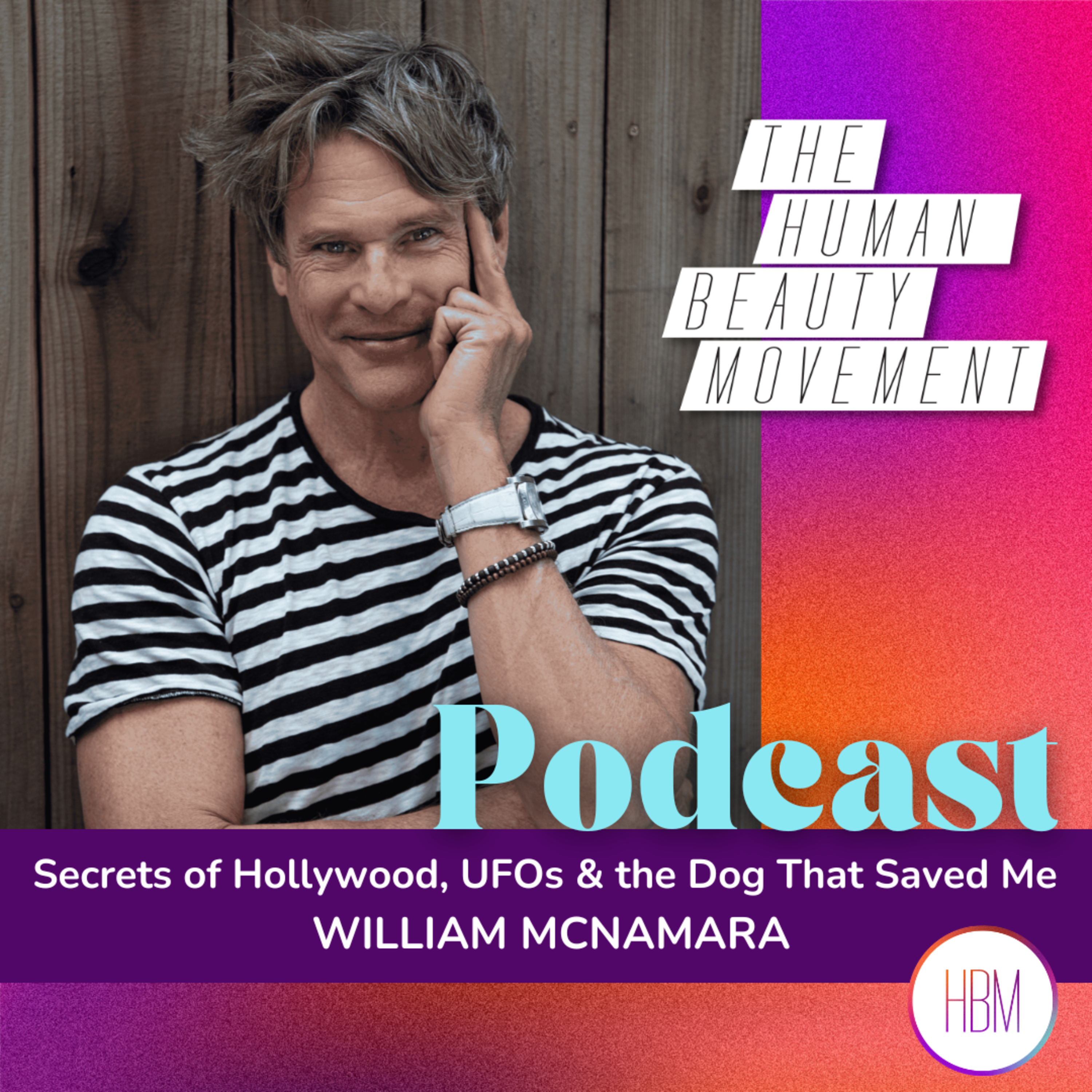


What happens after the glitz of Hollywood fades? In this riveting episode, Jennifer Norman sits down with William McNamara to unravel the raw truths behind fame—addiction hidden behind “binge control,” the seductive dangers of “pretty privilege,” and a jaw-dropping firsthand account of the MeToo-era casting couch, where William McNamara was propositioned by industry power players. Their conversation goes further, venturing into jaw-dropping UFO encounters, the hidden world of Alien Abduction Anonymous, and the wild love of an animal companion who gave his life purpose at rock bottom. From pit bull rescues in raging wildfires to refusing to erase transgender love stories for Hollywood comfort, William McNamara models what it means to reclaim your worth, redefine comeback, and root beauty in compassion, nerve, and truth. Every moment is a reminder that our real power—the comeback that matters—is loving fiercely and standing by what makes us unbreakably human.
This podcast episode is sponsored by*:
- Humanist Beauty - Beauty for your skin & soul, Humanist Beauty is clean, conscious, and cruelty-free. Shop here → https://humanistbeauty.com
- SupeCaptainBraveMan - Super books for super kids! SuperCaptainBraveMan picture books are sweet stories that help build disability awareness for a kinder, friendlier world. Learn more → https://supercaptainbraveman.com
*The Human Beauty Movement may earn commissions from your support
Billy's Links:
- https://thetroublewithbillyseries.com
- https://linktr.ee/thetroublewithbilly
- https://linktr.ee/williammcnamara
- https://www.facebook.com/thetroublewithbilly
- https://www.youtube.com/@thetroublewithbillyofficial
- https://x.com/williammcnamara
- https://www.tiktok.com/@thetroublewithbilly
- https://www.imdb.com/name/nm0001530
The Human Beauty Movement Links:
- Official Website https://thehumanbeautymovement.com/
- YouTube https://www.youtube.com/@thehumanbeautymovement
- TikTok https://www.tiktok.com/@thehumanbeautymovement
- Instagram https://www.instagram.com/thehumanbeautymovement
- Facebook https://www.facebook.com/thehumanbeautymovement
- Community https://www.facebook.com/groups/thehumanbeautymovement
- LinkedIn https://www.linkedin.com/company/the-human-beauty-movement
- X https://x.com/thehbm_official
- Pinterest https://www.pinterest.com/thehumanbeautymovement
Jennifer Norman Links:
- Lnk.Bio https://lnk.bio/iamjennnorman
- LinkedIn https://www.linkedin.com/in/jennifernorman
- Instagram https://www.instagram.com/iamjennnorman
- TikTok https://www.tiktok.com/@iamjennnorman
- YouTube https://www.youtube.com/@iamjennnorman
- Facebook https://www.facebook.com/iamjennnorman
- Pinterest https://www.pinterest.com/iamjennnorman
- X/Twitter https://twitter.com/iamjennnorman
Thank you for being a Beautiful Human.
Jennifer Norman:
Hello, beautiful humans. You are in for a treat because today marks the very first live interview on The Human Beauty Movement Podcast, and I couldn't have asked for a better guest. Joining me today in the studio is actor, writer, director, producer, and animal advocate William McNamara. Many of you know Billy from his standout roles throughout the '80s and the '90s with more than 165 films and television credits, including Dream a Little Dream, Stealing Home, Stella, and Copycat. But today's conversation isn't about looking back. It's what happens after the spotlight fades.
Jennifer Norman:
Billy's new series, The Trouble with Billy, is inspired by his own extraordinary life. It tells the story of a once recognizable Hollywood actor living out of his car with his rescued pit bull while trying to rebuild his career, his identity, and his life. It's funny, heartfelt, deeply human, and perhaps most remarkably, it's based on a true story. Today, we'll talk about the making of this series, Billy's journey through sobriety and recovery, the healing power of animals, and the life lessons he's learned about fame, relationships, resilience, and what a true comeback really looks like. Billy, welcome. It's so wonderful to have you here in the studio.
William McNamara:
Thank you. Thank you very much. Yeah, nice to be here.
Jennifer Norman:
Well, your series is called The Trouble with Billy. But underneath this comedy is a very vulnerable truth because it really is about a lot of the things that happened to you when you were famous and then after things started to change. Can you tell us why you felt it was OK, actually, to tell all of these vulnerable stories?
William McNamara:
Well, I think that it's OK in that it's like these are— experiences that should be told. And, and they happened to me, and I'm an artist, so I thought, who better to tell this— these— about these experiences of what it's like to go from the top to the bottom and fighting your way back up again? And so, and it's like, you know, the whole time I've, I've maintained a good sense of humor throughout my entire life. I think I got that from my dad. So it's never been like super duper depressing, or— because I always saw the humor in everything and the irony. And so I felt like I was almost— it was happening to me to tell the story.
Jennifer Norman:
So let's talk about that story because, yes, you were the poster child in the '80s and the '90s. And you worked with some of Hollywood elite. What was that like? And what does that do to somebody when they get all of this fame at a young age?
William McNamara:
Yeah, it's challenging in its own way. I had a pretty sheltered life growing up. Went to boarding school from a very early age, like 11, so very young. And so education was important to my family for me to have a good education, which I think is important. But, and then I ended up in New York City at Columbia. But my dream was to be an artist, an actor. You know, fortunately, I also grew up in New York City. So when you grow up in New York City, you're way ahead of the game.
William McNamara:
I mean, you know, it's— you're exposed to everything. Some people come from these small towns where it's like, oh, just white people. No, New York City is everybody. And you're mingling with them all the time, interacting with all humans, which is great. And that's a real advantage that not everybody gets. So I was lucky to grow up in New York City. It really is a melting pot and so many people, so many cultures that you can learn from. So once I was able to get back into New York City, my mom kept sending me to boarding school in Connecticut or Massachusetts, out in the middle of nowhere.
William McNamara:
And, you know, all boys school with a religious, like Protestant religious thing. And, and so a coat and tie all the time. And so once I got to the city, I was on my own living in my own apartment up on Riverside, up by Columbia. And I was able to get into my own trouble, which was I found an acting— independent acting school that I was going to. And I started, like, modeling. I ran into a photographer and said, oh, have you ever thought about modeling? I'm like, me? And he's like, yeah, yeah, let's do some pictures and see what you look like. It turned out to be pretty good. And I started making money modeling, and then I started making a lot of money in commercials in the '80s.
William McNamara:
Yeah, because that was sort of a natural progression from modeling to commercials. If you could say a few lines, you could be a commercial actor. And back then, not necessarily the same today. And that's what's so odd. In the '80s, you know, when things were affordable, we made a lot of money in commercials. You get a check sometimes for $20,000, $25,000 in the mail. You did a commercial 6 months ago, made a few thousand on it when you shot it, and then all of a sudden you get a check for 20 grand. And they come all the time, those checks.
Jennifer Norman:
And being young, that's not a bad thing. It kind of goes to your head a little bit.
William McNamara:
It does. And so things were going really good. And, you know, I finally left Columbia And I was meaning to go back. I had gotten a movie and I took time off and they gave me the time off. And I thought, oh, I'm just— I was lucky to get this movie. I'll never get another movie again. But right after that movie, I got another one right immediately. So I wasn't able to go back.
William McNamara:
And then my family's like, well, we're gonna cut you off if you drop out of college. Oh, they didn't know that I was getting these checks for $20,000 every couple of months.
Jennifer Norman:
Interesting.
William McNamara:
And so I I said, well, you cut me off then. I had about $100,000 saved up in the bank.
Jennifer Norman:
Wow.
William McNamara:
Yeah.
Jennifer Norman:
Wow.
William McNamara:
And that's a lot of money for a young, super 19-year-old or 20-year-old in New York City in the '80s. $100 grand goes a long ways. Not so much anymore. About 3 months in Santa Monica, $100 grand gone. Erewhon gone.
Jennifer Norman:
A couple of smoothies. You're broke. Yeah, you're bankrupt.
William McNamara:
Their $30 smoothie, which I had the other day, which wasn't that good. I was like, I can't believe this. Yeah, it's got all this stuff in it. But so anyway, so yes, so that was— and then I got a really big movie, Stealing Home, with Jodie Foster, Warner Brothers, and paid a lot of money at the time for a young guy. And it's funny, I was always kind of allowed to party, even as a young person, in the summertime.
Jennifer Norman:
Okay.
William McNamara:
My family's kind of okay drinking and doing mushrooms or whatever it was that I was doing. They were okay with that as long as I didn't do anything at boarding school.
Jennifer Norman:
So when you say they—
William McNamara:
My parents.
Jennifer Norman:
Your parents knew you were drinking and they knew that you were partying. But as long as in the summertime when it's—
William McNamara:
That's right.
Jennifer Norman:
When you're off. That's right.
William McNamara:
When you're off. But when I'm at school and funny enough—
Jennifer Norman:
You gotta buckle down and do your schoolwork. Yeah.
William McNamara:
In school, I would buck— I didn't do any drugs or alcohol ever.
Jennifer Norman:
Oh, interesting. You had that discipline back then.
William McNamara:
I did.
Jennifer Norman:
Okay.
William McNamara:
Now I'm on my own and I'm doing— so I'll do a movie and I'll be stone cold sober for the whole movie. And then afterwards, it's summertime.
Jennifer Norman:
Ah.
William McNamara:
And that started to snowball little by little.
Jennifer Norman:
Because you were doing a lot of movies and then you'd have a lot, a little bit of time off. And then in between, you're doing all of that.
William McNamara:
And then I got into— I was on set one day And it was a Teamster that gave me the white stuff, cocaine. I didn't know what it was.
Jennifer Norman:
Oh.
William McNamara:
And they were sniffing it. I'm like, oh, what's that? They're like, oh, you know what this is? And so I sniffed it and like, oh. But that was— I controlled that as well in the beginning. Like once, I didn't do it again for like another month or 2. But then the things started to catch up. I had a lot of money, a lot of access to a lot of things. Nightclubs, all that sort of stuff in New York City, as you probably know. Best— and the clubs are open till 4:00 AM.
William McNamara:
After-hour clubs that don't get started till 5:00 AM.
Jennifer Norman:
Yeah.
William McNamara:
And they go till like noon.
Jennifer Norman:
I unfortunately remember all of that. Yes.
William McNamara:
So—
Jennifer Norman:
In the days.
William McNamara:
Yeah. So I got sucked into that and eventually that'll bring you down. I moved out to LA. I finally moved out here because I was paying— I had an apartment that I was paying, like slight view of the river. If you leaned out the window, you could see the river up by Columbia. So Pretty cool. I can't remember what I was paying, but maybe like $1,500, $1,600 for a little tiny one-bedroom. And then I was out and I started having to fly out to LA for screen tests, or I would get a job and they would put me at the Oakwood Apartments.
Jennifer Norman:
Oh, yeah, yeah.
William McNamara:
So a lot of the jobs shot in LA back then. And so one day I was just— I had a day off. I was driving to Malibu on PCH, and I saw a for rent sign in front of this tiny house on the beach. And I went up to the for rent sign and I wrote down the number just because I was just curious, what does a beach house in Malibu cost? Because I know what I'm paying for a tiny view of the river. It's just if you lean way out, you could see a little bit of the river.
Jennifer Norman:
But if you could see the whole ocean, it must be many, many, many times more expensive than that.
William McNamara:
And this, it was a 2-bedroom, 2-bathroom house with great parking off PCH. It was, it was off PCH by a good 60, 70 feet. So you're really not so close to the PCH, which is great. It was $1,900.
Jennifer Norman:
Yeah.
William McNamara:
About what I was paying for this.
Jennifer Norman:
Amazing. And for those of you who don't live in California, PCH is the Pacific Coast Highway. So it's right along the coast. This is the best of the best. The crème de la crème real estate is along the PCH Malibu.
William McNamara:
On the beach.
Jennifer Norman:
On the beach.
William McNamara:
This house was on the sand.
Jennifer Norman:
That's amazing.
William McNamara:
So you walk off your deck onto the sand into the ocean.
Jennifer Norman:
I always wondered why in New York do people live like that? But I guess it's because the city is your real estate. The city is your backyard. It's your—
William McNamara:
I guess that's what it is.
Jennifer Norman:
And so it's okay to live in a little tiny shoebox of an apartment.
William McNamara:
Yeah.
Jennifer Norman:
If you have all that at your disposal.
William McNamara:
Well, once I saw that, that was it. I just left. I got that place on the beach. I called, I said, I'll take it, you know? And then I just moved out here and I've never gone back.
Jennifer Norman:
Wow.
William McNamara:
Yeah, I found some great deals. And plus living in Malibu on the beach, it just, there's nothing better. There's nothing better.
Jennifer Norman:
It's really, really just heaven on earth, I think. Wow. And so, all right, you started to kind of get into this regular habit of recreation, shall we say?
William McNamara:
Yeah.
Jennifer Norman:
And so when did you realize it was starting to become a problem? Was there like this, a couple of series of instances where it's like, okay, this is really starting to affect me?
William McNamara:
Well, I never realized the problem, the type of addiction I had.
Jennifer Norman:
Yeah.
William McNamara:
It's not the type of addiction that's depicted in Hollywood films.
Jennifer Norman:
No?
William McNamara:
Well, no, because, you know, you see these movies like the Nicolas Cage, Elizabeth Shue movie, Leaving Las Vegas. He's drinking, he's drunk all the time. Going to the store and buying like 50 bottles of booze and drinking nonstop. That's not what I did. I was a— they call it a binger. So I could go weeks, months without using any drugs or alcohol.
Jennifer Norman:
Yeah.
William McNamara:
Which in the movies, that is not how— what you see.
Jennifer Norman:
Right.
William McNamara:
And when you read books about people, that's— you see they're falling down drunk all the time. And that's a problem. If somebody's falling down drunk, if they're drinking every day and destroying their liver, that's an obvious problem.
Jennifer Norman:
Yeah.
William McNamara:
But with somebody that can stop doing it for 2 to 3 months.
Jennifer Norman:
You don't think that it's a problem if you have the discipline to stop for that period of time.
William McNamara:
So you think of addiction, you think of addiction like addiction is something like, I have to have it every day, right? Wake up in the morning, I have to have my alcohol or a quick line of coke or, or a pill. That's not what I had. So it was very hard for people to convince me. And they— people were saying, you know, Billy, I think you have a problem with drugs. I'm like, no, I don't. Because— and I would prove to people, no, watch this. I could go— one time I went a full year not touching it. So I said, look, I don't have a problem.
William McNamara:
No alcoholic addict can do a full year without doing it.
Jennifer Norman:
That is pretty convincing.
William McNamara:
Yeah.
Jennifer Norman:
Yeah.
William McNamara:
The person I convinced the most was me. I said, look at me. This is the thing. So that was very hard. But then I got in trouble on a movie. Oh, early on, it was a big movie. I'm trying to remember the name of the movie. I know Don Johnson starred in it.
William McNamara:
And I was on— got in this big part. And I got fired from the movie for drugs.
Jennifer Norman:
Interesting. Okay. Because sometimes you hear like everybody is so tolerant of it with actors being on drugs or people being on drugs. But what was it?
William McNamara:
There was multiple layers, multiple reasons why I was fired from, from this movie. But the excuse they used was the drugs.
Jennifer Norman:
Got it. Okay.
William McNamara:
And I was doing drugs.
Jennifer Norman:
Okay.
William McNamara:
And that's not good. So that's where it slipped into my work. I wasn't doing it while I was working, but the night before. And then the hangover carries into the day.
Jennifer Norman:
Yeah.
William McNamara:
So that was a big wake-up call. And after that happened, then I realized, oh, wait a minute, this is a problem. And I think I went to Betty Ford, which is a rehab in Palm Springs. And that's where the whole sort of thing started for me, recognizing that there's a problem because I had to go to rehab. That's a problem.
Jennifer Norman:
Yeah. How long did it take you after that instance? Did you go to rehab multiple times or was you— and that's common. That's something that it's not easy to get over it your very first time.
William McNamara:
No.
Jennifer Norman:
And why is that, you think? You just haven't really, even though you've gotten the mental ability to say, yes, I have a problem. The body seems like it still has these habits and these reasons that overcome.
William McNamara:
Well, no, the problem is when you're young and very resilient, you know, able to bounce back very quickly. You can have a binge or whatever, and you, within 2 to 3 days, you feel great, unstoppable again. So, and what happened for me is I would get sober for a period of time, do really well, make good money, end up in a good situation. And then when life was really good, I always think to myself, I can make life a little bit better. if I could go out and party. And so that's what I would do. And what happened was, unfortunately, it's a hard lesson to learn, and that is you can do that for so long when you're young.
Jennifer Norman:
Mm-hmm.
William McNamara:
So what would happen to me is I would build everything up— great career, great house, always on the beach in Malibu, great car, great girlfriend, all these great things. I would go, oh, I can make it a little better. And I know that if I screw up, I can always bounce back and get all this stuff back. I was like a major manifester. I could manifest Wow. And it was amazing. I mean, literally manifest. If I told you stories, the girl, the things that I manifested from just seeing them one time and boom, a year later, I'm in that house, the house that I dreamed about.
William McNamara:
So I thought, I'm a major manifester. I have this gift that nobody else has. And so I can use the drugs and have a good time and fall off the wagon and get in some trouble because I could get all that back with just like Bewitched, twinkle my nose, doop doop, and boom, it's all back. It's like, look at this. It's fantastic. However, when you get to a certain age, and my age was in the late 30s, hit 40, all of a sudden that manifesting ability disappears.
Jennifer Norman:
So this is like a 15-year situation from the time that you started partying to the time where you're like, okay, gone to rehab a few times, and then all of a sudden it's like—
William McNamara:
I guess it's like a 15-year. There was a time in those early, in the '90s, when I got 5 years sobriety. And that was the best time of my life. And I had so many things then. I mean, just amazing. This giant house on the beach, on a private road in Malibu, just everything. And again, I thought, oh, I can go out and get this.
Jennifer Norman:
Yeah, it just came easy to you.
William McNamara:
Yeah. And so I thought, oh, I can make it a little bit better with drugs and alcohol. And but I did have 5 years early on, and that was the best 5 years of my life. I have to say, I just had everything. You know, it was amazing. So, so yeah, and you would get to a certain age, all of a sudden that manifesting ability disappears. And I'm not sure if it's age-related or if it's kind of like my higher power or the universe saying, we've given you this gift, you've abused it, so no more. Now you're gonna struggle for everything you get.
William McNamara:
It's gonna be a struggle.
Jennifer Norman:
How much of it when you're young, and granted you said you started modeling pretty young, how much of it do you think it was like pretty privilege? People were like, oh, he's attractive. And so people are just naturally wanting to be your company. Maybe you're charming, maybe you're good looking. And so you just tend to be able to attract all the things that you want.
William McNamara:
That is a huge part of it for me. I did recognize that early on. And I was photographed by some very well-known photographers. And a lot of them said, you are the probably the—
Jennifer Norman:
You were pretty good looking. And not to say that you're not now.
William McNamara:
These photographers say, you're, you know, you are the most beautiful person I've ever photographed. And they, you know, there's some incredible photos out there that I've seen. I've never saved any of them, so people send them to you on the internet all the time. But yeah, so that— it's an interesting privilege that bites you. That also, it's a curse.
Jennifer Norman:
Mm-hmm.
William McNamara:
I'll give you an example. This is a crazy story. So I became good friends later on with Tom Sizemore. I don't know if you know who he is.
Jennifer Norman:
Sure.
William McNamara:
Passed away about 2 years ago. He stars in The Trouble with Billy, and I'm sad he's not going to be in second season.
Jennifer Norman:
Yeah.
William McNamara:
We were very good friends, but we were good friends later in life, really through Alcoholics Anonymous. And he tried to come in and get— and he did a great job for me in The Trouble with Billy. He did a fantastic job. And he really loved the show, and he was trying to get people, you know, to help finance. He was really out there trying to help me.
Jennifer Norman:
Oh.
William McNamara:
And, you know, he said to me one day, we were doing the voiceover— it's his voiceover in the beginning of the show.
Jennifer Norman:
Oh.
William McNamara:
You remember this guy? He was in the '80s, '90s, that's Tom. And so we were doing the voiceover at these— at the editor's house in Santa Monica, and he said, you know, Bill, I'm so glad I know you. I'm so glad we're friends. He said, because I'll be honest with you, Me and my group— and his group was like De Niro, all those guys that were those great actors, that group of great actors, like all the guys that were in Heat and all those things. He said, I have to be honest, Billy. Me and my group, we hated you.
Jennifer Norman:
Oh, really? Yeah.
William McNamara:
And I said, really? Why? You didn't even— you don't know me. You were so pretty. You were better looking than any girl in Hollywood. And you just got all the girls all the time. And we just all hated you. And he said, I'm so glad I got to know you, and I love you now. But then, He said we— he was jealous.
Jennifer Norman:
There's a jealousy.
William McNamara:
So there is that weird jealousy. And, you know, I'm nowhere near Warren Beatty, but Warren Beatty had a similar story. And Warren Beatty, what was the difference between Warren Beatty's career and my career? I would— I'm not saying I would have a Warren Beatty career because he is a legend. He's an icon. He's like Clint Eastwood. But he had an interesting thing. Warren Beatty doesn't drink alcohol and doesn't do drugs. He is very well-defined, very, you know, disciplined.
William McNamara:
He's very disciplined. And he had to produce a lot of his own movies because Hollywood producers were not trying to bring him forward. So like Bonnie and Clyde, Heaven Can Wait, all those movies, Dick Tracy, he had to produce all his own movies. He put those movies together himself.
Jennifer Norman:
Wow.
William McNamara:
And so because everybody hated him, he was so good-looking, When he would come to a party, Hollywood party, every single woman would flock over to him and leave all these other guys, agents, producers, studio heads. They'd all go to Warren Beatty. So he had that interesting curse as well.
Jennifer Norman:
Wow.
William McNamara:
And you really have to be on top of your game, which I didn't realize. I thought the beauty was going to get me every— I wouldn't have to do anything.
Jennifer Norman:
Right, right.
William McNamara:
And that's why I could do whatever I want and always get reaccepted into the Hollywood society.
Jennifer Norman:
I never thought about it that way. Because I guess with Hollywood being so male-dominated, and it still is, let's face it. But yeah, there's that competition that you wouldn't think. You'd think, okay, you got a leading man here who's going to attract all of the audience of the female eyes that are going to want to see this person. But yet they're going to put their own egos on the line instead. Yeah. Yeah.
William McNamara:
And when I first came to Hollywood, I'll tell you a story I've never told anybody. I don't know if I should tell this story. I'm not—
Jennifer Norman:
Go ahead, tell it.
William McNamara:
I'm not going to name names. But I will say this. When I first came out here, I was signed by a big agency, Creative Artists. I can talk about CAA.
Jennifer Norman:
Yeah.
William McNamara:
And then I was approached by somebody that worked at a very large— the management company to be with at the time. Super powerful.
Jennifer Norman:
Okay.
William McNamara:
And they said, you know, so-and-so, the owner of the agency management company, wants to meet you and possibly manage you. And so I told my agents and like, oh wow, between CAA and this guy, Yes, you will, you will have anything you want. And so I went and had— I had to go have dinner with the owner of the management company. He actually has passed away, but I'm still not going to mention his name.
Jennifer Norman:
It's okay.
William McNamara:
And he was gay, and it was at his house at nighttime, and he had a butler, he had a chef, very successful guy. And when I got there, he was on the phone and he was talking to somebody. Butler brought me into the living room where he was on the phone, and he says, One minute, I'm on the phone. And he said, he made the phone call, listened to the phone calls, talking about business, pretty impressive. And he got off the phone and he said, oh, Billy, so sorry about that. He said, I was talking to this guy. He said, mark my words, in 6 months, I'm gonna make this guy a household name. And I said, wow.
William McNamara:
And at the time, he was not a household name. And he told me the guy's name. I'm not gonna mention the name because people will be able to look it up and find out who his manager was.
Jennifer Norman:
Okay.
William McNamara:
But he said— and by the way, this guy became a household name in 6 months.
Jennifer Norman:
Mark his words.
William McNamara:
Yep. So I was at the very nice dinner. We talked about my career. This is when I moved from New York City to LA. And he said, oh, let's take dessert in the living room or whatever and talk, really get down to business and talk, have some coffee and some dessert. I said, sure. So we go in there, he lights up a joint. The only drug I don't do and didn't do is marijuana.
William McNamara:
I just don't like it. It just is not— I just never did well on it. So I did a tiny little hit just because he wanted me to, but tiny. And I told him, I don't do well with marijuana. Coke? Let's do it. But marijuana? I freak out. I get really paranoid. So he said, listen, Billy, there's— it, you know, it's obvious you are beautiful and I am very attracted to you.
Jennifer Norman:
Oh.
William McNamara:
And I said, well, wonderful. Okay, what's next? And he said, but I want to tell you something. I give you my word of honor. If we go into business together, if I'm your manager, I will never cross the line. I will never hit on you. You have my word. I said, wonderful. Okay, good.
William McNamara:
Where do I sign? And so he said, now, however, I want to tell you about the reality of this business. As I said, I'm very attracted to you, but never will I make a move on you. So you're secure. I want you to know that. I said, okay, great. Where do I sign? And so he said, however, the reality is this. There are 2 men that you'll need to sleep with, and you will get this, this, and this. And then he named 2 the most famous actors, and he gave me the situations that they were in, and he gave me a play-by-play of how it happened for these 2 famous actors.
William McNamara:
And he said, unfortunately, it's the way it works. If you do this, you will get that career. That is my promise to you.
Jennifer Norman:
No one ever speaks about this side of MeToo.
William McNamara:
Right.
Jennifer Norman:
It's always the female side.
William McNamara:
Right.
Jennifer Norman:
And thank goodness that came out because that had always been so brushed under the rug, everybody knows that that happens, but nobody does anything about it. This part of it is really, really eye-opening.
William McNamara:
It's interesting. And it is. I— now, I was an adult, so I was like 22, 23, 24. So it wasn't like I was a teen. They weren't hitting on— so they— I've heard a lot of accusations about these people doing with young— I've never seen that, to be honest. It could have happened. I don't know. But I looked 15 when I was 22.
William McNamara:
I looked really young. It was crazy. And now the good news is I was so arrogant and cocky, maybe even a possible narcissist, Yes. Yes.
Jennifer Norman:
I see where this is going.
William McNamara:
And good for you for being a narcissist in this moment. Yeah. So the narcissism saved me then. Today, not so good. I'm alone, living in my car. Not so good. But it worked. I told— I said, well, you know what? I really appreciate your honesty.
William McNamara:
And I believe I'm such a great actor that I'm going to make it on my own. And I won't need to do that. But I appreciate the offer and I'm not offended at all. And he goes, okay, no problem. No problem. And he was very gracious about it. He was very nice. We finished our coffee.
William McNamara:
He was fine with the rejection.
Jennifer Norman:
Mm-hmm.
William McNamara:
He wasn't angry. He wasn't bitter.
Jennifer Norman:
Nothing.
William McNamara:
But he did say at the end, I said, so are we going to work together? He said, well, probably not, Billy. You know what? I do believe you're going to have a great career and I wish you all the luck in the world. And you are a great actor and you are good looking and you may have a phenomenal career. And that's what I hope for. He was super gracious. So there was not a bad feeling about it at all.
Jennifer Norman:
But imagine you were a kid from the Midwest. Like, the fact that you lived in New York City. Yeah. That you lived there, that you had these diverse experiences, you knew different people. You were already very LGBTQ-friendly, shall we say, before all of this happened. But can you imagine just being a kid that was just coming in, how that entire conversation could have gone?
William McNamara:
Yeah. Yeah. And, you know, it's funny that in the older version of The Trouble with Billy, there was a line with my manager in the older— and they said, when I meet this manager, I— the line was, uh, you know what, call so-and-so, tell them I'm ready. I'll do it now.
Jennifer Norman:
And so we know what that means.
William McNamara:
And so the next day, the next day, I called the manager to check in. Well, what happened? Did you call so-and-so? He said, I did. What did he say? Too late and too old.
Jennifer Norman:
That was a long way around pre-privilege, ladies and gentlemen. But yeah, thank you for being so forthcoming. I think that that was an important story to tell, and I really appreciate you sharing.
William McNamara:
Hope I don't get in trouble for that.
Jennifer Norman:
I hope you don't either, but I actually hope you get a lot of really good comments about that too, because there is the flip side of people also being able to say, you know what, I was also rejected and this is why, and I stood my ground and so be it.
William McNamara:
Yep.
Jennifer Norman:
But back to your recovery and all of these things.
William McNamara:
Yes.
Jennifer Norman:
'Cause we were talking about you getting into like your late 30s, and then you felt like at that point it had either become a problem or you were on your, your way to like getting away from doing any drugs and whatnot. And you're 21 years sober now?
William McNamara:
21 years sober.
Jennifer Norman:
21 years. Congratulations on that. That's huge.
William McNamara:
Thank you.
Jennifer Norman:
That's huge. And so what was it like? 'Cause you had 5 years of sobriety, you'd fall off the wagon again, you'd get back on it, you'd Maybe. But what was it that finally, you think, clinched it for you and said, you know what, no more?
William McNamara:
What happened is, luckily, that 5 years was a seed planted in me. Yeah. Knowing— I learned a lot in that 5 years, and I made a lot of friends in AA that I still had kept in touch with when out there because we were good friends. And so I had that important seed planted. And what happened was, it wasn't something dramatic, actually.
Jennifer Norman:
It was—
William McNamara:
I was living in Topanga at an ashram.
Jennifer Norman:
Oh, you're kidding.
William McNamara:
Yeah. So it wasn't the big house that I had in— that I bought, the historic landmark I told you about, the Spanish place. But it was a place on Artique, Artique Road. And it was at the time it was an ashram. So I got into all the spiritual stuff, the meditation, the gurus, got into all of that. And I wasn't using drugs at all. So there's no drugs involved. But I was having— I was drinking red wine with dinner and beer, Guinness beers and stuff like that.
William McNamara:
And I was doing all this spiritual stuff, living at the ashram, learning all these new meditations, doing satsang with gurus, kirtan. I don't know if you know what kirtan is. Call and response devotional singing.
Jennifer Norman:
I do.
William McNamara:
So it's a lot of stuff, good stuff that nourishes the soul. And I pretty much dropped out of acting altogether. I was at this ashram and I had like a regular little job and I was pretty, pretty happy. But I had an underlying depression. And I'm doing all this spiritual stuff, so the underlying depression shouldn't be there.
Jennifer Norman:
Mm-hmm.
William McNamara:
And I ran into a friend at a supermarket from my old days in AA, and she's a good, great person. We started talking and she said, well, where have you been? I said, well, I'm at an ashram now and I'm doing all the spiritual stuff. And she goes, are you going to meetings? I said, no, I stopped going and I'm not doing AA anymore and I'm just drinking. And because my real problem was cocaine. And my drinking was very controlled, by the way. So I wasn't getting drunk. I wasn't driving drunk. I would have like one beer at a sushi bar or, you know, 2 glasses of red wine, but not a whole bottle.
William McNamara:
And I could stop. So it was very controllable. But there was this side effect, the low-level depression.
Jennifer Norman:
Yeah.
William McNamara:
And so she said, well, if you ever, you know, want to come back, you know, call me. And also, I'm doing these events. She was a huge campaign fundraiser for the Democratic Party. So she said, I'm doing these, you know, I'm doing a big event for Hillary Clinton. She's a very big Hollywood TV producer. She was the producer of Friends. And she goes, I'm— she's having an event at her house for Hillary Clinton. Would you like to come? I'm like, yeah.
William McNamara:
She goes, don't worry, I'm not going to judge you if you can drink. I didn't drink there though. I would, you know, because I respected her. But she said, you can come just as be— you know, you can come just as you are. You don't have to be in AA to be my friend. And I was like, wow, to go to this big producer's house, plus meet Hillary Clinton was a big deal. And she did a bunch of these events for Nancy Pelosi, all these great California politicians. Pretty cool to meet them.
Jennifer Norman:
Mm-hmm.
William McNamara:
And so she didn't judge me, and she'd never— and I don't think I did drink at any of her events because I just thought, just to respect her. But the fact that she didn't have any rules, oh, if you want to be my friend, you can't drink. She's like, do whatever you want, but if you want to come to these events, you're welcome. And little by little, I, you know, started talking to her more. And she said, well, if you want to come back, you should call this number. This is my best— my friend. It was, uh, I think he's passed away now, so I think I could say his name. Chris Lawford.
Jennifer Norman:
Okay.
William McNamara:
I think he passed, I think from heart disease or something. And, you know, he's a— he was a Kennedy. She said, call him if you want to come back. He's— he will help And he'll take you to men's meetings because I go to women's meetings. And so I did. I called him, met him in a meeting, and it just felt right. So there's no dramatic, like, DUI, I'm gonna— before the judge says you got to go to AA, or no kind of like— everything was kind of okay in my life, but it wasn't great. It was okay.
William McNamara:
And so I started doing the, the AA again, and I just started going every single day. And I met a great group of men that really looked after me and included me in everything. And when I lived at the ashram, I was pretty much a loner. You know, meditation you do by yourself. All these things you do by— kirtan you do with the group, but that's just 2 hours in the evening. Everything else you do by yourself.
Jennifer Norman:
Yeah.
William McNamara:
You're on your own. So yeah, so it just naturally, just organically came back and I start— it stuck with me.
Jennifer Norman:
That's a really interesting lesson that I think is helpful for a lot of people listening in that, you know, when you are working, you've got fame, you've got things going on, and then you have this addiction, which does screw up your dopamine cycle.
William McNamara:
Yeah.
Jennifer Norman:
And so, yeah, it can give you that peak, the trough. And then a lot of people do talk about this underlying depression that happens. And when you feel like you've got maybe a lack of purpose because you're not doing that kind of work that everybody's gonna give you these accolades for, those dopamine hits that you get from the attention and the validation. And you don't necessarily have that community. You were in an ashram, and you said you were alone. You're not having that support that you were probably hungry for.
William McNamara:
Right.
Jennifer Norman:
And so it sounds like you're getting all of that now. You've got AA meetings that you're going to. There's a building of a sense of purpose. There's friends that you're connecting with. And that's one of the pieces of AA that, you know, for a lot of people who may criticize AA, I think one of the best things they do is the community.
William McNamara:
Community.
Jennifer Norman:
Yeah. And I mean, all over Hollywood, I mean, the best of the best is in AA. And it's like just the networking, community, the no matter what you are going through right now, we are here for you kind of a friendship that builds from that, even into some people a sense of spirituality that underlies, you know, the 12 steps and everything, I think is what keeps the whole mission alive of AA too.
William McNamara:
Yes.
Jennifer Norman:
Yeah. So that to me is pretty cool. It's pretty cool that you were able to discover that and actually have it stick.
William McNamara:
Yeah.
Jennifer Norman:
Wow. Wow. So you talk about in, in The Trouble with Billy, you're going through all of this period of, you know, having it all and then having this, what we'll call an alien encounter. So I'm really curious about what happened because there is a lot of discussion these days about UAPs and UFOs and all of these fun things. What happened to you in New York? This was New York, right?
William McNamara:
Yeah. In the show, it happens in Topanga Canyon. It makes it relevant because he's living in—
Jennifer Norman:
If it's gonna happen in LA, it'll happen in Topanga Canyon.
William McNamara:
And so, yeah, it actually— it was in upstate New York. Actually, before I moved back to New York, sold my house in Malibu. I was going through a major lawsuit. That's another story, a little crazy story. So I was up late at night all the time looking over my different motions that were being filed. I was just obsessed with this lawsuit. So I was up very late, 2, 3 in the morning in Malibu. And I lived on the beach and there was some strange craft in Malibu that I saw.
William McNamara:
But I was so focused on this lawsuit that I was going through, having to do with the land and property of my house and stuff like that. I did see some strange stuff in Malibu, right? That's where it started.
Jennifer Norman:
Hmm.
William McNamara:
But again, I just didn't have time to pay attention to it. But there was something off about it, the way these things moved over the ocean and they were low flying and only very late at night. And it was strange. After the lawsuit, I moved back to New York.
Jennifer Norman:
And this is before the time of drones being a very common thing.
William McNamara:
Oh, yes.
Jennifer Norman:
So just—
William McNamara:
This is the '90s. And these things were very large, so that would be difficult to be a drone.
Jennifer Norman:
Yeah. Okay.
William McNamara:
So now I go to New York City. I'm living in New York City because I'm supposed to do Law and Order and all these other things was happening in New York. So I have an apartment on the Upper East Side. My mom has like a horse farm in upstate New York, and I had my pit bull So I would try to go to upstate New York, like, every chance I had, so my dog can run around free. Oh, not so great in New York City with a dog. Central Park, but just not, you know, all that concrete. They have to go to the bathroom on the concrete and everything. It's rough.
William McNamara:
I started pretty much going out. I'd be in the city. I'd leave like Friday, 8 or 9 o'clock at night, and I'd drive. I had my car. So I'd drive up the Taconic, and it's like a 2-hour drive to upstate New York. In this area that my mom lived in, there's just large horse farms, so it's sparsely populated. So it's not a large population. And these— they're little hamlets.
William McNamara:
They're not even towns. Hamlet, maybe with the post office. That's it. And maybe one gas station, but nothing else. No police. There's no police in this at all. And there's no airports. There's no nothing out there.
Jennifer Norman:
And so very low lit. There's not big lights going on.
William McNamara:
No lights. No lights.
Jennifer Norman:
There's— it's very— almost rural.
William McNamara:
It's very rural. And because everybody works on horse farms, they get up at 4 or 5 4:30 in the morning because that's when you start with the horses. So everybody goes to bed at 8:00 PM. So all the houses are dark. So even if there were a lot of— everybody's asleep. So I would get up around— I would get an exit to my mom's exit, which is 2 hours from the city and no traffic. And I was making the exit. And so I was driving my car and I would make the exit and I'd start driving and I'd just glance up like that and I would see something.
William McNamara:
Something.
Jennifer Norman:
Hmm.
William McNamara:
That shouldn't be there because there's no airport nearby. These low-flying things should— there's nothing. Well, how is this possible for a low-flying thing? But because I know my personality, addictive, that I knew not to look up. I knew not to focus on that because if I did, I'd end up all night trying to figure out what these things are. And so I didn't want to do that. And so I'd get to my mom's house, me and the dog would get out, and I wouldn't— I just kept my head down, didn't look up because there was some weird— and you had a vibe too that something's going on. And so I—
Jennifer Norman:
And at this point you're sober?
William McNamara:
Yeah, sober.
Jennifer Norman:
Okay, completely sober.
William McNamara:
Which is why it was so— yeah. And I'll cut to the next thing. So eventually, after a couple of weeks, I finally couldn't help it because every time I make this exit, there's something hovering around this hamlet. The hamlet's called Salt Point. Tiny little town. It doesn't— it's just a post office and one gas station.
Jennifer Norman:
That's it.
William McNamara:
That's the whole town. And there's no police stations at all. So the police, if there's a problem, it's the state troopers. Then they're on the— they're like the highway patrol. They're state troopers. And so they can fly up and they can get off the exit if there's— but there's nothing there. I've never seen a cop anywhere. There's never anything going on.
William McNamara:
So I finally made the mistake of looking up, and these things were so peculiar, and I got obsessed with it.
Jennifer Norman:
Hmm.
William McNamara:
And so, I mean, I did things like I started to find out where the private airports were because there's a couple small plane airports in the area. So I would go there at nighttime. I would stake it out at like 6 PM. All these These private airports, the small plane airports, they close at 6:00 PM. There's no air traffic at all. So I went like a crazy person. I went to each one of them. I had it all mapped out.
William McNamara:
I went and I sat there and they're closed. Nobody's in the tower. There's no planes. It's dark. There's nobody. So I ruled that out. I'm like, okay, so it's not these small planes. There's nothing.
William McNamara:
And there's no airport close by.
Jennifer Norman:
Mm-hmm.
William McNamara:
JFK and LaGuardia are far away.
Jennifer Norman:
Mm-hmm.
William McNamara:
Albany, far away. And these things are flying too low for it to be—
Jennifer Norman:
And when you say too low, like, would you be able to see the shape of them?
William McNamara:
Oh, yes.
Jennifer Norman:
What was the shape?
William McNamara:
Well, okay, I'll tell you. So, yeah. So anyway, and I couldn't tell anybody at the time because they would think I was doing drugs again. So I couldn't let my mother know. And I couldn't tell any of my friends. Just me and my dog in the car.
Jennifer Norman:
And you never took a photo of them?
William McNamara:
I have a video. I did a video, yes. And there were always orbs, which I didn't know what they were. Now everybody's talking about orbs. You go to any channel anywhere, Instagram, TikTok, orbs. I had orbs. I didn't know what they were. And again, I can't tell anybody because they'd think I'm hallucinating and I must be on doing something again.
William McNamara:
Must be. None of my friends could know. My mom couldn't know. And my mom did get suspicious. She said, William, what—
Jennifer Norman:
Oh my God.
William McNamara:
Yeah, what are you doing like late at night? I notice you, you come in, you drop your stuff off Friday night. I hear you moving around the house and then you're gone till 4 or 5. I hear you come back in at 4 or 5 in the morning with your dog.
Jennifer Norman:
What's—
William McNamara:
what are you doing? She's suspicious that I'm out drinking or doing drugs. And I said, I'm just driving around with my dog. She goes, just driving around? You're not like drinking? I said, I'm not gonna drink and drive. And I never never would, and I never have. And so that was suspicious. And these things were large, either very, very like triangular, like triangles, or shaped like a manta ray, the animal in the ocean, those manta rays, which is kind of like a triangle.
Jennifer Norman:
Mm-hmm.
William McNamara:
Right? And they didn't have any means of propulsion, no engines on them. And they made no noise. And they were swooping around. I mean, they would come banking. I mean, it was just like totally silent. Almost like manta rays in the ocean, the way they were able— the way manta rays, you know, swim in the ocean.
Jennifer Norman:
And could you garner a guess about how big?
William McNamara:
Oh, well, they're very large. I mean, probably like at least half, maybe half a football field long, 50 yards.
Jennifer Norman:
50 yards.
William McNamara:
Yeah. So what happened, what finally kind of broke me out of it, was I started watching them all the time. And these things realized that I was watching them.
Jennifer Norman:
Oh.
William McNamara:
And what would happen, very strange. This is when I knew it must be, unfortunately, this is what broke me of it. But they would, all of a sudden I'd be up on a hill with my camera and I might be in camouflage and I'd be waiting. 'Cause usually I knew the path, the path of these things when they would start at nighttime. And they would start right when it got dark and everybody's asleep at 8 o'clock. And so now all of a sudden a single-engine airplane would show up and start flying around the area. And then it would disappear and I would hide. And I knew the single— I hear— I, I could hear the single-engine airplane and it was low.
William McNamara:
It was definitely looking for something. And I would hide and I wouldn't move for an hour after the single-engine plane came around. And lo and behold, every single time the craft would come over the hill. So, and it looks, you know, it is that triangular shape, but I did get a few— I get a couple of very close looks, especially on full moons. One time I did see 3 helicopters, military helicopters surrounding one of these craft, and it was wobbling.
Jennifer Norman:
Oh.
William McNamara:
Yep. And I noticed when I got a closer look, it had the same angles on it that the stealth fighter has, and it had that same matte black, the black that doesn't, that doesn't reflect anything, kind of like the matte black that's on those stealth. So that led me to believe that most likely it's of human origin. Now, it might be something they reverse engineered. Maybe it was something that they captured and now they're trying to figure out how to work. But whatever it was, it might have been alien, but there was humans involved because the helicopters, because the single-engine airplane. So all these things started to line up. So my whole thing was I was trying to meet an alien race.
Jennifer Norman:
Hmm.
William McNamara:
But when I realized that it's probably not an alien race, it's probably, you know, they had the stealth fighter and the stealth bomber in the '70s. It was flying over Nevada, Area 51 '70s, and people would see it and they thought for sure this is a UFO. And then I guess in the '80s, all of a sudden the stealth bomber is released and it's like, oh, then people say, that's what I was seeing, that I thought that was a UFO, but it was a secret military thing.
Jennifer Norman:
Mm-hmm.
William McNamara:
Now, there were 2 situations where the vehicles I saw were something else. They were half mechanical, the lower part of the body, the manta ray, mechanical.
Jennifer Norman:
Mm-hmm.
William McNamara:
And then the upper part of it was like a turret on a tank. You know what a turret is with a gun? It was a kind of a turret, but it was not of any kind of metal. It was actually— it looked like the head and neck of a crocodile. So it was reptilian. And it was— so it didn't turn mechanically. It turned like the way an animal. It was biological, whatever it was. was.
William McNamara:
So it was half biological, the top, and the craft that it was on top of was technological. So some of it was, you know, made out of steel, but the top of it was something else. Something so disturbing.
Jennifer Norman:
Oh.
William McNamara:
And I was at an ashram in New York, upstate New York. That's where I would go on the weekends to do the kirtan and stuff like that. It's an ashram. And I was— I'm not going to name where it is because I don't want people to go bother them. because that's where a lot of the activity is. So I was leaving— I'd leave late at night and I'd do the kirtan, hang out with all these cool yoga people, pretty yoga girls, you know. I'm a single guy. And so, um, and I would leave at night to go back to my mom's, her place.
William McNamara:
It was like a 45-minute drive.
Jennifer Norman:
Mm-hmm.
William McNamara:
When you leave this beautiful ashram, beautiful grounds, there's a long driveway out. And right when you come out, there's a street right here. You take a right to go back to Taconic. And right across the street was like a junior high school. And so one night I'm driving out and I, over the main building. It's a single-story building of a junior high school or a high school, public school. And the building was probably maybe 25 feet high. And right over the roof of this building, like 5 feet off the roof, was this giant thing, this half technological, half biological thing.
William McNamara:
And it was floating, hovering right over the school. So it's not more than— it's less than 50 feet off the ground. Now that's the closest I've ever seen one of these things.
Jennifer Norman:
And is this same So it's not the same size as the original ones that you saw?
William McNamara:
It was not as big.
Jennifer Norman:
Like a single manned, quote unquote manned.
William McNamara:
Correct. Single manned.
Jennifer Norman:
Okay. So this was a smaller thing.
William McNamara:
Yes, smaller.
Jennifer Norman:
Is it plausible that the first things that you saw were actually military?
William McNamara:
That's what I'm thinking.
Jennifer Norman:
Yeah. So those were what you believe are, because of the helicopters and the single-engine plane, you think that that was probably part of a military operation because you thought at first it might be UFO or alien.
William McNamara:
And then when I saw—
Jennifer Norman:
But then all of a sudden you see something that is quite unique, quite different.
William McNamara:
Yes.
Jennifer Norman:
Okay.
William McNamara:
Yes.
Jennifer Norman:
And you don't believe that those are military?
William McNamara:
I don't know what it is. It is bizarre. And so I saw this thing and its back was to me. So it's facing up away from me. And the head or whatever you want to call it, turret or whatever, I'm just sitting there frozen in my car like, oh my God, it's some kind of like animal crocodile. That's just bizarre. The head turns, and I can see it's turning back and looking at me. And I saw the, the, the crocodile skin crumpled as it turned.
William McNamara:
So it's like, you know, the way you're— you know, there's like a strain on it.
Jennifer Norman:
And what time of night is this?
William McNamara:
This is probably midnight.
Jennifer Norman:
Midnight. And you could— but you can still see clearly because—
William McNamara:
Oh, yes.
Jennifer Norman:
It's in a school and there's lights.
William McNamara:
There's lights in the school.
Jennifer Norman:
Okay.
William McNamara:
Yes. So— Yes.
Jennifer Norman:
Wow.
William McNamara:
And so I followed this thing. That's a logical thing to do. When it saw me, it started to move away. So I just, instead of going right to the Taconic, I went left and I started following it for quite some time. And it was just floating, making no noise. And it wasn't moving fast because I could keep it. I kept it in my line of sight. It finally came to a golf course and I was driving an SUV, a Mercedes 4-wheel drive SUV.
William McNamara:
So I could take it off-road, no problem. And so, which I did a few times. And so, um, I, um, while I was chasing other craft on people's property and stuff, they had no idea. They're asleep. They're far, you know, they're horse farmers. And so, so I got to the beginning of the golf course and it kind of flew and it kind of hovered over the golf course for a second, waiting to see if I was going to follow it. And I know growing up with the way I grew up, that private clubs, golf courses, teenagers, We, a couple of times we do things to golf course. They put you in jail if you mess up a golf course.
Jennifer Norman:
Yeah.
William McNamara:
And it's like the, the fine. And it's private.
Jennifer Norman:
Yeah.
William McNamara:
Yeah. It's like $100,000. You screw up their scuff, it's all $100 grand every time for them to resurface the whole thing. So I debated whether or not to keep following it and it stopped, waited, and I just sat there in my, I wanted to follow it and it'd be easy too, cuz the golf course is, you know, it's, but I knew not to and it just, Took off. So that, I'm not sure was military. That was, that was, that was something very disturbing.
Jennifer Norman:
Hmm.
William McNamara:
Is it felt like it was sentient. It felt like it was, was having a community. It was messing with me.
Jennifer Norman:
Wow.
William McNamara:
Yeah.
Jennifer Norman:
And so at what point did you feel that it was okay to start telling people about these encounters?
William McNamara:
Well, what happened was, um, I did call a friend of mine who knew a lot, who was in that whole world. world, UFO world. I did call him. I said, hey, Stewart, I want to ask you a question. I'm in upstate New York and I'm seeing some stuff and I can't tell anybody because of my alcohol and drug problem. He said, what are you seeing? And I describe it to him. He says, oh, Billy, go to Google, type in Hudson Valley triangles. So I'm like, really? He said, yes.
William McNamara:
And so I typed in Hudson Valley triangles and yes, Probably this was in the early 2000s. In the '90s, there was a rash of these triangles in a small town. This town I can mention. It's called Pine Bush because it stopped happening there. People every night were seeing these things, these flying triangles with no propulsion, no sound, and people were seeing them all the time.
Jennifer Norman:
Mm-hmm.
William McNamara:
So all of a sudden, this is on So I can start telling people.
Jennifer Norman:
Okay.
William McNamara:
Like my mom. And I showed her Google. I said, this is what I'm seeing. And people, other people see it. So out of— on Google, I found this guy who's a— he's a— he was a teacher at a college in New Jersey, but he's a UFO aficionado. He knows a lot about UFOs. That's his hobby is UFOs. He teaches geology at a college in New Jersey.
William McNamara:
And so I called him and I— because he knew— he was involved with the Pine Bush stuff.
Jennifer Norman:
Mm-hmm.
William McNamara:
The sightings. And so I told him about what I was seeing up at my mom's thing. He said, well, I find it very hard to believe because yes, there was a lot of activity in that area, a lot. And I still have a lot of contacts there, but that activity stopped. And I've checked, I always check in with my contacts and nobody has seen it again. So I'm sorry, I don't really believe you. I was like, oh, well, okay. I'm seeing them.
William McNamara:
And so he said— so I finally said, listen, if you want, you could stay at my mom's farmhouse. She had a huge place and you could stay and you can, you know, I'll show you. So he took me up on it. And that's the video that we got. He brought the video camera and he analyzed it and did all the stuff with it. And when he saw it, he said, yep, that's— they're back.
Jennifer Norman:
They're back.
William McNamara:
They're back. And he's like, Wow, they're back. And he was shocked.
Jennifer Norman:
And when he says they're back—
William McNamara:
The triangles.
Jennifer Norman:
Does he— so he is familiar with the species of—
William McNamara:
Well, not the species. He's more familiar with just the straight triangle, not manta rays. They're called manta rays. Not necessarily the crocodilian-headed ones. I did see it a second time in that same town. The thing. And I did chase it again.
Jennifer Norman:
Mm-hmm.
William McNamara:
This time— and, you know, like I said, there's no police, so you can drive on people's properties unless you screw it up. You can, you know, drive on— and nobody had fences like in LA. There's not fences. People had open farmlands. Just drive. And I was never afraid of getting stopped by the police because there's no police. However, the second time in the same town, I was leaving the same ashram. This time I went right and was going towards the Taconic.
William McNamara:
And so over the road, the thing appeared. So I start chasing it. And as I'm chasing it, I'm driving all over the place. I'm just winding this way, down, up this guy's property, up a hill, down, back onto the road again. So I'm going all over the place. And I'm back on the road. And all of a sudden, in my rearview mirror, blue lights are flashing.
Jennifer Norman:
Oh.
William McNamara:
And I'm like, what the hell is that? So I figured it's a cop, but there's no cops. But I pulled over. Who knows? And it's a state trooper. He'd pulled off the highway to get a— to relax, I guess, or something. And he saw me driving like a maniac. So he was freaked out. He comes up, he's got his flashlight on me, you know, trying to blind me. He's got his hand on his gun.
William McNamara:
And he goes, what do you think you're doing, sir? And I said, listen, I'll take a sobriety test right now. I'm not drinking. He said, well, you're not drinking at all? I said, I'm not drinking. He said, what are you doing? Why are you driving like that? I said, sir, if I told you, you're not going to believe me. You're going to think I'm crazy. Can I just take a sobriety test?
Jennifer Norman:
I was just willing to do it right away.
William McNamara:
Get out of the car, do this, blow in the thing, just do everything I had to do, comply with anything he wants. I didn't want to tell him the story. And I kept saying, sir, you're not going to believe me. He goes, well, try me. I want to— you need to give me an explanation of what you're doing because you're driving like a maniac. You're saying you're not drinking. I said, I'm not drinking. What about drugs? No, I'm not doing any drugs.
William McNamara:
And I kept offering the sobriety test. He said, no. What the fuck is going on? And I said, well, this is crazy. I am chasing after this giant manta ray-shaped thing that's flying. 100 feet off the ground. And he says, oh no, it's happening again. State trooper. So he knew about it.
William McNamara:
And he said, all right, sir, have a good night.
Jennifer Norman:
Oh, he just let you go?
William McNamara:
Let me go. Didn't— that's all I had to say. And he just turned his flashlight off, shook his head, and he said, please drive safely. And he walked back to his cruiser and just turned around and took off.
Jennifer Norman:
What do you think that these things want or what they're doing?
William McNamara:
I have no idea. That's why I'm so curious. That's why I was so curious. Like, what are they doing? I mean, you know, it is weird for the military to test these things over populated areas.
Jennifer Norman:
Right.
William McNamara:
Where's the thing fell? You know, it is still very pop— it's not super populated, but there's people there in the daytime. There's people.
Jennifer Norman:
Yeah.
William McNamara:
But there was nobody else chasing them like me. I know for a fact, at least in my mom's town, because I found the base where they were. I found a house in the woods in the middle of nowhere that had all these cars parked there. in their driveway, like 15 cars. But the house is empty. And I could see— I was too afraid to go get too close to the house because something's going on there. Somebody. So I think that's the entrance to, to like an underground base.
Jennifer Norman:
Oh.
William McNamara:
And I think it's very hilly. The area, upstate New York, is very hilly. Not mountains, but hilly. Very hilly. Where you can, you know, you can hide a lot of stuff. And so, and of course, like I said, everybody goes to bed at 8. I mean, there's the one guy that was, you know, this one crazy guy. And I think that's why sent the private— the single-engine plane out to search for this crazy guy that was trying to take video.
Jennifer Norman:
Yeah. And now it becomes pretty much known. This was, you said, early 2000s.
William McNamara:
Yeah.
Jennifer Norman:
Here now in 2026, it seems like it's all over popular culture in terms of Reptilians, Pleiadians, Atlanteans, that like the whole— all of the different kinds of potential, you know, non-human sentient forms that might be kind of strolling around among us doing who knows what.
William McNamara:
Right, exactly. So now it's kind of like it's old news. My stuff is old news, you know?
Jennifer Norman:
Yeah. It is interesting to see what might happen. I know that there are a lot of declarations that next year they're gonna make themselves known or their intentions known. And so everybody's like waiting for that. I think that's why you're seeing a lot of it more on TV and Gaia is actually streaming a lot more on UFOs too. Yeah.
William McNamara:
And they talk about it in Congress now. They've had all these hearings where people have said, yes, these things are real.
Jennifer Norman:
real.
William McNamara:
Under oath, they've said it. So it's— if they're lying, I mean, I don't think they are.
Jennifer Norman:
Yeah, I think people now believe that we're not alone in the universe. I think that that's probably the majority belief, that there's no way that out of the entire universe that we are the only living creatures here. I think that it's much more plausible to—
William McNamara:
Right. And there's probably like— there's probably interdimensional beings that can go through the dimension, you know, interdimensional. So they're not traveling traveling 6,000 years to get here.
Jennifer Norman:
Exactly.
William McNamara:
It's a pop through a dimension.
Jennifer Norman:
Yeah. Interstellar-like.
William McNamara:
Yeah. And then the other thing is, I think— 2 things. I think there's a lot— there could be— we don't know what's 5,000 feet underground. There could be a whole civilization also deep in the ocean. They have all these vehicles now they see coming out of the ocean. So there could be a whole thing in the ocean that we don't know about, you know, underground in the ocean. We will never find them, you know? And then the other thing is, and this is what the guy, the geology teacher said, his theory was— this is way back then, his theory was, is they're actually, they are human beings. They're the future humans coming back to warn us, which I thought was crazy.
William McNamara:
I was like, this guy's a little crazy. But then just the other day on like TikTok or Instagram, I saw a clip of Gregg Braden. Do you know who he is?
Jennifer Norman:
Yep. I've actually met him.
William McNamara:
Gregg Braden saying that he believes these are human beings from the future that are coming back to warn us to not accept the technological integration. No, not the AI. Sorry. Integrating into the human being, which is what they're trying to do. Singularity. You they're trying to do that.
Jennifer Norman:
Yes. Yes.
William McNamara:
Elon Musk is leading the way.
Jennifer Norman:
Elon and Bryan Johnson.
William McNamara:
Yeah. So there's a lot of people that are trying to have— so we'll have to be interfaced with the computer, somehow build it into us.
Jennifer Norman:
Right.
William McNamara:
So, and Gregg Braden, I have a lot of respect for. He's done so much research. I mean, if anybody knows anything, it's going to be Gregg Braden. So I just— this is just last week I heard Gregg Braden say it on an Instagram thing. So now I'm— maybe there's some credence to that. Maybe, maybe, maybe it could Wow, that is so interesting.
Jennifer Norman:
When you have your animation at the beginning of The Trouble with Billy, it shows you actually getting lifted up. I know that's a bit of a spoof, but, you know, you and Boo, the dog, are getting lifted up into the spacecraft. You meet the 2 green men with the antenna. And I imagine that was just done because people are so familiar with that version of what aliens are. And so it's not to say that you were abducted. Is that true?
William McNamara:
Well, so part of the thing of my story is is the same person, Stuart, when he told me to Google the triangles, the Hudson Valley triangles, he also said, Billy, I can set you up with somebody in Pine Bush. That's the town where it all happened in the '90s. And she runs a group. And in The Trouble with Billy, part of my—
Jennifer Norman:
AAA?
William McNamara:
Yeah. So instead of being in AA, which every cliché Hollywood actor— there's a show about a Hollywood actor in AA. So cliché. It's like, where have you been? Well, I've been getting sober. I'm getting— building my life back to get my career back. I had to get sober. That's the same that I've heard that story from everybody. And so it's— I didn't want to do that.
Jennifer Norman:
Yeah.
William McNamara:
And so what I did is I used AAA. So Billy's a member, not AA, but AAA.
Jennifer Norman:
Alien Abduction Anonymous.
William McNamara:
Which, which really exists. And they have those meetings. And I called this person and I was invited to a meeting. They're super anonymous because these are people in these small towns that are normal people. Could be a cop, Could be a fireman, could be a schoolteacher, could be a plumber.
Jennifer Norman:
And they have no one else to talk to.
William McNamara:
Yep. And they come to these things and they have been abducted. So I got to go to these meetings.
Jennifer Norman:
Oh, so you know about it through the AAA meetings? I do.
William McNamara:
I do.
Jennifer Norman:
Oh, what were some of the stories?
William McNamara:
Well, it's hard to get into.
Jennifer Norman:
Yeah, I don't want to necessarily divulge. It's—
William McNamara:
I'm sure this has been divulged before. I'm sure. So apparently Generally, there is a reptilian element to it. These large beings that are sort of reptilian, but they always say that they do see in the back, like if you're on a table in the craft, there'll be 1 or 2 of these reptilian things close to the table hovering over you doing something, but that you could always see in the background there were human beings in military outfits, like green, you know, they're green, whatever those military things are.
Jennifer Norman:
Hmm.
William McNamara:
So their thing, their belief is, is that the humans know about this or involved with these other weird beings. So there's usually a— both beings are on these craft, humans and these other beings. So that's strange. And but they all say the same thing. So I don't think they're all making it up. And they, they're very consistent with their stories. So that tells me, unfortunately, that our military is involved in doing not such good things to people, which wouldn't surprise me.
Jennifer Norman:
And when they say not such good things, so, so why would they be taking regular people and just kidnapping them and then doing who knows what with them. That's the unusual thing. And who— I mean, I don't know.
William McNamara:
Well, these beings are possibly studying humans. It's like, it's like, you know, lab rats, but instead of it being a rat, it's a human. But again, what I heard Gregg Braden say, which I didn't think of, which I thought was maybe this is pretty interesting, is they're taking these samples and there's a lot of people report like semen and ovary scooping out and stuff like that, samples. It has to do with keeping this humans in the, you know, in the race.
Jennifer Norman:
Yeah.
William McNamara:
So I don't know if any of this is true.
Jennifer Norman:
It's not to see how much plastic that we've consumed into our cells or anything like that?
William McNamara:
I wish. But it's a very— it's very— yeah, it's very strange.
Jennifer Norman:
Wow.
William McNamara:
Yeah.
Jennifer Norman:
Well, thanks so much for sharing all of that. I think that it is unique, it is new, but, you know, it's definitely out there now. It's not like we have to hide and we have to, you know, say these things didn't happen if we believe that it's true. And, you know, the truth will be made known soon enough, I think.
William McNamara:
Yeah, I think so.
Jennifer Norman:
Wow. So you had Boo, your, your, it was your pit bull named Boo?
William McNamara:
Yes. I named my first pit bull. Yeah.
Jennifer Norman:
Oh, your first pit bull. And so Boo and you have this incredible love affair, shall I say? I mean, you, you guys are best friends.
William McNamara:
Yeah.
Jennifer Norman:
And you would do anything for Boo.
William McNamara:
Yes.
Jennifer Norman:
You'd do anything for animals. You would put yourself in the middle of crazy, crazy danger to save an animal.
William McNamara:
Yeah.
Jennifer Norman:
That's really incredible. What caused to love animals so much?
William McNamara:
You know, I don't know, but I think part of it had to do with I was an only child. So growing up, and my mom or my dad always had cats and dogs, and— or we had a ranch in Texas. So I was around horses all the time. And I just had a connection to animals. And like I said, I had no brothers or sisters. And so—
Jennifer Norman:
They were like your brothers and sisters?
William McNamara:
Yeah, they were like my brothers and sisters. So I had this incredible bond and connection immediately it with animals. And it just carried over into my adulthood. And it was sort of like built in the foundation of my being. So I think that's what it must be, you know. And I had, I was never afraid of any of the animals, you know, large horses, I would get never afraid. And so I just feel very comfortable. And, you know, in the '90s, I used to volunteer at Agoura Animal Shelter.
William McNamara:
They'd have these supposed very dangerous pit bulls. come in. And you, you know, you're not allowed to get into the kennel with them because they're very dangerous. I would always get in with them. And over time, Pit Bull would trust me and come over to me and stop the growling and showing the teeth. And I was never afraid. And so, and I've been bit a few times, still not afraid. So it's some sort of innate thing that was in me, I guess, you know, I guess that's what it would be.
Jennifer Norman:
A lot of people misunderstand Pit Bulls, I think.
William McNamara:
Yes.
Jennifer Norman:
Yeah. What would you want them to know?
William McNamara:
Well, pit bulls are super sensitive. They'll do almost anything to please their owners, which is why you can get them to fight. And it takes time to get them into the fighting mode. They don't— it's not, it's not something that's innate. So yeah, they're super sensitive, super intelligent. Like, you know, the thing I find about pit bulls, or my last 2 pit bulls, and I don't find it with a lot of other dogs, is they— a pit bull, if you get into a staring contest, if you look at the pit bull's Most dogs, a Labrador is looking all over the place, you know, or a Golden Retriever. They're just everywhere. What's next? What's next?
Jennifer Norman:
I'm gonna win the staring contest.
William McNamara:
Well, no, and they're not, it's not a contest. They're happy to gaze. It's eye gazing. And so, and they're able to keep the attention and focus, which is not normal for an animal. You know, most animals are gonna look around. They hear a noise, they're gonna look over there. Or they smell something, they're gonna start smelling. You know, all these different sensations are coming into animals and they react to them, you know, 'cause they're animals.
William McNamara:
And they should. Uh, pit bulls, they'll hold the gaze, but, you know, firecracker could go off and the pit bull's still— if you want to look at the pit bull and do eye gazing, pit bull's right there with you. So I just find that to be very unique. And they're super sensitive.
Jennifer Norman:
Would you be as committed to saving people, you think, as animals? Or is it really like, okay, animals first. I'm gonna go into the fire for the animals.
William McNamara:
Well, a funny story. During the Palisades Fire, I ended up saving a human being. that I was— I didn't want to. You didn't want to? Yeah, as it was getting in the way of my, my work of those modular homes on PCH. I was trying to get animals out. And, uh, yeah, this guy showed up and he— it was so smoky and hot and there was nobody there, not even firemen. I was completely by myself and I almost bumped in because it's so smoky. And, and it's not just so smoky, the, the smoke is so intense that your eyes are burning.
William McNamara:
So you can barely see anything anyway because the eyes are burning so much. And then you have this super duper smoke. So I literally bumped into a man who was standing there and he had a, he had a bunch of suitcases.
Jennifer Norman:
Was he living there?
William McNamara:
Yes, he was living there and he was blind. So he was blinded by the smoke. Oh, but he couldn't see. He didn't know. And like, he didn't even see me and I was 3 feet— I didn't see me either. And I kind of hit him like, whoa! I was scared. I was like— 'cause there's nobody there. And the fire is raging.
Jennifer Norman:
Oh my God.
William McNamara:
And he couldn't see. And I'm like, oh my God, who are you? He goes, I live here. I live here. I can't— I can't see anything. Can you help me? I'm like, oh, damn it. I'm like, oh, man. I couldn't say no because he's gonna get burned. He didn't know where to run.
Jennifer Norman:
But where's your animal? Where's your pet?
William McNamara:
Yeah. And he said, what are you doing here? I said, I'm rescuing animals. Animals! And he said, well, can you get me out of here? And I'm like, ah, okay. And I grab him and I lead him because he can't see and he's just pulling all those bags with him. And, um, I bring him over to my car and I set him in the car and he, he, uh, he sits in the car and he's— his eyes are complete— he's— he was right in the fire with the smoke. I mean, if I— maybe if I hadn't been there, I don't think he would have found his way out.
Jennifer Norman:
Hmm.
William McNamara:
I don't know though. I don't know. He was in bad shape. So I And I drove him down PCH. I got him out of the fire zone, but I went right back in. Yes. Yeah.
Jennifer Norman:
Yeah. What would possess you to do that? Wow.
William McNamara:
Yeah. Well, I was just, you know, I've been in fires before, so rescuing animals. So I kind of know how to do it. And I kind of know, but you never really know because fires change so quickly and so many weird things can happen in a fire situation. So not the smartest thing to do.
Jennifer Norman:
But you're willing to do it.
William McNamara:
Yeah.
Jennifer Norman:
Yeah. You had volunteered with Sea Shepherd as well in Japan. And you're really, you know, you just get involved with making sure that animals are treated humanely.
William McNamara:
Yes.
Jennifer Norman:
And so, yeah, that's, you know, something to have a shout out for.
William McNamara:
Yeah.
Jennifer Norman:
For sure. What do you think that they teach us about humanity in general?
William McNamara:
Well, I mean, so when you're with animals, almost all animals, um, from dolphins to elephants to dogs to, you know, they, they, they are able to, uh, they're sentient beings and they're able to feel love and give love. And that when you get into that situation, even with a wild animal, you can— the word tame is not right, but you can feel the power of love.
Jennifer Norman:
Hmm.
William McNamara:
So what they teach us is that there is this power of love and it can and will overcome. And it's the thing that we share in common with all beings on this planet. So it's a powerful thing that we shouldn't neglect or we shouldn't— that we should focus more on that because it is the unifying energy of the planet. And I've been in situations with wild animals and where they could have really hurt me. And I think that they felt my love for them and my non-fear that they were okay with me. I don't recommend people try that because people have tried that and they've been killed. So probably not the best.
Jennifer Norman:
Grizzly Man.
William McNamara:
But yeah, Grizzly Man. I mean, that guy used to live in Malibu.
Jennifer Norman:
Yeah.
William McNamara:
was my neighbor. It's crazy. So anyway, so I do, I think it's an important lesson. I've swum with wild dolphins too. I used to, not so much anymore, but I used to. And wild whales, humpbacks. I swam with them in the Dominican Republic. Costa Rica? No, the DR, Dominican Republic.
William McNamara:
And so they're wild humpbacks and you're in their breeding ground.
Jennifer Norman:
Wow.
William McNamara:
So they're all around you and they're giant and they'll come right up to you and they'll, they'll, if they hit you, you're going to be dead because they're like a 40-ton truck hitting you at 20 miles an hour in the ocean. And if they hit you, it's gonna— and they'll veer away. They don't want to hurt you. And they know that we're there observing as observers, and we don't ever go near them. We let them come to us. These are the whales. And so I've done this in the— it's called the— I think it's called the Silver Banks off the DR. And so that's— I think that's what they're here to teach us.
Jennifer Norman:
I think that it's amazing how we've come to know animals as emotional support animals, therapy animals. Horses are incredibly Incredible. Therapeutic when you spend some time with them. You just feel their calm and their peace, and they sense you very much, and they just have this ability to help to just pacify away stress and anxiety. Yeah, that's right. Yeah, they definitely feel you. And I think that you're right, there is this unifying bond if we meditate on it enough, if you quiet yourself enough to hear it and to feel it and to sense it. And that's what you've gotten with all the animals that you you've been privy to know and to save and that.
Jennifer Norman:
And yeah, sometimes I feel like we might have lost that connection as humans. And, you know, it's the hope that we get it all back.
William McNamara:
I know. Yeah.
Jennifer Norman:
Yeah. Maybe that's what the Reptilians are hoping for.
Jennifer Norman:
So as far as The Trouble with Billy goes, you wrote, you directed, you produced it, you starred in it. This was really your baby from start to finish. How was that?
William McNamara:
Well, it's a big learning experience. It's pretty challenging, pretty rough. Um, you know, it aged me tremendously. I used to look really young. Now I look my age. So it's just obviously it's put a lot of mileage on my, on my physical body, my brain.
Jennifer Norman:
You look pretty good for 61. You're 61 now?
William McNamara:
Yeah.
Jennifer Norman:
Yeah. Wow.
William McNamara:
So it's quite an experience. I mean, I've— I don't know how to describe it. It's, it's overwhelming. And it's, it's amazing that I pulled it off. So, you know, I'm super proud of it. And I'm super like, I look back and I'm like, And like, so I still have the manifesting abilities apparently, because, you know, to do an independent 10 episodes, you know, 24-minute episodes and make it look like a real show and have real well-known actors in it. And it's a great show for what it is.
Jennifer Norman:
Mm-hmm.
William McNamara:
And to be able to do that, nobody makes independent television. If you don't, everybody has a network or a streaming platform, or it's almost impossible to make a TV show, episodic television show on on your own. And in fact, when I was, you know, a couple attorneys and agent friends of mine, they're just, they're like, how did you do that? How did you make— you know, it wasn't easy, but I did it. I saw it all the way through. And, you know, after the, the first 4 episodes, I personally ran out of money. I was using my own money, and I ran out of money. And so a friend of mine said, you know, you need to shoot an ending and make this a movie to get your money back. So I did.
Jennifer Norman:
Oh.
William McNamara:
I gave up. It's not like I gave up. I, I just, I surrendered to what is. And what is, is there's no more money. And at least take these 4 episodes, make it a movie. So I made it like an 85-minute movie, and I shot an ending. And so, um, I surrendered to it. I said, okay, this is what it is.
William McNamara:
I'm not going to make the series, but this is fine. And as I was shopping it, a production company contacted me and said, oh, we love your movie, but we think it should be a TV series. I thought, oh, okay.
Jennifer Norman:
How funny.
William McNamara:
I'm listening. What's— what, what? We would like to take your movie and cut it into 4 episodes and then give you some money to write. Could you write and direct 6 more to make And I said, yes, I could. And so, and I did. And so, you know, so it still happened even though— so my original thing was 10 episodes, but I gave up, surrendered, made it a movie. I got the quality control done. I went to post-production. So it was— I was done.
William McNamara:
I was like, okay, I'm done. Did the poster, did all the stuff you're supposed to do to sell your movie. And I just surrendered to what is. And, you know, that's where the higher power, that's where the universe comes in.
Jennifer Norman:
Surrender.
William McNamara:
Yeah, comes in and says, okay, we're gonna, we're gonna do it for you. Couldn't finish it on your own, so we're gonna come in and we're gonna help you, Billy. The energy of the universe is gonna come in and help. And they found the right person, the right people to do that, you know. So that's amazing. It happened despite it not happening. It happened.
Jennifer Norman:
I love all the support of the people who came to be part of it. You said that a lot of people donated their houses to shoot in, their time. Your friend flew in from, you know, different state and actually worked for free on it. I mean, that's pretty extraordinary. And it shows a great testament to what a friend you are and how much respect that they have for you and your project.
William McNamara:
Yeah, it's amazing.
Jennifer Norman:
Yeah. Yeah. That's absolutely incredible. I love that you also cast Claudia Chérez as Billy's love interest in this. And, you know, she's a— for those that don't know Claudia, she is a transgender model who didn't act before but she's absolutely gorgeous and did a lovely job as your girlfriend. And it wasn't really done as a political statement. She's just a character.
William McNamara:
Well, she becomes the girl— she becomes my love interest by episode 10. 1 through, like, 9, we're friendly on the periphery. You know, we're friendly, we're good friends and stuff like that. The girl that plays my ex-girlfriend is a girl, Ellie Keats. And then Claudia at the end. So, I'm living in my car with my dog in the beginning. Halfway through, I'm on my way to being a movie star again. Everything's going great.
William McNamara:
But of course, Billy screws everything up. and he's back in his car, and everybody abandons him except for Claudia. She shows up and said, you got me. I'm here with you. Let me get in the car. Me, you, and the dog in the car. So she turns out to be the savior. So yeah, so that's Claudia.
Jennifer Norman:
Yeah. I saw an interview with you and Claudia, and I was really amazed at how she was talking about now in this administration, it's become so much more difficult for her as a transgender.
William McNamara:
Well, yeah. And I do— you know, our sales agent said that that when we were trying to sell it to a larger company, the sales agent said, you know, unfortunately, the environment has changed. And a lot of, I guess, Trump's friends are buying some of the companies now. So now they— people are afraid for their jobs. And I think they're not so welcoming to that storyline anymore, to having that participation, the diversity. And so the sales agent recommended that we take her off the poster, maybe change the ending a little bit.
Jennifer Norman:
Mm-hmm.
William McNamara:
no kissing or anything. But I'm like, um, that's the story. I'm not gonna— I'm not changing it because I'm not— no, I won't do that. It's not worth it to me.
Jennifer Norman:
Yeah.
William McNamara:
You know, I made it for nothing anyway and used my own money anyway, so I'm not really— I'm not gonna be beholden to anybody because I did it on my own. Sure, if Netflix financed my show, Netflix says, hey, we want you to change the ending, we spent $10 million on you, so you're gonna do what we say, I would probably have But if I do it on my own, at least there's one benefit of that. I get to tell my story.
Jennifer Norman:
Yeah. I think that you had mentioned this idea of the comeback isn't fame, the comeback is character.
William McNamara:
Yeah.
Jennifer Norman:
And I think that that speaks to what you're talking about right here, is that, you know, you're gonna stand for the character, your values, and what you think is right.
William McNamara:
Right.
Jennifer Norman:
What you think is important, and not acquiesce if you didn't have to.
William McNamara:
Correct.
Jennifer Norman:
If you didn't have to.
William McNamara:
That's character, exactly right.
Jennifer Norman:
Yeah. Yeah. And I think that's really beautiful. If only a lot of other people would strive for such standards. uh, such things, I think that the world would probably be a better place.
William McNamara:
Yeah, I do too. And the character of standing by my dog. I mean, you know, I'm on the board of Eastwood Ranch Foundation, and, and, you know, and so we do a lot of stuff at the shelter, the animal shelters, the county shelters. People turn their dogs in like they're— like it's a piece of furniture, an old piece of furniture.
Jennifer Norman:
Yeah.
William McNamara:
And I, I, I cannot conceive of that. I try to think like, how? Because I'll live in my car with my dog if I have I'll do— there's— I'm not getting rid of my dog. And there's nothing you can do to convince me otherwise. You can't give me money, nothing. I won't do it. And so, um, it's, it's, you know, I learned a valuable lesson about myself. I do have some principles and some character, and then I'm not going to change the storyline for anybody. And I'm not going to abandon my animal.
Jennifer Norman:
Yeah. Part of the storyline, which is so beautiful, Boo needs a heart transplant.
William McNamara:
Right.
Jennifer Norman:
And it's $15,000 for this heart transplant. And so rather than, you know, raising money for you to live on, you're raising money for the dog to get this heart transplant. So that essentially is the purpose and the reason why you're trying to actually get back into work and all of that. So it's a really lovely, lovely storyline.
William McNamara:
Yeah.
Jennifer Norman:
Full of a lot of humor.
William McNamara:
Yeah.
Jennifer Norman:
I really appreciate it. Billy, this was such a fun interview. I'm so glad that you came to join me today. At the end of each of my episodes, I ask everybody 3 common questions, And it's always nice to hear the answers to these questions. My first question to you is, what makes you beautiful?
William McNamara:
Well, I think what makes me beautiful is my love for animals.
Jennifer Norman:
Oh.
William McNamara:
Yeah, that's the beauty. It's the inside beauty, and it's, it's having the love and compassion for—
Jennifer Norman:
Love that. But what do you think that it means to be human then?
William McNamara:
Well, being able to have the love and compassion and to recognize it and to make that the priority. I think that's what, you know, good humans— that's what it means to be human. We have to go back to that. We have to really start remembering that more because people are But that's what it is to be human, the love and compassion we have for others and other beings.
Jennifer Norman:
Sets us apart. And my last question, what is one truth that you live by?
William McNamara:
Well, one truth that I live by is that I am okay no matter what, and I am taken care of. I've been in really bad situations, but I've never not had to not have food or not have a place to sleep or, or whatever. So my higher power, God, is in my life. That's my truth, is I have a personal relationship with my higher power, and I am I'm gonna be okay no matter what. And that's a, that's a superpower.
Jennifer Norman:
That is a superpower.
William McNamara:
I don't need anything.
Jennifer Norman:
That is the truth.
William McNamara:
Yeah.
Jennifer Norman:
Wow. Thank you so much for answering those questions. Thank you so much for this interview. It was an amazing conversation. So everybody, today I want to let you know that you can stream The Trouble with Billy on Red Coral Universe right now. The link is in the show notes. And remember that your worth has never depended on biggest successes or your hardest season, the most meaningful comeback is becoming someone with deeper compassion, greater courage, and a heart that refuses to give up. Until next time, I'm Jennifer Norman, and this is The Human Beauty Movement Podcast. I'll see you in the next episode.
Jennifer Norman:
Thank you for listening to The Human Beauty Movement Podcast. Be sure to follow, rate, and review us wherever you stream podcasts. The Human Beauty Movement is a community-based platform that cultivates the beauty of humankind. Check out our workshops, find us on social media, and share our inspiration with all the beautiful humans in your life. Learn more at thehumanbeautymovement.com. Thank you so much for being a beautiful human.


