
Building a Life of Purpose, One Bed at a Time with Luke Mickelson
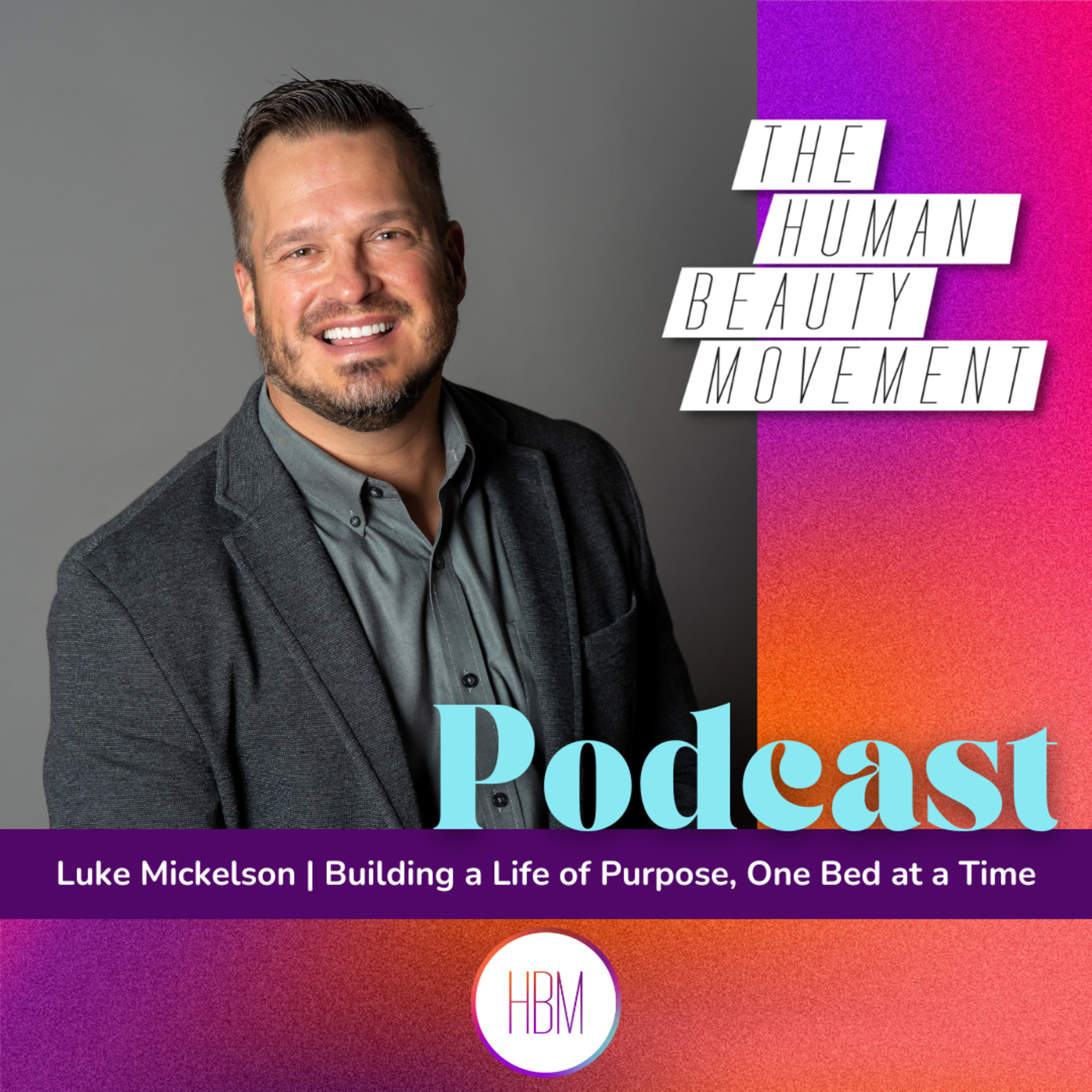


Luke Mickelson, founder of Sleep in Heavenly Peace, joins host Jennifer Norman to explore how a simple act of service—building beds for children in need—became a nationwide movement restoring dignity, safety, and belonging. Their conversation shines a light on the transformative power of empathy turned into action, and encourages listeners to embrace purpose-driven giving, regardless of their background or experience. The episode serves as a heartfelt reminder that true beauty lies in authentic care for others and that anyone can spark meaningful change in their community.
This podcast episode is sponsored by*:
- Humanist Beauty - Beauty for your skin & soul, Humanist Beauty is clean, conscious, and cruelty-free. Learn more here → https://humanistbeauty.com
- Headspace - Headspace has one mission: to improve the health and happiness of the world through meditation, sleep, stress reduction, and mindfulness. Learn more here → https://headspace.pxf.io/thehbm
- Organic India - Organic India is a Certified B Corp that offers organic teas & supplements formulated by traditional wisdom and modern science. They embrace organic regenerative agriculture, ethical fair trade partnerships & beneficial, inclusive social change. Learn more here → https://organicindiausa.sjv.io/thehbm
- Seed Health - Seed Health is a microbial sciences company pioneering applications of microbes to improve human and planetary health. Learn more here → https://seedhealthinc.pxf.io/thehbm
*The Human Beauty Movement may earn commissions from your support
Luke's Links:
- Website https://shpbeds.org/
- Facebook https://www.facebook.com/SHPLuke
- Instagram https://www.instagram.com/lukemickelson
- LinkedIn https://www.linkedin.com/in/shpluke
- YouTube https://www.youtube.com/channel/UCX5ucidI36JmZP4-gO1rcqQ
- TikTok https://www.tiktok.com/@shpluke11
The Human Beauty Movement Links:
- Official Website https://thehumanbeautymovement.com
- YouTube https://www.youtube.com/@thehumanbeautymovement
- TikTok https://www.tiktok.com/@thehumanbeautymovement
- Instagram https://www.instagram.com/thehumanbeautymovement
- Facebook https://www.facebook.com/thehumanbeautymovement
- Community https://www.facebook.com/groups/thehumanbeautymovement
- LinkedIn https://www.linkedin.com/company/the-human-beauty-movement
- Pinterest https://www.pinterest.com/thehumanbeautymovement
Jennifer Norman Links:
- Lnk.Bio https://lnk.bio/iamjennnorman
- LinkedIn https://www.linkedin.com/in/jennifernorman
- Instagram https://www.instagram.com/iamjennnorman
- TikTok https://www.tiktok.com/@iamjennnorman
- YouTube https://www.youtube.com/@iamjennnorman
- Facebook https://www.facebook.com/iamjennnorman
- Pinterest https://www.pinterest.com/iamjennnorman
- X/Twitter https://twitter.com/iamjennnorman
Thank you for being a Beautiful Human.
Jennifer Norman:
Imagine a child whose bedroom floor is their bed. No mattress, no pillow, just blankets on a hard surface, night after night. Now imagine that one person's choice to act changes hundreds of thousands of lives across the world. What begins as a simple act of kindness becomes a movement so profound, it reshapes how communities care for their most vulnerable. Today on the Human Beauty Movement Podcast, we are joined by a rare kind of visionary. Someone who turned a hammer and a big heart into a global force for dignity and belonging. Luke Mickelsen is the founder and driving spirit behind Sleep in Heavenly Peace, the nonprofit with a mission that resonates with both compassion and urgency: No kid sleeps on the floor in our town.
Jennifer Norman:
What started in 2012 with Luke building beds in his garage for children in need has grown into the world's largest bed building charity, delivering hundreds of thousands of beds through more than 400 chapters across the US and beyond. Luke didn't just build beds. He built a blueprint for community empowerment, serving families with tangible support in restoring something even deeper. Sleep, safety, and self worth. His journey from corporate life to full time nonprofit leader has been recognized on national stages, featured on television, celebrated by volunteers, and felt in the quiet joy of a child climbing into their very first bed.
Jennifer Norman:
Today's conversation isn't just about charity. It's about how each of us can turn empathy into action. How one tiny yes can ripple outward and into hundreds of thousands of stories of hope. So whether you're building something with your hands, nurturing something in your heart, or just seeking inspiration to step into your own calling, stay with us. Luke's story will remind you that when we care more and build more, we don't just give a bed. We make space for future. So now let's pick up some new tools with Luke Mickelson. Welcome to the show, Luke.
Luke Mickelson:
Thanks, Jennifer. Wow, that was the best intro I've ever had. Well done. Jeez, I love it.
Jennifer Norman:
Well, this is what inspires me, stories such as yours, yours is so profound. When I heard about you and Sleep in Heavenly Peace, I mean, I was moved. It really just struck a chord because I don't think that people think, particularly in the US about children not having a bed to sleep on every night, I mean, it seems almost unheard of. I live in Los Angeles and yes, you see homeless people on the street, but when you think about just children, and children that may be going to school that just... they go home and they don't have a place to lay their head on a pillow every night, or they've just got a pile of clothes to sleep on. It's like, wow, I had no idea.
Luke Mickelson:
Well, I think that was probably the biggest thing to me as well. Well, almost everybody that comes and is a part of Sleep in Heavenly Peace. They say the same thing. Right? You know, never in a million years did I know that this was a problem, nor did I know that it was this big. And I mean, 2012 is when I discovered it myself. And it still kind of shocks me that in this day and age, right in the country we live in, I mean, this is United States, for crying out loud, there shouldn't be any kids sleeping on the floor. Beds shouldn't be a luxury. And unfortunately, it doesn't take long to realize that it is.
Luke Mickelson:
And these kids are just in these environments not because of their choices, unfortunately. And sometimes they're just rotten luck for these families. Someone, you know, fire happens or someone loses their job or something. But you just. These things get created, these situations get created. And unfortunately, clothing, food and shelter are much more important than beds. And when you learn the fact that there are kids out there greater than 3% of the total population, by the way, which is huge number kids sleeping on the floor, then how can you not want to do something about that? Right.
Jennifer Norman:
Yeah. So you heard about this and you started in 2012. What was that specific moment or the story that made it impossible for you to ignore?
Luke Mickelson:
Well, first of all, let me give you a little bit about me.
Jennifer Norman:
Yeah.
Luke Mickelson:
I grew up in a small town called Kimberly, Idaho, about 4,000 people. And the beauty about living in a small town is also the curse. You know everybody and they know you, you know their business, they know my. I mean, it's. Which is fun in a lot of ways. Not so much fun in a lot of ways, but. But the nice thing about it is growing up in such a small town like this is you learn to enjoy being with people. You learn to enjoy serving people.
Luke Mickelson:
You kind of had to. I'm a farm kid from Idaho. You don't know how to go out and lay a floor down or build a wall or work on a farm, then you're going to be. You're going to be sore loser there. No. So the small town feel was great. And like I said, I knew everybody in my high school. I knew everybody in my church.
Luke Mickelson:
And so at the time, in my church service, I served what was called a young men's president, which is kind of like a youth pastor, if you will. I was responsible for the spiritual growth and the lessons that get taught during church. And then on the weekdays, particularly Wednesday, I was in charge of the activity arm, which at the time Boy Scouts. So it made it kind of easy. We had a curriculum to follow. However, if you ever. Those Boy Scout leaders out there that are listening to me right now or have you ever dealt with a 12 to 15 year old kid and try to keep them entertained without involving a controller. Yeah, yeah.
Luke Mickelson:
Good luck. Right. And that's kind of where we're at. Right. But in my calling or this position I held, they talked about the families that we were helping in the community and things that were going on and activities and stuff. One particular family that they were talking about really struck me because first of all, they lived in a very, very poor area.
Jennifer Norman:
Okay.
Luke Mickelson:
It was so, so poor, Jennifer. I didn't even know it existed in my little town. And I'd been everywhere in my little town, right. They had this little apartment and they had a couple of kids. The mom was the local school bus driver and the dad, he suffered from a little mental health, couldn't really hold a job. And so, you know, they were just struggling like a lot of families.
Jennifer Norman:
Yeah.
Luke Mickelson:
But they were, you know, they're keeping it together. They just didn't have a lot of things. So the church was helping them with rent and food and such. Well then they, the words and the kids don't have any beds flashed across the crowd and you know, there's about 15 of us in this meeting and, and man, it hit me. I don't know if it hit everybody the same way, but it hit me and I got thinking, now wait a minute, like they don't have beds, like what are they sleeping on? And they said, yeah, they're just sleeping on the floor. And I don't know what, it hit me like a two by four. I just said in my mind, I thought of my own kids, number one and them sleeping on the floor and, and how horrible that would be night in and night out. And then the second thought came to me thinking, you know, listen, here's a great opportunity to take my Boy Scouts.
Luke Mickelson:
Let's get an Xbox controller out of their hands, let's put a drill and a sander in it. Let's teach them something. Right? And so this idea sparked in my mind and, and I was so excited about it, Jennifer. You know, you get older. I was 35 years old, I had great job, I was getting paid well, successful that way. Right. I coached the kids, was in my church calling. I had three kids of my own, and on paper, my life, I couldn't complain, in fact, when you did or when I felt bad about it, you, you feel guilty for feeling that there's just this hole that was getting created in my inside of me.
Luke Mickelson:
Like I just didn't feel satisfied with the things we did and other than I enjoyed doing service, that, that did fill a hole for me. Well, here is this opportunity and I got so excited, I could just feel all this anxiety, all this self crisis mode, whatever you want to call it, just starting to fleet away. And so when I went home that night, I went straight down to my daughter's room who had a bunk bed down there with tape measure and pencil in hand, you know, and I just started making notes of how I could build this bunk bed. I'd never built a piece of furniture in my life, but, but I, I said we'll figure it out. And so that week we had the Boy Scouts come over and we started building this bed. And I was super excited. Well, number one, I was nervous that these kids were just going to be stump on the ground type thing. They weren't going to really participate or enjoy it, but quite the opposite.
Luke Mickelson:
They got really excited about it and they came back the next day and the next day, you know, and it took about three days, but we got this bunk bed finished and, and we had such a great time doing it. To see the smile on these 12, 13, these teenagers faces was amazing, right? It just, it was surprised me. And then of course we had to deliver the bed. Now this is about this time this year, the first of December in Idaho. Everybody knows, not the warmest time or warmest place to be, but we're building these beds in these or this bed in this garage of mine. And I had to stay back and clean it up because I had to park my cars. My wife had a beauty salon in the third bay. So the boys and their parents and stuff went and delivered this bed to this family.
Luke Mickelson:
And so I didn't get to have that experience. But the next day at church, they talked about how amazing it was, these kids that they were sleeping on the floor and now they've got a mattress, they've got bunk beds they can play on and they can actually get a good night's sleep and that to hear the kids as parents like the, the Boy Scouts and their parents talk about how special it was. I mean, I was really jealous. I got to build the bed. I didn't get to deliver it, but my bucket was filled by watching these boys get excited about building beds. But now then the project was done, right? We built the bed, we delivered it. And I could feel that week, I could feel this. It almost made it worse, right? This hole open up again because here I just got a feeling and I was, it was so exciting and, and to hear the stories.
Luke Mickelson:
It just filled my bucket, overflowing and, and then I could feel it being drained. And that's a tough feeling when you find something you're super excited about and it's short lived. It almost makes the time when you don't have it worse. And again, I mean I had a great life. My kids were still young and just enjoyed them. And in fact that next week we were watching Big Bang Theory, it was our family program. And this commercial came on and it was some Xbox controller, Xbox game, whatever. And I remember knowing, okay, I know my kids are going to ask for this gift. I'm not going to buy them another Xbox, right?
Luke Mickelson:
Jennifer, There was just, there's times in our lives where things just line up, right? That just a perfect storm is a perfect moment. Here I was struggling with some faith doubt, some self doubt. What am I supposed to do? Blah, blah, blah. I do this great project, fills my bucket. I can feel that bucket being emptied again, right back in the same hole I didn't want. And then my kids talk about a present that they know I'm not going to get. When I just built a bed for kids that didn't have any beds, right?
Jennifer Norman:
Yeah.
Luke Mickelson:
And the thought came to me, I said, you know what, I can sit here all day long and I can talk to my kids and tell them to appreciate the things that they have. I can tell them the joys of service, or I can show them. And so I just got up off the couch and went straight to the garage. And my wife at the time was cooking dinner and she kind of looks at me, where are you going? And I said, you know what? I've got some leftover wood. I'm going to go build another bunk bed. And the kids are coming with me. And I wanted them to have the same joy that I saw the Boy Scouts have. I wanted them to appreciate the things that they had.
Luke Mickelson:
I wanted all these things for my own kids, of course, like any parent. And so my daughter got her tutu on and my son put on his favorite Boise State jersey and we went out and we just started building this second bunk bed. I had no idea what to do with it. Right. It was about the experience to have with my kids was the original, the original concept here. And I didn't know child bedlessness was a problem. I mean, that family was the only family I knew in the whole valley, county or I'd ever heard of that had kids sleeping on the floor. And so when we were all done, what do you do with it? I mean, I got this finished bunk bed.
Luke Mickelson:
And I didn't know where to go with it. So I was recommended me to throw it on Facebook. Now, I wasn't a big Facebook social media guy. I post pictures of my fishing and that was about it. But I said, okay, fine, and where do I put it? My wife said, why don't you put it on one of those buy sell trade groups, right? And I said, okay, fine. Well, I don't know what that is, but we'll put it on there. And anytime here I am putting a free bed on buy sell trade for Facebook, fully expecting that every Tom, Dick and Harry is going to call and want this free bed, right? But I really wanted it to go to a child. I wanted to go to kids that we're sleeping on the floor if we could find one. Well, yeah, it wasn't hard to find them. In fact, it was quite shocking.
Luke Mickelson:
There's a couple of things happened. I had so many requests and then the stories that you read where these kids, the conditions these kids are sleeping in, I just went, oh my gosh, like this is an issue. I heard about these kids over here sleeping on the, on carpeted floor with blankets. That's terrible. But those are even luxury items for some of these kids. That of these stories I was reading.
Luke Mickelson:
And so when it really hit me, Jennifer, is when I did my own delivery. Now we talk about, you live in LA and you see a lot of poverty and homelessness and you've been through some of that, a little bit of that system before and, and not fun. But as an adult, I've never looked at it through the eyes of kids. And so when a friend called me and said, hey, listen, I've got the perfect family for your bunk bed that you made with your kids. There's a little girl there named Haley, and her and her mom are homeless. Well, they just came out of homelessness. Haley is six years old, never slept in a bed. She's just slept in the backseat of her mom's car.
Luke Mickelson:
And so I just was like, perfect. This is exactly what I wanted for my kids. This is why we built the bed, you know, to find a child that is in need. So it was great. We were excited to bring this bed over to him. And again, I've never seen or looked at homelessness through the eyes. Certainly of a six year old.
Luke Mickelson:
And when you walk in, when I walked into this house, I mean, you can imagine, there was nothing. There was nothing in the house. There was no couch or table or TV or, or anything. The only thing there was, there was a...one of those milk crates. It had a hot plate on it and a can of soup on it. And that was dinner. And that was pretty shocking. And if that didn't break your heart, Haley pulled us back into her room, which, by the way, she has a room now, you can't call it a bedroom because there's no bed in it.
Luke Mickelson:
Walked in and you can imagine there was holes in the carpet and tears in the wallpaper. And the closet didn't have a door on it, but it had a bunch of used toys that she played with. And of all those things, what got me the most is I looked in the corner and there was a stack of clothes, this little nest of clothes. And that's where Haley slept. So she'd come home from school and take her school clothes off, put her PJs on, sleep on her school clothes, and then put them back on in the morning. She went to school, and that was her cycle. And at first when I saw that, I almost got mad. You almost get up frustrated, upset that...that this is going on in your own neighborhood.
Luke Mickelson:
And that quickly moved to being sad for her. And then you start thinking about the years, the days and nights and years of cold and hard floors and maybe a couch once in a while from a friend or something. And it's just hard. It just breaks your heart. And then I went to excitement. Here we are going to deliver Haley her first ever bed. And so we started bringing in these pieces of the bed, right?
Luke Mickelson:
And you could see and a lot of our kids that we deliver beds to, this is their reaction. They're hiding behind mom. They're scared. They don't know who this strain these are in their house. It's kind of fun. But then when they recognize what it is that we're bringing in and start putting this bed together for them, I mean, Haley erupted. She went and hugged us. She started hugging the bed and kissing the bed. And I mean, I've never seen that before.
Luke Mickelson:
And it was just, I mean, it just talk about overflow your bucket instantly. And if that wasn't enough, I look up and see the single mom, which I was raised by a single mom, five kids, single mom. I mean, you want to talk about farm kid from Idaho that didn't have much. I knew what every single one of those tears that she shed right there meant because I saw it. My own mom, hard work and three jobs, and the worry and concern you have for your kids and the guilt that you feel. I knew it. I heard my mom say it for years. And so when I saw these tears, I, I lost it. Like it was. It's still touching to think and to even see to this day, there's single parents, not just moms, but single parents out there that are in the same boat doing the best that they can.
Luke Mickelson:
And it was so overwhelming that on the ride home, we had about a 30 minute ride home, me and my buddy Jordan, we really didn't say much to each other. We were just. I mean, it was so overwhelming. And I remember when I finally got home, I. I'm a farm kid from Idaho that loves to hunt, loves to fish. Saturday mornings are spent for college football. I mean, all these things. And in an instant, Jennifer, none of it mattered anymore.
Luke Mickelson:
I just felt this drive, this passion I'd never felt before. And I just looked at my buddy and I said, you know what? No kid's gonna sleep on the floor in my town if I have anything to do with it. Just ain't gonna happen. And so we started. Now, what I didn't realize is how big that problem really was. Right?
Luke Mickelson:
I just thought two or three or four that I listened to or watched on Facebook for my post, we're gonna solve that problem. But the more we built, the more we found that child bedlessness is may not be a real word, but it's a real problem.
Jennifer Norman:
Wow. My gosh. I think it's also juxtaposed with the fact that you had gone and you pulled yourself up on your bootstraps and you got to a place of success and you had kids that seemingly had it all. And then you juxtapose that and say like, oh, my. It's such a stark reality when you're faced with it right there in your own town, that there's so much need. And the things that we take for granted like a bed, the things that we consider just almost necessities, which are absolute luxuries, Right? If you really think about it and how blessed we really are and how much we just think, oh, well, there's so much more that I need or I want, but it's really about just those simple things. It's about giving back, and those are the things that fill us.
Jennifer Norman:
And ultimately, after those couple of instances you were able to somehow find that this was a calling and that this became your purpose and you quit your job and really kind of went full boat with this. Tell us about that.
Luke Mickelson:
Well, sitting on Haley's bed and looking up at Haley's mom crying like that. Yeah, I knew right then and there this was far more than just a bed. This was more than just a good night's sleep. I mean, this is keeping families together. This is bonding relationships with, with spouses and with keeping kids out of foster care and adoption and all these situations. Now what I didn't know was anybody else doing this. Right. I'm just a. I've said many times, a farm kid from Idaho that doesn't know how to run a non profit or be a non profit or anything like that. It's just a family Christmas project that I was going to do the best I could.
Luke Mickelson:
And then when I did a little research, I found that there was one charity in the entire country in 2012 that was doing beds for kids.
Jennifer Norman:
Wow.
Luke Mickelson:
And that was their name, actually. And it just blew me away. And the more I delivered beds to kids in need, the more other agencies got a hold of me, like CASA and protective services and foster care. And, and I found very quickly that this was, if not the number one need, it's the, in the top three of the hardest things for these agencies to get for kids was beds, which blows me away. I mean, I don't. It's still, still to this day is an odd thing to me. But yeah, getting beds for kids is just low on the priority pole for these families. And so I'm like, you know what? I can't finance this all by myself.
Luke Mickelson:
And I had companies that wanted to help. So that's when we became a charity. And I still had a full time job. I'm still working and trying to provide for my own family. And yet this charity of mine that, well, this family Christmas project that now is a charity really just kept pulling at me and pulling at me and pulling at me. And it came to the point where I, I went to my boss and I was like, listen, I. This is becoming a thing for me. Right.
Luke Mickelson:
And I couldn't tell him I didn't like my job. I actually liked my job, enjoyed it very much. I was gonna buy the company from him. My career was set, if you will, and I would have been moderately happy staying there. But once I found this and once people find their true passion. Right. You just really, at least for me, I didn't think of anything else.
Luke Mickelson:
And he says, you know what? I think you need to decide what you want to do. Right. If you're gonna go after it, go after it. And you know, at first that's really scary, right? You know, kind of almost. Almost an ultimatum, if you will. And he had such great insight in who I was. He knew that this is where Luke needs to at least give it a shot, spend some time.
Luke Mickelson:
And so, yeah, in 2017, five years later, I quit my job. Didn't have another job lined out. I just quit my job because I didn't want to quit my passion. And, you know, luckily it grew very, very fast. I was able to at least get a little bit of help from Sleep in Heavenly Peace a couple years later. But now I get to do my dream job, which is share, share the message, spread awareness, build beds and deliver beds for kids. And I wouldn't have any other way.
Jennifer Norman:
Wow. And I love that the mission was so poignant for you in terms of like, no child is going to sleep on the floor in my town. And having that as your through line, it's almost like as long as you have like a north star of what you're aiming for and you keep your eye on that, then we are. So we have this unique ability as humans to just figure it out. Like, yeah, it's scary. We have no idea what is going to unfold. But somehow the unique universe lines you up with people with situations, with happenstance, with synchronicities that really help this move along, for it to become something real and something that does have this amazing impact. And a lot of people take their eye off of that.
Jennifer Norman:
I think they start getting a little bit self aggrandized or maybe the mission converts and changes and they're not really sure what to do with it, or they just aren't necessarily trying to relinquish the reins as it might be as you're growing. But you learned so many valuable lessons along the way that I would love for you to share. For those who maybe have this inkling of an idea, a spark of something that they feel is really tugging at their heartstrings, their souls, to say, you know what, what I'm doing right now may not be aligned with where I really see my life going and what.
Luke Mickelson:
You hit the nail on the head.
Jennifer Norman:
Yeah. Can you talk a little bit about that?
Luke Mickelson:
Of course. When we went, let's say national, right. In 2000, the end of beginning of 2018, rather, we were featured on a show with Mike Grove, the Dirty Jobs with Mike Grove guy. I don't know if you know him, but he's a pretty big celebrity. Really cool guy. It was a Facebook watch series called Returning the Favor. So we were like episode nine, season two.
Luke Mickelson:
Long story short, it really announced us. 10 million views, and all of a sudden we had people all over the country that wanted to do what we were doing. So we put together a real quick program of, a training program, of how to bring people on because I knew Jennifer, one thing. Luke Mickelson, the guy from Idaho, isn't going to solve this child bedlessness issue that's seems to be a pandemic in our country. But what I can do is work out the kinks and develop a platform or a template that people can follow so they can do it in their own hometown. And so when this Returning the Favor hit and we got all these requests, we were pretty prepared, at least the best we could in the early days of taking these people on and teaching them what we're doing and creating chapters, if you will, of this charity of ours. And so that's what we did and that now we're able to like fulfill and reach these kids. This year in 2025 we built 90,000 beds, right? So we're able to reach more kids. Isn't that crazy? It's both awesome, but super sad that we have to do that.
Luke Mickelson:
Anyways, when we started getting national and we're growing and things that nature, I got called probably on a weekly basis of non profits and friends that wanted to start non profits or even non profits have been around for a long time and they just were like, Luke, how did you get from point A to point B and what do you do? What's the secret? Blah blah. And my first answer back then was like, I'm just a farm kid, I don't know what I'm doing. We're building this plane as we fly it. But then I started listening to what they were doing and their thoughts and their ideas and I quickly learned, okay, I actually may know a few things here. Both luckily and unluckily, I've been through the potholes and I've filled them and I know what to avoid and what to go after. So anyways, I'm in the middle of finishing my book that talks about the story of Sleep in Heavenly Peace, but also the things that I've learned such as mission creep, which you talked about, when you have your mission. And for me, having a full time job coaching my church service, all this stuff I didn't have time to run a, what I thought was a non profit.
Luke Mickelson:
And how do you run it? Right. So the one thing I did know is I had to keep it as simple and as clear as possible. Right. We're going to build beds. That's it. In fact, our very first year of 2012, when we delivered 21 beds before Santa came, we got presents and food and all sorts of stuff. Right. Well, the next year, I ixnayed all that and said, you know what? Look, all I have time for is really just to build and deliver beds.
Luke Mickelson:
And that was the biggest blessing. I didn't know at the time, but it was the biggest blessing in the nonprofit space. Mission creep is a really hard thing for people to get up, to, get past because they're in the nonprofit world because they have such big hearts. So it's hard.
Jennifer Norman:
They want to do everything.
Luke Mickelson:
Yeah. Like, I walk into Haley's house, don't think for a second I didn't want to run down and buy her a couch and a TV and all these things, Right? But as a non profit, you can't. You have to curb that. You have to learn and be disciplined, too. This is my mission, and I'm not gonna flow away from that. And that keeps us centered. And when we do have obstacles, which you will when you've got those boulders you gotta cross.
Luke Mickelson:
If you don't have that North Star like you mentioned, it's easy to lose sight of it. And then you drown yourself in other things that isn't part of your mission. Even things like fundraising and things of that nature that can get away from, get you away from your mission and have you focus on things that you don't want to focus on. That's one thing I learned. We really don't do fundraisers in Sleep in Heavenly Peace because our fundraiser is our program. It is building and delivering beds. And so I do a lot of nonprofit consulting, talking about how can you make your program your fundraiser, right? Don't do the spaghetti feeds and the galas.
Luke Mickelson:
I mean, they're fine. You know, they can make money for you, Right? But really, if you want sustainable and scalable growth, you've got to look at your process, your program, as a way to make money. Right. As a way to receive donations. That's probably the first lesson I learned besides mission creep. I learned that down the road. And the second one is, as a nonprofit, you really need to include as many people in your nonprofit as possible. Having their hands on something, having them feel like they're a part of it.
Luke Mickelson:
I have what I call my Hank story. I have this Hank story in my book. Hank was a like, I don't know, an 85 year old guy. He was an old dude that when I did my very first public build, when I just wrote in the newspaper, hey, be down here at this shop, this cold shop in the middle of winter in Idaho. Come down on a Saturday morning and I'll teach you how to build beds for kids that need them. Hank showed up and he's just this old guy, come wobbling in, super nice guy. You could see his smile just filled the room. And he started handing out these thank you cards, which I thought was really weird at the very beginning. And apparently he donated his time and done service his whole life. And he was just thanking volunteers for showing up, which I thought was really cool.
Luke Mickelson:
So, you know, this guy's just the salt of the earth. Well, he comes up to me and he says, luke, okay, where do you need me? And I'm like, man, an 85 year old guy, I don't want you to die on me. I said, what did you do for a living? And he says, well, I was a carpenter for 40 years. I'm like, okay, I know exactly where to put you because we build these beds out of wood. I said, I'm going to put you on the saw, right? So there's one critical point of our process is cutting the wood properly. And so I put old Hank on the saw.
Luke Mickelson:
And when you run a build, you understand as a chapter president, you're the only one that really knows how to run this build. And you got 60 volunteers in these different stations. So you're running around like a chicken with his head cut off, trying to teach people these stations and make sure they're doing it right and say, well, I forgot about old Hank. I mean, four hours later I'm like, the build was winding down and I'm like, oh my gosh, I forgot about Hank. So I went back to the cut station and here, you know, Hank was just covered in sawdust. I mean, his clothes were as wide as his hair.
Luke Mickelson:
And I'm like, I went up to him. I'm like, Hank, how you doing, buddy? Like, I'm sorry, I forgot about you. And he looked at me and he says, you know, Luke, he's like, I've donated my time for many, many years. Other nonprofits all across the state here. He says, I've never walked into an event and in five minutes been assigned a task and then never stopped, and couldn't stop the whole time. At first I was like, Sorry. I'm really sorry. And he said, no. He said, thank you.
Luke Mickelson:
And right then, Jennifer, I learned something very valuable. When you grab volunteers, they want to feel like they donated their time. They want to feel like they made a difference. They want to feel fulfilled, just like you do. The only way that's going to happen is putting them to work. And so I found that the happiest volunteer is the sweatiest and the dustiest, and because they want to feel like they participated. So I learned another valuable lesson of not only including as many volunteers as you can, but don't be afraid to put them to work. Don't say no for them.
Luke Mickelson:
And that was a hard lesson because, you know, building beds and delivering and carrying wood and cutting all this stuff, it's not exactly easy. And so you try to make it as easy as you can for these volunteers because you want volunteers to show up. Well, come to find out, you make it too easy for them. They don't feel fulfilled. Right.
Luke Mickelson:
And so Hank taught me a really valuable lesson that when people want to donate their time and take time out of their Saturday morning and suffer through cold winter mornings, they want to walk away feeling fulfilled. Our volunteers with Sleep in Heavenly Peace, they touch every piece of wood that gets created into a bed. Right. And it's kind of fun to watch as a team building exercise. You know, one station has to rely on the previous station, which relies on the previous station, and someone's waiting on them. So it's this big teamwork effort of building beds.
Luke Mickelson:
And that's one huge advantage I didn't plan for, is you make friends. Like you said earlier, you make friends with people you would otherwise pass in the grocery store that you'd never have a conversation with. Now you're like, hey, you passed me wood at the sand station while I was putting together headboards. Right. It's super amazing to watch people hard at work for a good cause. And, yeah, I feel like we have two missions at Sleep in Heavenly Peace. We build beds for kids. Obviously, that's the big one. But we also bring communities together.
Luke Mickelson:
To many of us, well, I learned a long, long time ago, there are so many people in the world that really want to give back. They really want to help. They just don't know how. And us as nonprofits, have an opportunity to provide service for them so they can feel fulfilled. They can feel the way we feel when we complete our passions.
Jennifer Norman:
Yeah. From what you said, there are so many things that I just want to circle back on. Notwithstanding the fact that Sleep in Heavenly Peace is from Silent Night, which is a Christmas carol. And so it seems such, like such a beautiful name for your charity, which was born around Christmas time 2012. So I'm not letting that one go.
Luke Mickelson:
But then that wasn't the first name, by the way. The first name was Bed for Babes, but that was the wrong one.
Jennifer Norman:
Oops, that might be a different charity.
Luke Mickelson:
It's not the Google search, Jennifer, that you want to ask your audiences.
Jennifer Norman:
No, no, no. For certainly not. I can almost see what the results might be. But then also the fact that you were talking about people making things, doing something with their hands and not...You could have very easily turned this into. Well, we're just going to get a bunch of sponsors, like bed sponsors. We're going to get like people that would just donate beds and deliver these already made constructed beds.
Jennifer Norman:
It's not that. It's let us come together and create something. Let's make something. And we're putting our blood, sweat, souls, all of that into that pride and that fulfillment and that, that physical activity of actually creating this, delivering this to this child. And that is so much more fulfilling than, okay, I'm just gonna buy this toy off the shelf and give it to somebody.
Luke Mickelson:
You know what you find? And even in our process, if you ever come to a build day, you'll notice it's not the most efficient way to do and build beds. And trust me, we get people all the time, especially engineers, those guys, they just, you know, they, let's do this. Yeah, that's right. They problem solve. You need to do this and you do this and we just kind of laugh and say, you know what, you're, you're absolutely right, we could. But the process of building beds has changed obviously over years. Right. I'm no longer on hands and knees lining up wood and drilling it. Right. We have jigs.
Luke Mickelson:
But anytime the process might need to be adjusted, the first question we ask is, does it eliminate a volunteer? If the answer is yes, then we don't do it. Because it's like you said, it's not about efficiency, although we are efficient. It's more about how many people can experience the joy of building something for a child. And again, all you nonprofits out there listening, or if you're thinking about starting a non profit, you need to foster a process where people can feel fulfilled and be involved and feel like they made a difference. And that might cut down on efficiencies, that might cut down on speed and time, but that's not the point, you know, the point is the experience.
Jennifer Norman:
It's not a business in that way.
Luke Mickelson:
Yeah, correct, you're right. And I tell people, listen, the only difference between a non profit and a for profit company is the non profits don't pay taxes. Right. It's still a business however. But the experience of a non profit is what people go for. They don't go for a paycheck, they don't go for accolades for the most part. They go because they want to have an experience and they want to feel like they made a difference. Well, you're not going to feel like you made a difference if you didn't have a good experience.
Luke Mickelson:
And so really the paycheck that the non profits pay out is the joy and the fulfilling and the experience of, of the volunteering. And that's where the rubber meets the road. That's where your non profit can grow and foster. And now these volunteers become quote, quote your mouthpieces and your salesmen and they, they spread awareness and they raise funds and they, they do all these things for you. We have just in the last, can't remember the numbers. I'm not the executive director anymore so I don't have them off the top of my head but it's somewhere in the tune of 600,000 volunteers just in the last three or four years, right? 600,000 people, over a half a million people have been able to touch wood, feel those feelings, share the story, share the awareness so we can reach more kids. That's how we've grown so fast.
Jennifer Norman:
There is something magical in that, just getting into that physical aspect of the volunteering and there's so many ways to volunteer and there's right and wrong for every individual of what's good for them. But there is something magical about and I'm going to call it the neuro linguistic programming, the NLP, of getting your body actually activated and moving in sync and in line with that mission. And that's where a lot of that fulfillment comes from, that joy of volunteering and saying yeah, I want to do this again. Because you're really just moving yourself in a way that is different than just donating money or buying something and giving it. It really is something that's very special and something very magical that is able to translate into this amazing growth that you've seen because it is so rewarding and so fulfilling. And that's why people are saying, yeah, come do this with me. Let's get the community involved, let's get out, create a chapter, let's do this because it's really cool.
Luke Mickelson:
I think in our day and age, we're losing out on. Yeah, you hear millennials or whatever, people talking about hard work and us old dogs moving up the hill, both waves with no shoes on. I mean, all the sayings of us old guys talking about that, but really, there is some lessons to be learned there. And I think the biggest lesson is we miss out on these younger kids nowadays, miss out on the joy of, of completing something and the joy of what comes from doing something that's hard and then finishing it, right? Go get your win. On my Facebook page now, I promote get yourself a win for the day. There's a general that, that gave a talk, a very, very popular talk that talks. His talk was about make your bed, right? When you wake up in the morning, just make your bed. If that's the only thing you accomplish, you accomplish something.
Luke Mickelson:
And I think there's our kids nowadays, they want to feel accomplishment in a video game, right? And the problem with a video game is the whole concept of a video game is to never fully complete because you want to keep going. And they want you to keep going and going and going and going and going. So you'll never really fully complete. You get these little way stations, right? You get these checkpoints that you get a little bit of that. But to be able to take a piece of lumber, like raw lumber, and in just a couple of hours have 30 beds that you participated in it, right? And it's a completed, finished product for, let alone for a child that doesn't have one. Those are the fulfilling wins that I think fuel people and drive people. And the hard thing is, is you don't really feel that. You can't feel that until you do it.
Luke Mickelson:
And, and I tell people when you go on deliveries, which is really where the magic happens in our organization, you get to see the conditions that this child was sleeping on. Literally sleeping on pallets or hardwood cement floors and basements. And then you bring them them the most comfortable bed they've ever slept in. A lot of times these kids go to bed at 3 o' clock in the afternoon because they've never slept in a bed before, right? And so you get to see that and be a part of that. And you can tell people, you can watch videos, you can hear testimonials, you can hear me right now and feel moved. But I promise you, there is nothing, there's nothing that's more fulfilling than being in the room and feeling the weight of the emotion and seeing the child smile. And their idiosyncrasies of being happy and, and nervous and then happy and then they're in bed. I mean, it's just awesome.
Luke Mickelson:
It's just awesome.
Jennifer Norman:
Oh, my goodness. And I think another part of this story which I think is so special is you are so humble. You've got such humility about you. I'm just a farm kid from Idaho. I'm just, I mean, and so that also... No, I mean, but there is this humility which I think is magical to be able to, even as you've grown into the largest bed making charity in the world, to kind of know where you came from and to keep that within you and that is your identity and you haven't really walked away from that. You can tell.
Jennifer Norman:
And that has also served you in the way that I'm going to keep this simple and there's no reason to go and fluff this up and make it all like, fancy this, fancy that. It's really, this is about this mission. We're staying on course, we're keeping it simple and I am just, just going to learn as much as I can along the way. And I think that that's super, super special. Just wanted to say that.
Luke Mickelson:
Thank you. No, you said that for a reason. Let me tell you why. Like, as SHP's gotten bigger, right? I've been on all sorts of stages. I've been on CNN Heroes. I've been on American Ninja Warrior, which was a terrible experience, by the way. American Ninja Warrior. All these fun...Oh, dude, that's a whole 'nother story that involves a dad bod and a belly that you don't want to see. It was a bad experience. I won't tell you what season I'm in, but don't go watch it.
Jennifer Norman:
Oh, I'm gonna run right after this.
Luke Mickelson:
Yeah, there's a story behind it, but I had a lot of people counsel me that, listen, you need to stop saying you're just a farm kid from Idaho. You now represent the organization and you're the face of it and all this stuff, right? And yeah, Jennifer, it's hard. I still even fight that. It's like. But the face of this is not one guy, number one. And I don't want to the face of anything, let alone something that's so innocent and pure and amazing to be corporate or to be. You know what I'm trying to say. I don't even know how to say it other than just honest?
Jennifer Norman:
Yeah.
Luke Mickelson:
I have no business, at least had no business starting a non profit. I had no business trying to do what we did right. And quite frankly, none of all my friends and people that I hired to help did either. None of us built a non profit building beds. What we had though was passion. What we had was the mission in our hearts and that's what's most important. And I think that's... And thank you for saying this because that is the message I want to carry across to people when I say, hey, look, I'm just a farm kid from Idaho
Luke Mickelson:
You know what? You're just a gal from LA, and this is a guy from Texas, and this is a gal from Alaska. It doesn't matter who you are...
Jennifer Norman:
It desn't have to limit you.
Luke Mickelson:
Correct. Whatever success means to you, to me. And success to me back in the day was how many zeros were behind my paycheck. I mean, how stupid is that? Right? Success is what you make of it. It's what you're, what's important to you. And, and for me, anybody can be involved with a non profit. Anybody can go build beds for kids. And it doesn't, it just takes a farm kid from Idaho that doesn't know what he's doing, that is willing to bring people in and share his experience and not make it about him, but make it about the experience.
Luke Mickelson:
And what happens? The world's largest bed building charity. Right. And I say that obviously not as a bragging thing. I hope people understand that. I say that it's actually a sad thing because the only reason why it's the biggest in the world is because there's not very many of them. I mean, there's more now because they've kind of offshot from us or saw what we did and they want to do, which is great. That's awesome. There's so many kids right now, tens of millions of kids in our country right now that don't have a bed of their own. And so the more the merrier.
Luke Mickelson:
And but thank you. I struggle a little bit. Because that's a little out of my realm. It's out of who I am to try to be someone I'm not. And really I'm a farm kid from Idaho. I make mistakes. I don't talk necessarily the non profit lingo when you go to these conferences and stuff, but I at least can hold my head high and say, hey, Listen, we have 600,000 volunteers that helped.
Luke Mickelson:
We've built almost coming on 400,000 beds for kids. And that's not from me. That's from our not paid, wonderful chapter presidents, core teams of the 400 plus chapters in the four countries that we're in, they're the ones that have built this, and they should be celebrated for it. We're just looking for more people like it.
Jennifer Norman:
Yeah. And that is exactly why I wanted to bring that up, is because there is, I mean, if you see just a vision of pure authenticity, it is this, it is. And that is what The Human Beauty Movement is about. It's not what you're wearing or what you're trying to be on the outside. It's what's in your heart. And what was in your heart was the impact and this desire to serve others. And that is going to carry you throughout your life in a way that is so purposeful and meaningful, more than any other showcasing of 'look what I've accomplished' will ever do.
Jennifer Norman:
It's not about you in that perspective. It's about what the mission is, what your message is and how you were able to create that impact through what is in your heart. And so that's what I want to implore with everybody listening here. It doesn't matter where you came from, it doesn't matter who you are, what you look like, what your circumstance is, any of that. If you've got goodness and love in your heart and you wish to serve, then there is going to be a way for you to be able to do that.
Jennifer Norman:
And so also for those that are very touched by what Sleep in Heavenly Peace is doing and wishes to start a chapter because there is such great need everywhere in the country, everywhere in the world. Luke, can you tell people what it would take in order to start a chapter in somebody's hometown?
Luke Mickelson:
You bet. So we made the process as simple as possible. You can go to our website, shpbeds.org and there's the Start a Chapter. Now, the biggest thing that we wanted to do and share with people that are interested is number one, we want you to know as much as we can about what it means to be a chapter president and what it takes to run a chapter. Because it's not easy. Most of our chapter presidents are retired people. Because it can be consuming, it can be addicting.
Luke Mickelson:
Right. In fact, I used to coach. I coach people. When I trained all the chapter presidents, I said, listen, the first thing is you got to have fun. The second thing is you got to have a balanced life. You still have kids, you still have work, healthy addiction. Exactly. Healthy addictions. That's right.
Luke Mickelson:
So when you click on the Start a Chapter, you're going to see a little video, kind of tells a little bit about what a chapter president goes through, a very 50,000 foot view. And then you fill out this application, if you will. And really the application is, it's more letting you know what we do, right. What's involved. There's public speaking and you're going to be on radio and TV and then you're going to manage an event that could have 200 people. I mean there's. So there's things that, that if you don't like that, if that's not your strong case, it doesn't mean don't start a chapter.
Luke Mickelson:
Means you need to go find someone that knows how to do that to help you. Right. And then once you find three or four people that can be a part of your chapter, then you actually join a webinar with what we call a chapter support lead a CSL. We got the country split up in regions, right. And you'll be on a zoom call with them as well as other people that want to start chapters. And that's where you get to ask any question you want. Right. You really get to dive deep into you what this is about.
Luke Mickelson:
And once you make it through all of that and you're still gung ho and want to do it, then we schedule you to fly out to Salt Lake City and we train you, we take a weekend, we do four trainings a year and we train you on how to build a bed. That's the easy part. But really what are the things that we. As a non profit and as a chapter of that non profit, how do you, because you're kind of running a business in a way. How do you report things properly so we can get it right to the irs and all those things which we take care of that, that for our chapter presence, we really want our chapter presence to focus in on three things. Raising money, which will be the easiest thing you'll ever do in Sleep in Heavenly Peace. People, that's always their biggest worry.
Luke Mickelson:
When I trained and said, okay, what's your biggest worry? Well, I've never asked for money. I don't know how to raise money. And I just laugh and I said, listen, raising money with Sleep in Heavenly Peace is the easiest thing you'll ever do. I mean, all you have to do is go tell a company, hey, I'm building beds for kids. Do you want to help? I mean it's really almost that you easy. So raising money is the first thing. The second thing is, is building the bed. Right. And we teach you how to do that.
Luke Mickelson:
And we have a very slick process with a handbook and a chapter president hand manual and all this...that as well as a chapter next door. Most of our chapters, you got a chapter with the Sleep in Heavenly Peace that have experienced people in it probably an hour away or maybe two hours away. Very, very few pockets in the United States were not covered. And then the third thing is of course delivering the beds, and what that takes and how to report that, and, but all the other minutiae like insurances and taxes and all that stuff we take care of for the chapter president. So they have to worry about that kind of stuff. There is some reporting we have to get from them. But that's kind of a long answer to say we make it as easy as possible. Jennifer. So anybody can do it.
Luke Mickelson:
Like I said, we have college students that have started chapters at their college, Texas Tech and Missouri. These students, they cycle in, obviously their students, they cycle in every two, three years. But because of the easiness of the process that we make it, they can run it and they can pass it down to the next person and that's we. I learned that a long time ago. Burnout's a real thing. And so you have it. You have to have succession planning so you can keep your mission going on in your own hometown.
Luke Mickelson:
So shpbeds.org you can go there, you can learn, read testimonials, get on a webinar with the CSL and really ask the questions that you want to learn. And I promise you, if helping kids and certainly getting beds for kids and you like woodworking, there is not another non profit out there that I think does and fulfills that itch that you might have like Sleep in Heavenly peace.
Jennifer Norman:
Amazing. One other question I have. Do you ever identify the child who's going to get the bed and say that they're a little bit older and perhaps wants to participate in the making of their own bed? Has that ever happened?
Luke Mickelson:
Oh, all the time. We enjoy that. We supply beds, beds for kids ages 3 to 17.
Jennifer Norman:
Okay.
Luke Mickelson:
That's the only really parameter. The other parameter qualification for a bed is you got to have a home that we can put it in and, and the supervising adult signs off on it. Other than that, we don't care where you live, how much money you...none of that matters to us. You know, I, I remember telling my friend, look, I don't care if the parents have a million dollars in their closet. If the kid doesn't have a bed, I'll get them a bed. That's okay. It's really about we're there for the kid, there for the child.
Luke Mickelson:
But the process and the experience of it is really what drives our mission forward. That one of my favorite pictures of the build is I've got a four year old that's sanding the same piece of wood as 104 year old guy. It's pretty cool picture. And we're not, of course, we're not a babysitting outfit. This is, you know, you got wood material and tools running around, so. But no, we want everybody to come. And again, one of the reasons why Sleep in Heavenly Peace was even created, needed was to teach my kids or kids, period, the joy of service and to appreciate the things that they have like their own bed.
Luke Mickelson:
And so yes, we love... In fact, I have a lot... There's hundreds, thousands of stories of families getting beds and then coming to the next build to build a bed for whoever gets the next one. It really is a community bonding building thing.
Jennifer Norman:
That is so cool. Wow. For those of you listening, I want you to also just ponder in your minds, you know, if there's a part of Luke's story that stayed with you most. What was that and why? Was there a feeling or a realization that you didn't expect? And before this episode, have you ever considered that children in your own community might be sleeping on the floor? And is that now a realization that you might want to look into in your own hometown? What is one small thing that you might be able to do, a small act of care that you might be inspired to take after listening to this, whether it's building beds or maybe some other way to serve? And the other thing I think that is an important thing to ponder is, what do you think that dignity might mean to you, and how do you think that that could show up in everyday life for yourself and for showcasing that kind of respect to others? I think that there's so much richness in this. I feel like we're just getting started. But it's like there's just so much that can be thought of after this episode for you to think about on your own, to research, to even consider going over to shpbeds.org and seeing if you want to build a chapter in your own hometown and learn how that might be something that is in your own calling.
Luke Mickelson:
That was great. Jennifer. I've been on many podcasts and that call to action was beautiful by the way. Well done.
Jennifer Norman:
It's not just about the talk. It really is. I mean, I want this to be a spark that might ignite something in somebody's heart, even if it's just one. We know the magic of just one.
Luke Mickelson:
Oh, yeah.
Jennifer Norman:
Just one is all that it takes. And so if somebody is called to act, which is what the definition of compassion is, it's like, okay, it's like you can have sympathy, you can feel sorry for somebody, you can have empathy and feel like, oh, moved in your heart. But unless you actually get up off the couch and turn off the screen and do something about it, that's where compassion, that's the rubber meeting the road. And that is your call to action, everybody, to see if there is something that might move you to act in caring for somebody else now that we're heading into a new year.
Jennifer Norman:
Well, to end, Luke, I always ask three questions of every guest. These are a reminder of what connects us. So, Luke, I ask you, what do you think makes you feel beautiful?
Luke Mickelson:
Oh, wow. That a great question. Being honest to myself, I think I grew up in a religion that was pretty controlling, and I always had questions about it. And whether it's religion or politics or how you were raised, you know, you always have these questions that may go against your inner call. I don't know how to say it other than that. And I'm learning. Not learned. I'm learning the value of just being honest with yourself and how that opens up up your life, Being transparent, being an oversharer.
Luke Mickelson:
I've been told I'm an oversharer. Right. And that used to bother me, Jennifer. I don't care anymore. It's because I have no care, because I'm just honest with myself and I'm proud, being comfortable with myself. It doesn't mean I don't have problems. And there's things about me I wish I didn't do or wish I could that I'm not working on. But those are mine, right? And I think the more I can accept myself, the happier I am.
Luke Mickelson:
And the happier I am, I think the more beautiful someone can be. Right? The happy you are. You, like we said earlier, you express what you want in return, and we all want in return. Happiness and joy and peace. You got to express that. And that's. It's like working out. I mean, I work out every day, and those are just muscles, right? You got to work, work out the art of finding joy and finding peace.
Luke Mickelson:
And you're responsible for creating your surroundings. You're responsible for putting yourself in environments where it's inducing for positivity and joy and peace. And those are the things. If you can, if you can get that within yourself, right, and make yourself happy, it's not a selfish thing. It's actually quite the opposite. If you can get yourself centered and yourself happy and be pleased and happy with even the mistakes you made, then people are going to find you and want to be around you and want to listen to you and just feel your presence. That's where I think my beauty, I'm working on it, where I hope people see beauty in me.
Jennifer Norman:
So hell to the yeah. It reminds me of that statement, you know, know who you are or the world will tell you who you are. And it's kind of like we're all continuously growing and evolving, but knowing what that is at the core, like that true self, that higher self, and that is, it's just getting to know that even further and knowing that it's within you and nobody else is going to tell you. Some people can be really good mirror and that's wonderful too. But yeah, if you know the difference between those that are trying to control or have expectations of you that don't align with your own true being, it's beautiful to be able to find that and to continuously learn and nurture that. So that's a great answer. Okay, my second question. What does it mean to be human?
Luke Mickelson:
I had a podcast, I'm gonna actually rekick it here in a couple of months, hopefully. But it's called Humans Helping Humans. And I think that's the kind of along the same first answer, I think. What does it mean to be human? It means to be, to make mistakes. It means to be happy, to be sad. It means, it means to experience life and, and enjoy at least the best you can enjoy what it is about us humans. I remember growing up, you'd watch all these sci fi shows and these aliens and they'd always talk about humanity and humans and all this stuff.
Luke Mickelson:
You know, it's kind of funny, but when you really kind of think about, about it, we are the human race and that's we should be happy and proud of the beautiful things and not like the bad things, wish we did better, but that's being human. And really when you get down to the core of it, humans are beautiful, humans are amazing people. It's getting away from being human. It's being taught that maybe being part of human is wrong. That's where the problems happen, right? And whether it's religion or politics or culture or whatever those are the mixing pots of humanity. That always usually doesn't taste very good, but the ingredients is still amazing, right? And if we can learn to mix those together, it comes out a nice cookie. And by the way, I'm the king of analogies. Everybody makes fun of me because the analogies are usually terrible, but sometimes they come out cross.
Luke Mickelson:
So I think being human, I think being human is just, it's making the cookie that we all enjoy and, and learning how those ingredients go together.
Jennifer Norman:
So if I was a cookie. Would I be?
Luke Mickelson:
My wife is definitely a chocolate chip cookie. You know, she doesn't run away from any chocolate chip cookie. There you go. I don't think I've ever compared life to cookies on a podcast, but here we are.
Jennifer Norman:
You are an oatmeal raisin cookie? I don't know.
Luke Mickelson:
I'm lumpy, let's say that.
Jennifer Norman:
Okay, and my final question. What is one truth that you live by?
Luke Mickelson:
One truth that I live by that you live by? Oh, wow. Service is obviously the biggest thing that I love. I had a... I served a mission for my church years ago and, and my mission president gave me some really good advice. He was a father figure to me. I grew up without a father. And so he, he was a big. I had plenty of fathers. They're all coaches and teachers and all these, you know, and he was one of them.
Luke Mickelson:
And you know, he said, Luke, he says when you get in your profession, whatever your profession is, whether you're a lawyer or a whatever, right? He says, just look at your job as a way to serve others, then it doesn't become a paycheck. And boy, was he right. So I really try to live by that, that when I go and do things, especially hard things or go work, I'm doing it to serve others. And that, that has sustained me many, many times on tough days at work. I was in the water treatment industry for many years. You know, I'd spend hours, sometimes 24, 36 hours, and sometimes some grease filled processing plant. And it wasn't fun, but I knew if I wasn't there, then these plants, this machine wouldn't run.
Luke Mickelson:
And so it was nice to look at it that way. So I think, I think finding the joy in service and following service is really something that I try to live by and being as honest with myself as possible, facing my issues and learning how to live with them and deal with them. Those two things I think are the biggest things that I work on daily basis.
Jennifer Norman:
Wow. And one thing that's coming up for me, and I hope that this is okay. That I'm just saying it, because you just mentioned being raised by a single mom, five kids, and without a father. I feel like you've turned into the commensurate father figure. I feel like you've been able to be a dad to so many and to be a coach and a mentor and a leader to so many. So you are a great father figure.
Luke Mickelson:
Oh, wow.
Jennifer Norman:
You really are. I hope it's okay that I say that.
Luke Mickelson:
Thank you. As my daughter walks past my door.
Jennifer Norman:
Well she may disagree with me, but...
Luke Mickelson:
She's remodeling my bathroom right now. So she's a pretty good, pretty good duck.
Luke Mickelson:
Thank you for that. Wow. That's. I didn't grow up with a dad, and so. Or he left when I was very, very young. And. And I remember telling myself, look, I.
Luke Mickelson:
I want to be the best dad I can. And unfortunately, us dads and moms, we don't have the manual to it. We're never given the manual.
Jennifer Norman:
And we're only doing this for the first time ourselves.
Luke Mickelson:
Correct? Yeah. We don't have the Cliff Notes. It sure would be nice. And that's some of the problem. We read other people's Cliff Notes, and we don't live up to that because we. We feel differently and we act differently and we parent differently, and. And I hope I'm doing it right. I guess the proof is in the pudding.
Luke Mickelson:
And these kids, they get to make their own choices, right? The. The biggest thing, and I think the best advice I've ever learned about trying to be a dad because I wanted to be is just be there. Just show up. That's more than half of it. You know, you're not going to get it right every time. You're going to make mistakes, and Lord knows I've done that. That. But my kids know the minute they call, man, I'm a guy that they can rely on.
Luke Mickelson:
And I think that's the best part of being a dad. For me, at least the best. What I'm best at. Let's say that.
Jennifer Norman:
Well, I love your answers. I think that this was such a special episode. Now, so beautiful humans, before you go, I want to invite you into something simple and profound, because I believe that beauty isn't what we just see in the mirror. It is what we build. It is what we restore, and it's how we show up for one another, especially when no one is watching. That is the big, big part, is especially when no one is watching. So if Luke's story moved something in you, then please don't let it just stay a feeling. Let it become a gesture.
Jennifer Norman:
Maybe that looks like volunteering your time. Maybe it's donating, sharing this episode, or simply opening your eyes a little wider to some of the needs that might be sitting in your own. And maybe, just maybe, it's asking yourself a deeper question. Where can I help someone feel safe, seen and supported? Today I heard this wonderful statement. It was by the founder of the Mary Kay Cosmetics line, and she said, you know, everybody is just walking around with an invisible sign, 'Make me feel important'. So how can you make somebody else feel important? Today at The Human Beauty Movement, we believe that dignity is beautiful, that care is powerful, and when everyday people take responsibility for one another, we don't just change lives, we actually can change culture. So if this conversation resonated with you, I invite you to subscribe, leave a reflection in the comments and take one small action this week that restores dignity for somebody else. Because when we choose compassion over comfort and action over indifference, then we become the beauty that the world is waiting for.
Jennifer Norman:
I want to thank everybody for being here. Thank you for caring. Thank you for helping us build a more human world one act of love at a time. Thank you so much Luke for being my guest today on The Human Beauty Movement podcast. You are a beautiful human.
Luke Mickelson:
Thanks Jennifer. Appreciate it.
Jennifer Norman:
Thank you for listening to The Human Beauty Movement Podcast. Be sure to follow, rate and review us wherever you stream podcasts. The Human Beauty Movement is a community based platform that cultivates the beauty of humankind. Check out our workshops, find us on social media and share our inspiration with all the beautiful humans in your life. Learn more at thehumanbeautymovement.com. Thank you so much for being a beautiful human.


